
Tri-Cities to bake at 110 and higher for days. Hot air dome threatens air quality
The Tri-Cities is forecast to swelter under temperatures of 110 degrees or hotter for at least five days starting this weekend.
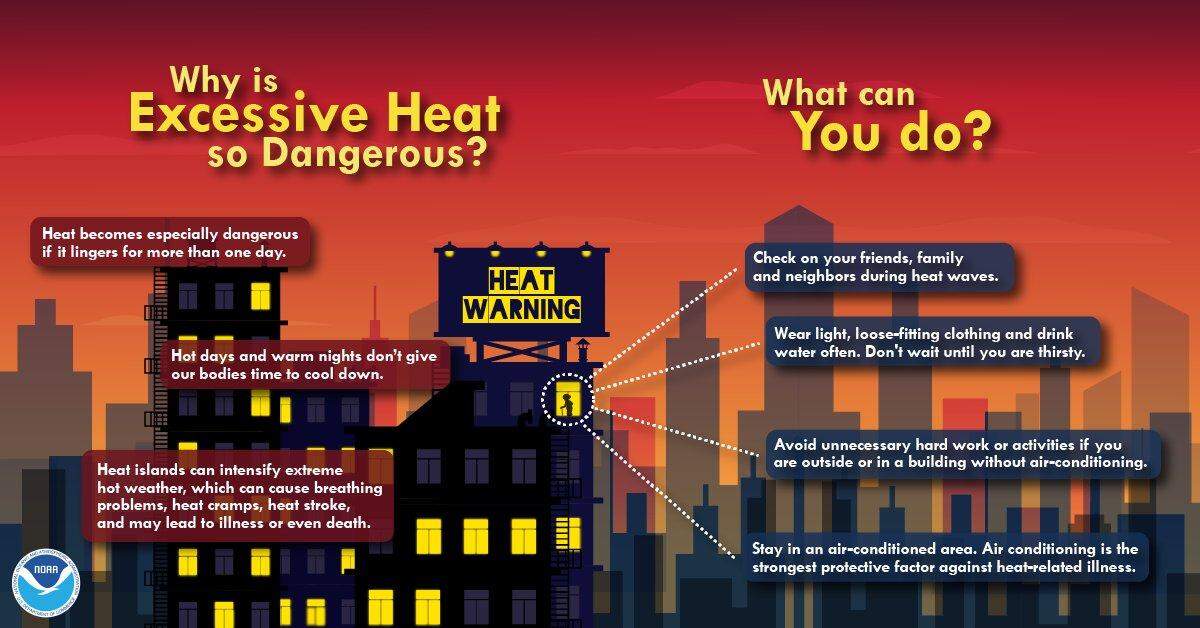
The National Weather Service is concerned that not only days will be warm, but that lows as hot as 80 degrees overnight will not give bodies time to cool down.
The weather service’s excessive heat warning has been extended to cover the entire state of Washington.
The excessive heat warning for the Tri-Cities takes effect at 2 p.m. Friday and continues through at least 8 p.m. Thursday.
The forecast calls for the high of 99 on Friday to jump to 106 on Saturday. The temperature could hit 110 on Sunday, 112 on Monday and Tuesday and then drop to 110 Wednesday and Thursday.
The forecast highs are the center of a range and temperatures could be a few degrees higher or lower.
The hottest night is expected to be Monday, when the low is forecast at 80. Other nights from Saturday through at least Wednesday night low temperatures are forecast at 77 to 79.
The Weather Channel’s forecast is for hotter weather than predicted by the weather service.
It predicts a high in Pasco of 116 on Tuesday. It does not expect temperatures to drop below 100 until July 8.
Tri-Cities records for the hottest day recorded in June may fall, but it’s not too likely that the area will set a new all-time high record for the state.
The hottest temperature recorded in Washington state was 118 degrees on Aug. 5, 1961, at Ice Harbor Dam on the Snake River about 12 miles west of Pasco, according to the weather service.
Oregon has been a degree hotter with a high of 119 recorded in Pendleton on Aug. 10, 1898, and at Prineville on July 29 the same year.
Air quality issues
Air quality could be a problem in the Tri-Cities as a dome of hot air settles over the Northwest.
Temperatures in the triple digits increases the chances for elevated ozone levels, says the Benton Clean Air Agency.
It predicts air quality to deteriorate from good to moderate Friday afternoon through Sunday. Air quality could worsen on Monday and Tuesday to a level that’s unhealthy for sensitive groups.
Ozone is good if it is in the Earth’s upper atmosphere, helping shield people from harmful ultraviolet radiation.
But it is harmful if it is near the ground and people are breathing it.
In the Tri-Cities pollutants, particularly those blown by light winds from the north, dam up against the Horse Heaven Hills. There particles bake in the sunshine on hot days, producing ozone, which spreads across the Tri-Cities.
The chemicals that create ozone can come from the exhaust of motor vehicles, a major contributor in the Tri-Cities, and the reason ozone is most often a problem in large cities, including Seattle.
If you plan to travel this weekend, Washington State Patrol Trooper Chris Thorson recommends making sure fluid levels in your car are topped off and that you take plenty of cold drinking water in case you break down.
For the most efficient cooling of your car’s interior, Pemco Insurance recommends taking the ventilation system off recirculation mode when you first start your car. Otherwise hot air will be recirculated within the car’s cabin.
Turning on the air conditioner before you get in the car and start driving won’t do much good, it says. The air conditioner compressor works best when the car is being driven.
The Washington State Department of Health is reminding residents that the heat will be dangerous.
“Hot weather and high temperatures can quickly go from uncomfortable to life-threatening,” said Dr. Umair Shah, the Washington state secretary of health.
Heat safety tips
Department of Health tips to stay safe include:
▪ Drink plenty of fluids but avoid beverages that contain alcohol, caffeine or a lot of sugar. Carry water with you and don’t wait until you’re thirsty to drink.
▪ Avoid extreme temperature changes. Taking a cold shower right after coming in from the heat or jumping into cold water when swimming outside can cause rapid changes in your breathing, heart rate and blood pressure and even cause hypothermia.
▪ If you go outside, protect yourself from heat and sun. Sunburn slows the skin’s ability to cool itself, so make sure to use sunscreen with a high SPF rating. Wear a wide-brimmed hat and light-colored, loose-fitting clothes.
▪ Check in frequently with family, friends and neighbors who are elderly, ill or may need help. Avoid dressing babies and children in heavy clothing or wrapping them in warm blankets.
▪ Keep outdoor pets safe in the heat, make sure they have protection from heat and sun and access to cold, fresh water. Asphalt gets very hot and can burn your pet’s paws, walk on grass if possible. Never leave any person or pet in a parked vehicle.
▪ If you notice symptoms of heat illness — dizziness, nausea, headaches, muscle cramps — act immediately. Move to a cooler location to rest for a few minutes and seek medical attention immediately if you do not feel better.
This story was originally published June 25, 2021 at 12:23 PM.