
Are gray wolves returning in WA after population drop? What we know
Are gray wolves on the path to recovery in Washington state?
In 2024, the state’s gray wolf population decreased for the first time in 16 years.
The Washington State Department of Fish and Wildlife recently released its wolf count for 2025, showing this setback was a one-time event.
Despite a population drop the previous year, Washington state recorded its highest count of gray wolves since monitoring began in 2008.
Here’s what we know:
How many gray wolves are in Washington state?
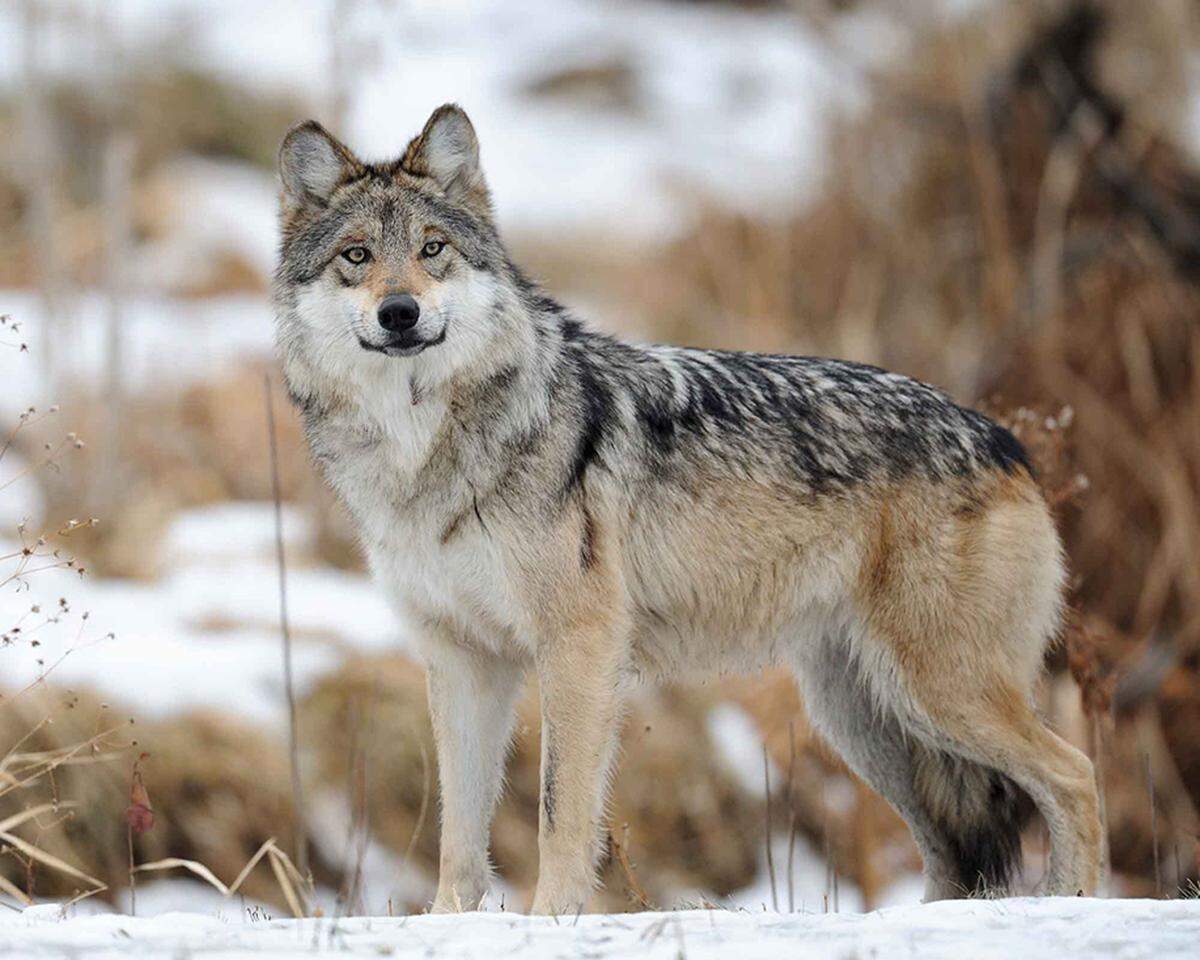
In 2025, the state Fish and Wild Department and its tribal partners counted 270 gray wolves across Washington state, according to the most recent report, released April 17.
This is a 17% increase from 2024.
In 2024, the state’s gray wolf population decreased nearly 10% compared to the previous year.
That means 2025’s increase didn’t just make up for the loss, but also kept up with additional growth.
The state wildlife department also noted 23 packs had successful breeding pairs in 2025, a 27% increase from 2024.
Looking at increases since the first survey in 2008, the state’s wolf population has increased an average of 21.5% per year, even with the 2024 decline, according to the department.
Why does Washington state track gray wolf population?
By the 1930s, the gray wolf population in Washington state had been “virtually eliminated,” according to the state Fish and Wildlife Department.
Gray wolves first received federal protection through the federal Endangered Species Act in 1974 — though this status has changed several times since, and currently applies only in part of the state.
Washington state added its own endangered species protections in 1980.
Over the decades, conservation efforts across multiple agencies and tribal entities in Washington state have contributed to a gradual increase in the gray wolf population.
To measure the management and conservation efforts of gray wolves, the Washington State Department of Fish and Wildlife monitors wolf activity throughout the year and compiles an annual report.
The end-of-year survey includes total numbers plus 12.5% to account for wolves that are difficult to track, to determine the minimum presence of wolves in the state.
Where are gray wolves resurging in Washington state?
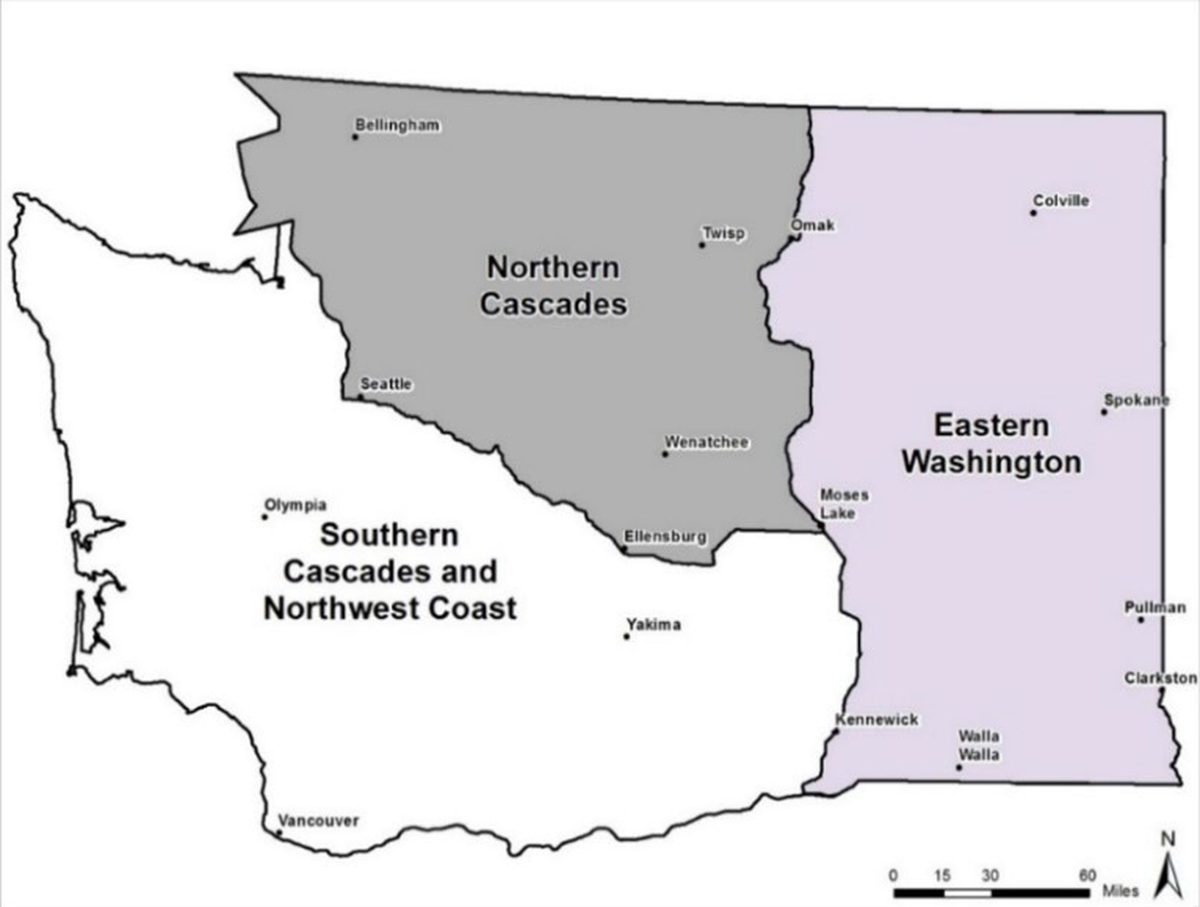
In Washington state, gray wolf recovery efforts are broken up across three regions: the Northern Cascades, Eastern Washington and the Southern Cascades and Northwest Coast.
Wolves are tracked within each region, with recovery goals. State wildlife officials note when wolves travel from one recovery region to another.
Each region aims to have a minimum of four successful breeding pairs for three years in a row.
A “breeding pair” refers to at least one adult male and one adult female wolf who raised a minimum of two pups through the end of the year, according to the Washington State Department of Fish and Wildlife.
The presence of such pairs reflects “reproductive success and recruitment,” state wildlife officials said.
In 2025, the Eastern Washington recovery region had 13 successful breeding pairs, and the Northern Cascades recovery region had 10.
This is the sixth year in a row both regions have met or exceeded their recovery objectives. The Eastern Washington recovery region has met its objectives for 12 years in a row.
The Southern Cascades and Northwest Coast recovery region did not meet its recovery goals in 2025, and it hasn’t for several years.
In fact, no packs or breeding pairs were documented in the region in 2025, although a couple of wolves were spotted in the area, indicating some movement.
“It’s encouraging that Washington’s wolf population and number of breeding pairs increased last year, especially considering 2024’s discouraging declines,” said Amaroq Weiss, a senior wolf advocate at the Center for Biological Diversity. “Regaining lost footing is essential but these numbers don’t mean wolves are recovered in Washington. The southern Cascades and North Coast boast some of the best wolf habitat in the state but still have no wolf packs or breeding pairs.”
Why is the wolf population struggling in parts of Washington state?
Staci Lehman, Fish and Wildlife communications manager, previously told McClatchy Media that there are numerous reasons the gray wolf population has struggled to recover in the Southern Cascades and Northwest Coast region.
Wolves face barriers into that region, including natural ones such as the Columbia River, and manmade ones including fencing along Interstate 90.
Additionally, it’s the farthest from currently established wolf populations, making it a difficult journey for wolves to make.
However, the presence of wolves in the area could be a good sign.
Kristin Botzet, Defenders of Wildlife’s Northwest program representative, called it “promising.”
“Although it didn’t establish a territory, it demonstrates that wolves are capable of naturally dispersing to the region on their own, but poaching remains problematic and a barrier to recovery,” Botzet said. “If we can’t get the poaching in check, it will continue to hamper recovery efforts, making it challenging to meet recovery goals and subsequent delisting.”
Weiss also previously told McClatchy Media that the wolves’ mortality rate is a concerning factor.
“When collared wolves have successfully dispersed into this recovery region, some have been killed unlawfully,” Lehman said. “While this only accounts for collared individuals, it suggests that poaching may play a role in the slower-than-expected recovery in Southern Cascades and Northwest Coast Recovery Region.”
How many gray wolves died in Washington state in 2025?
Across 2025, there were 28 documented wolf mortalities in Washington state, including three deaths attributed to unlawful killing or poaching.
Illegally killing a wolf — or any endangered species — in Washington state is considered a gross misdemeanor. Penalties include up to a $5,000 fine and one year in jail.
However, 12 of these 28 deaths are attributed to legal harvesting by tribal hunters, state officials said.
Four wolves were removed in response to conflicts with livestock.
What can help Washington state’s gray wolves thrive?
The Washington State Department of Fish and Wildlife has taken multiple measures to decrease the number of gray wolf deaths in the state.
These include new approaches for wolf and livestock conflicts, an emphasis on cracking down on poaching, and collaborating with tribes on shared goals.
The department said that public acceptance is essential for statewide wolf recovery, and it’s actively working to improve the public perception.
The agency spent nearly $2 million on wolf management activities in 2025 alone.
“In Washington, the year-after-year gray wolf population increase demonstrates that we are on our way to full recovery,” Botzet said. “As wolves continue to expand throughout their historical range across our landscape, it’s critical that we continue to invest in programs that reduce conflict.”
Botzet said the investment in such programs fosters better tolerance of wolves and can ensure long-term recovery.
Weiss believes that preventing deaths is key to helping the wolf population thrive.
“We have to figure out how to reduce human-caused mortality elsewhere in the state if we want to make it possible for wolves to safely make their way west and south into that third recovery zone,” Weiss said. “Once they get there, we must keep them safe from illegal poaching.
“The bottom line is that for Washington’s wolf population to fully recover, the department must focus on reducing human-caused wolf deaths.”