
How a cable bridge glow-up could illuminate the Tri-Cities
Washington has its share of stunning bridges.
They are suspended over the Tacoma Narrows, float across Lake Washington and Hood Canal, arch across Selah Creek and Deception Pass and are cantilevered between Longview, Wash., and Rainier, Ore.
And then there is the Tri-Cities’ very own contestant for the list: The Ed Hendler Bridge.
Better known as the cable bridge, it is a first-of-its-kind structure that holds its own among Washington’s most intriguing spans.
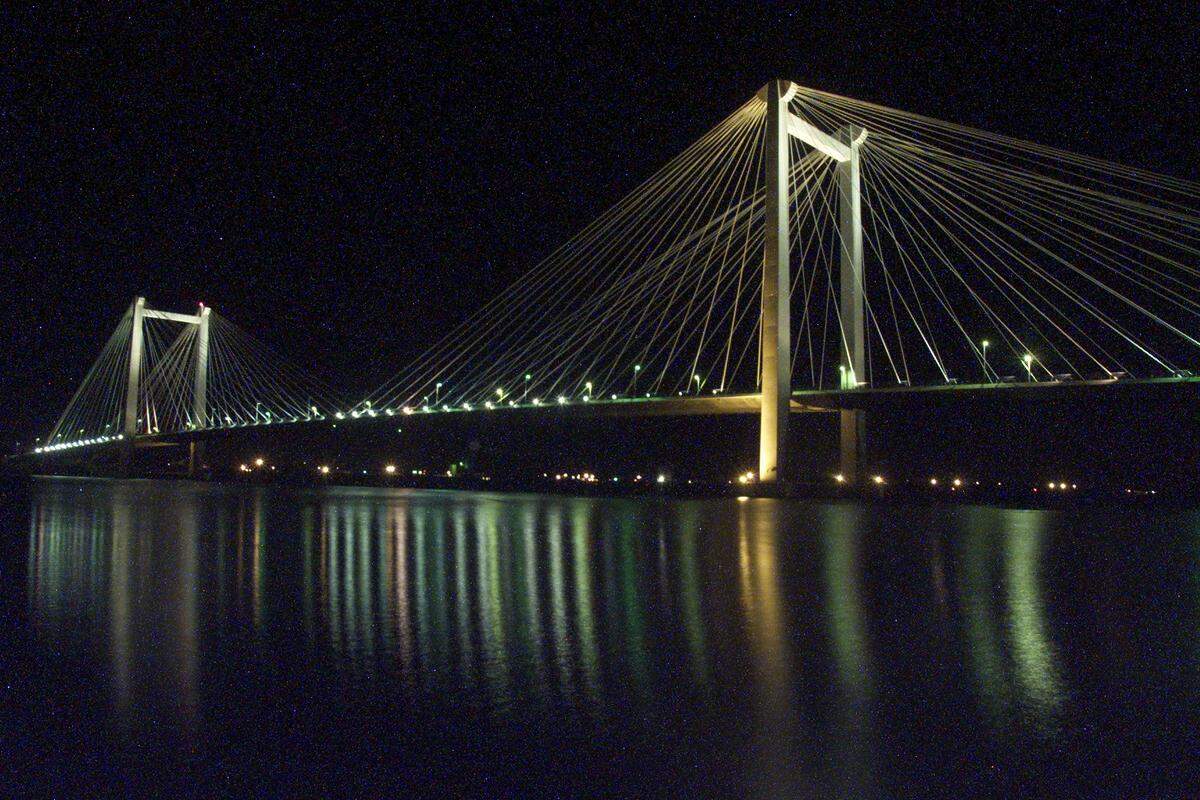
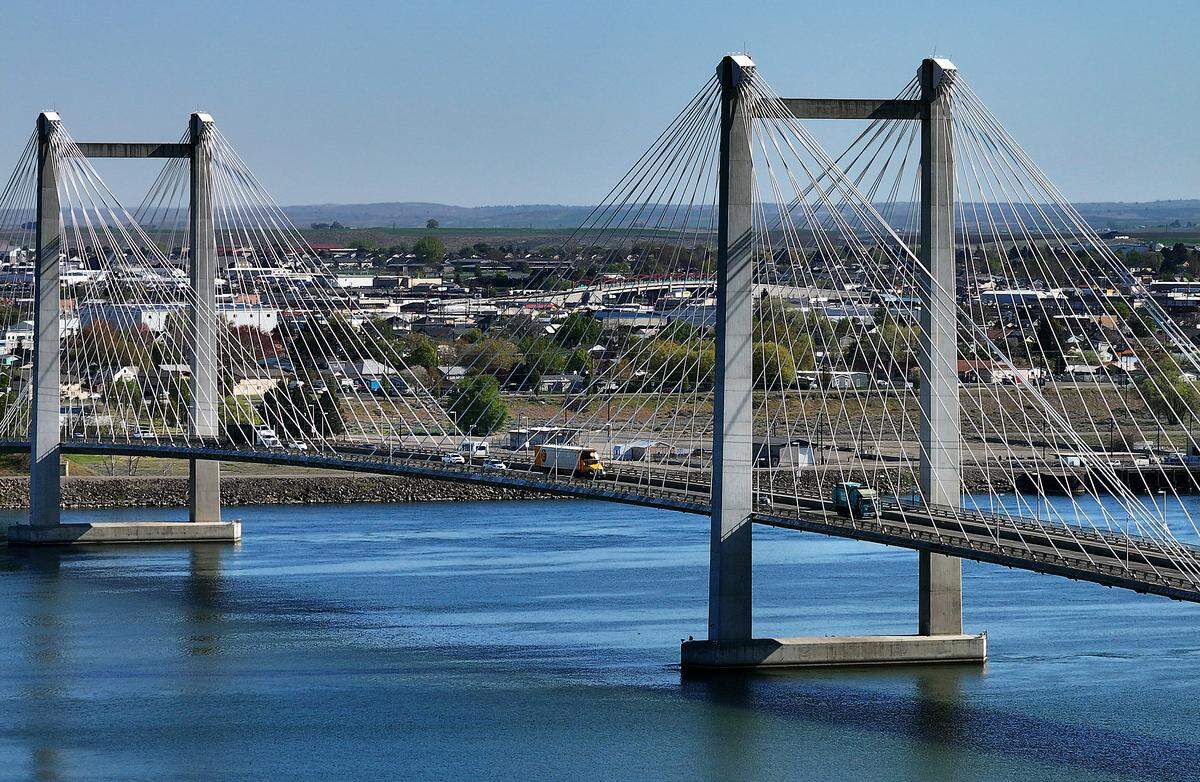
The cable bridge was the first major cable-stayed bridge in the nation and the second-longest concrete cable-stayed bridge in the world when it debuted in September 1978.
The span carries Highway 397 across the Columbia River between Kennewick and Pasco and is arguably the community’s most-photographed landmark.
Today, as it approaches its 50th anniversary, efforts to bedazzle the soaring structure with programmable LED lights are gaining traction.
The cities of Kennewick and Pasco and their respective ports each contributed $25,000 to hire a consultant to assess the bridge for a lighting update, to estimate costs and to propose a general idea of what a new lighting system might look like.
Psomas, a Los Angeles engineering firm, was the winning bidder.
This spring, Psomas delivered detailed drawings and scans of the bridge.
The rest, including renderings to show what it could look like, are due this summer, said Adam Lutes, who is overseeing the project for the city of Pasco.
That will determine the next steps, including finding funding for a project that supporters guestimate will cost about $2 million.
Striking accomplishment
The cable bridge was a marvel when it was dedicated.
It won national engineering awards and accolades for the team that built it.
Today, cable-stayed bridges are more common.
The bridges that followed sport modern lighting systems that turn them into dramatic backdrops for light shows and special occasions.
Portland created a light festival around its newish Tilikum Crossing, a transit-oriented bridge spanning the Willamette River.
In 2021, Kathy Lampson, Karen Miller and Deb Culverhouse decided the cable bridge deserved a glow-up. They promoted the idea to civic groups and government agencies.
Their efforts convinced officials to pony up money for the Psomas study. The cost to light it hasn’t been set and funds have not been identified, though it’s likely there will be a community campaign.
Programmable LED lights would turn the cable bridge into a dazzling backdrop.
The bridge could be bathed in high school colors to celebrate academic and athletic milestones. It could be lit up with red, white and blue for patriotic occasions. Hydroplanes could dance across during Tri-Cities Water Follies boat races in the summer.
Any lighting system would have to comply with state safety laws.
Static lighting system
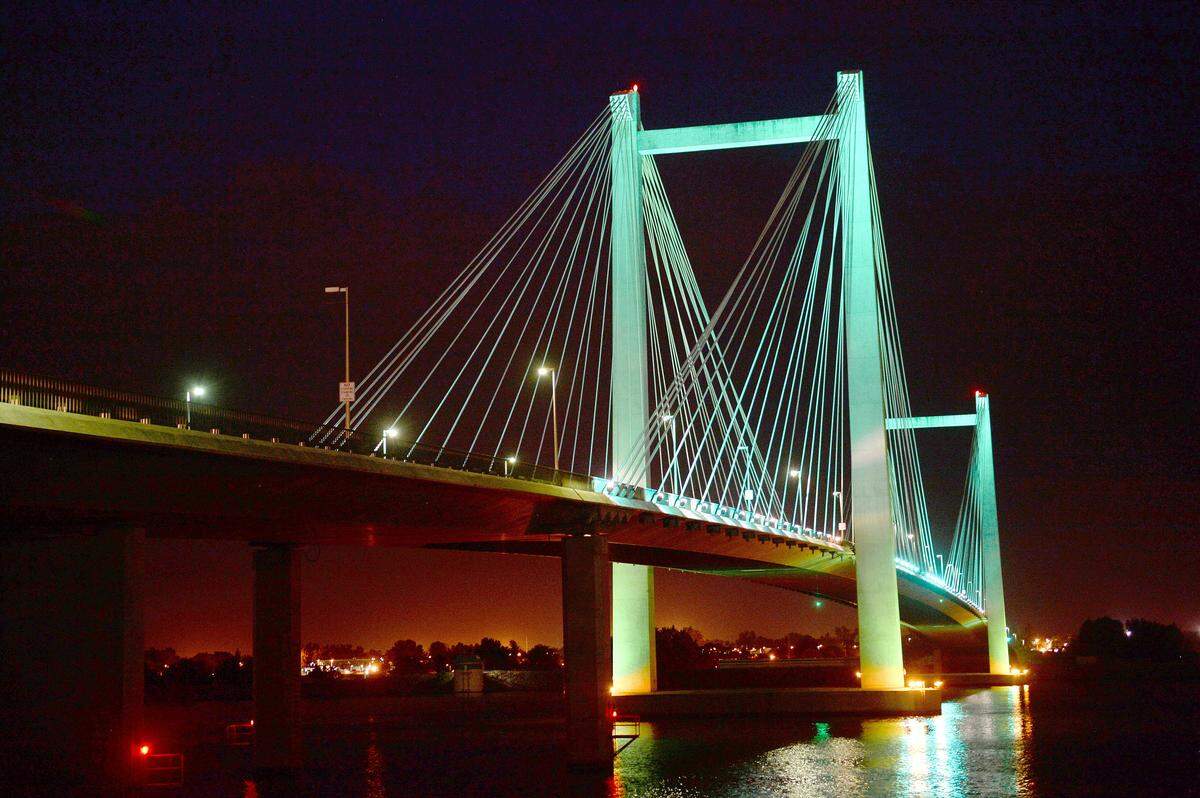
The bridge is currently illuminated by 144 sodium vapor lights, cannon-like devices bolted to the bridge and aimed at its white-wrapped cables.
On special occasions, notable ovarian cancer awareness events, teal-colored lenses are bolted in place by workers in safety harnesses to give the bridge a color bath.
Pasco and Kennewick officials backed the lighting work to boost economic development initiatives on both sides of the river, which is consistent with the bridge’s original mission.
The ports, in particular, are investing in efforts to draw visitors and investment to their respective communities.
The Port of Kennewick established the Columbia Gardens Artisan Village to the west of the cable bridge. Columbia Gardens boasts wineries, tasting rooms, food trucks and the new Kennewick location of Wheat Head Brewing.
On the Pasco side, the port is promoting industrial development in the Big Pasco Business Park and hopes to eventually see residential and commercial development at Osprey Pointe, east or downriver from the cable bridge.
This story was originally published June 3, 2026 at 7:00 AM.