Judge makes swift ruling on Eastern WA redistricting case impacting Latinos
AI-generated summary reviewed by our newsroom.
- Judge Robert Lasnik denied a motion to vacate Washington’s remedial legislative map.
- Lasnik ruled intervenors lacked standing to seek withdrawal using Callais.
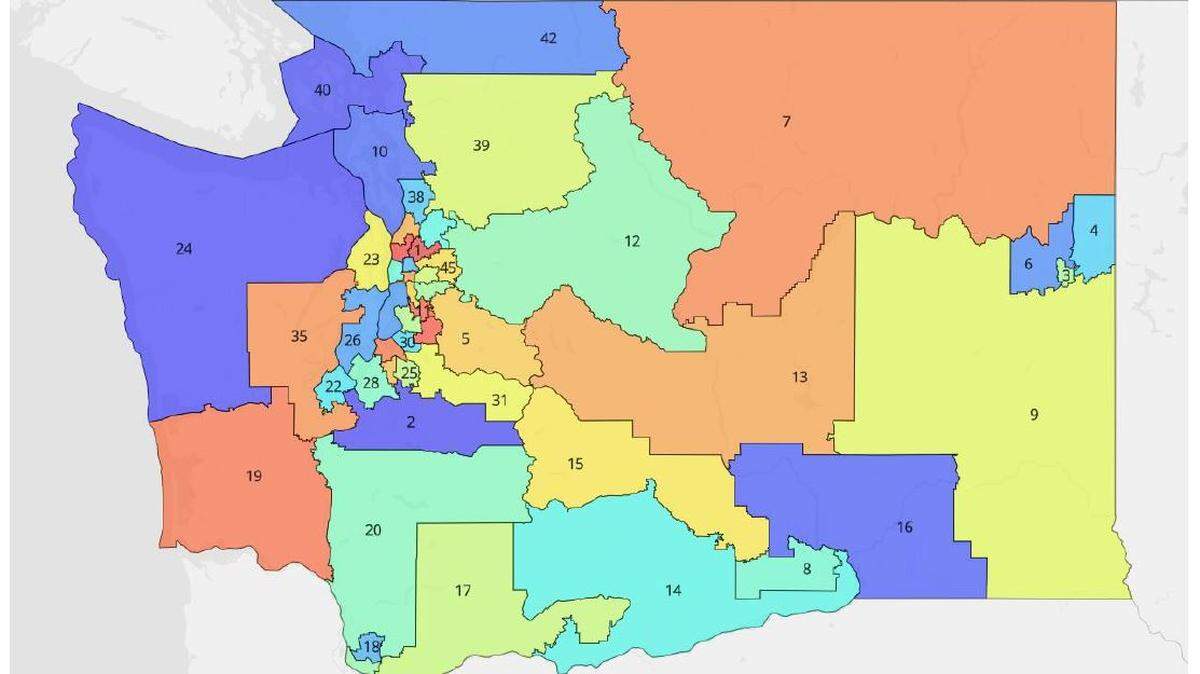
- The court’s 2024 remedial map redrew at least 13 legislative districts.
A federal judge in Seattle smacked down a request to throw out Washington’s map of legislative districts just weeks after the U.S. Supreme Court upended the U.S. Voting Rights Act.
The order came from Judge Robert Lasnik of the U.S. District Court for Western District of Washington. He’s the same judge who determined in 2023 that the state’s Redistricting Commission violated Section 2 by “cracking” apart Latino communities in the Yakima Valley.
A group of Republican intervenors hoped to use the ruling in Louisiana v. Callais to vacate Lasnik’s prior orders. But in a short 10-page order, Lasnik determined the group did not have the standing necessary to request withdrawal.
“A party seeking relief from judgment must have standing to invoke the court’s authority to grant that relief, and an intervenor’s prior participation in the case — whether permissive or as of right — does not itself supply the required concrete stake,” he wrote.
The move is a win for voting rights advocates who for decades now have been trying to give Latino and Hispanic strongholds in South-Central Washington a stronger voice in the Legislature, as well as on local boards, city councils and commissions.
Opponents have called the result in the case, Palmer v. Hobbs, a clear example of partisan gerrymandering.
“The district court correctly concluded that the intervenors have no standing to pursue their meritless appeal. We are proud to represent our clients,” said Sonni Waknin, senior staff attorney for the UCLA Voting Rights Project, for the plaintiffs.
A request filed by the group of intervenors for the U.S. Supreme Court to review the case still remains pending.
Jim Walsh, chairman of the Washington State Republican Party, on Monday went after Lasnik, calling him a “petulant child” for refusing to reconsider his orders in the wake of Callais.
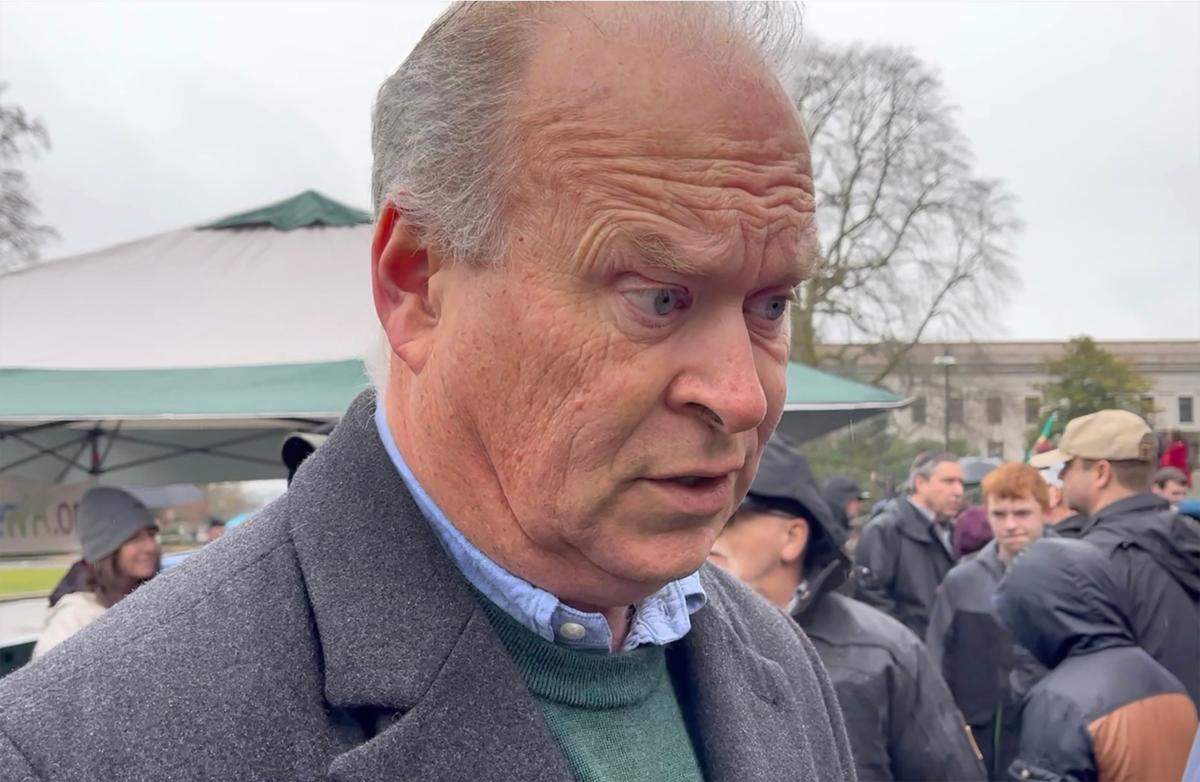
“There are growing calls to impeach this Lasnik from the bench,” Walsh said on Facebook. “Contact your Congress representative and tell them to support articles of impeachment against this left-wing activist judge in Seattle. We’ve had enough of his hacky, hyper-partisan, illegal and frankly racist manipulations.”
In a statement to the Tri-City Herald, Washington State Democrats said the current lines protect the votes of Latino communities in the region.
“We are relieved the court did not inject chaos into our state’s primary election, like what the Supreme Court of the United States did in its recent Callais decision, which upended elections where ballots had already been cast,” the statement reads.
The decision in Callais weakened Section 2 of the 1965 Voting Rights Act, which had allowed voters to challenge racially discriminatory maps that break apart communities of similar interest. It also struck down the ability to use race as a redistricting criterion.
The intervenors’ motion for relief from judgment was the first ripple effect to touch the Evergreen State. Several other states, including Louisiana and Florida, have responded with efforts to further redraw their maps in the lead up to a contentious midterm election.
Following a bench trial in the Palmer case, the district court determined that the boundaries drawn up by the 2020 redistricting commission, together with “social, economic and historical conditions in the Yakima Valley,” resulted in unfair opportunities for voters.
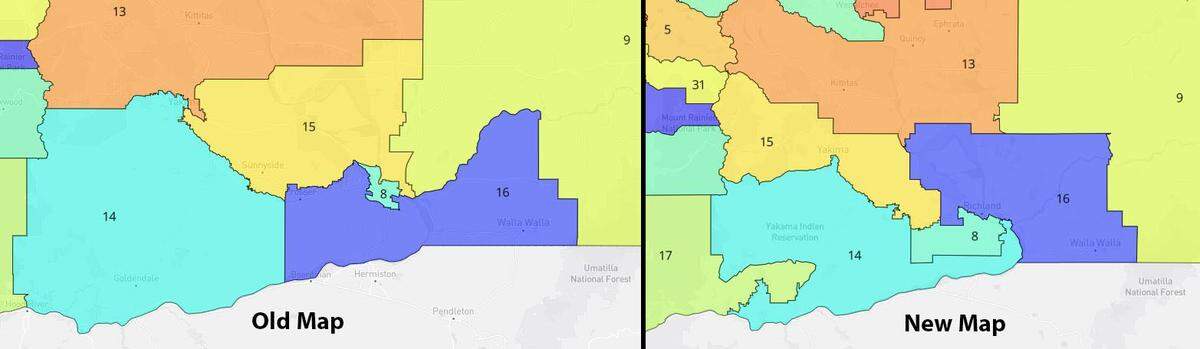
The case focused on the 15th Legislative District. Judgment was given to the plaintiffs and their Section 2 claim, with an opportunity opened for the state to redraw the map.
After the commission declined to act, Lasnik ordered a remedial map in 2024 that redrew the boundaries of at least 13 legislative districts and knocked state Sen. Nikki Torres out of her district.
The new map also turned the neighboring 14th Legislative District into one that was majority Hispanic and leaned Democratic — the new shape described in court records as an “octopus slithering along the ocean floor.”
Last year, the U.S. Court of Appeals for the Ninth Circuit affirmed the district court’s decision, with one judge saying the remedial map “did not discriminate on the basis of race in violation of the Equal Protection Clause” of the 14th Amendment.
Defendant Secretary of State Steve Hobbs did not weigh in on if the Supreme Court decision affected this case, but he voiced strong opposition to further changing the legislative map for the 2026 election.
In court documents filed last week, he said candidates have already become familiar with those boundaries and offices, and that they have already filed for them.
Altering the boundaries would jeopardize and disrupt the Aug. 4 primary, causing significant confusion.
Washington state’s ballots for the primary are already finalized. Candidate filing week for the 2026 elections was May 4-8.
This story was originally published May 18, 2026 at 7:53 PM.