Fired transit CEO’s ‘questionable judgment’ detailed in 280-page report
AI-generated summary reviewed by our newsroom.
- Transit agency report found former CEO often pushed limits and bypassed documentation.
- Many actions showed poor judgment and impatience with policy involving public money.
- Board unanimously fired the former CEO last month after reviewing the report.
Fired CEO Thomas Drozt risked embarrassing and damaging the reputation of Ben Franklin Transit with his questionable judgment, impatience and insistence on skirting policy and procedure, a recently-released investigation found.
Drozt was fired last month at a special meeting after the transit board reviewed the completed report in a closed-door session.
The 280-page investigation was released Monday to the Tri-City Herald under the Washington state Public Records Act.
At a recent Franklin County commissioner meeting, BFT board chairman Stephen Bauman addressed the firing and decision to keep Brian Lubanski as the agency’s interim CEO for the time being. Lubanski was the agency’s Chief Experience Officer.
“I felt like that was a good move on behalf of Ben Franklin Transit in the direction that organization needed to go,” Bauman said. “As that vote demonstrated the board had lost confidence in Mr. Drozt’s leadership in Ben Franklin Transit.”
While the report said that Drozt likely did not violate any laws, in nearly every instance it concluded he showed poor judgment and a willingness to find ways around policies in place to protect the public’s money.
Drozt told the Tri-City Herald in an email that he has read the report.
“While I respect the process, I do not agree with the characterization of my decision-making as poor judgment,” he said.

“Importantly, the report does not find any fraud, misuse of funds, or violation of conflict-of-interest policies. In fact, several key allegations were explicitly dismissed,” he said.
Risk of embarrassment and reputational damage
Seattle attorney Rebecca Dean, who was hired by the public transit board to conduct the investigation, highlighted some common themes on Drozt’s behavior.
• Drozt showed poor judgment in his attempts to award contracts and made decisions inconsistent with agency policy.
• He complained frequently about the state of the transit agency when he joined, saying its operations were below industry standards and “in the Stone Ages.”
• He believed the leadership staff lacked basic management skills and did not have enough experience outside of transit operations.
• Drozt was impatient with the agency’s procurement processes, including the amount of documentation needed and the time required to follow the established process.
• He often pushed the limits of BFT’s procurement policies, frequently argued for sole source contracts and insisted on justifications for a policy or law for adhering to normal purchasing protocols.
According to one person interviewed for the report, Drozt claimed that the board did not care if he pushed the limits of the procurement policy, which potentially made (their) job more difficult. However, he did not ask the person to do anything they felt was unethical or illegal.

Drozt told the Herald that at no point did he personally benefit from the decisions reviewed and does not believe his conduct was found to be unethical. He believes the majority of the allegations were found to be in compliance with policy or the complaints were without merit
“The recurring theme in the report centers on ‘judgment.’ As CEO, I was responsible for advancing projects, solving operational challenges and delivering results in real time — often in areas where policy language itself was not always definitive. My decisions were made in that context, with the intent to move the organization forward, not to bypass process or controls,” Drozt told the Herald.
“I remain proud of the work accomplished during my tenure, including measurable improvements in service performance, customer experience and organizational development. While I acknowledge that not every decision will be viewed the same in hindsight, I firmly reject any narrative suggesting misconduct.”

What is the report about?
The report reviewed a series of key claims made by the agency’s former finance leader, Alex Smith.
The investigation did not look into other claims made by employees or the union representing transit drivers.
While the agency has closed the investigation, the attorney conducting it never interviewed former CFO Alex Smith.
Smith told the Tri-City Herald he was not interviewed because the attorney would not agree to conduct it in writing after he raised concerns about ensuring his full statements were included in the record. The investigator did include this email exchange in the report.
It is unclear who else was interviewed, but the bulk of the specifics pertain to conversations with human resources, the agency’s attorneys and other members of management staff, previously reported on by the Tri-City Herald.
The four main allegations against Drozt were that he tried to improperly set up a $3 million grant fund to benefit board members’ cities and counties, awarded a contract to a former colleague convicted of a sex crime, paid his stepson for a training that Smith wasn’t sure ever happened and that Drozt made inappropriate requests of a potential AI vendor. The report also reviewed a claim that Drozt took home a luxury golf cart.
The Washington state Auditor’s Office is investigating the contracts and Drozt’s credit card spending.
Drozt told the Herald in a phone call while on administrative leave that Smith was not competent, but also defended his hiring of former colleagues, saying they were among the best in the nation and the best candidates for the jobs.
$3 million grant fund
Smith claimed that Drozt potentially skirted Washington state’s Open Meeting Act in an attempt to create a $3 million grant fund. The agency had not produced any records of these meetings or documents prepared for them prior to the publication of the investigation. Smith told the Herald Drozt came to the meeting with a full plan ready for sign off.
Outlines prepared for the meeting detailing what the grant fund could look like were shared with the Herald by Pasco Mayor Charles Grimm. It is unclear who made those documents, but the report did include emails to BFT’s attorney about the conversations.
The investigator concluded that Grimm and Bauman, a Franklin County commissioner, did not violate Washington Open Meeting Act standards.
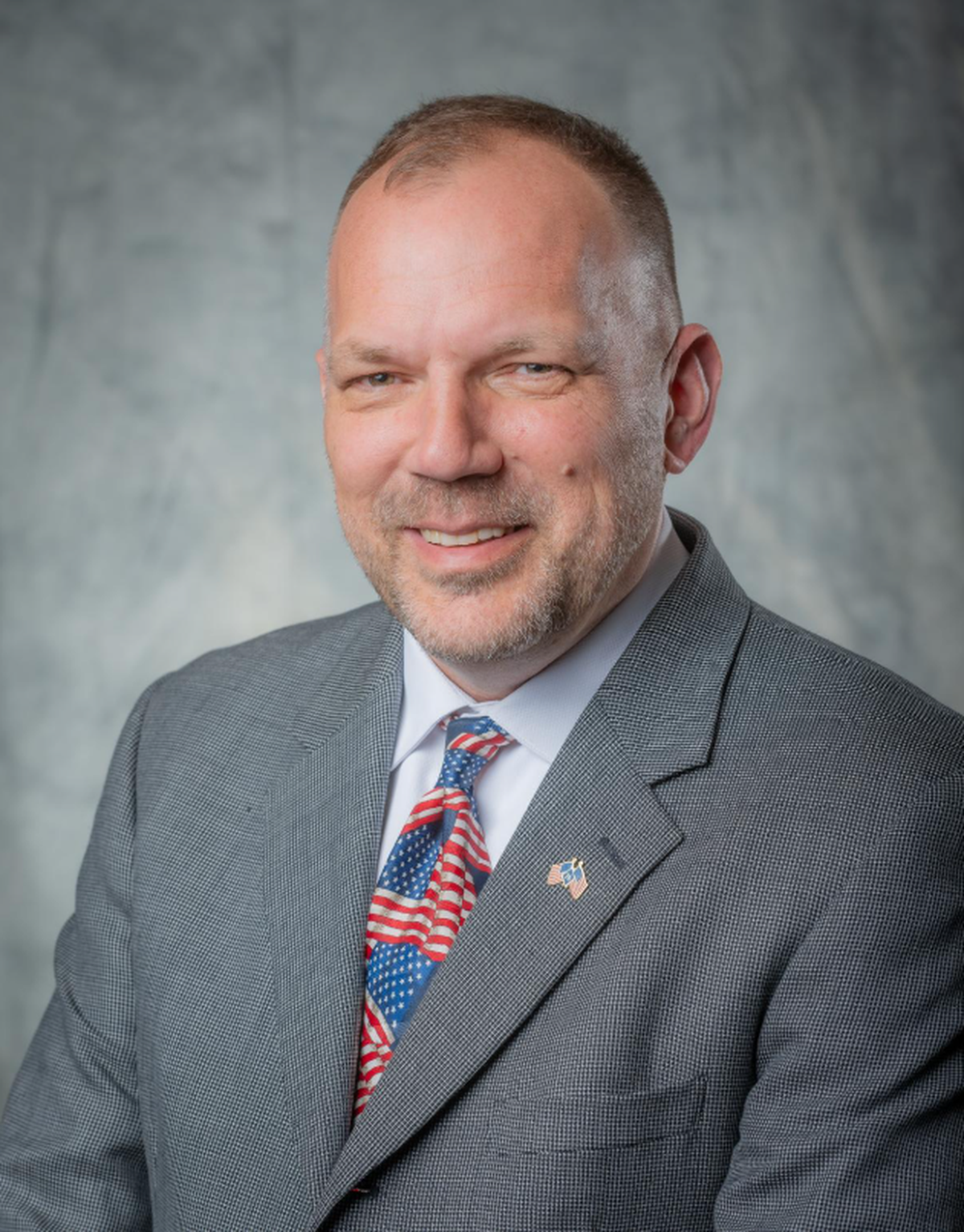
Grimm said his primary concern during the entire process was transparency, and no open meeting rules were violated. He was disappointed that the program got caught up in the other allegations.
Grimm said the idea behind the program was to use excess interest earnings to help cities within the agency’s taxing district pay for minor improvement projects that were related to transit. Examples could be potholes near heavily trafficked bus stops or sidewalk repair to improve accessibility.
Dean wrote that Smith’s allegations about the program potentially violating open meeting laws were without merit.
She noted that conversations about the program included addressing concerns about how it would work, the legality of it and how the public might perceive it.
$120K contract given to a sex offender
The report looked into a $131,000 no-bid contract to convicted sex offender Daniel Matta of Phoenix, Ariz.
He likely never completed the contracted work, according to the report.
Drozt previously defended the decision, telling the Herald he was aware of the conviction and that it did not violate any agency rules. He felt Matta deserved a second chance.
Dean wrote that his decision to award the contract to Matta was “more likely than not inconsistent with BFT’s policy on non-competitive procurements” and that aside from policy violations, “Matta’s engagement raises substantial questions about Drozt’s judgment.” Drozt told Dean that he had known Matta since 2000, when they were both bus operators in Phoenix.

The contract came about when Drozt decided BFT needed a modern computer-aided dispatch system and that Matta was an expert who could work with staff to make it happen, according to the report.
Dean wrote that Drozt did not disclose to staff Matta’s criminal history or lack of any known professional work experience from 2017 to 2024.
Drozt never completed a required sole-source justification for the contract, which violated agency policy.
Management told Dean they didn’t push back because the contract was under Drozt’s $250,000 spending limit and “low” compared to other consultants.
Dean concluded that Matta’s lack of experience after 2017 raised questions, considering he was tasked with software and hardware design and implementation. Drozt discounted Matta’s lack of experience, according to the report.
Dean wrote that the combination of his criminal history and lack of recent experience “created a very real reputational risk to BFT” and that by not disclosing his history Drozt denied the agency the chance to make an informed assessment of the risks and benefits of hiring Matta.
“As CEO, I relied on the understanding that the engagement was permissible, including guidance that certain thresholds and conditions allowed for flexibility,” Drozt said. “This was not an intentional circumvention of policy, but rather a matter of process execution and documentation.”

$5K contract for stepson
The report also looked into a contract awarded to a company owned by Drozt’s stepson.
He used his company credit card to pay $4,900 for a two-day leadership workshop, in order to keep the amount under a $5,000 limit.
Dean said the payment was “irregular and inconsistent with BFT policy and expectation. Drozt’s actions raise substantial questions about his judgment.”
Drozt repeatedly tried to minimize their relationship, referring to his stepson as his “wife’s son” and argued that he was not immediate family because they did not live together, according to Dean.
Drozt told the Herald this was a blind spot in agency policy that led to a review.
Drozt engaged a now-retired former colleague, John Kelley, to do a leadership workshop because he felt the agency’s management team was “green” and lacked broad transit experience. Kelley did not have his own company, so Drozt decided to try and route the payment through his stepson’s solar consulting business, according to the report.
Instead, his stepson formed a new company. Dean said the company used a non-existent address and fake email address in its business filings. Drozt claimed he had no knowledge of this.
Drozt also claimed he did not know Kelley could have just been paid as an independent contractor. However, a month after the contract was awarded, he did pay Kelley as contractor for his assistance with BFT’s Bus Roadeo.
Kelley did not conduct the leadership workshop on the agreed upon dates in June 2025. According to Drozt, the agency was “busy with other events.”
A training was eventually performed on Dec. 29-30, 2025 for a workshop with the ride-share department, after complaints of chaotic workplace conditions, lack of clear processes, constant changes and anxiety about the department’s manager, according to the report.
Members of the management team interviewed gave conflicting statements about why the purpose of the workshop was changed.
Dean concluded that the decision to use his stepson’s company violated several policies prohibiting transactions with immediate family.
The investigator also noted that Drozt apparently “paid no attention to the details of the invoice, and, ignorant or not, is responsible for paying an invoice to a company with a fake address, fake email address, and deceptive corporate registration information.”
She also said the entire process was unnecessary, as Kelley should have just been paid as an independent contractor and did not believe Drozt’s claims about Kelley being the right fit for the ride-share workshop.
Instead, she concluded, “it is more likely than not that Drozt seized upon (a suggestion) that BFT engage a consultant to support (the ride-share manager) to obtain some value from the amount BFT had already paid.”
Questionable AI requests
Drozt allegedly asked for a favor from a potential AI vendor, “requesting access to an additional, unrelated piece of software described as a horse-betting or wagering analytics application” if the vendor was chosen.
That contract was expected to be in the range of $250,000 to $1 million, but was never executed.
Dean wrote that whether Drozt engaged the company to look into reducing represented union positions was outside the scope of what she was engaged to investigate.
She believed that Drozt’s statements about a horse racing app were likely just jokes, and did not violate policy. However, the way he tried to force through a contract did raise concerns.
Drozt tried to figure out a way to do a sole-source contract, which could not be justified because other AI options were available and proper process would require a Request for Proposal, so he pressed a member of management to find a loophole, according to the report.
The solution was having the AI company enter into a cooperative agreement with another software provider to circumvent a competitive bidding process, which would have been allowable by policy.
Drozt then suggested another company the vendor could engage with to create a cooperative agreement.

Dean wrote that the final project as presented complied with policy, but how it came about was concerning.
She said that the “evidence shows that Drozt pushed hard for a sole source contract” based on minimal and superficial evidence showing that the AI company qualified for one.
Dean wrote that it highlighted “Drozt’s impatience with, and resistance to, normal public sector procurement processes.”
Drozt told Dean that he had no prior contact with the company and did not vet their references. Rather, he relied on an informal lunch at a conference, a two-hour demonstration and a former colleague’s recommendation.
Golf carts
Dean also looked into whether Drozt broke company policies by purchasing five luxury golf carts to be used to shuttle attendees around at public events.
She said the purchase itself was fine, but there were some decisions that reflected poorly on Drozt’s part.
Drozt personally visited golf cart suppliers in the Tri-Cities and met with sales representatives. He claimed a sales person suggested driving one from the store to his home in Canyon Lakes using back roads. Drozt said he didn’t know the cart was not “street legal,” according to the report.
He then kept it at his home for about six weeks. He claims to have been testing its speed, braking, visibility and battery life, but did not document any of it.
Dean noted the “testing” could have been done at the transit agency in one day by qualified staff. It is unlikely there was any valid business reason for him to do so, but Dean did not find any evidence indicating he planned to keep the cart.
Drozt told the Herald he never drove the cart on the road outside his neighborhood. He also told Dean he doesn’t play golf, but did drive the cart around on weekends.
Staff only found out he had the cart when the vendor was ready to do upgrades.
Dean wrote that it was concerning that Drozt drove the cart on city streets for business purposes.
“Had the police stopped and ticketed him, and the story leaked to the local news, it would have embarrassed BFT,” she wrote.
This story was originally published May 4, 2026 at 6:14 PM.