Tri-City leaders want regional town halls, new bills to stop sex offender homes
AI-generated summary reviewed by our newsroom.
- Tri‑City leaders plan coalition to press lawmakers to change sex offender home rules.
- Leaders seek coordinated town halls and legal strategy before the 2027 session.
- Communities pursue zoning, moratoriums and litigation to limit LRA home placements.
Tri-Cities leaders are regrouping after a number of bills aimed at preventing or restricting sex offender homes failed to gain any traction with lawmakers in Olympia.
Mayors from across the area spoke at a Franklin County commissioners workshop meeting Wednesday to discuss how their communities are responding after a home was purchased in Kennewick for the placement of a Less Restrictive Alternative home for sexually violent predators being released from the Special Commitment Center on McNeil Island.
No decisions were made during the workshop, but the city and county leaders agreed a regional town hall is needed and that they must figure out a way that the policy and legal experts from each of their jurisdictions can work together to get new bills before state lawmakers next year.
Finding a way to make change
Kennewick Mayor Jason McShane said the problem their city is facing is that the process for a contracted LRA home does not allow for city input. There is no application they could have reviewed or denied.
McShane said that rules around sex offenders were put into place for a reason, but court rulings have chipped away at those protections over the years.
These homes were not designed for low level sex offenders, but for offenders the state has deemed are sexually violent predators. After it was determined that these offenders could not be held for life on civil commitment orders, the state began transitioning them back into communities through Secure Transition Facilities and LRAs.
“People were killed, children were mutilated,” he said. “When we understand why these things were put in place, it’s stunning to watch the erosion of those protections in our day, not even 30 years later.”
McShane praised local legislators for trying to get eight separate bills before the Legislature on short notice, but said they need to be better prepared next year after many of the bills were called unconstitutional. Only one of those bills got a hearing.
“I am not interested in virtue signalling, I’m interested in making change,” he said. “We cannot have any doubt on bills that are going to Olympia, in this session we were trying to do anything we could. This is a nonpartisan issue, this is an issue for families across Washington state.”
Richland Mayor Theresa Richardson said that it is easy to say, “I’m glad it was over there, and wasn’t in Franklin County, wasn’t in Richland,” but it is only a matter of time before it is their own communities.
“We’re in a position of leadership now, and we need to protect those that are more vulnerable,” Richardson said.
Pasco Mayor Charles Grimm also spoke, and Connell Mayor Shelly Harper attended. West Richland Mayor Fred Brink was unable to make the meeting.
McShane said that going forward, they want to be able to clearly and concisely lay out the community’s demands to lawmakers.
“What we’re requesting as part of coming here today is that coordination, this is something we all need to come together on and partner to figure out how to best protect our community,” he said.
“It’s incredibly ridiculous for us to even have to have this conversation. Not only are we not able to make headway on less restrictive alternative housing, but we’re seeing the erosions of these protections,” said McShane.
Commissioner Clint Didier suggested the possibility of a ballot initiative, but noted that was likely to just be struck down by the Washington state Supreme Court.
Commissioner Stephen Bauman said local leaders should set a date within the next six weeks or so to get community input.
“As a region of 330,000 people, that’s a pretty big voice,” Bauman said.
McShane also responded to criticism that sex offenders already live in the community, or that it was a “not in my backyard” issue.
“We’re not saying that’s OK. ... We’re going to fight that and protect those people who are most vulnerable,” he said. “I would say for anyone concerned, this is ‘not in anyone’s backyard.’”
While other cities have made efforts to slow down placement of the homes, such as zoning changes in West Richland and a temporary moratorium in Pasco, McShane acknowledged those efforts probably aren’t enough.
“There’s no moratorium that Kennewick can issue on what we call the less restrictive housing because there is no application,” he said. “We need to do whatever we possibly can to change the state law.”
The leaders discussed an even larger vision of a coalition that could bring people together from across the state. They hope that by the time the 2027 legislative session begins, hundreds of thousands or even millions of Washington residents take to the state Capitol to demand change.
About sex offender homes
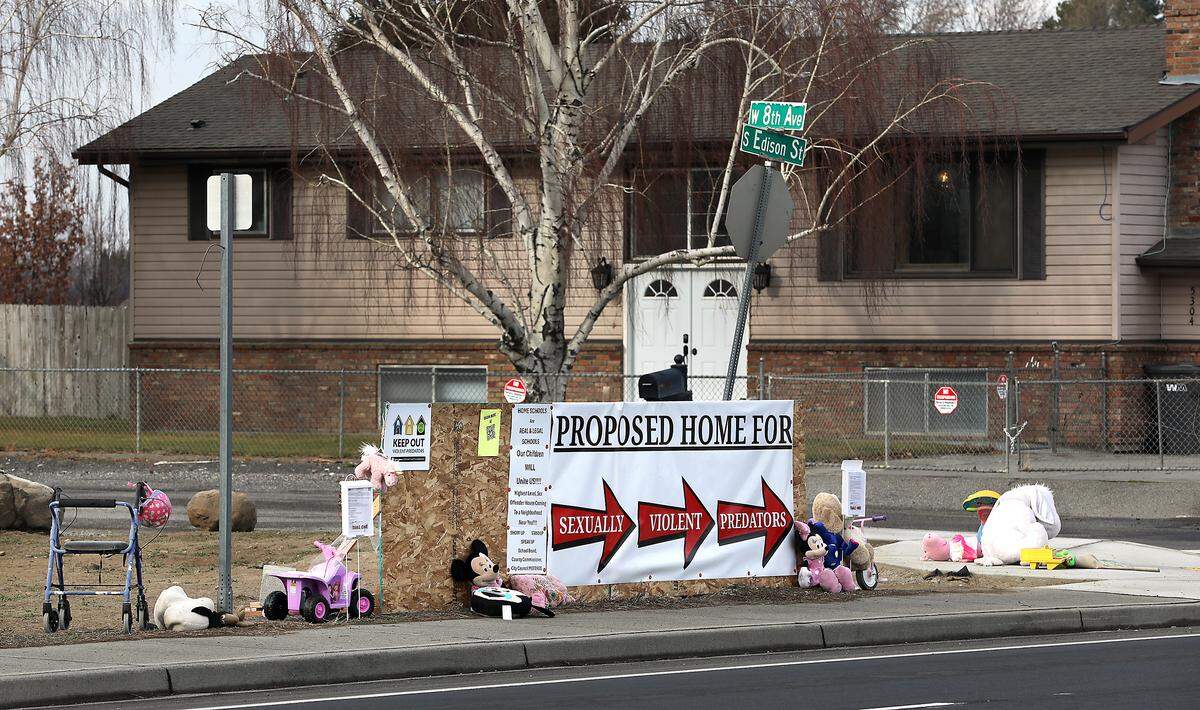
There has been significant community outrage after plans for a Less Restrictive Alternative house for sexually violent predators were made public in January.
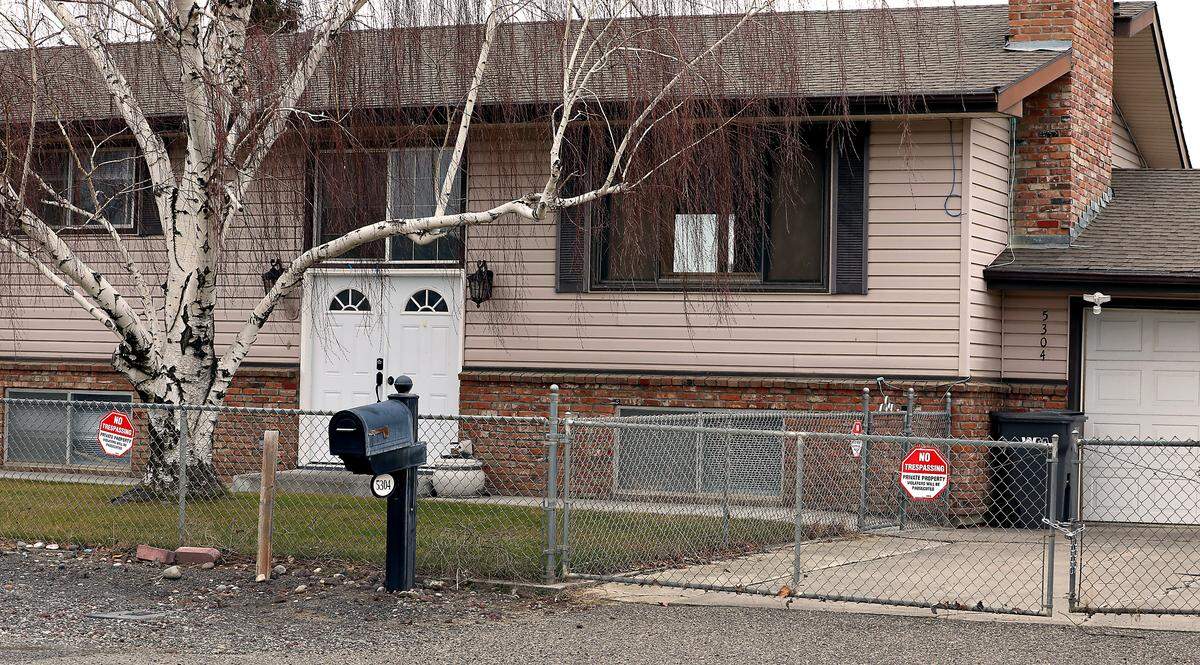
The home off Edison Street is intended to serve as a next step for sex offenders released from The Washington Department of Social and Human Service’s Special Commitment Center on McNeil Island. It is about half a mile from Edison Elementary School.
Kennewick officials have estimated there are 7,200 children living within a 2-mile radius of the home.
Under the state’s civil commitment law the state has placed ongoing security and treatment conditions on offenders who have finished their prison sentences, but are still considered likely to re-offend. Residents of the home would not be able to leave without an escort and GPS monitoring, though there has been criticism of this oversight and the eventual goal is for the residents to transition into living on their own.
The state also has been criticized for its handling of treatment at McNeil Island. A 2025 Seattle Times report found that sex offenders at the civil commitment center were only receiving two hours of group therapy per week.
The community pressure to stop the facility from opening has led to attempts to change laws surrounding the placement of the facilities, to temporarily block new applications and even the Kennewick City Council calling on Gov. Bob Ferguson to intervene and halt the plans.
The cities cannot outright ban the homes, but Tri-Cities leaders are exploring other ways to exert more local control and potentially slow down or stop the process.
Save Our Children Tri-Cities, a new nonprofit, was formed by concerned neighbors to raise money for legal efforts to block the Kennewick home. They have a GoFundMe campaign which has raised more than $10,000 and also are accepting donations via Venmo.
This story was originally published February 25, 2026 at 1:26 PM.