Irrigation rates may jump 60% in Pasco, plus higher fees for new homes to fix aging system
Pasco is considering increases to its irrigation utility rates by 60% over the next five years and adding a new connection fee so that the city can pay to maintain, improve and expand its aging irrigation water system.
The rate increases would apply to all residential, commercial and industrial utility users, as well as future customers.
City staff says the system needs close to $14 million in improvements to keep pace with the next 20 years of expected growth.
But customers and developers have been concerned about the higher costs.
The city hosted public meetings and gathered feedback in December and January. Customers expressed concerns about the city’s water resources, the financial burden on aging adults and families with low incomes, and more.
The Pasco City Council will review the community’s feedback and decide whether to approve the proposed rate changes and fees. The changes would take effect as soon as April 1.
There will be a discussion about the changes at the city council meeting on Feb. 18.
About the system
The PVC pipe network for Pasco’s irrigation system was purchased from a farmer in 2002 and is reaching its end of life.
The system serves more than 9,000 Pasco residents and is separate from the city’s drinking water system. It provides irrigation water to a limited area, mainly West Pasco — the system does not serve east of Road 36 or south of a canal owned by Franklin County Irrigation District (FCID).
Much of East Pasco is irrigated with potable water and FCID provides irrigation to users on the south end of the city.
The city’s irrigation water is sourced from 11 wells and the Columbia River through one pump station. The water is used to grow crops and water lawns and gardens during spring and summer.
The system normally operates from April to October.
Demand is only increasing. Since 2017, the customer base has grown by 25%.
In 2023, the city partnered with financial consultants at Redmond-based FCS Group to complete a rate study, based on Pasco’s need to maintain service levels, increase water capacity and expand the irrigation system.
The results of the study led the city to look at increasing rates and charges.
Revenue from rates and connection fees collected from 2025-30 would help pay for system improvements and expansion projects, daily operations and maintenance costs and debt service to pay back loans to improve the system, and create an emergency fund, according to discussion at a city council meeting in October.
The improvement projects, costing about $13.9 million, would be paid for by revenue bonds, future connection fees and other city money.
The city’s Capital Improvement Plan for 2025-30 also includes around $10.6 million in spending for irrigation, including system expansion and installation of new wells at three existing sites.
Monthly rate changes
If approved, irrigation utility rates would increase by 60% between 2025 and 2030. It would start at 17% each year from 2025-27, followed by 3% increases from 2028-30. Irrigation rates are billed seven months out of the year.
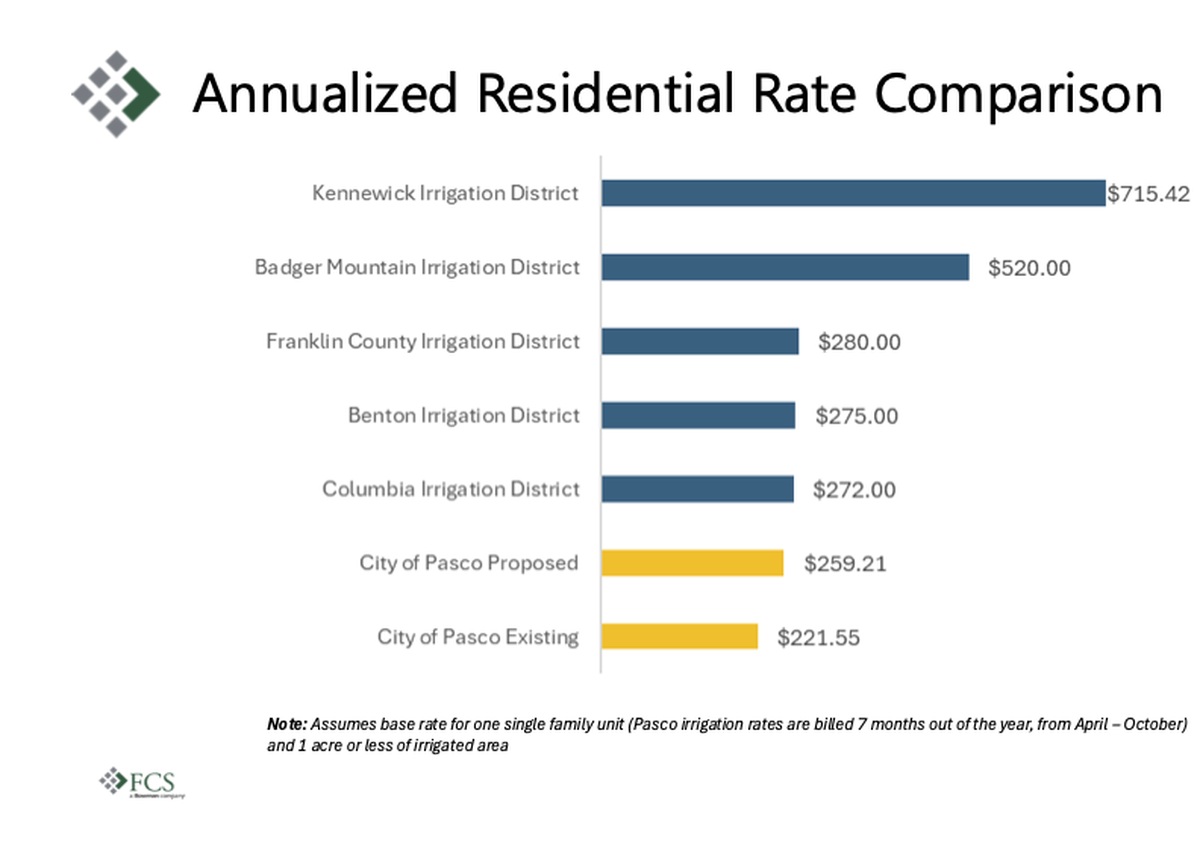
The city shared a cost breakdown of how the new rates would impact a single-family home’s current annual irrigation bill of $221.55.
- 2025: $259.21 (increase of $37.66)
- 2026: $303.28 (increase of $44.07)
- 2027: $354.84 (increase of $51.56)
- From 2028-30, the increases would be smaller, about $10-$11 more per year.
Pasco’s annual irrigation rates are on the lowest competitive end compared to residential rates of nearby cities and counties.
For example, the Kennewick Irrigation District charges a base rate of $715 for a single-family home with one acre or less of irrigated land.
Pasco previously increased irrigation rates by 3% per year from 2018-22.
New connection fee
A one-time fee of up to $1,500 is proposed for each new user joining Pasco’s system. It would only be applied to new lots.
Public Works Director Maria Serra said that if someone buys a new home in Pasco, it would be up to the developer to decide whether to pay the fee upfront and pass the cost on to the resident, or charge differently.
The fee would help pay for projects to expand the system. The city said that without this fee, existing customers would have to pay even higher monthly rates.
If the connection fee is not added, the city will need to borrow $2 million more in 2026 and increase monthly rates. Instead of 17%, rates would need to go up by 19.5% annually from 2025-27.
What would improve?
Planned improvements include removing and replacing existing pipes, extending the irrigation main in the Broadmoor area, building a new pump station that will increase river water intake, and upgrading wells or drilling new wells to access more water.
Serra told developers and stakeholders at a meeting in December that the city plans to build and complete a new, second pump station to be operational by early 2026.
The station would be located at the end of a canal northwest of Pasco, owned by the South Columbia Basin Irrigation District.
Customers already make complaints to the city about low irrigation pressure, especially during the summer when there is high usage across the city. Serra said that the upgrades would address this issue.
A finite resource
A 2018 study determined that Pasco did not have access to enough water for the city’s irrigation, creating low pressure and delays in some areas, and making it difficult to expand.
In response, the city improved wells to increase capacity and made minor changes to the city’s pump station to boost river water intake.
To acquire water, the city purchases and leases water rights from the state and private owners, and partners with the U.S. Bureau of Reclamation and local irrigation districts.
It also collects in lieu fees from developers — that money is specifically set aside by the city to purchase water rights.
To encourage water conservation, the city provides education and resources to the next generation in Pasco — young children at Pasco schools.
Serra said that since the city’s system does not have water meters and the irrigation utility is billed as a flat rate, it is difficult to incentivize rate payers to reduce water consumption.
Pasco is also considering a shift to encourage more xeriscapes, or water-efficient landscapes.
Xeriscaping involves landscaping with native plants, rocks and other materials that require minimal or no irrigation, conserving water and reducing maintenance costs.
The city’s Capital Improvement Plan includes a proposal by Pasco’s Parks and Recreation Department to xeriscape city facilities, parks and boulevards. The plan also includes upgrades to the city’s irrigation clocks to a new smart water conservation system.
This story was originally published February 17, 2025 at 5:00 AM.