
Metal detectorists find ancient portrait in Danish field. See the ‘legend’ it depicts

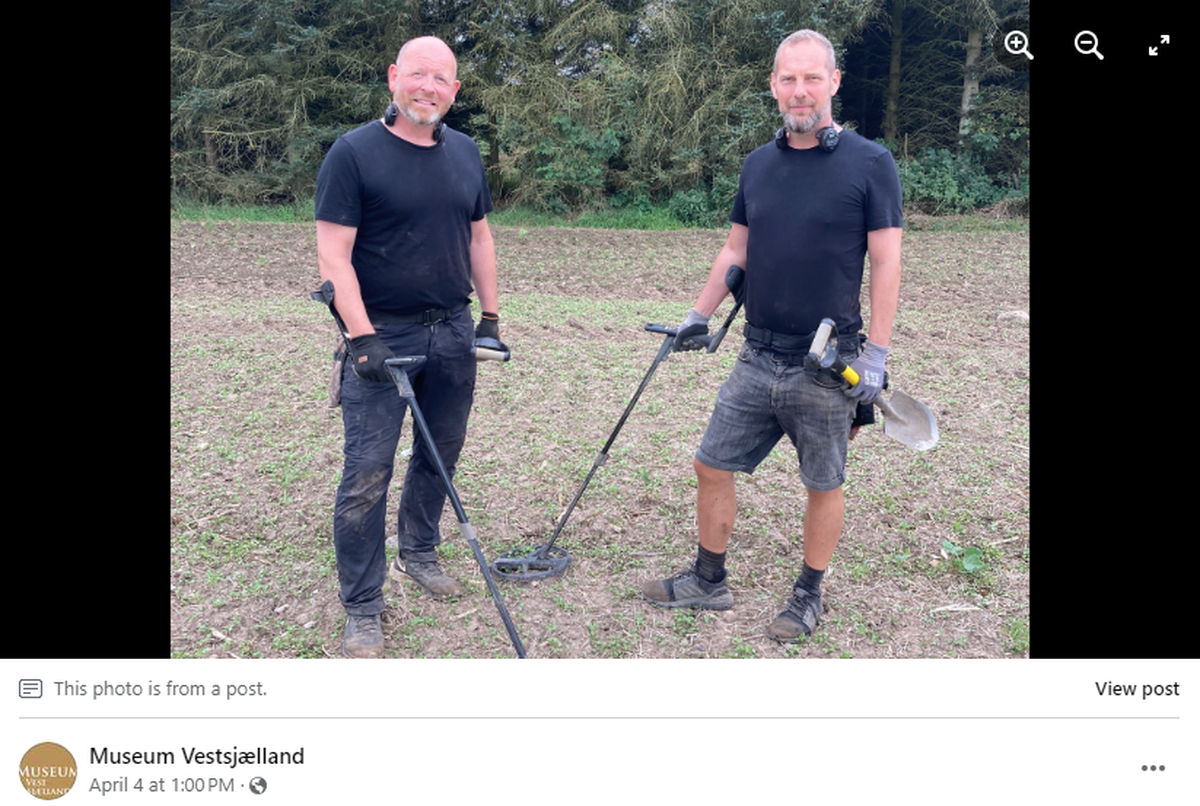
Standing in matching black t-shirts and holding metal detectors, friends Finn Ibsen and Lars Danielsen posed for a photo in a field in the town of Ringsted, Denmark.
The duo have scoured the Danish island of Zealand, sometimes finding artifacts stuck in the dirt, they told Danish news outlet TV2 Øst.
One day, Ibsen heard the beeping from his metal detector and started to dig — then a face looked back at him.
Buried in the field was a bronze fitting, according to an April 4 news release from the Museum Vestsjælland. The small, round, coin-like bronze had the image of a man on the front, topped with wavy hair and adorned with ram’s horns.
The find was brought to the museum where archaeologist Freerk Oldenburger took a closer look, the museum said.
“When he (saw) the bracket for the first time, he (was) very overwhelmed,” the museum said.
It may not have been obvious to the amateur eye, but to Oldenburger, the portrait was undeniable.
He was looking at Alexander the Great.
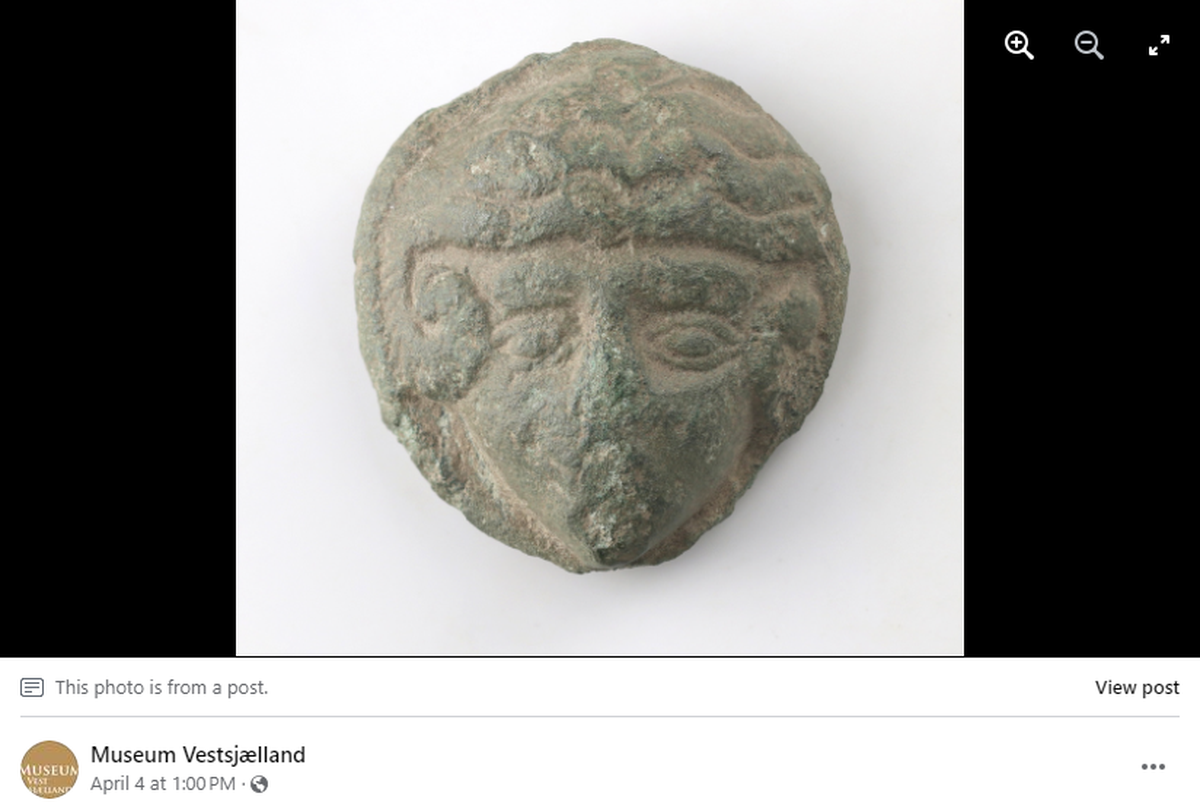
“It’s hard to get your arms down in excitement for the small bronze disk that shows that even the smallest archaeological objects can hide absolutely incredible stories,” Oldenburg said in the release. “This is a unique find in Scandinavia with connections to one of the most famous personalities in world history.”
Alexander the Great, the “greatest military commander of antiquity,” ruled an empire from Greece to India but died in Babylon at the age of 32, according to the museum.
Despite his short life, his rule became legendary, inspiring great and terrible leaders to come.
Caracalla, a “tyrannical emperor” who ruled 500 years after Alexander the Great, was one of those leaders and considered himself to be Alexander’s reincarnation, the museum said.
During his reign over parts of Europe, a battle between two Germanic armies took place at Illerup Ådal, a site on a neighboring island of Denmark.
“Many lost their lives in the battle, and the swords, bows, arrows, lances and shields left behind were sacrificed to the gods and placed in a lake. The excavation of the lake was able to show shields that were decorated with small, decorative discs with portraits of warriors,” the museum said. “One of these decorative discs bears a portrait of Alexander the Great, which is identical to the portrait on the newly found mount from Ringsted.”
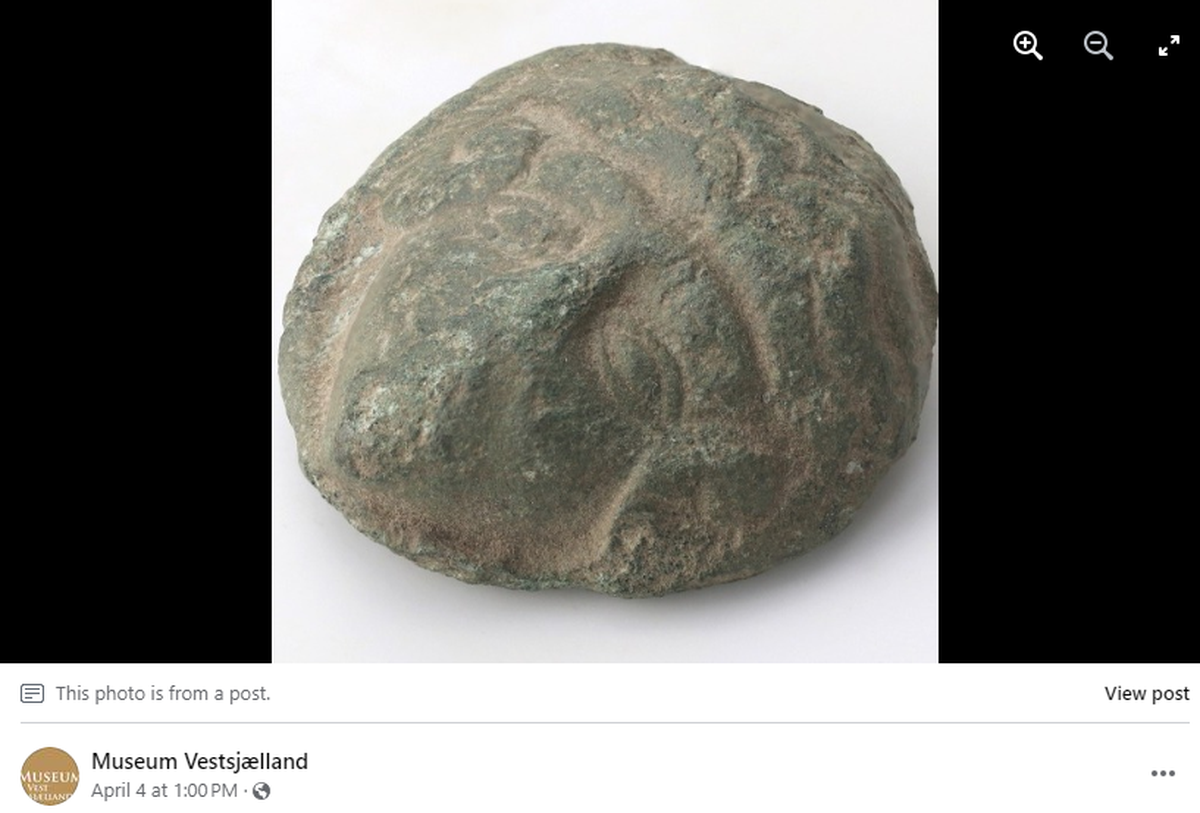
The disc is dated to about the year 200 A.D., the museum said.
The archaeologists aren’t sure what the newly discovered disc may have been attached to, they said, but it was likely something similar to the previously discovered shields or on a bracket of a sword belt.
The bronze alloy, which contains lead, is the same as casts used by the Romans, the archaeologists said, so it is possible it was made by Romans or by Germanic people who used a Roman statuette to remelt and form the disc.
In many ways, the disc has brought more questions than answers.
“If the bracket was cast by the Romans, how did it end up in the field near Ringsted? What was the meaning of Alexander the Great’s portrait for the Germans who lived in Denmark around the year 200? Did they think the portrait could bring luck on the battlefield?” archaeologists are asking, according to the museum.
Oldenburger said the find was “unique” and “hides stories of power, intrigue and murder in the ancient world.”
This story was originally published April 12, 2024 at 12:37 PM with the headline "Metal detectorists find ancient portrait in Danish field. See the ‘legend’ it depicts."
