
Tri-Cities biggest employer to share in $17B to develop next-generation computer chips
Pacific Northwest National Laboratory in Richland is poised to help make the United States a leader in the next generation of semiconductor chips, after Sen. Maria Cantwell led key work to make the largest investment in research, technology and manufacturing in America’s history.
This week Cantwell, D-Wash., stood beside President Biden and gave a thumbs up as he signed the CHIPS & Science Act into law.
It authorizes more than $250 billion, including money to build the U.S. supply chain for semiconductors after shipments of products have been delayed for lack of the chips that drive their operation.
The bill is intended to turn around U.S. chip manufacturing, expanding the supply chain for every machine and device that uses semiconductors, including cars, trucks, computers, phones and farm equipment.
Cantwell anticipates it will create 280,000 U.S. jobs.
But, particularly important to the Tri-Cities, the bill also focuses on scientific research for “the level of innovation that is going to happen with the next generation of chips and how the United States leads in the design and manufacturing of ... chip innovation,” Cantwell said.
“Innovation today equals jobs tomorrow,” she told the Tri-City Herald in advance of her Thursday visit to PNNL with Energy Secretary Jennifer Granholm.
Federal research and development has declined from 0.14% of gross domestic product in 1978 to just 0.04% in 2019, according to information provided by her staff.
Now, 13 other countries invest more in energy research and development as a share of their economies than the United States.
Cantwell is credited as being an architect of the bill that won bipartisan support and led a group of more than 100 members of Congress to reconcile two different versions of the package.
As chairwoman of the Senate Commerce, Science and Transportation Committee she secured the research and development funding late in negotiations.
She was the first of five U.S. senators called out by Biden for keeping “this bill on track, beginning to end” as he signed it into law on Tuesday.
Possibilities for PNNL
In the CHIPS bill $17 billion is set aside for Department of Energy national laboratories to develop key technologies.
“The bill is an important commitment to the kind of technological innovation that is key to our national competitiveness and security — the kind of innovation for which Pacific Northwest National Laboratory is known,” said Steven Ashby, director of PNNL.
Cantwell fought hard to carve out spending that would go specifically to Department of Energy national laboratories, knowing that they can translate microelectronics and computing research and development into partnerships with industry for advanced product development.
“I just think our national lab can have a lot to say about what is a distinguishing factor between us and other countries in what kinds of new materials, new packaging, new efficiencies, new capabilities might get put into chip fabrication,” Cantwell said.
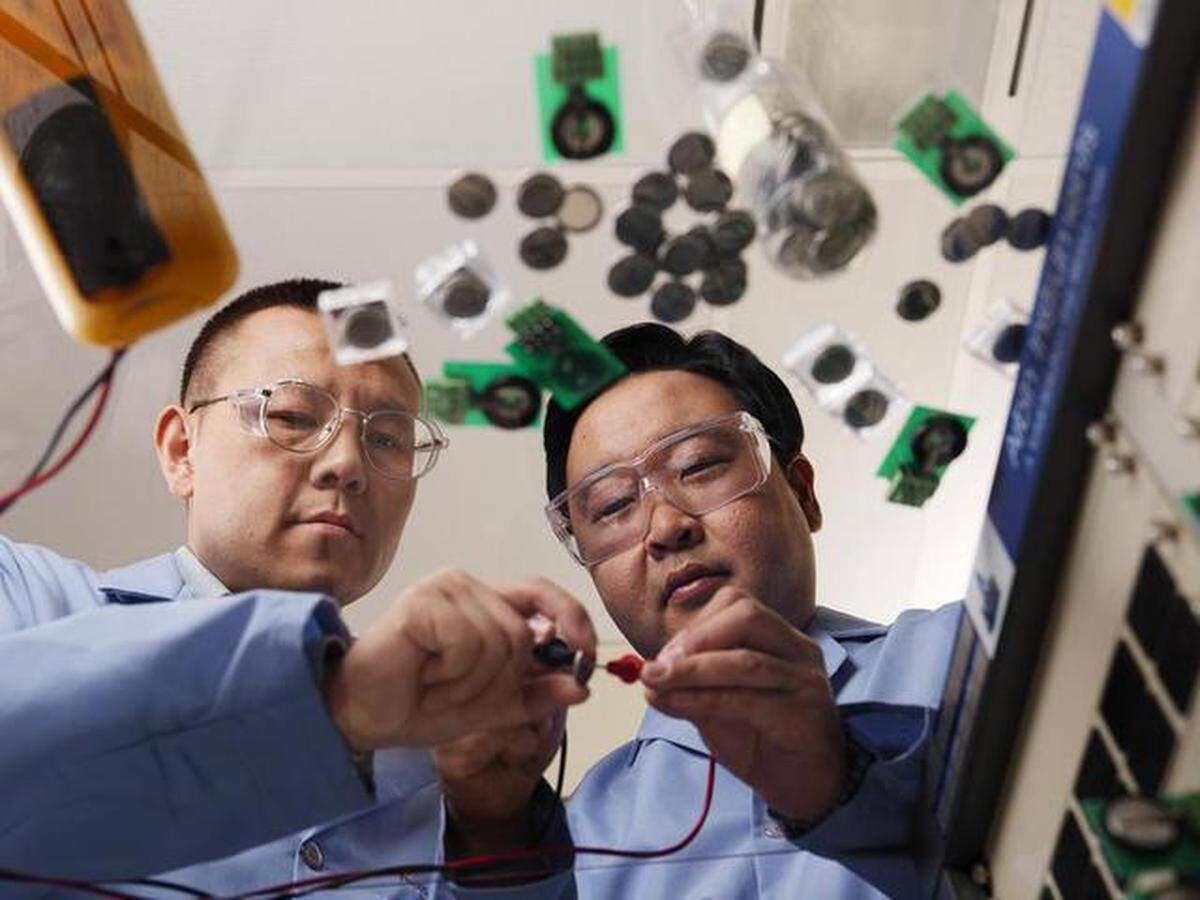
PNNL will have to compete for grant money, but it is well positioned in numerous areas, starting with applied materials science for research to achieve the next level of efficiency that can be obtained in chips, she said.
There are also intersections with research that the lab already does.
“PNNL scientists and researchers are developing the technologies we need to reduce greenhouse gases and mitigate the impacts of climate change,” Cantwell said. “This investment will supercharge their important work, and bolster the lab’s $1.6 billion contribution to the Washington state economy.”
PNNL could potentially expand existing DOE programs in Richland designed to accelerate innovation in energy storage technologies both for electric-powered transportation and also for the electric grid.
The bill’s authorization of investments in biotechnology infrastructure and research could leverage PNNL’s capabilities to understand and manipulate microbial functions at an unprecedented scale and pace for new medicines, fuels and chemicals.
Tri-Cities economy
The Tri-City Development Council credited Cantwell with championing the bill, which it said will be “extremely beneficial for PNNL and other national laboratories.”
PNNL already is the largest single employer in the Tri-Cities region and one of the largest employers east of the Cascade mountains.
In 2020 it conducted $1.1 billion in scientific research, generated 7,580 jobs through operations in the state and directly employed 5,350 scientists, engineers and support professionals.
“The Tri-City economy will be increasingly driven by energy sector innovation, and the support for PNNL that this bill provides will be critical to that continued economic growth,” said David Reeploeg, Tri-Cities Development Council, TRIDEC, vice president for federal programs.
This story was originally published August 11, 2022 at 5:00 AM.