
Permanent disposal of radioactive waste started at Eastern WA site
AI-generated summary reviewed by our newsroom.
- First vitrified Hanford radioactve waste disposed of at site.
- 30 containers of glassified waste staged as disposal started.
- DOE says its an important step in Hanford nuclear site cleanup.
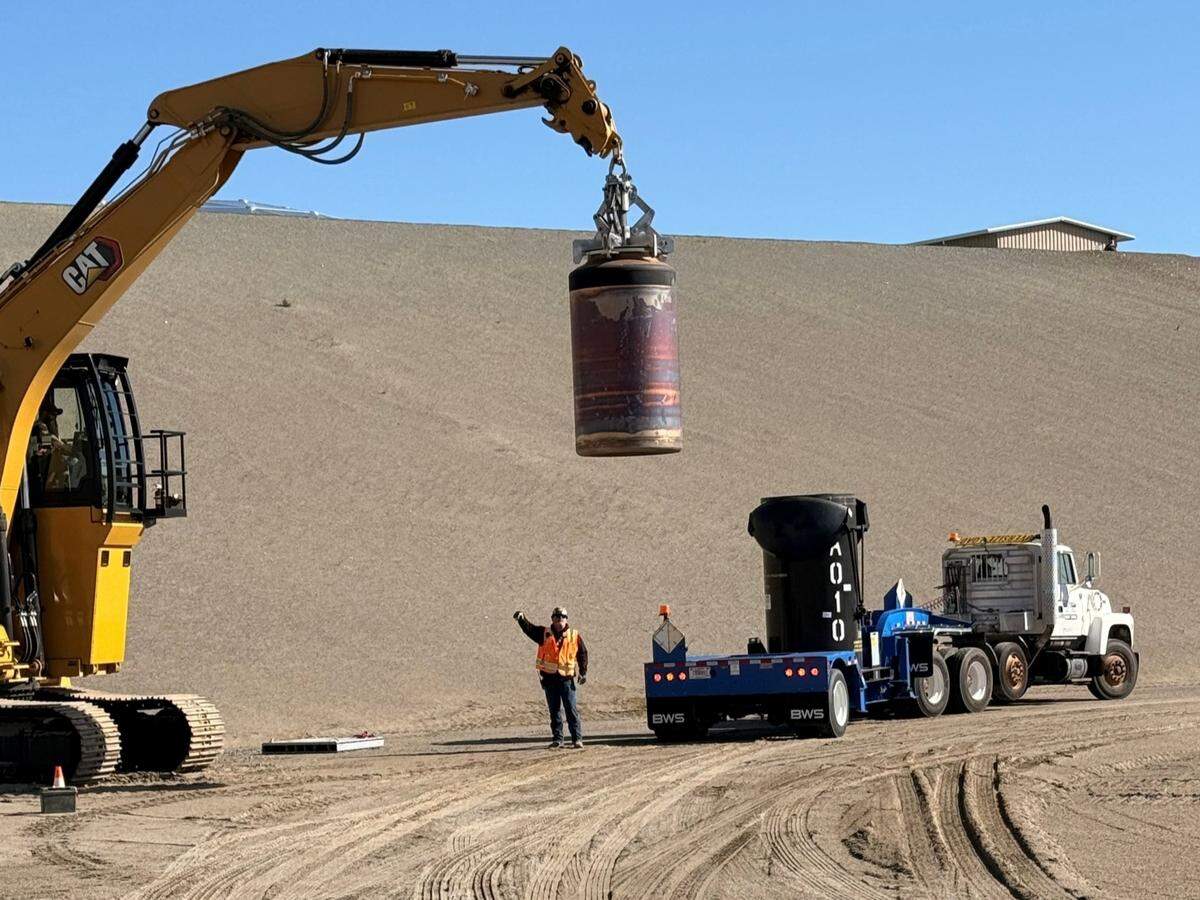
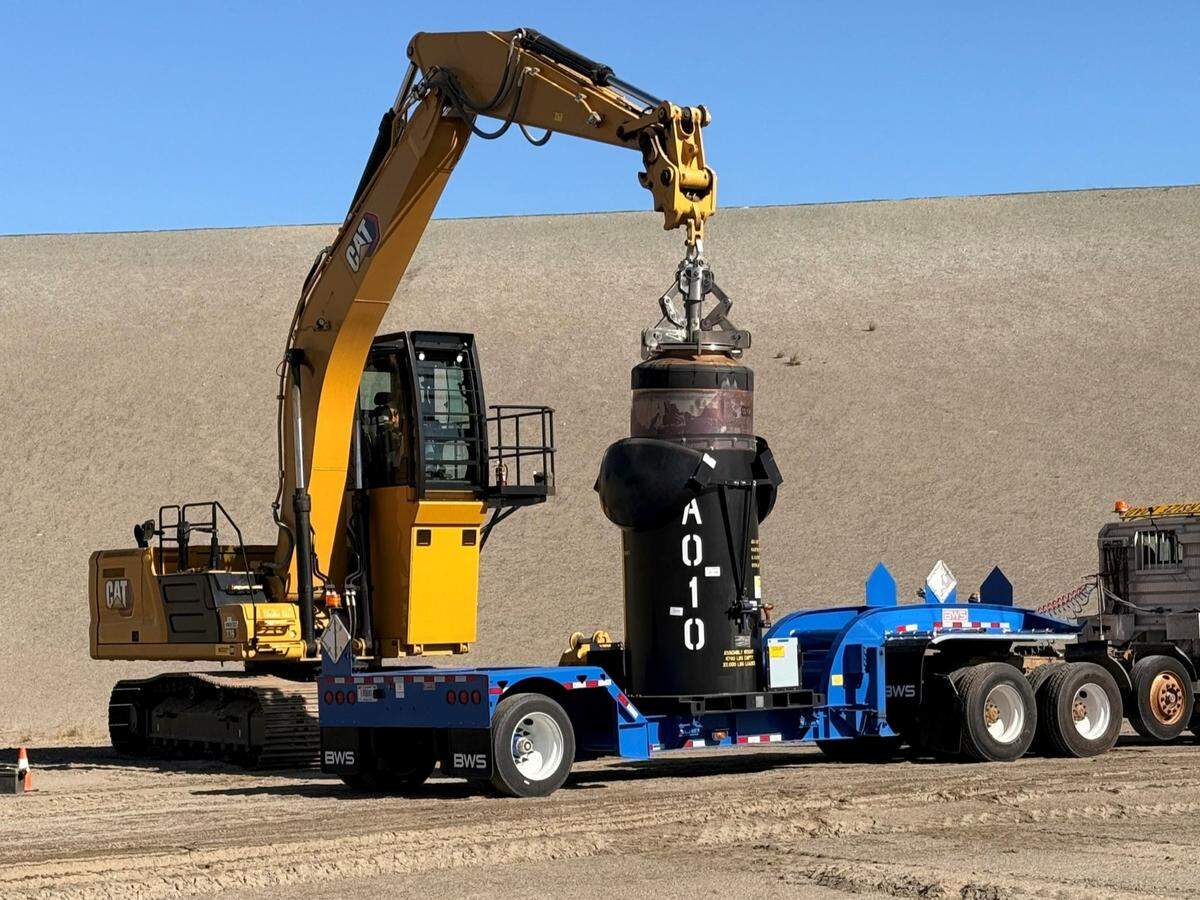
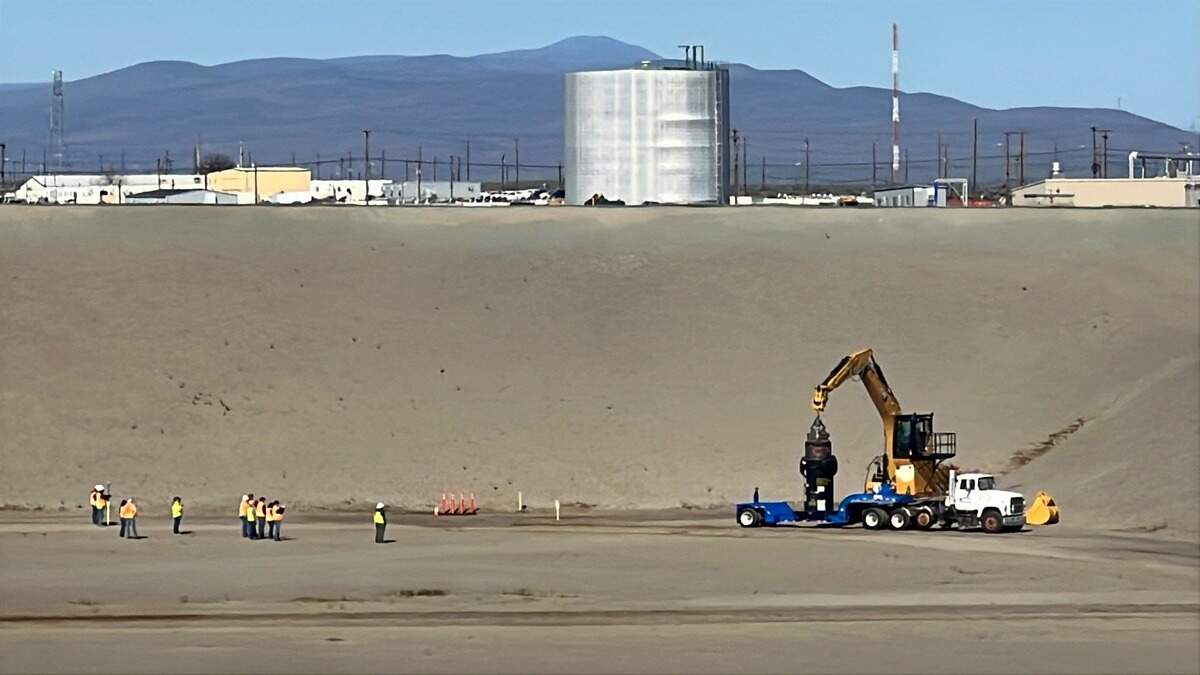
The first 7.5-ton container of radioactive waste turned into a stable glass form was carefully set on the bottom of a vast new landfill at Hanford in Eastern Washington Wednesday, its permanent disposal site.
It was a pivotal step toward disposing of 56 million gallons of radioactive and hazardous chemical waste stored in underground tanks in the center of the Hanford nuclear site, some for as long as 80 years, said the Department of Energy.
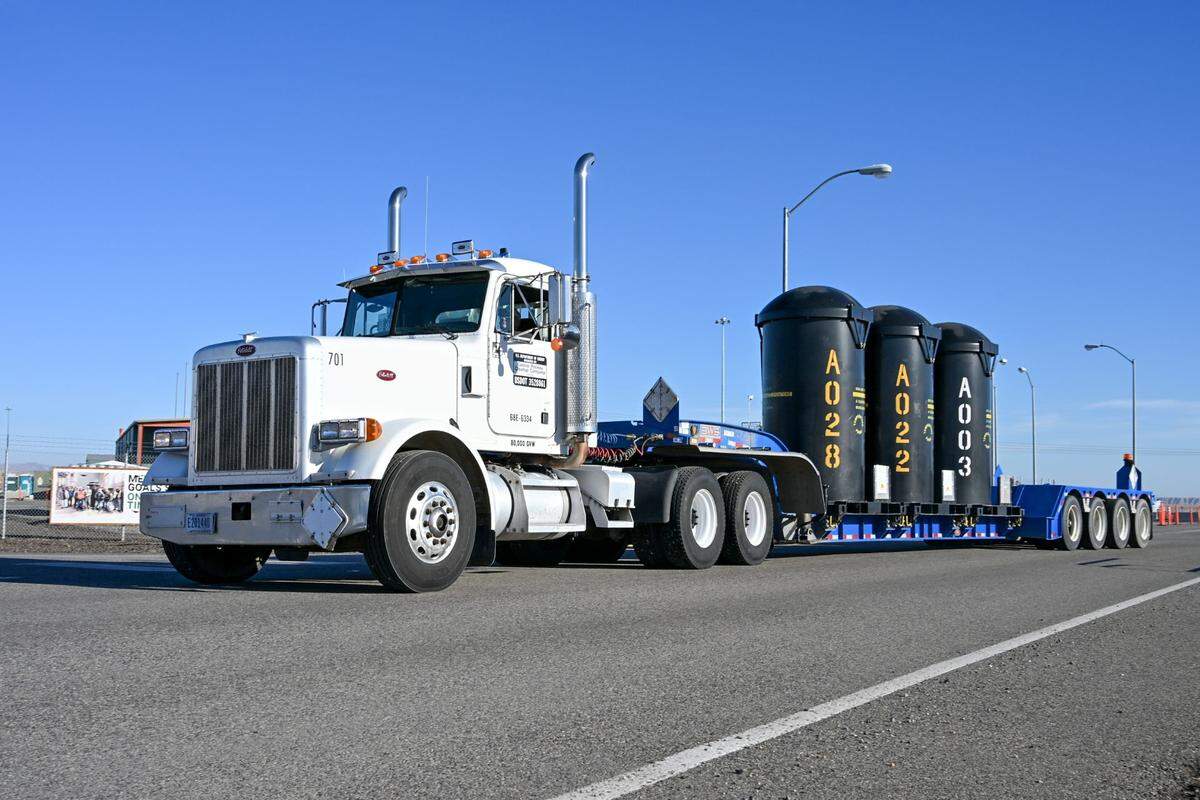
DOE began turning some of the less radioactive tank waste into a stable glass form at the Hanford vitrification plant in mid-October, filling stainless steel containers that are 4 feet wide and 7.5 feet tall.
A lined landfill in the center of Hanford, the Integrated Disposal Facility, or IDF, is their final destination.
“Every gallon of waste taken out of tanks, turned into glass and disposed of in this landfill better protects the environment, the Columbia River and surrounding communities,” said Suzanne Dahl, tank waste treatment section manager with the Washington state Department of Ecology, a Hanford regulator. “Congratulations to the U.S. Department of Energy and the Central Plateau Cleanup Co. on this historic achievement.”
As of Wednesday when disposal began, 30 containers had been hauled off the 65-acre Waste Treatment Plant, or vitrification plant, campus in central Hanford to be staged on a concrete pad at the nearby Integrated Disposal Facility, or IDF.
“Each container placed in the IDF reduces long-term environmental risk and moves us forward on DOE’s commitment to protect the community and the environment,” said Ray Geimer, DOE Hanford site manager.
“This is a proud and meaningful achievement for the entire Hanford team,” he said.
The Hanford nuclear site adjacent to Richland was used from World War II through the Cold War to produce nearly two-thirds of the plutonium for the nation’s nuclear weapons program.
Uranium fuel irradiated in Hanford reactors was chemically processed to remove plutonium. The stew of 56 million gallons of radioactive and hazardous chemical waste from processing is stored in 177 underground tanks, many of them prone to leaking. Some have held waste for eight decades
The Integrated Disposal Facility has two double-lined disposal cells with a drainage system that collects water from rain and dust-suppression activities that may have become contaminated from contact with waste. Workers will collect and treat water that reaches the liner at the bottom of the facility.
Radioactive waste landfill
The landfill is about 1,500 feet wide, 765 feet long and 45 feet deep, with a design that will allow its current size to be expanded to six cells, as needed. It is expected to receive more than 200,000 containers before it is closed and topped with a soil cap designed to keep water out.
Construction on the landfill began in September 2004, and by 2006 construction of the initial cells were completed at a cost of $25 million. When ground was broken on the vitrification plant, glassified waste was expected to be produced in 2007.
But as work to vitrify radioactive waste was delayed, final construction of the landfill was postponed until the years 2018 to 2023. That included work on support structures and upgrades to the liquid collection system.
The Integrated Disposal Facility will be used for disposal of only the tank waste that is low activity radioactive waste and only that waste that is vitrified.
Some of the less radioactive tank waste is planned also to be incorporated into concrete-like grout, and a test of that treatment of about 2,000 gallons of waste had been completed.
Grouted waste is not considered protective enough of the environment to allow it to be disposed of at the Integrated Disposal Facility, due to Hanford’s geology and groundwater that moves toward the Columbia River. Grouted waste is planned to be disposed of in Utah or Texas rather than at the Integrated Disposal Facility.
The portion of the waste in the Hanford tanks that is high level radioactive waste is required to be sent to a deep geological repository, such as what was once planned at Yucca Mountain, Nev., after the nation has a new site selected and a repository built.
DOE is required to start vitrifying high level radioactive waste in 2033, and in the meantime is separating low activity waste from the mixture in the underground tanks and vitrifying it.
Hanford contractor Central Plateau Cleanup Co., or CPCCo, is in charge of disposal.
“Every ILAW (immobilized low-activity radioactive waste) container safely placed in the disposal facility is another step in addressing Hanford’s tank waste legacy and reducing the footprint of risk on the central plateau,” said CPCCo President Bob Wilkinson.
This story was originally published April 8, 2026 at 12:54 PM.