Bidders sought for $4B of work to treat radioactive waste in Eastern WA
AI-generated summary reviewed by our newsroom.
- DOE seeks bids for possibly $4B work to grout and dispose of Hanford tank waste.
- H2C anticipates grouting at least 24M gallons.
- Decision due month-end on whether liquid waste will be shipped offsite.
A request for bids for possibly $4 billion worth of work at the Hanford nuclear site to grout and dispose of radioactive waste was released Tuesday.
The Department of Energy is pursuing a two-pronged approach to treat radioactive waste stored in underground tanks for as long as eight decades, with many of the aging tanks prone to leaking.
In addition to turning radioactive and hazardous chemical tank waste into a stable glass form at the vitrification plant, DOE also plans to immobilize some of the less-radioactive waste in concrete-like grout for disposal out-of-state.
Due to Hanford’s geology and groundwater that flows toward the Columbia River, only vitrified low activity radioactive waste may be disposed of in a lined landfill at the nuclear site in Eastern Washington.
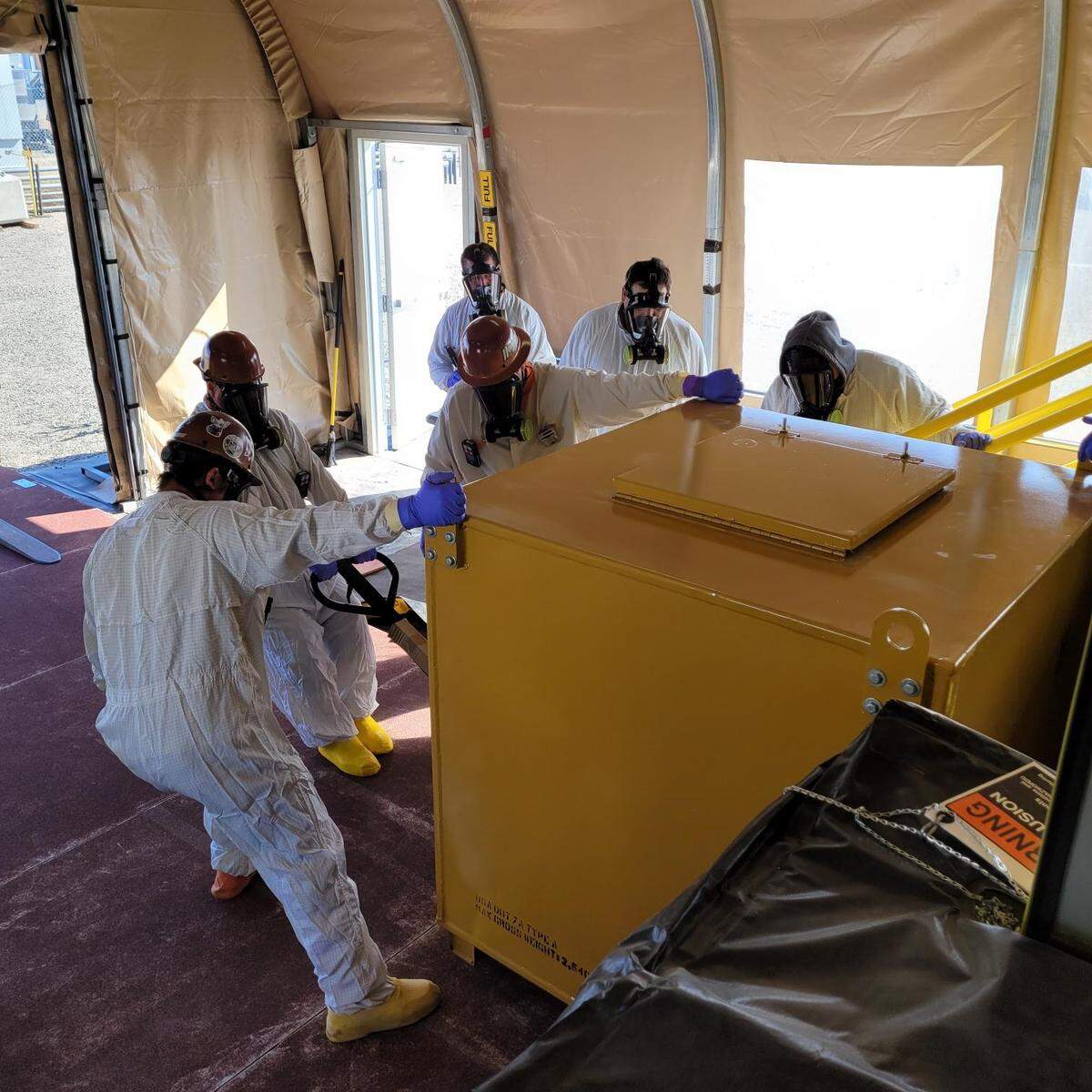
A demonstration project called the Test Bed Initiative to grout 3 gallons and then about 2,000 gallons of Hanford liquid radioactive and hazardous waste and dispose of it out of state was successfully completed this year.
The proposed grouting and disposal of larger amounts of waste would be handled by one or more subcontractors to Hanford Tank Waste Operations and Closure, or H2C, the company that holds the DOE contract to manage underground tank waste and eventually be in charge of treating the waste for disposal.
.jpg "Sluicer, Spray Ring, Pit Cleanout (1).jpg")
DOE Hanford Manager Ray Geimer put the estimated price of the work at $4 billion when he discussed plans at the Oregon Hanford Cleanup Board in November to seek proposals to grout waste this month.
A subcontract for the work could be awarded in the first six months of 2026.
Under the request for proposals, or bids, released Tuesday, H2C anticipates 24 million gallons of waste would be grouted, but that could be expanded to up to 50 million gallons of waste. Payment would be made at a per-gallon rate.
H2C would pretreat tank waste to separate a stream of liquid low-activity radioactive waste from the tank waste and deliver it for grouting.
DOE has not said whether grouting will be done in the center of the Hanford site or offsite.
Offsite grouting would require liquid waste to be shipped for grouting, possibly to Perma-Fix Northwest in Richland, or to out-of-state sites in Utah or Texas.
The waste, whether grouted in Washington or out-of-state, is planned to be disposed of at EnergySolutions in Utah or Waste Control Specialists in Texas.
Waste grouting timeline
DOE is required under the legally binding Tri-Party Agreement to make a decision by the end of this month on whether waste will be grouted on Hanford land or shipped offsite for grouting.
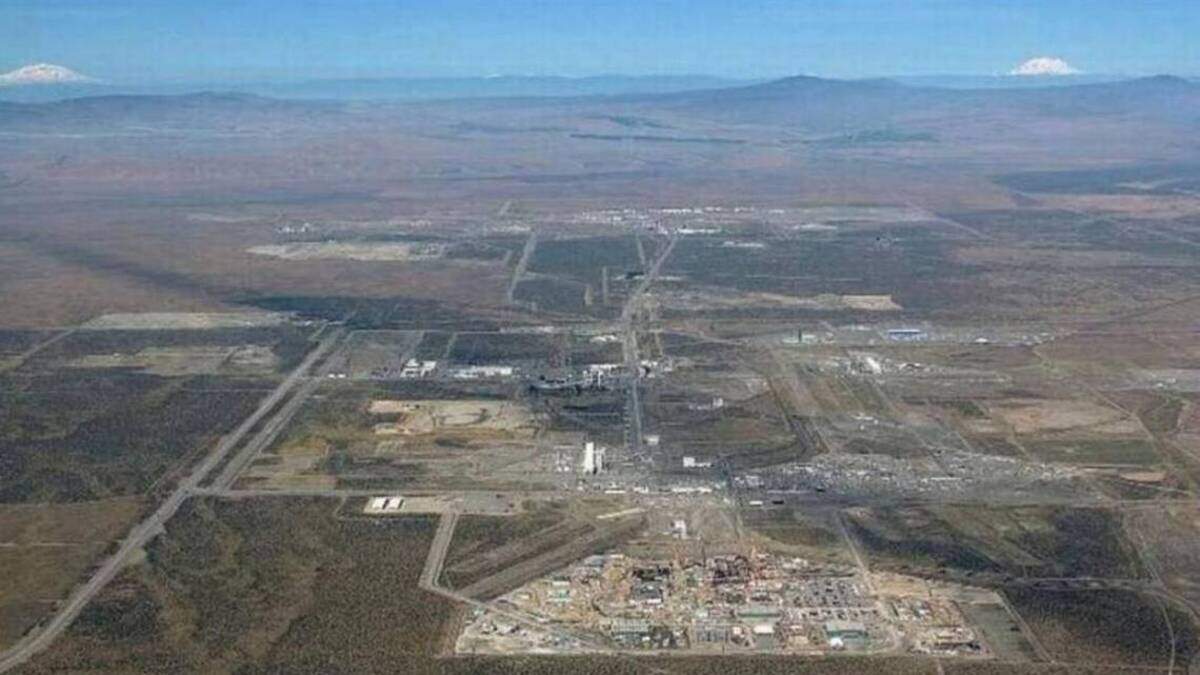
If the decision is to grout waste before it leaves Hanford, DOE would lease about 4 acres of Hanford nuclear site land to the subcontractor for the work.
Bids to grout and dispose of the waste are due by Feb. 23.
Work is expected to start Jan. 1, 2028, and continue for 12 years through Jan. 1, 2040. However, the timeline could be extended through 2042, according to the request for proposals.
At the start of this year, DOE and its regulators — the Washington state Department of Ecology and the U.S. Environmental Protection Agency — finalized a sweeping agreement reached in five years of mediated negotiations that included grouting waste in addition to vitrifying waste.
Under the agreement, DOE committed to grouting the waste in 22 of Hanford’s 149 single-shell tanks that are about seven miles from the vitrification plant.