
‘Days away.’ Feds get final approval to treat decades old radioactive waste in WA
AI-generated summary reviewed by our newsroom.
- Federal and state permits issued. Hanford waste treatment days away.
- DOE faces Oct. 15 court decree deadline to start treating radioactive waste.
- Hanford vitrification plant to turn decades-old waste into a stable glass form.
The last permitting and licensing hurdles have been cleared to begin the long-awaited treatment of Hanford nuclear site radioactive and hazardous chemical waste that threatens groundwater.
The Columbia River flows through the nuclear site in Eastern Washington, which has 56 million gallons of waste stored in underground tanks until it can be treated for disposal.
Many of the tanks are prone to leaking, and the oldest have stored waste for eight decades.
“Our state has done our part to start up the Waste Treatment Plant,” said Washington Gov. Bob Ferguson, when the state issued the final permit for the plant. “Now the federal government needs to live up to its responsibilities and clean up what they left behind.”
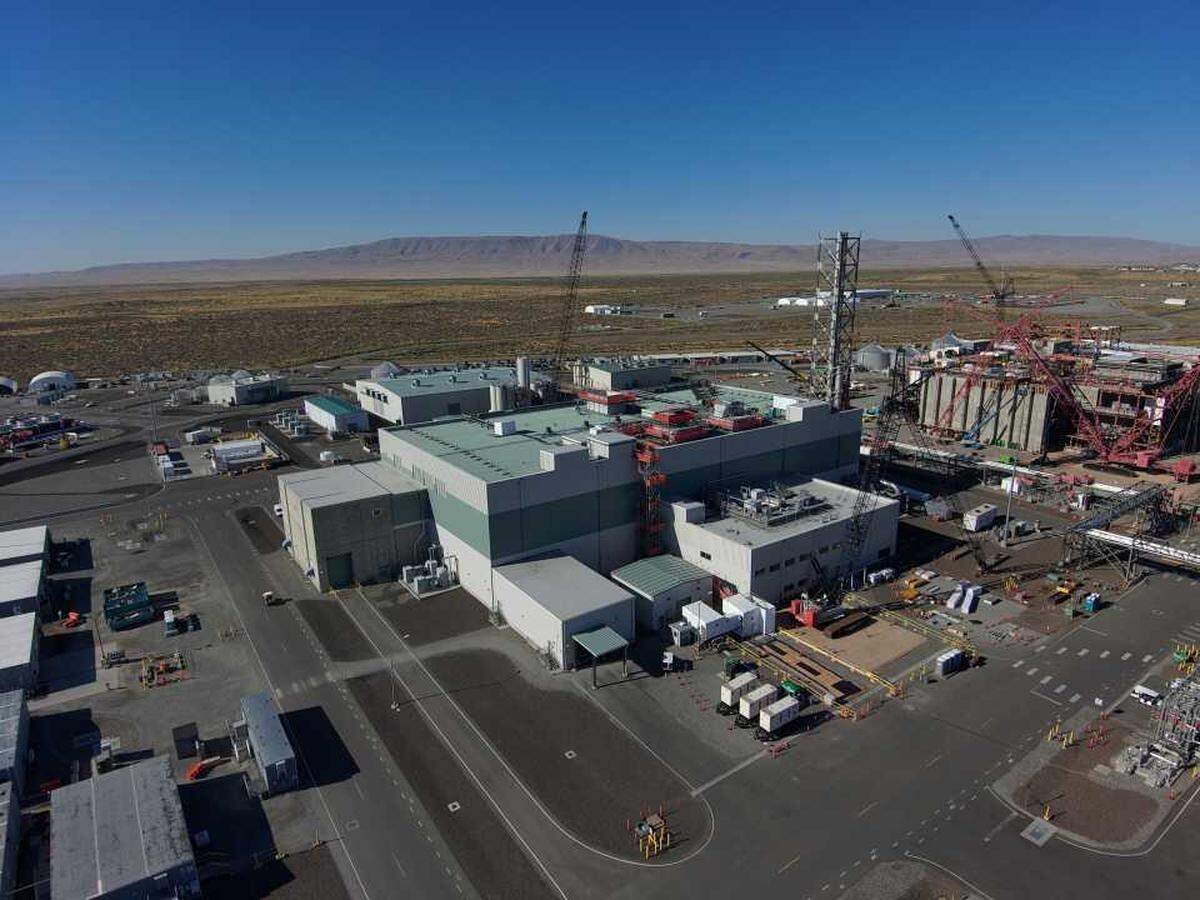
Construction began on the Waste Treatment Plant, or vitrification plant, in central Hanford in 2002 to treat the tank waste, with treatment expected then to start in 2007 and finish glassifying waste in 2027.
But after many delays and technical issues that needed to be resolved, the Department of Energy faces a deadline set in a federal court consent decree to show it can treat tank waste at the plant in a matter of days — Oct. 15.
The deadline requires DOE to have not only turned waste into a stable glass form, but to show that the glass meets quality standards to allow it be to be buried in a lined landfill in the center of Hanford without contaminating groundwater.
Initially, only the less radioactive waste separated out of the waste in the tanks will be treated at the plant’s Low-Activity Waste Facility. DOE has a 2033 deadline to start treating the more radioactive waste at the plant’s High Level Waste Facility.
Waste treatment amid government shutdown
Last month the Trump administration appeared to be rethinking the plan to start up the vit plant after not signing off on the start by the end of August as expected.
Washington state’s Democrat leaders were livid at the possible delay or cancellation of waste treatment at the plant, with Gov. Bob Ferguson saying the state would take the matter back to federal court and would be certain to win a legal fight.
On Sept. 17 DOE signed off on the start of radioactive waste treatment at the plant.
Then two weeks later on Oct. 1, the federal government shut down as Congress feuds over funding the government for the fiscal year that started Wednesday.
Work toward starting to treat radioactive waste at the vitrification plant reportedly continued as of Thursday. But DOE did not respond to questions about whether the shutdown would affect the start of waste treatment and meeting the Oct. 15 deadline.
Some federal agencies are already furloughing workers due to the shutdown, but a DOE contingency plan said work can continue at DOE offices if they still have money from the past fiscal year.
The DOE contingency plan said performance of contracts should continue under the shutdown. But there are factors — such as the length of government shutdown and the availability of funding left from prior years — that could cause contractor activities to be curtailed, it said.
Bechtel National holds the DOE contract to design, build and operate the portion of the vitrification plant.
WA permit for vit plant operation
The same day that the federal government shut down — just two weeks before DOE’s deadline to demonstrate successful waste treatment — the Washington state Department of Ecology signed off on the final approval needed from the state of Washington for the work. Department of Ecology had been working seven days a week to approve the permit.
A day earlier, on Tuesday Sept 30, the Washington state Department of Health issued the final license needed for air emissions for the part of the plant that will begin treating radioactive waste for disposal.
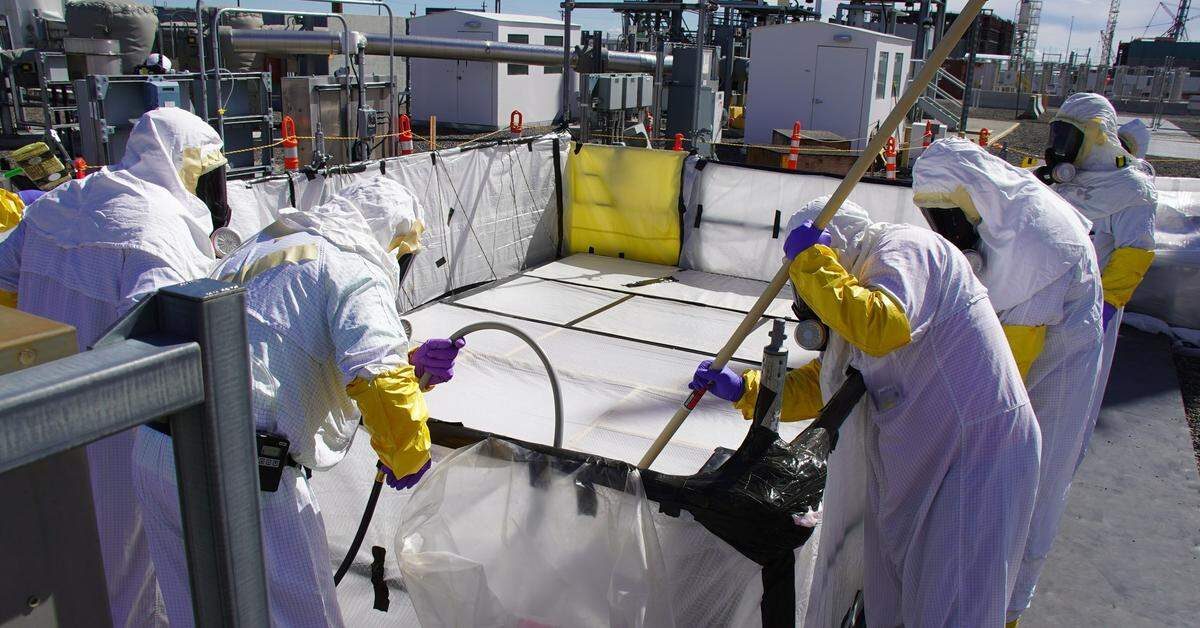
“With this approval, we are now just days away from transforming nuclear waste into glass,” said Casey Sixkiller, director of the Department of Ecology. “This is a milestone in our state’s waste efforts to oversee cleanup of the Hanford site’s toxic legacy.”
The Hanford nuclear site adjacent to Richland was used from World War II through the Cold War to produce nearly two-thirds of the plutonium for the nation’s nuclear weapons program.
Uranium fuel was irradiated at Hanford and then plutonium was chemically separated out, leaving 56 million gallons of a stew of radioactive and hazardous chemical waste stored in 177 underground tanks. Hanford has not processed irradiated fuel since 1989.
“Pulling dangerous waste out of aging underground tanks and turning it into glass for safe, permanent disposal is what the state has been working toward for decades,” Sixkiller said in a statement.
The permit issued Wednesday by the Department of Ecology provides the parameters at which the vitrification plant is allowed to operate, treating tank waste in a way that is safe and protective of human health and the environment.
It was issued after performance demonstration testing showed the specifications at which the plant can be safely operated, such as how much waste can be fed into the melters at a time and the temperature at which the off-gas system can run.
The permit contains the caveat that DOE still must complete testing on the second of the vit plant’s two 300-ton waste melters for treating the low-activity radioactive tank waste.
The melters will heat a mixture of tank waste and glass-forming material to 2,100 degrees and then pour the mixture that is about 20% waste into stainless steel containers to cool and solidify. The containers, which are four-feet in diameter and seven feet tall, will be buried at Hanford’s Integrated Disposal Facility.
The Low-Activity Waste Plant is designed to fill about 1,100 containers a year.
License for vit plant stack
The Department of Health radioactive air emissions license for the plant issued Tuesday is intended to make sure the emissions from the Low-Activity Waste Facility stack and exhaust system are safe.
It sets standards for emissions and also requires their continuous sampling for a long list of radionuclides, including plutonium, cesium, strontium and iodine.
“This license reflects our commitment to the highest safety standards as we address one of the most serious environmental health risks in our state,” said Washington Secretary of Health Dennis Worsham. “We will maintain rigorous oversight and continue working with our partners to ensure this cleanup is done safely and responsibly, protecting Washington residents for generations to come.”
This story was originally published October 3, 2025 at 11:52 AM.