
WA governor baffled by fed stance that could delay radioactive waste treatment
AI-generated summary reviewed by our newsroom.
- Gov. Ferguson warns of legal action if DOE delays Hanford waste treatment plan.
- Hanford’s vit plant faces uncertainty despite $30B investment and 3,000 workers.
- Washington state regulators report no safety issues preventing October 2025 launch.
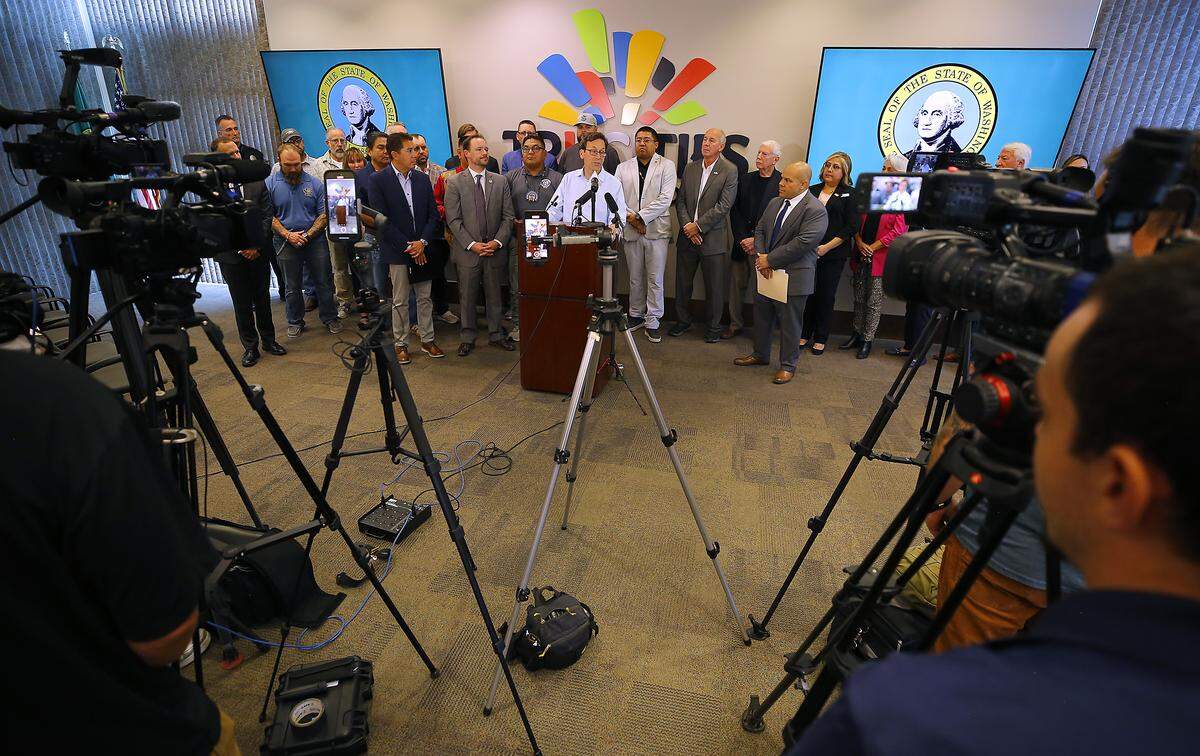
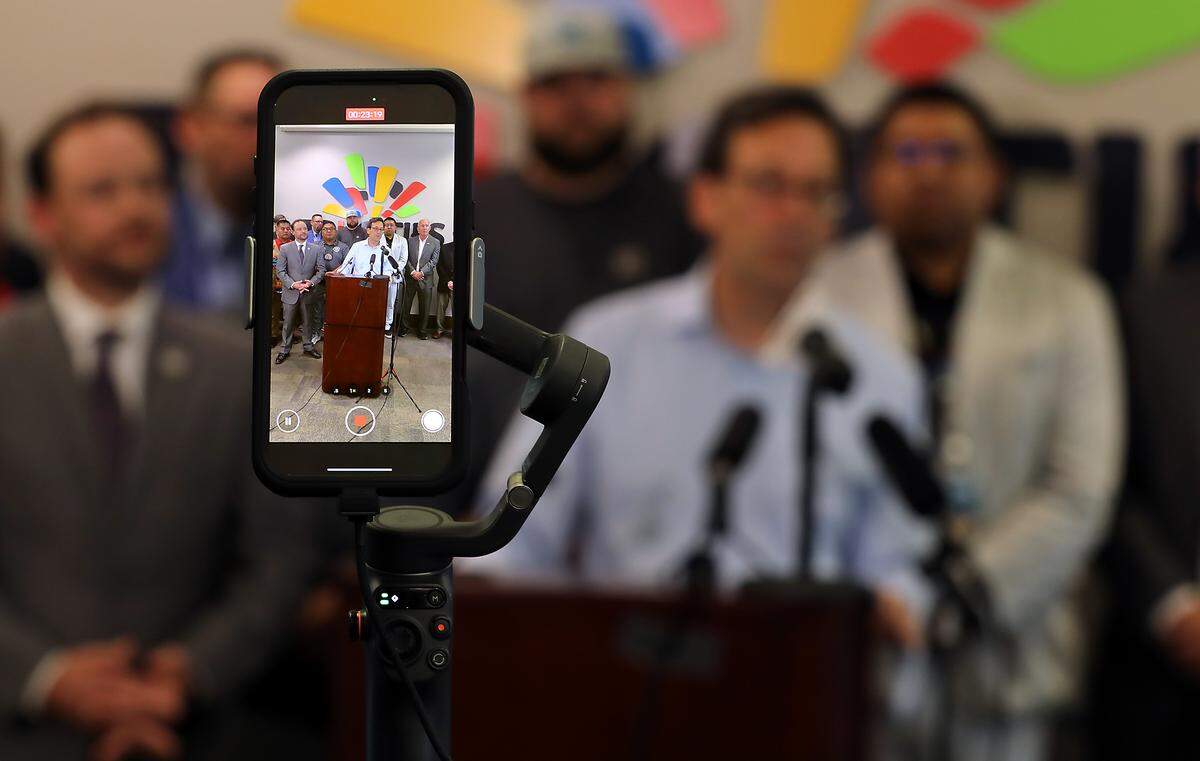
Washington Gov. Bob Ferguson stood with Hanford workers, Tri-City leaders and tribal members Friday afternoon in Kennewick to say that if the Trump administration attempts to derail treatment of Hanford radioactive waste, there will be a legal challenge.
“And they will lose,” Ferguson said.
He is not convinced by the most recent statement released from Energy Secretary Chris Wright on Thursday that the Department of Energy is committed to finally begin treating decades-old radioactive waste at the vitrification plant for disposal by a legal deadline next month.
Sen. Patty Murray, D-Wash., said a day earlier after a phone conversation with Wright that he admitted to actively stalling startup of waste treatment at the massive Waste Treatment Plant, or vit plant, at the Hanford nuclear site in Eastern Washington.
That conversation was “a four-alarm fire,” Ferguson said.
DOE’s apparent intent to pull back now from treating waste just weeks away from the plant’s planned startup “makes no sense,” he said.
The only reason Wright gave Murray for not starting to turn radioactive waste into a stable glass form by a court-enforced Oct. 15 deadline was a vague statement about a safety concern, Ferguson said.
But the state of Washington, a Hanford regulator, knows of no safety issue with plant operations, Ferguson said.
Washington state Department of Ecology staff have been at the Hanford site seven days a week as it prepares to issue the final permits DOE needs to start processing radioactive waste at the plant, said Casey Sixkiller, the state Ecology director, at the news conference in the Tri-Cities.
“There is no evidence of any outstanding safety issue,” he said.
The Department of Ecology is on track to issue permits to allow operations, including approving emissions into the air from the plant’s stack as plant melters heat radioactive waste to 1,700 degrees Fahrenheit in a process to turn it into a stable glass form, Sixkiller said.
Ferguson said that although the state of Washington is a Hanford regulator, no DOE leader has discussed with him a possible change of direction on treating radioactive waste.
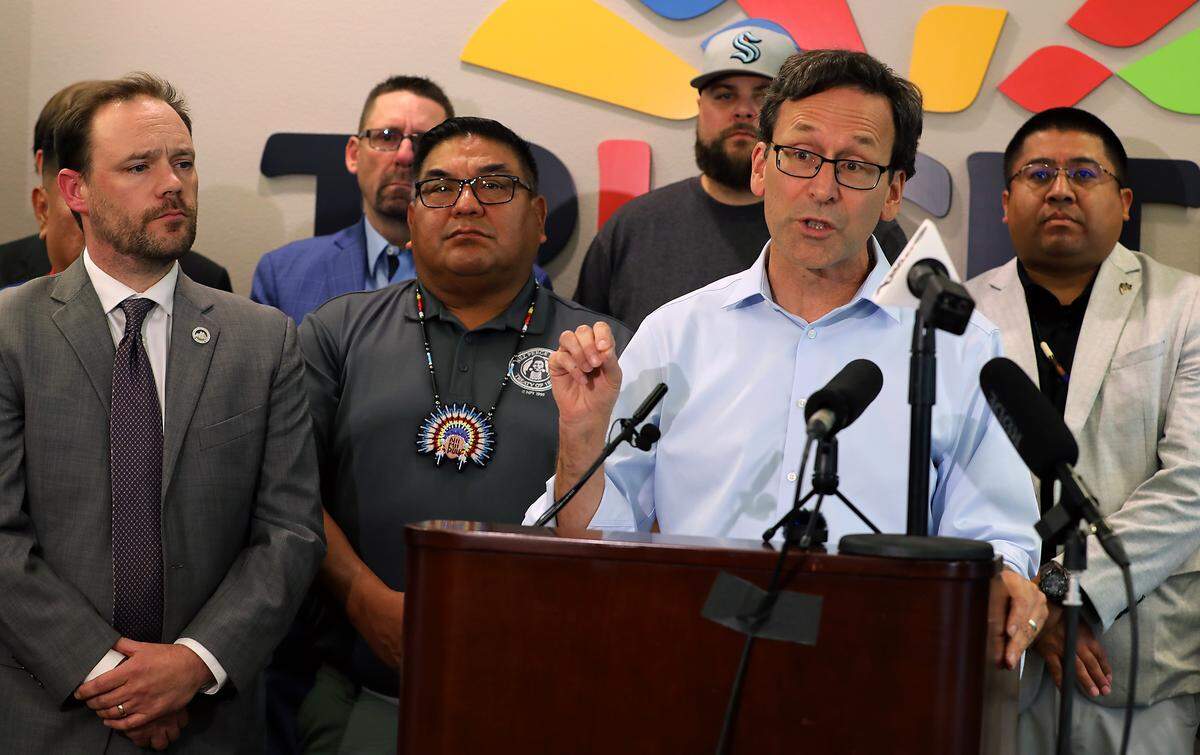
“It is difficult to understand why one would even consider an action like this at the stage we are,” the governor said.
If he knew what the real issue was, he’d be on a plane to Washington, D.C., to discuss it with DOE, he said.
Hanford worker jobs at risk
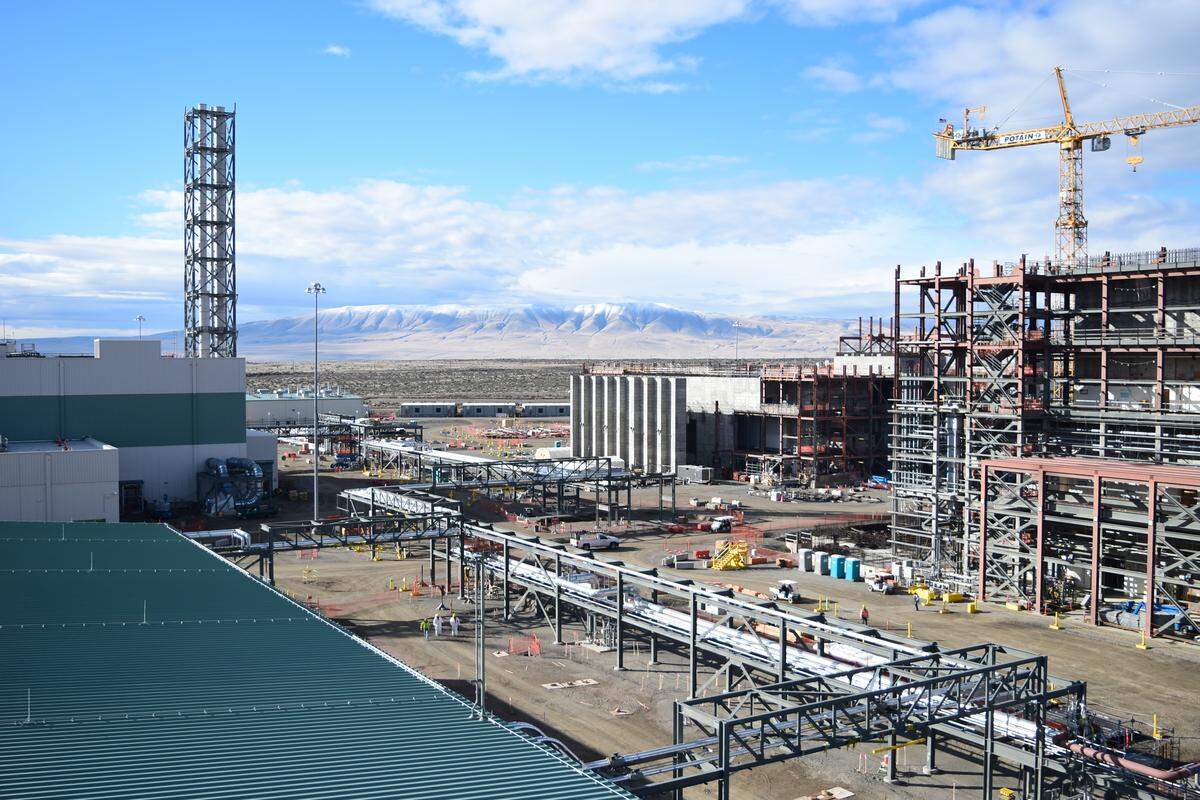
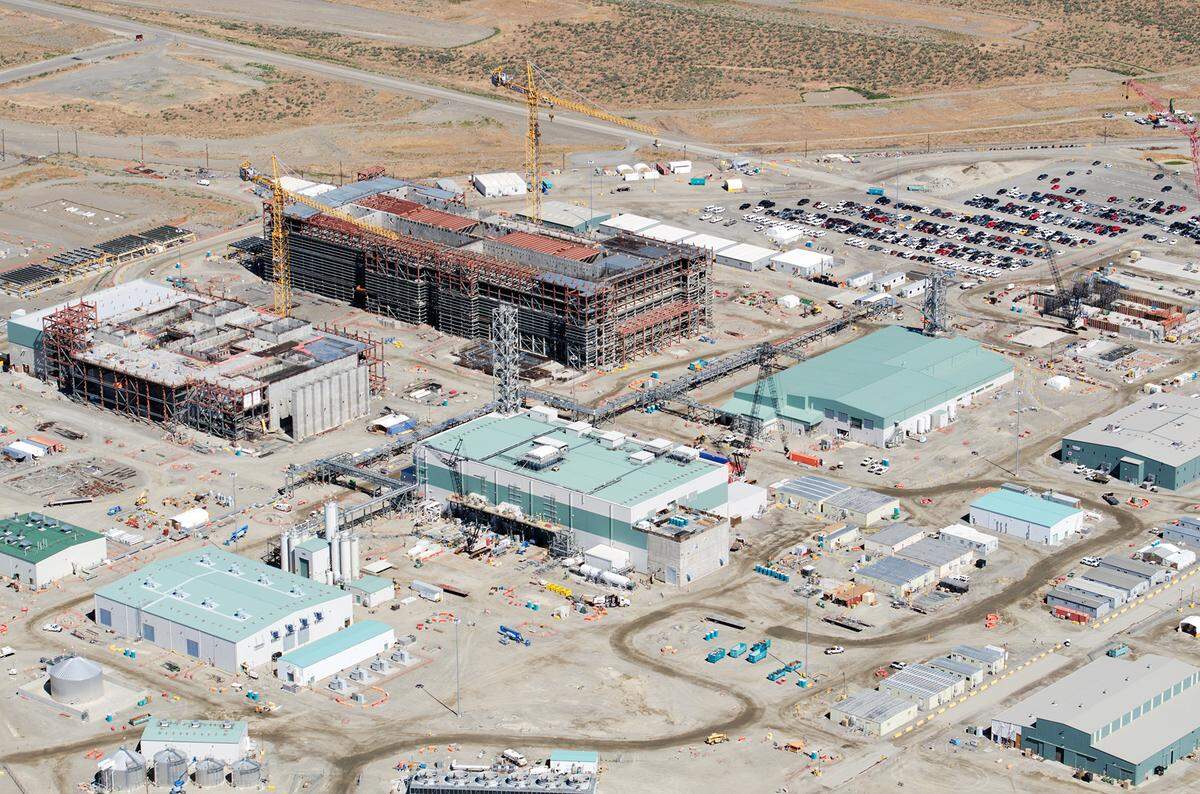
Construction on the vitrification plant started 23 years ago, and $30 billion has been spent on the plant’s design, construction, testing and commissioning, according to Sen. Patty Murray, D-Wash.
Currently, about 3,000 workers are employed at the plant, as it prepares to start treating some of the less radioactive waste stored in underground tanks and to continue construction on parts of the plant that are required to treat the worst of the radioactive waste by a legal deadline of 2033. Annual payroll is about $350 million.
Many of the plant’s workers are not sure if they’ll have a job next month, said David Reeploeg, vice president of federal programs for the Tri-City Development Council and the executive director at Hanford Communities, a coalition of Hanford-area local governments.
Treating and disposing of radioactive waste now held in underground tanks is one of the most challenging parts of Hanford treatment, he said.
The Hanford nuclear site in Eastern Washington has 56 million gallons of a stew of radioactive and hazardous chemical waste stored in 177 underground tanks, including 67 suspected of leaking or spilling waste in the past. The tanks sit above groundwater that slowly moves toward the Columbia River, as it flows through the 580-square-mile nuclear reservation adjacent to Richland.
Delaying or canceling treatment would keep dangerous, radioactive waste in leaking tanks longer, Sixkiller said.
“When it comes to tank waste, time is our enemy,” Reeploeg said. Hanford already has three tanks believed to be currently leaking waste into the soil despite efforts to reduce the risk of leaks, and other aged tanks continue to deteriorate.
The total waste — the oldest of it stored in underground, leak-prone tanks for more than 80 years — would fill 200,000 tank trucks, Sixkiller pointed out.
The waste is left from chemically processing uranium irradiated at Hanford’s now-defunct reactors to produce nearly two-thirds of the plutonium for the nation’s nuclear weapons program from World War II through the Cold War.
The vitrification plant is planned to turn much of the waste, starting with the less radioactive waste in underground tanks, into a stable, but still radioactive glass form, for permanent disposal.
Legal requirements to treat waste
To halt operations at the vitrification plant would be “a stunning waste of resources, a violation of multiple legal agreements and a slap in the face to the workers who have brought us to this point,” Ferguson said.
Any rumor that the vitrification plant has a safety issue that would prevent startup is “ludicrous,” said Nick Bumpaous, business manager of the pipefitters union Local 598 in Pasco.
Hanford workers have delivered decades of American ingenuity and know how at Hanford, he said.
“The simple insinuation, the flippant notion that the Department of Energy is willing to just turn their back on this national mission is a disgrace to the American legacy, and it is a disgrace to the sacrifices that we have all made to protect democracy,” he said.
The state of Washington has held years of discussions and negotiations with the federal government on the plan for environmental cleanup of tank waste, Ferguson said.
Deadlines and legal requirements are set in a 2010 federal court consent decree after previous missed deadlines.
In addition, DOE and the Washington state Department of Ecology concluded nearly four years of closed-door negotiations with a new holistic agreement early this year on the near term schedule and method for emptying leak prone tanks and treating the low-activity waste.
Both parties agreed that DOE must start vitrifying waste this year, with the startup deadline recently extended by the federal court from Aug. 1 to Oct. 15. In addition, DOE will start turning some of the less radioactive waste into a grout form, helping to empty leak prone tanks of waste more quickly.
WA legal strategy
There will be no need to file a new lawsuit if DOE does not meet its obligation to initiate radioactive waste treatment at the vitrification plant next month, Ferguson said.
The state will move to enforce the federal court consent decree already in place, he said.
“This is a carefully constructed, seriously negotiated agreement,” he said. “It’s a federal court order that binds (DOE) to moving forward.”
“We are very, very confident” that a judge would order the startup of radioactive waste treatment at the vit plant, he said.
It doesn’t matter that it is the Trump administration that has threatened to delay or not start vit plant operations, Ferguson said. In his previous role as Washington state attorney general, he brought a lawsuit against the Obama administration over worker safety and also took the Biden administration to task, he pointed out.
His press conference Friday was intended to send a message to the Trump administration that he is focused on the startup of the vitrification plant and that there will be consequences if it does not happen, he said.
On Thursday, after Ferguson released an initial statement saying that he would challenge any federal decision that would delay or cancel the treatment of tank waste, the energy secretary told state officials that DOE has made no changes to its plans or strategy for treating Hanford’s radioactive waste.
“Although there are challenges, we are committed to beginning operations by October 15, 2025,” Wright said in a statement.
“As always, we are prioritizing the health and safety of both the workforce and the community as we work to meet our nation’s need to safely and efficiently dispose of nuclear waste,” he said.
Murray responded with skepticism to Wright’s statement, saying that “when it comes to this administration, actions speak louder than words.”
“I need to see real evidence that this administration is moving forward on our decades-long effort to turn nuclear waste into glass at Hanford,” she said. “I also need an explanation for the conflicting information I have gotten from the department over the last 48 hours. And I need the deputy secretary to sign off on key documents so the completion of hot commissioning at the Waste Treatment Plant can move forward.”
She has placed a hold on President Trump’s nomination of Tim Walsh, a Colorado real estate developer, to be assistant secretary of energy, out of concern for the administration’s direction on Hanford waste treatment.
Sen. Maria Cantwell, D-Wash., spoke on the floor of the Senate Friday, taking the energy secretary to task.
“Every time a new administration comes in, somebody looks at the amount of money that it takes to clean up nuclear waste that’s been stored in tanks, and says, ‘this costs too much. We ought to be able to do it cheaper,’’’ she said. “So I would say to our current colleagues over at the Department of Energy, you need to look at history and think twice.”
This story was originally published September 12, 2025 at 7:51 PM.