
20 years in the making, massive nuclear plant takes final steps to treating Hanford waste
The massive Hanford vitrification plant now is in its final phase of work before it starts operating to treat some of the nuclear reservation’s radioactive tank waste.
The Department of Energy announced Tuesday that the startup testing phase for treating low activity radioactive waste at the $17 billion plant was complete, following completion of plant construction around the first of the year.
“We are pleased with the assertive schedule and technical progress made on startup testing for low-activity waste treatment at Hanford,” said Ryan Miller, spokesman for the Washington state Department of Ecology, the regulator on the project.
Now Hanford workers can shift all of their focus to commissioning, taking the final steps to demonstrate that the plant works before it starts treating radioactive waste by late 2023.
Miller said Ecology was looking for forward to the same “focused level of schedule and technical progress during the commissioning phase” to advance the project toward waste treatment.
“It was a huge milestone for the startup team to transfer the final DFLAW (direct feed low activity waste) systems to the care, custody and control of plant management,” said Valerie McCain, project director for Bechtel National, the DOE contractor designing, building and commissioning the plant.
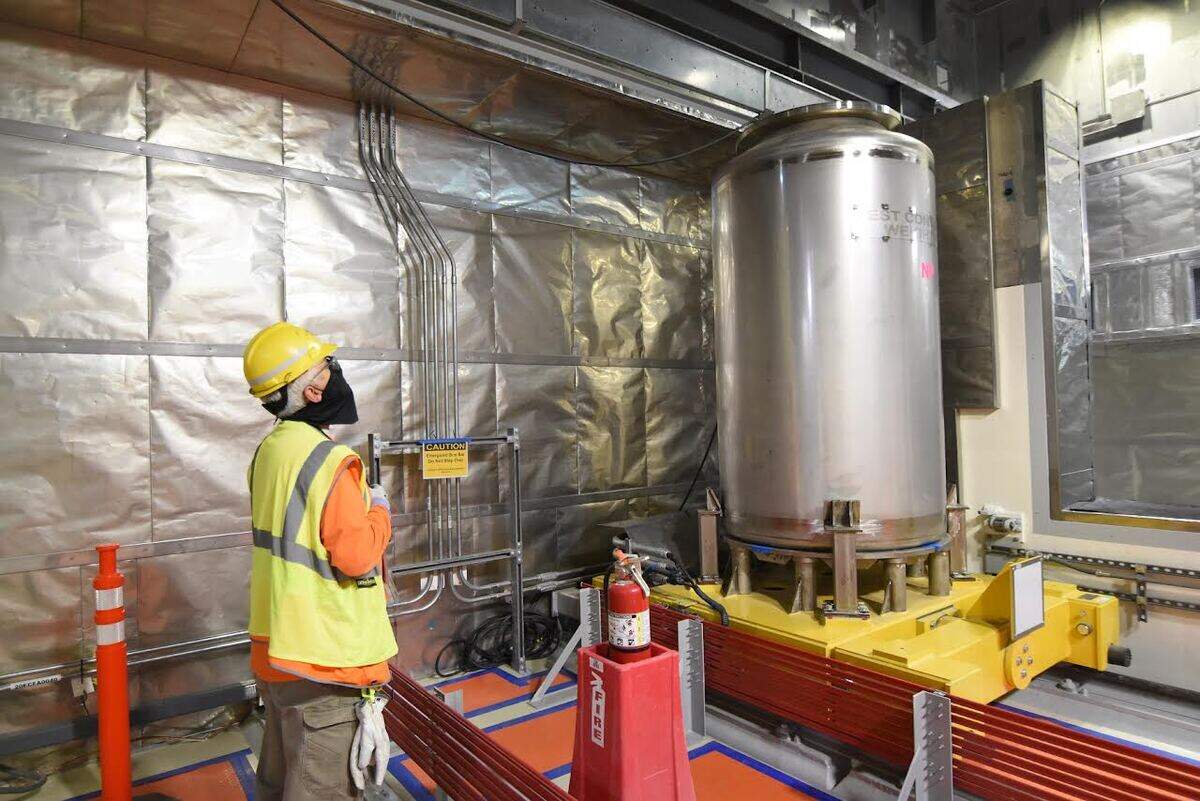
During the startup phase, the many components of the plant, from the electrical system to a system that moves containers of waste, were tested and verified to be in safe and working order.
“With the completion of startup testing, we can focus on commissioning and establishing the operating culture necessary to safely begin a new era of operations at Hanford,” said Mat Irwin, the DOE deputy assistant manager for the plant.
Commissioning includes operating the plant with a nonradioactive simulant of the waste it was built to treat, before radioactive waste is piped to the plant in about two years.
Construction on the plant started in 2002 with a plan to turn much of the 56 million gallons of radioactive and hazardous chemical waste stored in underground tanks into a stable glass form for disposal.
The waste is left from producing nearly two-thirds of the plutonium for the nation’s nuclear weapons program from World War II through the Cold War at the 580-square-mile site near Richland in Eastern Washington.
Twenty years ago DOE planned to start operating two separate treatment facilities at the plant at the same time — one for low activity radioactive waste and the other for high level radioactive waste.
But when technical issues were raised in 2012 about parts of the plant planned to handle high level waste, DOE came up with a new plan to treat the low activity radioactive portion of the tank waste first. About 90% of the tank waste is expected to be low activity.
Last week DOE announced that a small tank-side system would begin operating as soon as January to separate out low activity waste from the tanks.
It’s a workaround for the vitrification plant’s Pretreatment Facility, which was designed to separate waste into low activity and high level waste streams for separate treatment and disposal.
Instead, the tank-side system, the Tank-Side Cesium Removal system, will pretreat waste to allow direct feed to the vitrification plant’s Low Activity Waste Facility.
It pretreats liquid waste to remove radioactive cesium dissolved in the liquid and suspended, undissolved solids in the liquid, which are high level waste.
The plant is not required under a federal court order to be fully operational, treating both high level and low activity waste, until 2036.
But the court-set deadline for treating low activity waste is the end of 2023, although DOE may be given some additional time due to the COVID-19 pandemic, which slowed some work.
At the Low Activity Waste Facility, the liquid waste and glass-forming materials will be mixed, heated and poured into stainless-steel containers.
The containers of low activity radioactive waste will be disposed of at a nearby lined landfill, Hanford’s Integrated Disposal Facility.
This story was originally published November 23, 2021 at 11:49 AM.