
4 Hanford contractors awarded $77 million in annual incentive pay
The Department of Energy is awarding nearly $77 million in incentive pay to four contractors for their work at the Hanford nuclear reservation in fiscal 2020.
All earned a larger percentage of available incentive pay — or fee, as DOE calls it — for their performance in the fiscal year that ended Sept. 30 than they did in the previous fiscal year.
The awards are for Hanford’s three environmental cleanup contractors and its sitewide services contractor, which supports cleanup. Together they employ about 6,100 workers.
Hanford contracts over the last decade have typically reimbursed companies for their costs of work at the nuclear reservation and allowed them to earn profit by completing specific work and through a subjective evaluation.
Not included in the fee awards announced this week is Bechtel National, which is building and starting up the $17 billion Hanford vitrification plant. It is on a calendar-year review and fee schedule.
Rather than releasing the complete review, DOE in recent years has made public a scorecard that lists fee earned and a brief recap of work that was done well and also areas needing improvement.
Washington River Protection Solutions
The Hanford tank farm contractor earned nearly $42.6 million in incentive pay for its fiscal 2020 work.
That is 95% of the fee possible, compared to the 94% that it earned for fiscal 2019.
For the most recent fiscal year it earned all of the $28.8 million for work on specific projects, which included emptying radioactive waste from leak prone underground tanks and preparing to feed tank waste to the vitrification plant once it starts operating.
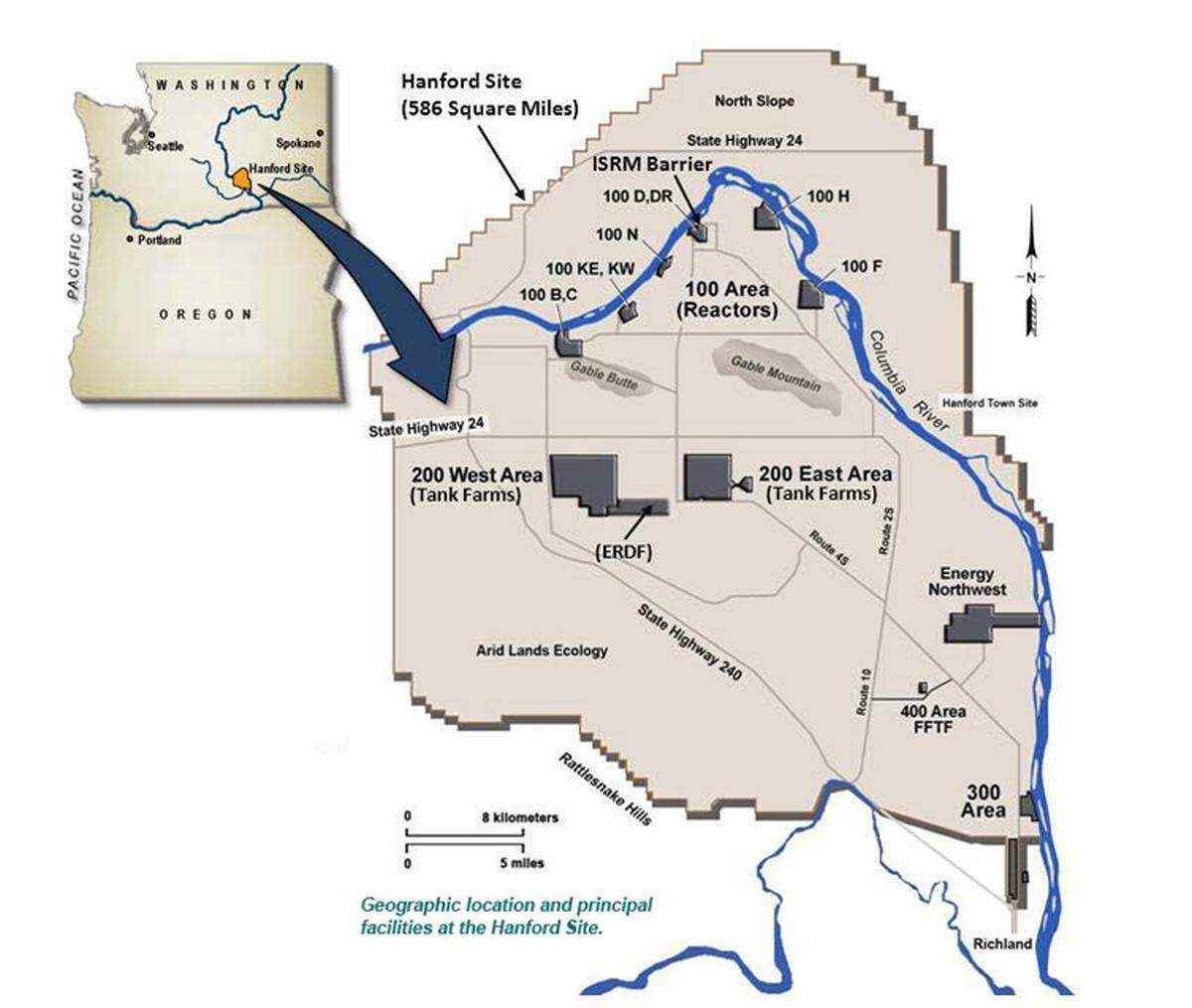
The Hanford site in Eastern Washington state has 56 million gallons of radioactive waste in underground tanks. The waste is left from producing about two-thirds of the nation’s plutonium from World War II through the Cold War for the nation’s nuclear weapons program.
Washington River Protection Solutions, owned by Amentum and Atkins, also earned $13.8 million, based on DOE’s subjective evaluation of nine areas, including its nuclear safety program, its management of the tank farms and dealing with the COVID-19 pandemic.
“I am pleased with the Department’s recognition of our strong performance despite the challenging and unprecedented time we faced due to the pandemic,” said John Eschenberg, chief executive officer of the tank farm contractor.
He pointed out that the company’s safety performance has been recognized as being among the best in the DOE environmental cleanup complex.
It’s top ratings of “excellent” on the DOE scorecard were for its safety program implementation and for management related to the pandemic.
Among its accomplishments were retrieving nearly 99% of the waste in single-shell Tank AX-102 and completing installation of a ground-level barrier to prevent precipitation from driving radioactive waste contaminating soil in one area of central Hanford deeper toward groundwater.
It also made progress on a new tank-side system to separate out some of the least radioactive tank waste for treatment at the vitrification plant.
Its lowest rating from DOE was a “good” that earned it just 70% of the possible incentive pay available for its quality assurance program.
DOE said it needed to improve quality oversight in its purchasing efforts, including equipment fabricated specifically for tank farm work.
CH2M Hill Plateau Remediation Co.
The central Hanford and groundwater cleanup contractor earned $17.2 million in incentive fee for what will be its last complete fiscal year at the nuclear reservation.
Its contract expires as a new contractor takes over Jan. 24 to continue a similar scope of work for as long as the next 10 years.
The fee earned by CH2M Hill Plateau Remediation Co. (CHPRC), a subsidiary of Jacobs, was 85% of the $20.1 million available.
It was better than the 79% of $9.9 million available that the contractor earned for fiscal 2019.
“Our 2020 accomplishments, completed safely while overcoming significant challenges, are representative of all of the progress we’ve made on behalf of the DOE since our contract began in 2008,” said Ty Blackford, CHPRC chief executive officer.
“As we enter the final month of our contract, I want to say how proud I am of the CHPRC team’s work as a member of the Hanford team for our client, community and stakeholders,” he said.
The money earned for the most recent fiscal year included all of the fee available for completing specific work and $6.5 million, or about 69%, of the $9.4 million available based on a subjective evaluation by DOE.
Among achievements that DOE praised were its response to the pandemic, treating more than 2.4 billion gallons of contaminated groundwater and work to prepare a lined landfill in central Hanford. The landfill for some of the least radioactive tank waste that will be turned into a stable glass form when the vitrification plant begins operating.
But DOE said it it needed to improve subcontract audits, as pointed out in a DOE Office of Inspector General audit report that found that taxpayers may have been overcharged for some work.
Nuclear safety management also was an issue, said a one-page summary of its performance.
Mission Support Alliance
Mission Support Alliance, which provides support services across the Hanford site, was awarded $16.8 million, or almost 93% of the $18.2 million available.
The award was for the fiscal year just through May 25 of this year, when its contract was initially expected to expire. It has been transitioning work to a new contractor that starts Jan. 24.
Its performance covered by the scorecard released this week was an improvement from work in the previous fiscal year, which earned it 88% of the fee available.
Mission Support Alliance is owned by Leidos Integrated Technology and Centerra Group. The new site services contractor, Mission Integration Solutions is also owned by Leidos and Centerra with Parsons Government Services as a third partner.
The current contractor earned 96% of the pay for completing specific projects and 87% of the pay available from DOE’s subjective evaluation, according to the new DOE scorecard.
“The contractor has exceeded many of the significant award-fee criteria and has met overall cost, schedule and technical performance requirements of the contract,” DOE said in its scorecard.
Overall it rated Mission Support Alliance’s performance as “very good.”
“We are incredibly proud of everything the MSA team has accomplished in support of the One Hanford mission in the last 11 years, and particularly in this last year during this COVID-19 pandemic,” said Bob Wilkinson, Mission Support Alliance president.
In a message to employees he highlighted the scorecard comment that MSA “went above and beyond expectations and surpassed targets for coordination with other contractors and DOE, particularly during the COVID-19 pandemic.“
DOE praised the contractor, which is responsible for information technology across the site, for its work to support an increase from 400 to as many as 4,500 Hanford employees teleworking during the COVID pandemic.
The Hanford Fire Department, another of the contractor’s responsibilities, helped combat the Saddle Mountain Fire in July that burned nearly 9,800 acres without damaging any critical Hanford infrastructure.
The contractor also did a good job of reducing unneeded infrastructure as areas of the nuclear reservation are cleaned up and did a good job of providing services to other Hanford contractors.
Among its responsibilities, in addition to information technology and firefighting, are safety and security, utilities, road maintenance, management of the HAMMER training center and preservation of cultural artifacts.
The DOE scorecard said the contract had no significant deficiencies but need to do better on meeting schedules. It also has had “less-than-timely resolution of ongoing software quality assurance issues,” the scorecard said.
Wastren Advantage
The 222-S Laboratory contract at Hanford, Wastren Advantage, earned $232,464, or 93% of the $250,230 fee possible.
That’s up from $211,340 earned in the previous fiscal year, which was 89% of the fee possible.
Wastren is also known as VNS Federal Services, a subsidiary of Veolia Nuclear Solutions.
DOE said extensive assessments in the past fiscal year found few program or operation weaknesses.
The contractor was honored for its safety performance and culture, receiving a DOE Voluntary Protection Program Star of Excellence.
It also simplified and improved its handling of waste within the lab.
The lab is used primarily to analyze radioactive waste in Hanford’s underground tanks to assist in its management until it can be treated for permanent disposal.
The DOE scorecard said areas needing work included more frequent acceptable performance evaluation results and an improvement in quality in analytical reporting and data accuracy.
The current Hanford 222-S Laboratory contract is expiring and the transition to a new contractor will start in January.
This story was originally published December 30, 2020 at 12:28 PM.