
U.S. Energy Secretary Dan Brouillette to visit Hanford and PNNL this week
New Energy Secretary Dan Brouillette is scheduled to visit the Hanford nuclear reservation and Pacific Northwest National Laboratory in Richland this week.
He’s expected to be accompanied by Paul Dabbar, the under secretary of energy for science.
Their schedule has not been released, but Hanford officials are preparing for a visit by Brouillette on Thursday. A visit to PNNL in Richland, a DOE national lab, is planned for Friday.
At PNNL Brouillette is expected to dedicate the Grid Storage Launchpad facility and to sign the I-beam for the Energy Sciences Capability facility.
Brouillette was confirmed as energy secretary in early December after Rick Perry resigned. Brouillette was the deputy secretary under Perry.
When Sen. Maria Cantwell, D-Wash., questioned Brouillette during a Senate Energy and Natural Resources Committee confirmation hearing, he told her that the Hanford site ranks “right at the top of my priority list, and should I be confirmed as secretary, I will be there quite often.”
However, that was before the COVID pandemic reached the United States, leading to reductions in travel.
Brouillette is familiar with Hanford from the two years he was deputy secretary, and he told Cantwell in 2017 that Hanford and cybersecurity were his top priorities.
He first visited Hanford in the early 1990s as a congressional staff member.
“I was a bit dismayed to come back 20 years later and see that many of the same issues — it still faces,” he said when questioned by Rep. Dan Newhouse, R-Wash., in a budget hearing in February. Brouillette added that there had been tremendous progress on some Hanford projects, however.
He faced tough questioning on the proposed Hanford budget for the next fiscal year both in that hearing and also at a March Senate budget hearing, with Sens. Patty Murray D-Wash., and Cantwell asking the questions.
The hearings came as the Trump administration had proposed cutting more than $700 million from the current spending of a little more than $2.5 billion.
Vit plant focus
Brouillette said that money carried over from the current fiscal year could be used to continue some work and some low priority work could be put on hold.
The focus under the administration’s proposed budget would be keeping work on schedule to treat some of the 56 million gallons of radioactive waste stored in underground tanks by the end of 2023, he said.
The $17 billion Hanford vitrification plant, under construction since 2002, faces a 2023 deadline set by a federal court to start treating some of the less radioactive waste in the tanks.
Among work that the administration proposed deferring is cleanup of a highly radioactive spill beneath the 324 Building just north of Richland and near the Columbia River, Murray said.
DOE officials have said that the radioactive cesium and strontium contamination beneath the building is so radioactive that it would be fatal within a few minute of human contact.
Extensive work already has been done to prepare to stabilize the 324 Building and then cut through the floor to dig up the contaminated soil using remotely operated equipment.
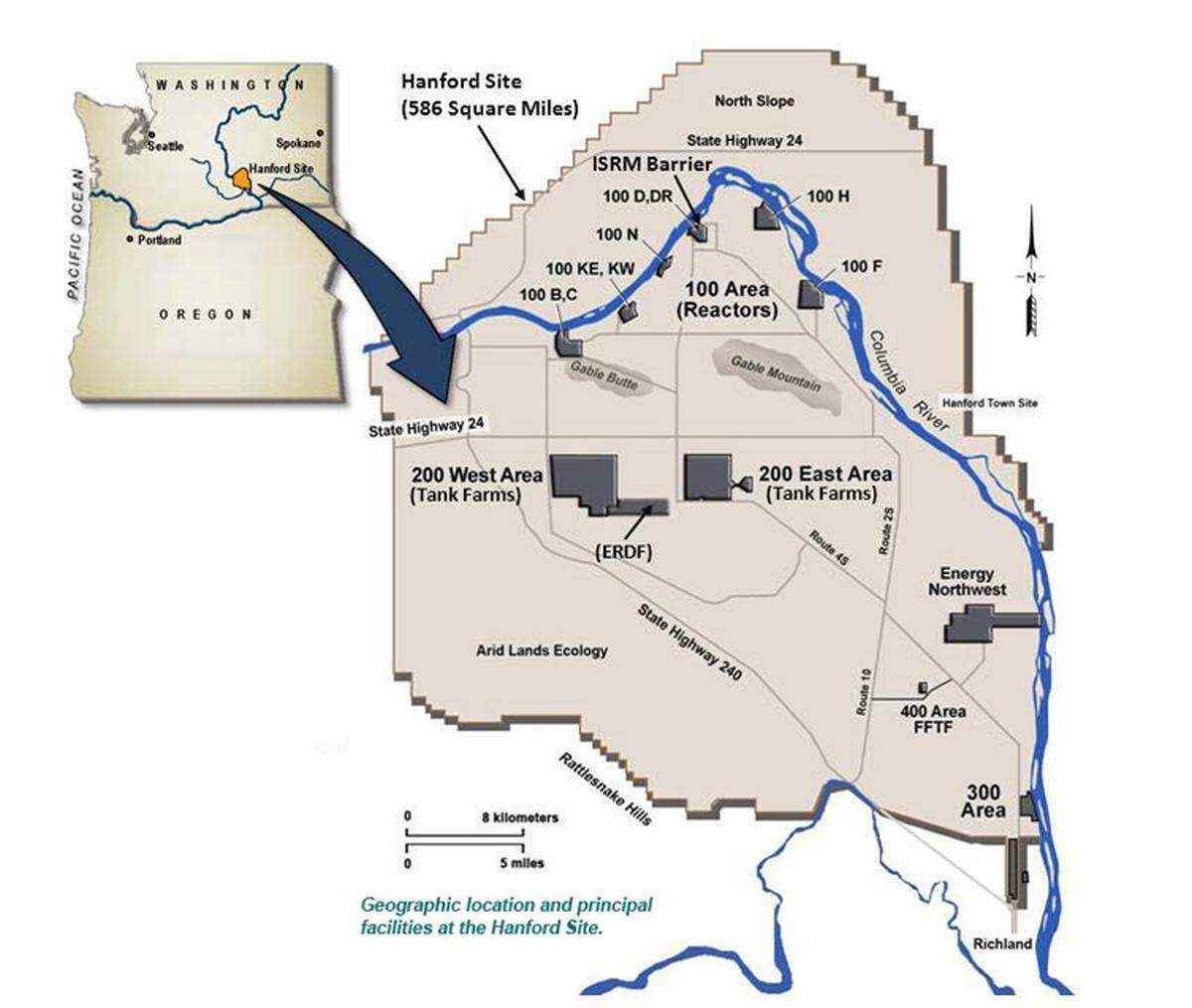
The 580-square-mile Hanford site was used to produce plutonium for the nation’s nuclear weapons program from World War II through the Cold War. Environmental cleanup of radioactive and hazardous chemical waste and contamination is ongoing.
Because of the coronavirus pandemic, the energy secretary’s visit may offer fewer opportunities for meetings with local leadership and groups than is typical for such visits.
PNNL visit
At PNNL, Brouillette is scheduled to dedicate the Grid Storage Launchpad building, which is sponsored by DOE’s Office of Electricity to support accelerated development of grid energy storage technology, modernizing the grid and unlocking its economic potential.
Construction on what is expected to be a $75 million project could begin at the north end of the PNNL campus in 2021.
Construction already has begun at the northwest corner of the campus on the $90 million facility now referred to as the Energy Sciences Capability. It is expected to open in summer 2021.
The Energy Sciences Capability project is creating 250 construction jobs and when finished will house more than 50 labs, 200 work stations and space for more than 50 visiting researchers, according to PNNL.
The building will consolidate many of PNNL’s chemistry, material sciences and computational capabilities, allowing researchers to communicate and collaborate more efficiently.
It also is designed for increased collaboration with university and other regional partners of PNNL.
This story was originally published August 9, 2020 at 1:44 PM.