
Cantwell amendment foils attempt to raid Hanford cleanup money for military weapons
A Senate bill has been stripped of a provision allowing money for Hanford cleanup and research at Pacific Northwest National Laboratory to be siphoned off to pay for the nation’s nuclear weapons arsenal.
The language allowing Department of Defense control over the Department of Energy budget was inserted into the National Defense Authorization Act for 2021, an annual military funding bill that senators are reluctant to vote against.
The Senate on Thursday unanimously adopted an amendment sponsored by Sens. Joe Manchin, D-W.V., and Maria Cantwell, D-Wash.
Both are on the Senate Energy and Natural Resources Committee, which was not consulted by the Senate Armed Services Committee when it added the budget control provision to the Senate bill, Cantwell said.
“We’re so glad that we were able to stop efforts to usurp civilian control of nuclear weapons spending and protect the Department of Energy’s funding for critical nuclear waste cleanup programs,” Cantwell said.
Manchin and Cantwell appealed unsuccessfully to the Armed Services Committee leadership to remove the provision, before the amendment was approved.
“Securing funding for Hanford cleanup is a tough fight every year, and without Sen. Cantwell’s leadership on this it could have become even more difficult,” said David Reeploeg, vice president for federal programs for the Tri-City Development Council.
He credited Cantwell, Manchin and Sen. Patty Murray, D-Wash., with working hard to get the issue resolved.
The bill, which Energy Secretary Dan Brouillette also opposed, would have allowed the Nuclear Weapons Council to set new proposed funding levels for the nuclear weapons program if it did not like the budget proposed by the energy secretary. The National Nuclear Security Administration (NNSA) is under DOE.
The additional money for NNSA nuclear weapons programs would have to come from other parts of the proposed DOE budget, such as environmental cleanup programs at nuclear sites like Hanford and research at national laboratories like PNNL in Richland.
The Nuclear Weapons Council is made up of mostly Defense Department officials, who lack the cabinet-level authority of the energy secretary.
The Energy Communities Alliance, a coalition of local governments near DOE sites, called it “a zero-sum game for defense funding” that would almost certainly cut environmental cleanup and other spending without the energy secretary’s input.
Cantwell agreed it would allow the military to “raid” DOE money.
“I do not believe that the Nuclear Weapons Council understands the Department of Energy’s priorities,” Cantwell said. “How could they? Do they sit in on any of the meetings for the national labs or the waste cleanup?”
The bill also would have removed the division of authority between the military and the Department of Energy, set when the DOE precursor, the Atomic Energy Commission, began overseeing plutonium production in 1946 at the Hanford nuclear reservation near Richland.
Amendment protections
The Department of Defense deploys the missiles and aircraft that deliver nuclear warheads, and DOE, through NNSA, produces and safeguards the nation’s stockpile of nuclear weapons.
The amendment adopted by the Senate ensures the energy secretary retains final authority over the DOE budget proposal.
It protects non-military control of nuclear weapons development.
It maintains the system of collaboration between DOE, the Defense Department and the Nuclear Weapons Council on budgeting for nuclear weapons.
It also promotes transparency by requiring that the Nuclear Weapons Council recommendation for the nuclear weapons budget be included as an appendix to the final budget request given by the energy secretary to Congress.
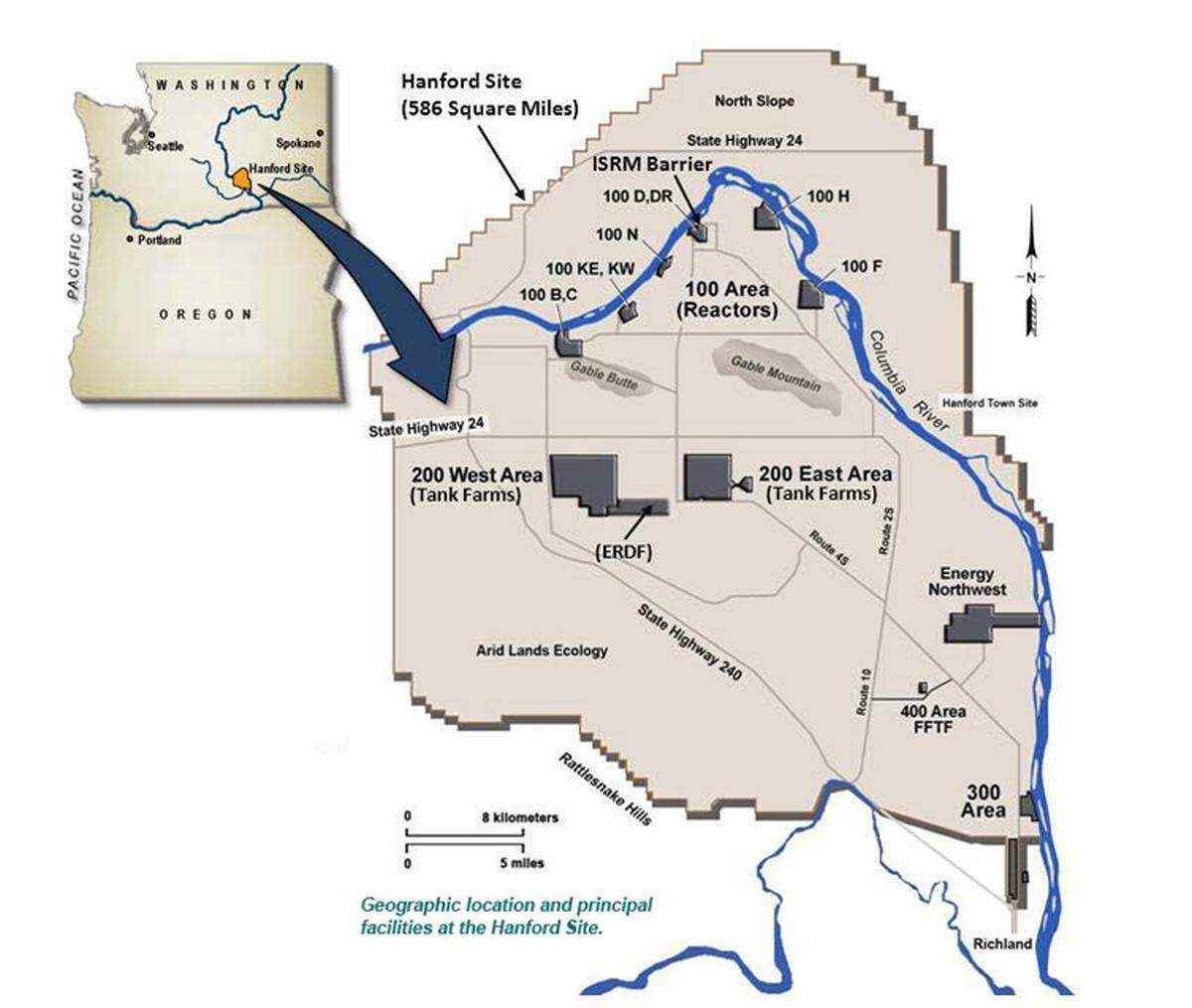
The Hanford nuclear reservation is the nation’s largest nuclear defense cleanup project. About $2.5 billion is spent annually on cleanup of the 580-square-mile site.
It is contaminated with radioactive and other hazardous chemical waste from the past production of plutonium from WWII through the Cold War for the nation’s nuclear weapons program.
This story was originally published July 3, 2020 at 12:19 PM.