WA ends ‘failing schools’ fund. What it means for at-risk students
AI-generated summary reviewed by our newsroom.
- Legislature removed the failing-schools proviso, ending RAD funding.
- RAD is planned to sunset by June 2027 after the proviso removal.
- RAD used $2–4 million annually to fund grants and leadership coaching.
The future of a program that assists and holds accountable the state’s poorest performing public schools is in question after lawmakers voted to defund it.
It’s a move that will likely peel away extra support from the Tri-Cities’ largest elementary school.
For the last 16 years, the Required Action District program, known as RAD, has helped at least a dozen schools identified by OSPI as the “persistently lowest-achieving.” It will come to a close after the state Legislature last year removed the “failing schools” proviso from the operating budget.
The state attempted to prop up the program with federal funds, but there is not enough resources to support it. That $14 million a year has supported grants for schools to implement plans and to support leadership coaching. It would have been a drop in the bucket of the state’s $80 billion supplemental operating budget.
Without funding, the plan is to sunset RAD by June 2027, said OSPI spokesperson Katy Payne.
“While some federal funding remains, any funding removal results in less support for our most needy students,” said Ron Mabry, a State Board of Education member who previously served on the Kennewick School Board.
This comes as education leaders, both local and statewide, continue to blast the Legislature over funding decisions that have resulted in heaping reductions to basic education programs and strategies that help early learners.
This year alone, Democrats in the Legislature voted to slash $80 million from K-12 education while raising spending in other non-education related programs. Those cuts are likely to have an outsized impact on the state’s poorest and most rural school districts.
The tough cuts have been necessary in recent years, lawmakers say, due to multi-billion dollar budget gaps caused by revenue shortfalls. State officials will have to address a nearly $500 million gap when they convene in January for the 2027 legislative session.
An annual ranking of U.S. states based on K-12 education outcomes showed Washington slipped from 27th to 31st. The report from Kids Count Data Book showed 70% of 8th graders not proficient in math and 68% not proficient in reading, though OSPI leaders have voiced skepticism of the findings.
Program helping Amistad
The Required Action District is unique in that schools undergo monitoring and reporting four times a year under the close eye of OSPI and the Washington State Board of Education.
They also receive additional funding to implement improvement activities and hire additional staff, and get more training support from the state.
It’s a layer of support on top of federal accountability requirements laid out in the 2015 Every Student Succeeds Act, or ESSA, which says that states must intervene in the bottom 5% of Title I schools and at schools with persistently underperforming subgroups. Schools with high populations of impoverished students also receive federal supports through Title I Part A.
Washington created the School Improvement Framework, known as WSIF, in response to the passage of the ESSA.
RAD is an accountability designation part of the WSIF — which grades schools 1-10 on student proficiency, growth, graduation and attendance — though that larger program will remain in place. WSIF scores are used to identify RAD schools and determine which schools need the most supports.
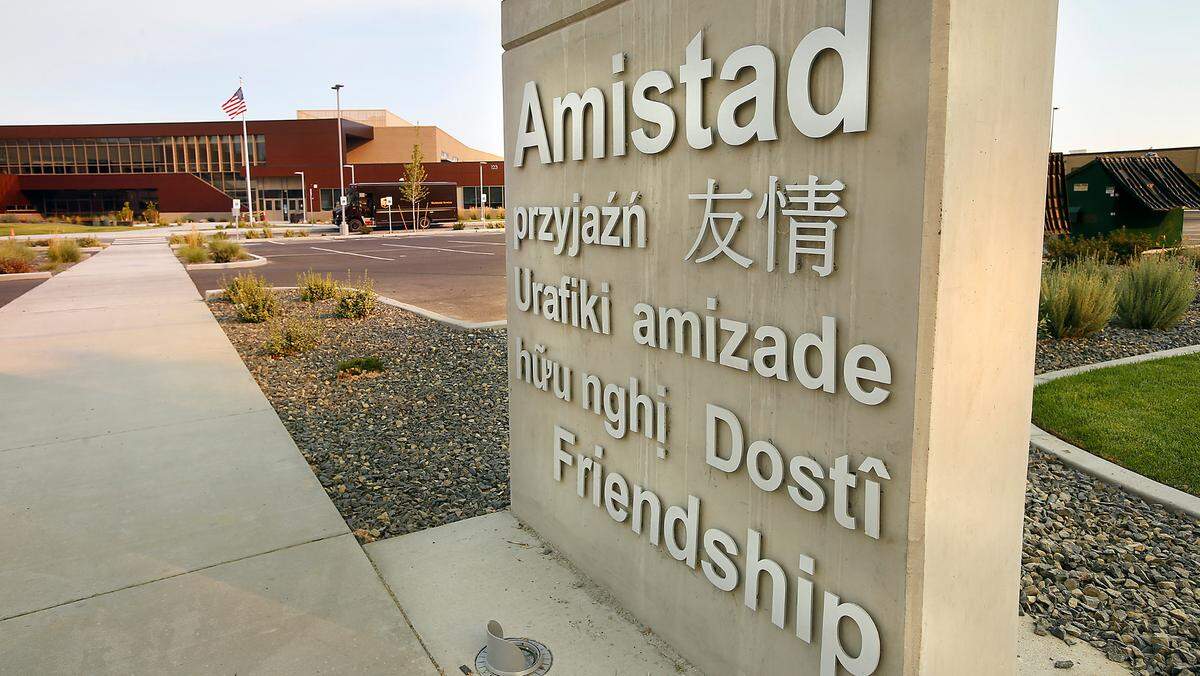
The Required Action District has helped schools like Amistad Elementary School in the Kennewick School District.
The school was placed on the designation starting the beginning of the 2025-26 school year after a comprehensive audit showed achievement and behavioral gaps among the school’s Black and Hispanic students, high needs for educational supports and low teacher retention rates.
Three areas of emphasis were identified: Improving staff, student and family engagement; improving curriculum, instruction and assessment; and creating more targeted supports for English learners and early literacy development.
In response, Kennewick School District used a mix of RAD and basic education dollars to hire an assistant principal who has done family engagement work, implemented instructional strategies and helped make data-informed decisions.
That’s allowed teachers to have an extra set of eyes to support high-needs students, and allowed teachers to focus on the important work of educating.
The extra vice principal position will continue to be funded for the 2026-27 school year, administrators say.
Kennewick Superintendent Lance Hansen said data on how Amistad improved over the most recent school year is still under preliminary review and hasn’t been finalized, but more information will be available soon.
“Our Amistad students deserve to have a great education, and we will do whatever we can to ensure they’re thriving and excelling,” said Alyssa St. Hilaire, Kennewick’s assistant superintendent of teaching and learning.

An ‘important element’ of WSIF
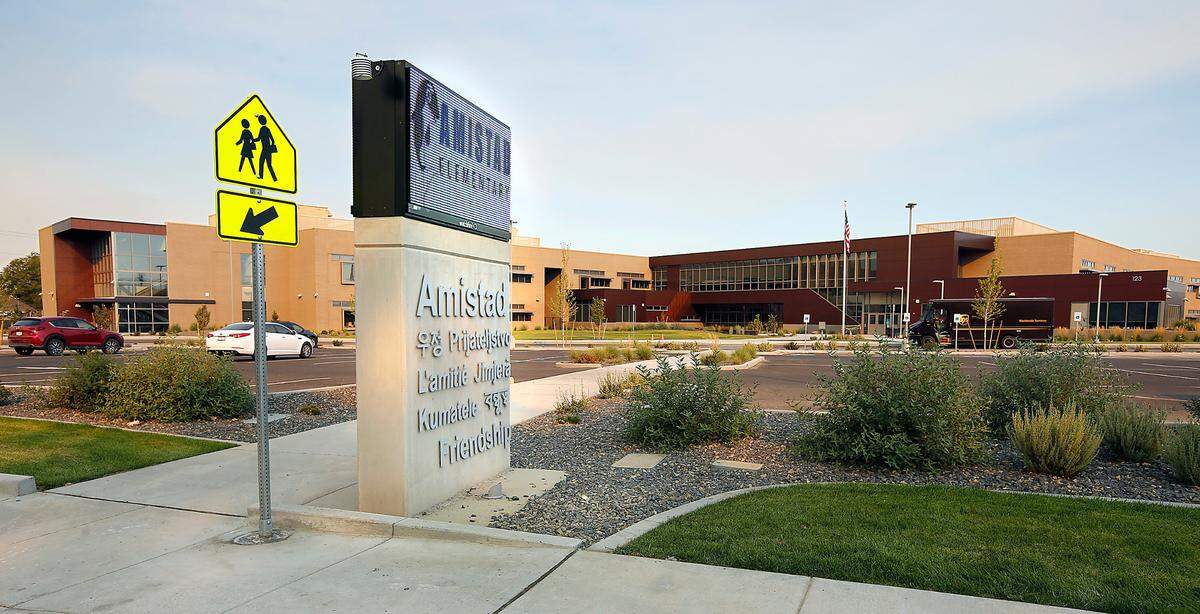
Amistad is Kennewick’s largest elementary school, serving about 900 students living around downtown Kennewick, in the Bridge to Bridge neighborhood and in several tight apartment complexes between Olympia and Garfield streets.
Nearly 9-in-10 come from impoverished backgrounds, and about the same ratio of students come into kindergarten unprepared to learn. Four-in-ten students are English language learners.
While Amistad lags behind the state average in student chronic absenteeism – defined as missing 10% or more of the 180-day school year – it has progressed in strides since the COVID era.
About 33% of students – or one-third of the entire population – were chronically absent last school year. That’s a sizable improvement from the 56% reported during the 2021-22 school year.
Its state assessment scores are improving but still remain among the lowest in the region.
Results from the Spring 2025 Smarter Balanced Assessment show 30% of students at or above grade level in English and 43% tested at or above grade level in math. The test is given to students in English language in third, fourth and fifth grades.
Hansen stressed that each of their students come to school with different levels of challenges and familial struggles that they experience at home. But they work hard to wrap supports around those students and families where they can.
“I’ve been in that building many times, and that staff is really doing the work necessary to improve. They’re doing the work,” Hansen said.
The Washington State Board of Education’s executive director, Randy Spaulding, called RAD “an important element of the state’s school improvement framework.”
Alongside OSPI, the board worked to develop plans with districts last year despite the “setback” of the program’s financial resources being drained, he said.
“Both OSPI and SBE approved the RAPs, as required by law, while recognizing that implementation of the plans using only the available federal programmatic and financial resources of Title I Part A (School Improvement) would likely not be sufficient for them to fully implement their plans,” Spaulding said in a statement.
RAD schools receive support on a three-year cycle. Others that were given the designation last year include Nespelem Elementary in the Nespelem School District, Evergreen Elementary in the Shelton School District, Soap Lake Jr. and High in the Soap Lake School District, and Edna Travis Elementary in the Tacoma School District.
“The elimination of the funding occurred as we (State Board of Education) are working to enhance programs to address the needs of our most vulnerable and challenged students, such as those who attend Amistad,” Mabry said.