Exclusive | Why a WA school campaign is collecting Facebook info and public data
AI-generated summary reviewed by our newsroom.
- PVS is using public records and social media actvitity to microtarget “yes” voters.
- The PVS app has identified at least 14,500 likely supporters and reached more than 5,400.
- A levy loss could cut about $50 million annually and potentially impact 500 jobs.
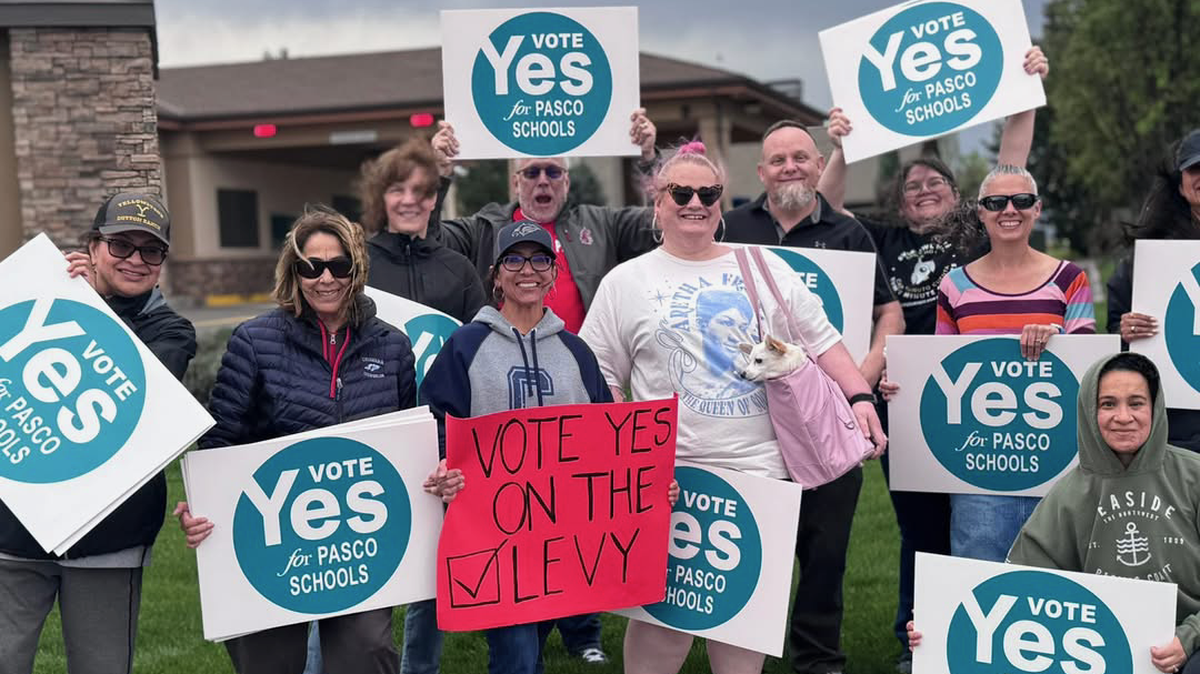
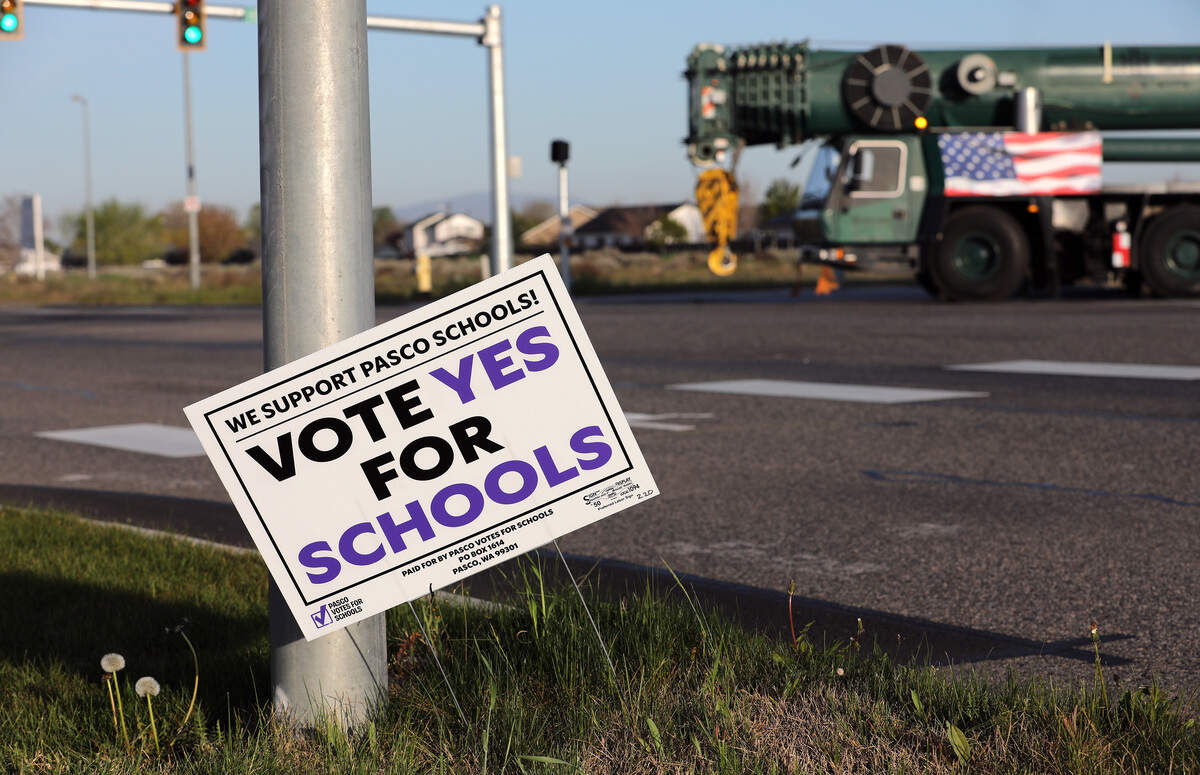
The group advocating for Pasco School District’s April 28 levy renewal is taking a page out of the 2023 bond campaign.
Digital canvassing could be the secret recipe to drive parent and staff turnout in the final days of the election, and get the $154 million measure passed.
Fewer than 1-in-5 registered voters have returned their ballots with just a week left to vote.
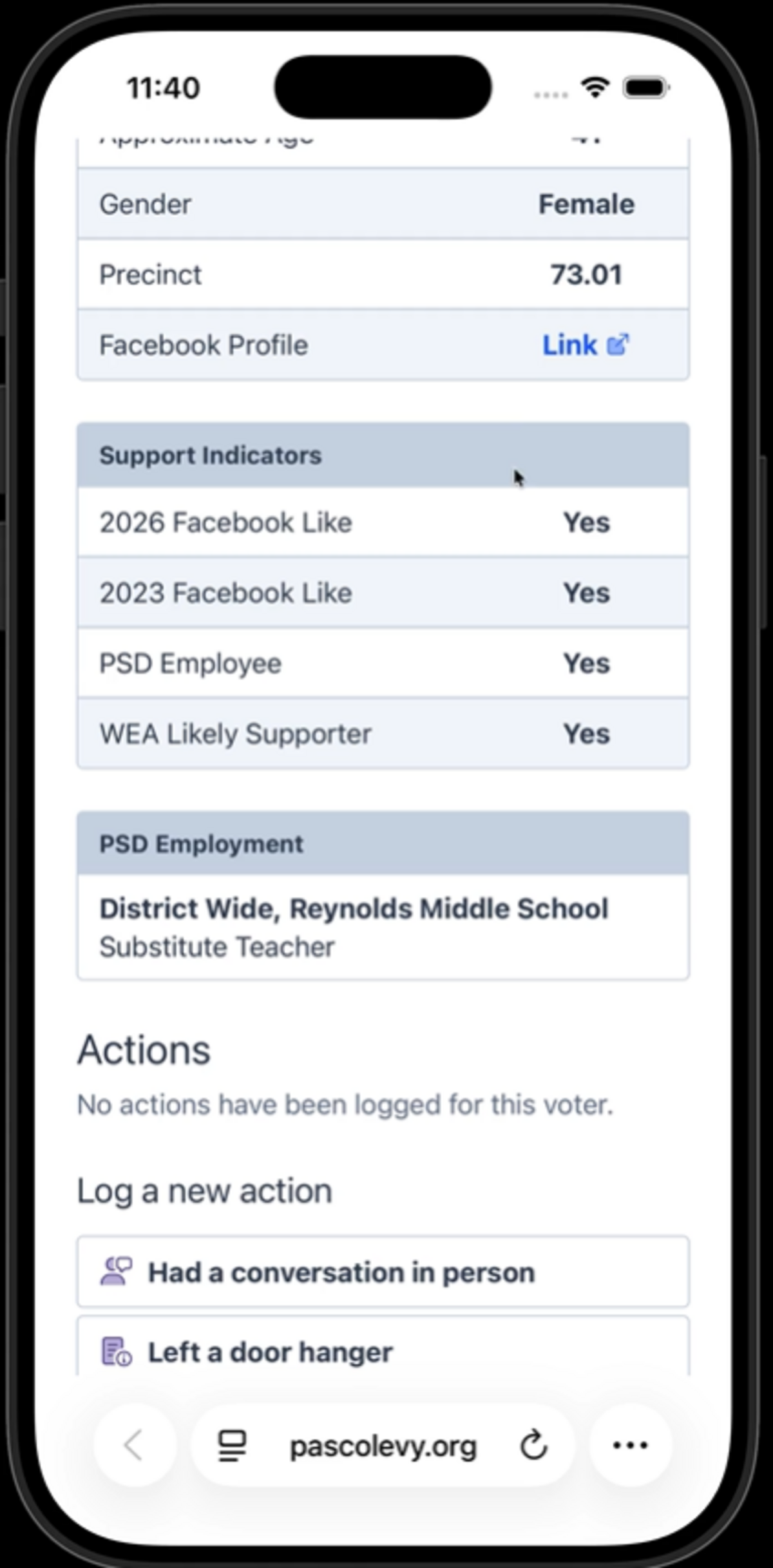
Using data scraped from Facebook activity, public school employment records, teachers union records and ballot returns data, supporters are microtargeting voters who are likely support the levy with phone calls, door belling and messages.
An application built by parent David Jones for the Pasco Votes for Schools (PVS) committee has identified at least 14,500 likely supporters of the nearly 45,000 registered voters in the district.
Of those, they’ve reached more than 5,400 voters so far.
“I think it’s the only way to win. I think there has to be an intervention in order to win,” Jones, a father of five Pasco students, told the Tri-City Herald on Tuesday.
“I’ve always been of the opinion that the vast majority of Pasco residents support schools, it’s just getting enough people to vote so we can observe the majority,” he said.
Similar ‘targeting’ strategy
In 2023, Jones was serving as the Pasco Votes for Schools secretary when he launched a similar strategy that helped them secure enough votes to pass a capital bond to pay for the construction of Sageview High School and Orion High School.
It passed with 61% of voters in support — just enough needed to pass a bond measure and a level of support rarely seen in recent years for school levies.
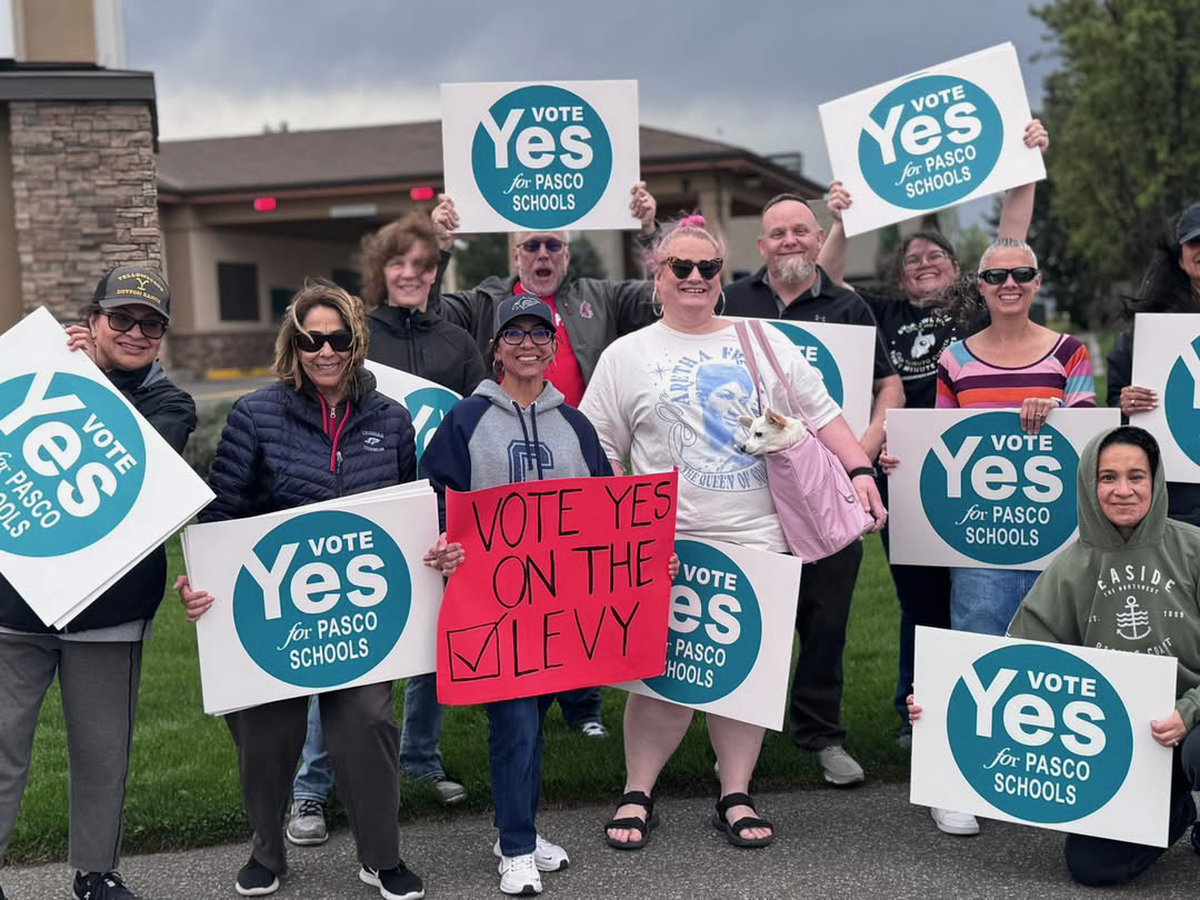
But this campaign will be a far cry from 2023, when Jones told the Herald he wanted “most people to forget that the (bond) election is happening.” This campaign is much more visible, and has mixed traditional canvassing methods with digital ones. Pasco teachers are also getting the vote out.
Jones said he was a bit surprised when the February measure failed. He had a few people who wanted him involved in that campaign, but he didn’t feel it was necessary at the time.
He assures the public that the data he is using to profile voters is all public records.
“Some people get nervous about their information being used for this purpose, and I would just say that we’re very respectful with that information,” he said. “I hope people don’t feel we’re misusing that information… it’s something we guard very, very carefully.”
A 2018 levy campaign ruffled some feathers when it mailed custom “report cards” to voters that included their voting history and an assigned score. That rankled voters who voiced privacy concerns.
100+ access Pasco levy application
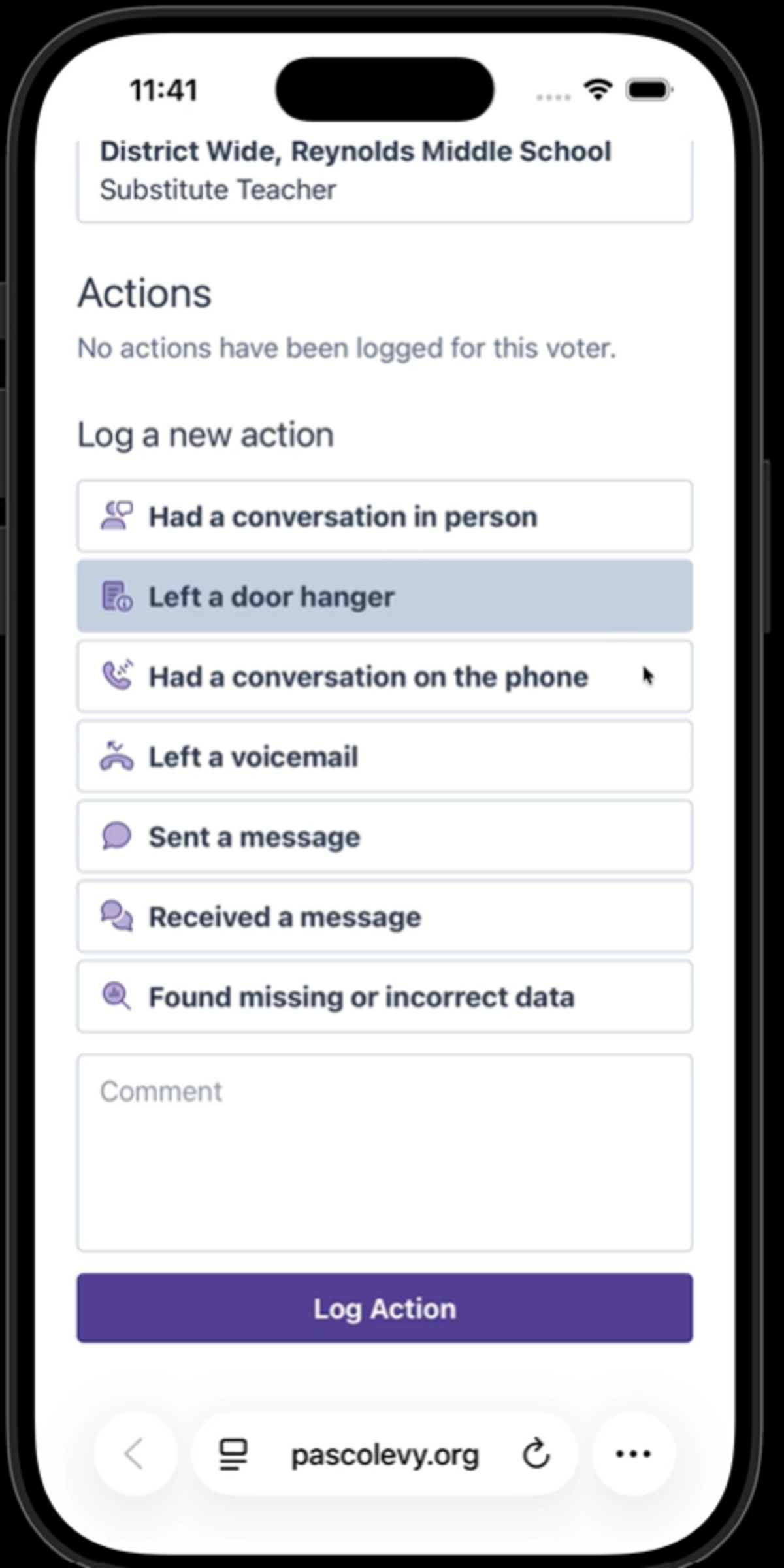
About 100 volunteers are using the Pasco Votes for Schools application to conduct digital canvassing.
Jones, a software engineer, said the idea is to have levy supporters reach out one-to-one to friends, colleagues and neighbors who have a high propensity to support school measures.
“Just because something’s important to someone, doesn’t mean that it’s always top of mind,” he said.
The campaign has also identified nearly 6,080 homes of likely supporters it’s hoping to canvas as well.
In-person efforts have helped to move the needle, and they’ve seen positive results in people returning ballots after receiving door hangers or other literature.
Jones said data suggests more teachers and staff will turn out this month than in February. Nearly two-thirds of Pasco teachers and staff living in the district did not vote in the last special election.
“I think we’re doing pretty good,” he said.
Up to 500 jobs at stake
Pasco’s educational programs and operations levy is not a new tax. The local tax funds athletics, musisc and the arts, school counselors, school resource officers and other programs.
Without it, Pasco School District would need to cut $50 million in annual funding from its budget to those programs, which could impact as many as 500 jobs.
Jones said levy funded programs are what drive students to stay engaged in the education system.
“If we lose the levy, we lose all of the reasons that kids really enjoy going to school and put up with the other stuff,” he said.
The Feb. 10 measure, which would have taxed the same amount as this current levy request, fell 60 votes short of the simple majority needed to pass.
Voter apathy and a subdued turnout were blamed since about two-thirds of Pasco teachers and staff living in the district did not vote.
The April 28 ballot is Pasco’s last chance to secure funding before its current levy expires at the end of 2026. It couldn’t try again until next year.
A failure would leave the district to reckon with big cuts starting the 2026-27 school year. Levy revenues and associated state revenues make up about 13% of the district’s $340 million operating budget.
Critics of the tax say they would like to see more accountability over the district’s budget, a staffing plan and reforms, and future levy increases limited to just 3% before they would consider supporting the measure.
The levy would tax all property in the district at a rate of $2.08 per every $1,000 of assessed value. On a home valued at $400,000, that is about $832 annually.
Jones said he has been running models based on daily return statistics. Without knowing how someone actually voted, he estimated based on who has voted as of this week, that the levy would pass by about 52 votes. Still, that figure is within the margin of error, he said.
Ballot returns exceeding February
Early ballot return statistics suggest Pasco could be on track to exceed turnout from two months ago.
About 19% of registered voters so far have returned their ballots, as of information updated Tuesday evening by the Washington Secretary of States Office. That’s 8,500 returned out of 45,000 registered voters.
During the Feb. 10 election, fewer than 25% of registered voters in the Pasco School District returned their ballots.
The U.S. Post Service, as well as local and state elections officials, recommend voters return their ballots at a county certified drop box since it’s less than a week to election day.
Ballots — which were mailed out to registered voters earlier this month — must either be postmarked by Tuesday, April 28, or in a drop box by 8 p.m. on election day. If returned in the mail too close to that date, they may not be postmarked in time.
Voters can see the status of their ballot online at vote.wa.gov.
Changes to voter registration or new voter registration can still be filed in-person at your local elections center. Ballots can be picked up at the Franklin County Courthouse, at 1016 North 4th Ave. in Pasco.