
Inspired by Artemis? Explore the planets with Tri-Cities solar system program
Is the Tri-Cities the center of the solar system?
Yes. Yes it is.
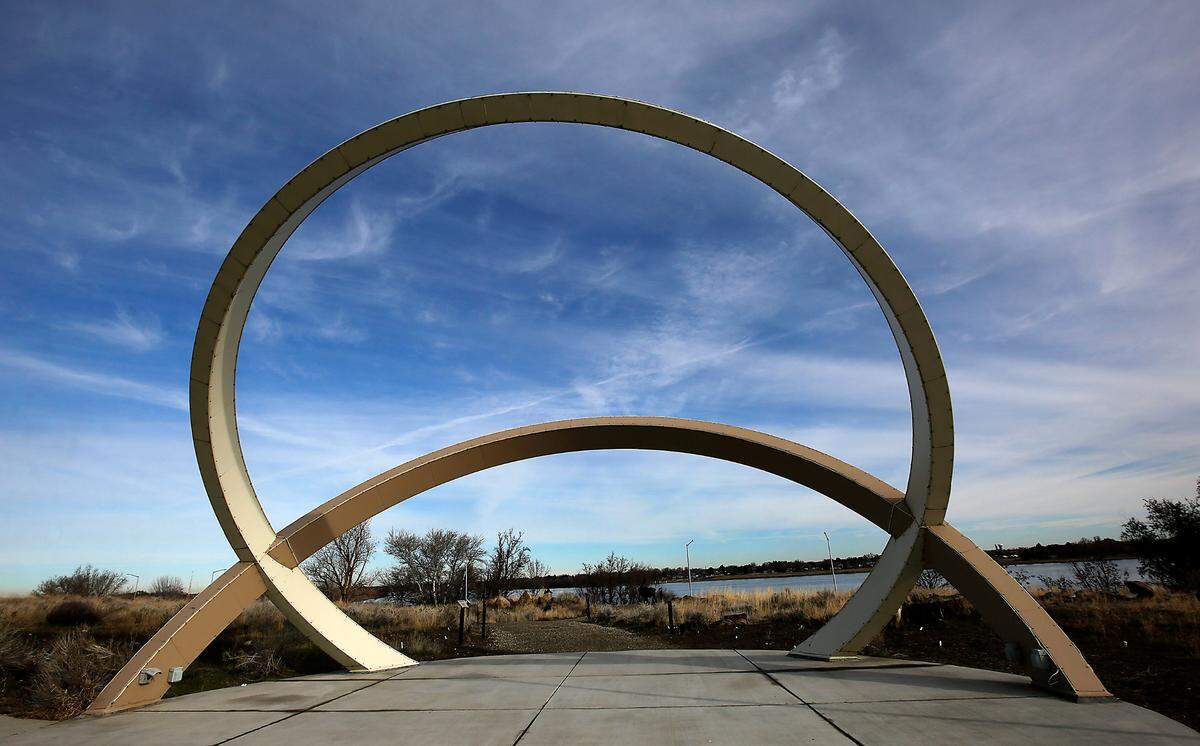
The sun is at the Reach Museum, where it takes the form of arches overlooking Bateman Island and the Columbia River at the Richland Wye.
Eight planets and an asteroid orbit it in a regional solar system stretching from Prosser to Touchet.
It is, according to its creator, the most comprehensive scale model of the solar system in this world.
The Hanford Reach Solar System has developed over the past 15 years, one planet at a time.
It is the brainchild of educator Trevor Macduff, who created Silas Education to build on an idea that began in his classroom.
Its mission: Create a regional-scale solar system to promote science education, curiosity and even tourism.
The project led to the sun sculpture at the Reach and 10 (and counting) markers representing the orbits of the eight planets and Ceres, the largest asteroid in the belt between Mars and Jupiter.
Macduff hopes to keep adding markers, as well as student-designed sculptures honoring each of the planets. It’s fine if a planet has more than one marker along its orbit, he said.
Confusion inspires curiosity and learning. And that’s the point.
“Because the planets go around, I’m including multiples of each.”
Silas Education is holding a proper ribbon cutting and grand opening for its ambitious solar system project in connection with Earth Day this month.
The official debut coincides with a new passport program to help guests navigate the solar system and learn more about each of the planets in its system.
The program begins at 4 p.m., April 22, at Camp Kiwanis in Columbia Park in Kennewick. One of two Earth markers is nearby.
When the festivities are over, Tri-Cities Young Marines will fan out to explore new worlds and tidy them up. Guests are invited to join in the clean-up.
Macduff said he’s excited to reach the 10-marker milestone. There’s still work to add more markers, but as it is, visitors can reach each of the eight official planets. Pluto, the dwarf planet, isn’t on the list, but it will be.
In keeping with the scale of the solar system, Mercury, Venus, Earth and Mars are within walking distance of the sun.
They are strung along the Sacajawea Heritage Trail that runs along the Columbia River on the Kennewick and Richland side.
The four gas giants — Jupiter, Saturn, Uranus and Neptune — require a bit more effort to reach.
Where to find them
Here’s where to find the planets, starting with the close-in ones and extending outward. Mercury, Venus, Earth, Mars and the asteroid Ceres each have two markers. The gas giants each have one.
The markers are noted in Google Maps.
The Mercury markers are near the former Columbia West Marina and overlooks Bateman Island and near the Reach Museum just past the Challenge Course.
The Venus markers are west of the Richland Wye overlooking Bateman Island and near the disc golf course off Columbia Park Trail.
The Earth markers overlook Bateman Island at the Richland Wye and near Camp Kiwanis on Columbia Park Trail.
The Mars markers are behind Ben Franklin Transit at the on-ramp to Highway 240 and in the parking lot off Columbia Park Trail at the base of North Edison Street.
The Ceres markers, representing the largest asteroid in the Asteroid Belt, are at Highway 240/George Washington Causeway bridge on the Columbia Point South side of the Yakima River in Richland and on Columbia Park Trail west of the Golf Triplex in Kennewick.
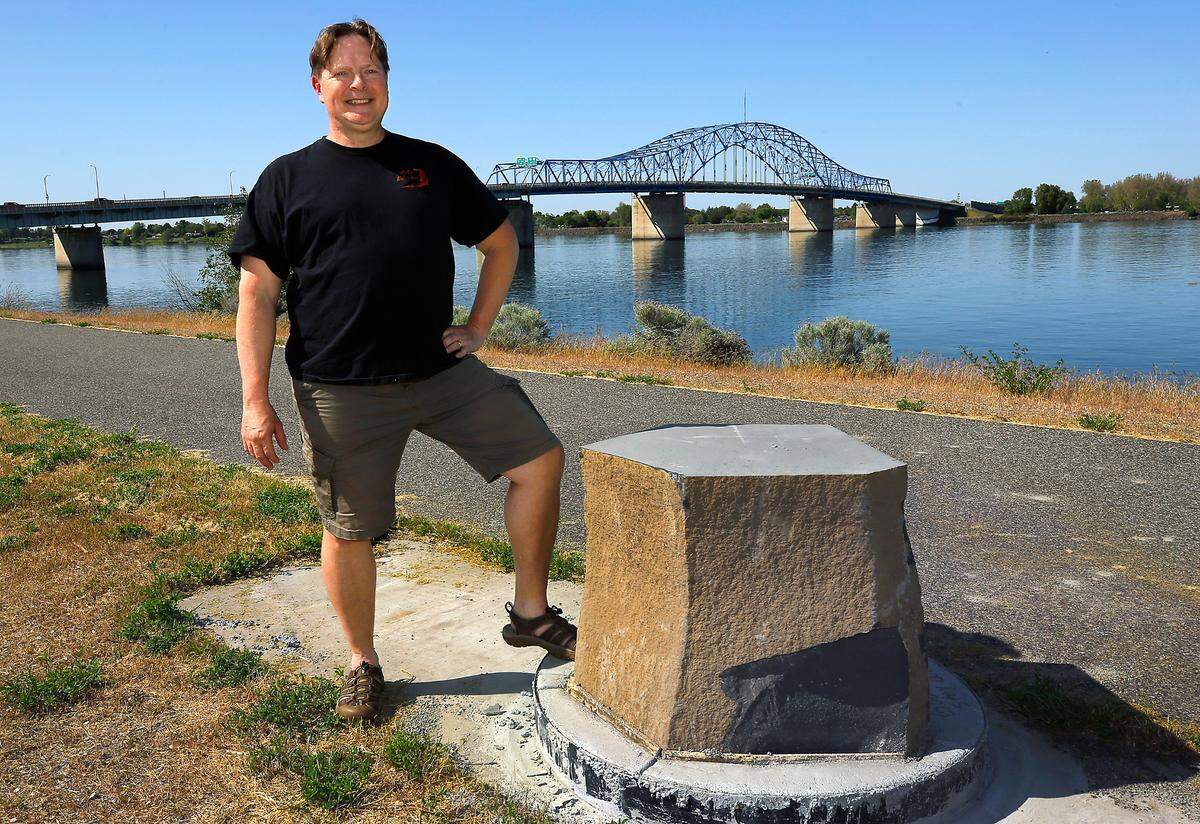
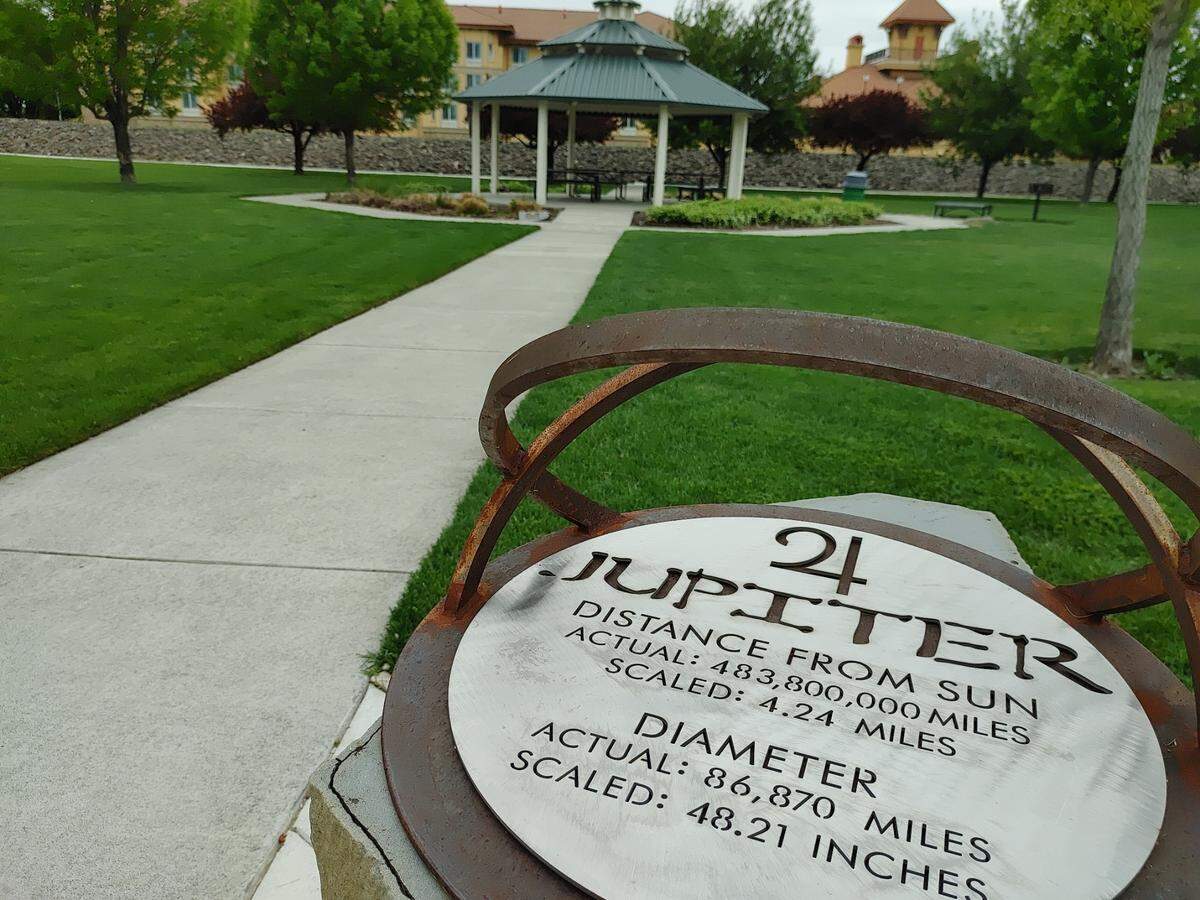
The Jupiter markers are at Howard Amon Park near the Rotary gazebo in Richland and a short distance east of the blue bridge in Kennewick.
The Saturn marker is at the USS Triton Sub Park overlooking the Columbia River in north Richland.
The Uranus marker is on the Benton City Path, west of 14th Street, north of the Yakima River.
The Neptune marker is in the Prosser Wine and Food Park, near Lee Road and Rapp Road by Kestrel Vintners. Neptune is currently the most far-flung of the Hanford Solar System markers. Its orbit would extend out to near Touchet, but there is not currently a marker on that end.
Macduff said his long term goal is to station 45 or 50 markers representing the eight planets and at least two asteroids, along with a dozen or so sculptures. That includes Pluto, now considered a dwarf planet.
Go to silaseducation.org.