2nd levy failure would devastate Pasco schools. Leaders torn on what to try next
AI-generated summary reviewed by our newsroom.
- Pasco School Board readies April levy revote after Feb. 10 measure failed.
- District weighs three levy sizes; $4M basic education cuts guaranteed for 2026-27.
- Smaller asks risk leaving $14M WA state aid on table; April vote cost would be $325,000.
The Pasco School Board has several big decisions to make this week after an incredibly tight levy election ended in failure.
The five-member body made a tentative agreement at an emergency Thursday night meeting that it would go back to voters in April — but the amount it will ask for and the number of years it will collect the tax are yet to be decided.
This week will be a whirlwind. On Tuesday, the board is expected to finalize details of that April 28 special election measure, just in time for the Feb. 27 deadline to the information into the county auditor’s office.
The school district’s four-year, $153 million renewal levy to pay for educational programs and operations officially failed on Thursday. It needed 60 more “yes” votes to get the simple majority it needed to pass.
Pasco Superintendent Michelle Whitney told the board she felt the election results provided the district with “really important feedback.”
“I think there’s something to be learned here. The community has spoken with these results,” Whitney said.
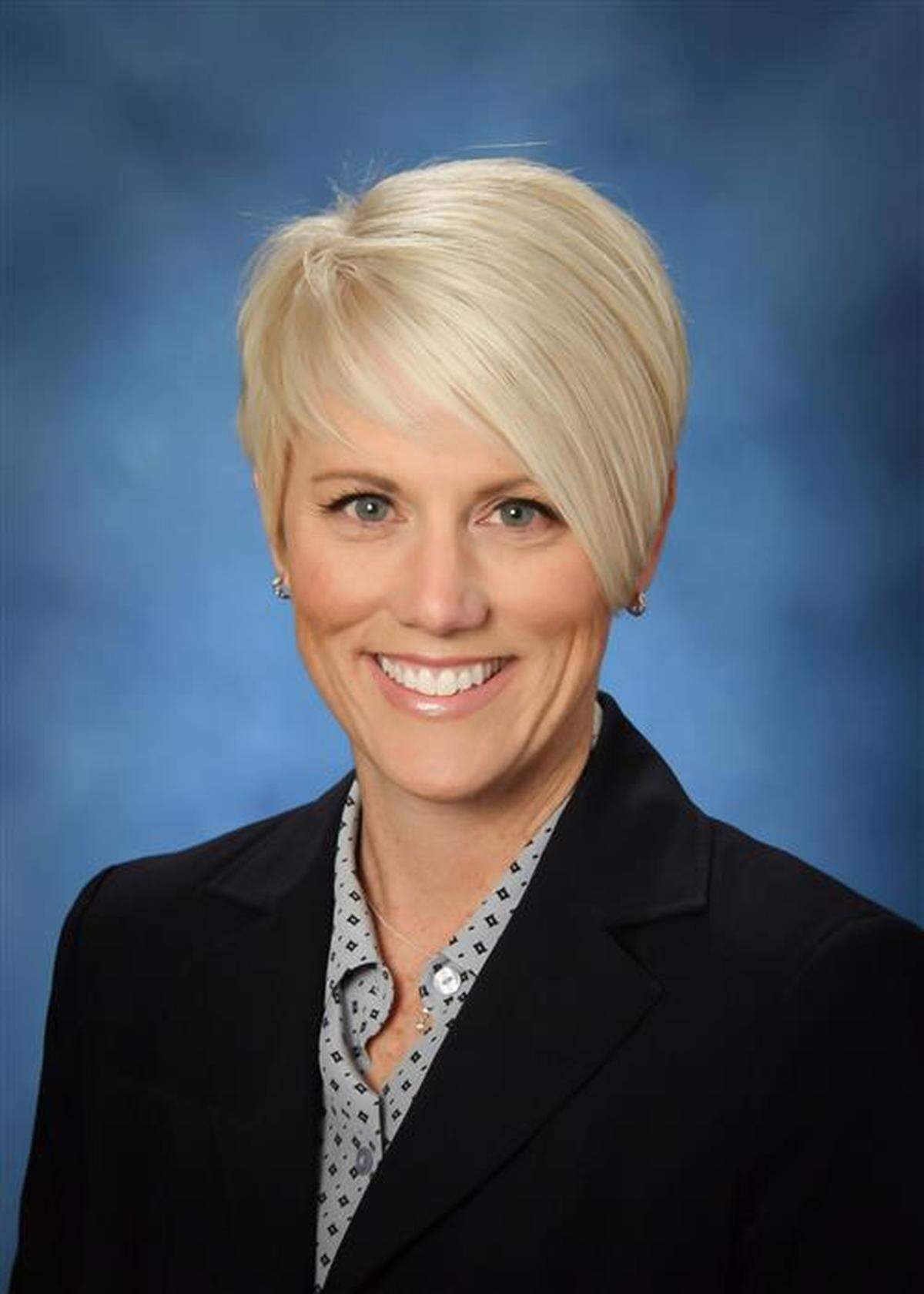
She said the district will continue to engage in “transparent communication, structured listening, and commit to continuous improvement.”
Pasco School District has one more shot at renewing its levy funding before it expires at the end of this year, or it will face deeper cuts to programs funded in-part or in-whole by the revenue. That includes programs and staff for athletics, safety and security, music and the arts, counselors and transportation.
The impacts also don’t take into account ongoing reductions the district is already making to improve its budget health and improve efficiencies.
Regardless of the next levy, Pasco already plans to cut $4 million in basic education funding from the 2026-27 budget. The district serves about 18,300 students.
School board weighs two smaller rates
Joseph Castilleja, the director of fiscal services, presented the school board with three levy scenarios. All three were for four years, but the board could decide next week to ask voters to consider a levy of just two years.
When it comes to levy measures, school districts ask for an amount and the tax rate is calculated based on the value of property assessments. Rates could be less if assessments that year are valued higher.
- Scenario 1: A four-year, $153.8 million measure that would tax about $2.08 on every $1,000 of assessed value.
- Scenario 2: A four-year, $147.1 million measure that would collect about $1.99 on every $1,000 of assessed value.
- Scenario 3: A four-year, $139.6 million measure that would collect about $1.89 on every $1,000 of assessed value.
Castilleja said Scenario 1 is identical to the Feb. 10 levy request, despite the rate being an estimated 9 cents less. The rate changed because fall estimates of the 2026 assessed values were initially expected to grow by 0.7%.
In reality, they grew by 5.1%. And Feb. 10 voters would have actually been assessed a tax rate lower than the $2.17 advertised had they approved the levy.
School districts do not collect more on the total levy if assessed values exceed expectation — it collects the same amount, but that cost is spread out among the additional wealth.
“If we had known this number back then, we would have passed a resolution at $2.08,” he said.
Possible budget cuts
Scenario 1 is what the district has identified as what it needs to maintain current program operation levels. The other two options would come with some modest cuts to the district’s annual $310 million operating budget.
Cuts would be applied to non-basic education activities.
Scenario 2 would create a gap of about $1.5 million to $2 million a year — the equivalent of about 21 full-time employees, their salaries and benefits. Over four years, that would total around $6.7 million that the district would need to cut.
Castilleja said those could be cut from extracurriculars and sports, security enhancements and school resource officers, course enhancements and other levy programs.
Scenario 3 would create a gap of about $3.2 million to $3.8 million a year — impacting possibly 43 full-time employees. Across four years, that would add up to more than $14 million that would be cut in similar areas.
Castilleja warned that opting for Scenario 3 could put Pasco at risk of losing millions in state matching money, called Local Effort Assistance.
The school district receives about $14 million annually from the state through the program, but only if it has an active levy above a $1.50 rate.
Asking voters for a levy estimated at about $1.89 per $1,000 risks dipping below the $1.50 threshold if the rate drops because of higher property values.

Pasco board split on options
The school board was largely split which scenario to support, but chose to move forward with the two larger scenarios.
Only board President Scott Lehrman supported the smallest Scenario 3 option.
Vice President Steve Norberg and board member Heather Kubalek initially were supporting Scenario 2.
“I think it’s something we can live with,” Norberg said. “It’s not ideal, but we can live with it.”
Kubalek said she feels the more expensive Scenario 1 has a good shot at passing but acknowledged public support for levies has continued to slip in the last 16 years.
“I do think it speaks to our community,” she said. “They are making a statement that they want us to be better stewards of the tax dollars. I think the $1.99 is not hurting us too much. We can still provide the services we need to provide. But that’s telling our community that we’re willing to tighten our belts just like so many other people have to do right now.”
Board member Amanda Brown called the $1.99 option “detrimental to our students.” She said half the community has told them through the election that $2.17 is OK.
“I’m torn between the two. I don’t want to go as low as $1.89 because I don’t want to put the district in that kind of situation, nor our students,” she said.
Board member John Kennedy also backed the higher option. He said the cuts to student safety and services would be “very detrimental.”
“There is a risk that any one of these scenarios lose at the ballot in April,” Kennedy said.
“I think we can make the best case that we can — knowing that it was so close, and so many people didn’t even bother to vote — that the stakes are very high for our students; that dozens of jobs are on the line; that many programs are on the line; that the ability for a student to engage in an activity or discipline that might change their lives for the better is on the line,” he continued.
Lehrman said while a $4 million gap is possible with the lowest option, it could also be the most likely to pass.
Levy dollars and the state match combined make up about $50 million to $55 million annually, and he does not want to risk losing those dollars.
“A double failure gives us none of the $50 million, which is a double-digit 15% loss to the district,” he said. “I would hedge towards make this a sure thing and run it at $1.89, because we don’t want to lose $50 million a year squabbling over $3 or $4 million a year.”
Ballot costs could run up to $325,000
Another issue the board must consider is the cost of the special election in April.
Pasco School District will likely have to pay Franklin County about $325,000 since it would likely be the only measure on the ballot, with no other agency helping split the cost.
Pasco paid the county about $78,000 to be on the Feb. 10 ballot because it shared the cost with five other measures.
Despite the cost, putting the measure up for a vote in April could be the district’s best — and least disruptive — choice.
That would allow the district to make budget adjustments before its spring staffing and budgeting processes.
If the district went out for a levy in August or November elections, it would have to plan without knowing if the levy would pass, Whitney said.
Levy funded programs would have to be suspended under those late timelines. Layoffs would be announced by May 15 with the hope that the district could “recall” those workers if voters passed it.
Can there be a recount?
The Pasco levy failed 5,424 votes, or 49.73%, to 5,483 votes, or 50.27%. The 59-vote difference was a little more than half a percentage point.
While state law requires mandatory recounts for certain close elections, Whitney told the board that’s not the case for local ballot measures.
A group of five registered voters could request a recount within two days of Friday’s certification, but they would be required to pay the full cost of the recount unless results change.
Whitney said their attorney told her most people don’t do this for school district measures because the results might change by only a few votes.
This story was originally published February 23, 2026 at 5:00 AM.