Parents say pulling teacher over Charlie Kirk post has disrupted classroom
AI-generated summary reviewed by our newsroom.
- Parents say teacher's removal left students with substitutes and chaotic routines.
- District reviews social media policy amid backlash over teachers' off‑duty comments.
- Union and parents say disruption harms special‑needs learners.
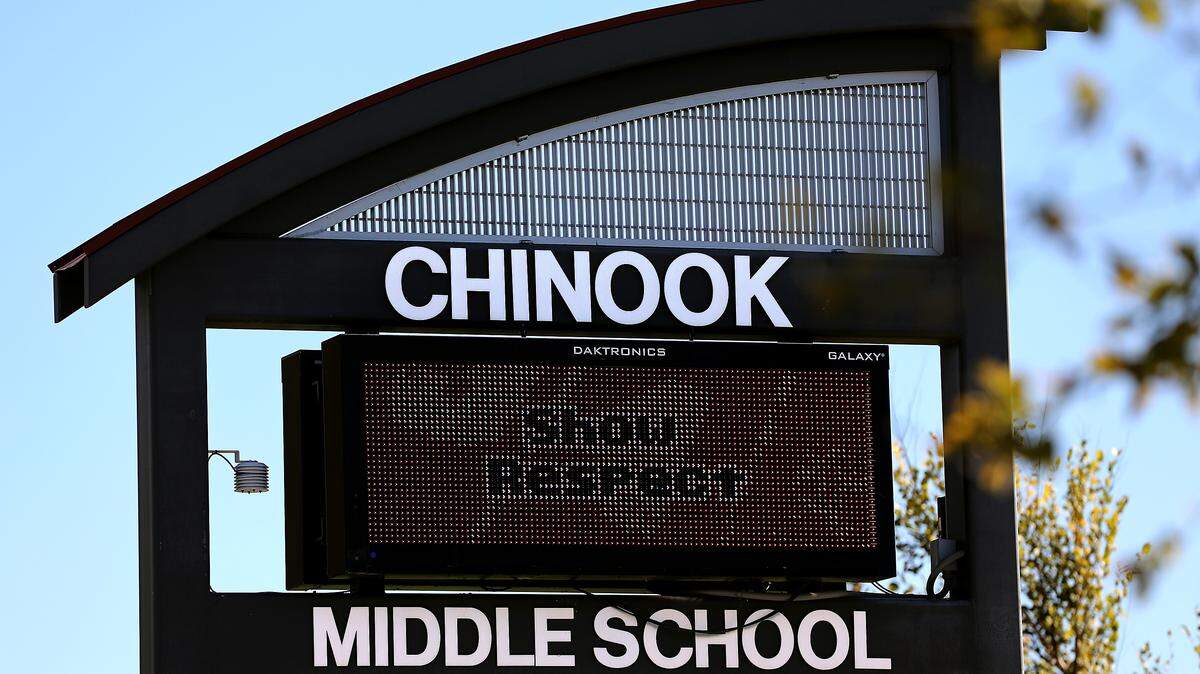
Chinook Middle School parents say their kids are still asking where their special education teacher went nearly a month after being abruptly removed from the classroom.
The unnamed teacher, characterized by parents as “a huge pillar in the autistic community,” had allegedly posted on Facebook a quote that referred to the killing of a prominent political activist.
A Kennewick School District spokesperson confirmed that the teacher is still employed and remains on leave.
“The kids are still in substitute mode,” said Savannah Tranchell, 40, of Kennewick, who is a parent to a 7th grader with high-functioning autism. “They feel that, they know (the teacher is) not there. He says it’s more chaotic.”
The issue at this Tri-Cities school continues in the wake of online reactions to Charlie Kirk’s assassination at a public event held Sept. 10 in Utah.
In a Facebook post, the Chinook teacher misattributed a Clarence Darrow quote, writing, “I have never wished a man dead, but I have read some obituaries with great pleasure.”
Kirk’s name was not included in the post, but many weighed in saying that someone who makes light of a person’s public killing shouldn’t have a role in public education.
The event has also resurfaced debates over how much free speech teachers and public employees have when they post about controversial topics on their social media. Some around the country have found themselves in hot water over their reactions or opinions about the Turning Point USA founder’s killing.
But an overwhelming majority of politicians and public figures across the political spectrum has condemned the political violence and called for a cooling of rhetoric.
Melissa Schneider, president of the Kennewick Education Association, declined to speak on specific personnel issues in an email to the Herald.
She says while Kennewick teachers focus on providing quality education, they also are “whole people” who engage in their communities outside of working hours.
“It is illegal and unacceptable when outside organizations attempt to dox educators — sometimes even targeting their families — and then encourage outsiders to pressure the district into taking disciplinary action,” Schneider wrote. “Our students need their teachers, and we cannot allow outside groups to bully our community into removing talented educators from the classroom.”
One Kennewick parent demanded an ethics probe into a city councilman’s actions after he called the Chinook teacher a “vile piece of trash” in a Facebook post.
Districts can limit some teacher speech
Washington’s K-12 public school teachers generally enjoy many of the free speech rights held by Americans, but there are some limitations.
The First Amendment protects the rights of many teachers to speak as a private citizen on matters of public concern, but they don’t have those same protections while on the job, according to the Washington chapter of American Civil Liberties Union.
“What you say or communicate inside the classroom is considered speech on behalf of the school district and therefore is not entitled to First Amendment protection,” reads a blog post from the Washington ACLU. “Certain types of speech outside the school might not be protected if the school can show that your speech created a substantial adverse impact on school functioning or that your speech was made in accordance with your job duties.”
The burden generally falls on districts to determine if a teacher’s comments have caused significant enough disruption in the workplace that it impedes operations or the ability of them to perform their job duties.
Kennewick parents who spoke to the Herald say the teacher’s removal has been more disruptive to families than the enflamed reaction.
The Pickering-Connick test — which takes its name from two prominent U.S. Supreme Court cases — weighs whether an employee was speaking on a matter of public concern or private grievance, then determines if the speech was sufficiently disruptive.
Kennewick School District has similar social media policy on the books that sets guidance on usage.
Employees here are allowed to create content on blogs, social media and websites knowing that it must not “disrupt the learning environment or damage the district’s reputation, its employees or students and/or their families.” The fault of school disruption in these circumstances lies on the employee.
“Employees must exercise care in setting appropriate boundaries between their personal and public online behavior, understanding that what is private in the digital world often has the possibility of becoming public, even without the user’s knowledge or consent,” Policy 5278 reads.
Tranchell, a mother of a student in the Chinook teacher’s class, finds Kennewick’s policy concerning.
She argues it is written in a way that allows for anyone to get fired if someone outside of the district makes a “big enough stink” about posts or comments, or if it paints the district in a negative light.
What teachers do on their own time, Tranchell argues, is their own business, as long as it’s not illegal or discriminatory.
“I’m not looking at my personal teacher’s social media pages,” she said.
But policies can often change. A couple of years ago, Kennewick weighed in on employee speech when the school board voted to establish a new policy banning its staff and teachers from wearing political buttons.
The district didn’t have any relevant policies written down at the time and it hadn’t been a problem. But it did come as teachers in the neighboring Richland School District had voiced frustration over one of their school board member’s threats to try to fire anybody who was wearing a button in support of a recall effort.
Courts have also allowed school districts to require that teachers remove some classroom banners, displays or decorations that convey messages not associated with curriculum, says the Washington ACLU.
‘Very disruptive at first’
“My hope is that (the teacher) is going to be returned to the classroom soon. I personally believe this has been blown out of proportion,” said Hannah McDaniel, 34, of Kennewick.
Her son is a 6th grader who is served by the teacher.
McDaniel says it’s been up to parents to pick up the pieces after the teacher’s removal at Chinook, which she says has disturbed the foundation of support structures for her child and others.
Tranchell and other parents agree that pulling the teacher was “very disruptive at first.”
But McDaniel says the reaction from local public officials, outside groups and local media coverage associated with the social media post have also fanned the flames.
Schneider says attacks on teachers create disruptions for students, especially those who rely on educators for consistency and support.
“These disruptions negatively impact student learning and development,” she wrote. “KEA stands firmly in support of our members and their right to teach free from harassment, political pressure, and intimidation. When concerns arise, we work to ensure that professional rights and due process are always upheld.”
This story was originally published October 6, 2025 at 2:15 PM.