More WA schools are banning cellphones. What about in Tri-Cities
AI-generated summary reviewed by our newsroom.
- Washington state districts expand cellphone bans as 75% adopt use-limiting policies
- Tri-Cities schools report improved focus and behavior after device restrictions
- Research links reduced phone use to gains in learning and student well-being
Tri-City school leaders say curbing cellphone use in the classroom continues to be a winning formula as students and teacher return to class this week for the 2025-26 school year.
They report seeing positive impacts and the broader trend of cutting down on distractions.
Last week, Washington Superintendent Chris Reykdal said results from a spring survey of school districts across Washington found 75% will have a policy in place when students return this year.
Roughly half of those policies restrict device use during instruction time only, while a third outright ban students from using them at all from the first to last school bells.
A year ago, Reykdal challenged the state’s 295 school districts to curb distractions during teaching time by drafting their own policies. Research has shown removing cellphones helps student concentration and learning, improves mental and physical health and reduces pressure from social media.
Richland High School Principal Nicole Anderson said their policy prohibiting “personal electronic communication devices” during class time has allowed students to have more candid, focused and fruitful discussions.
“Students could be themselves because they weren’t worried about someone else snapping a picture of them or recording something they said. They just felt safe, I think,” she said.
The Richland School Board codified a comprehensive policy in November 2024 after Richland and Hanford high schools, as well as Enterprise and Carmichael middle schools, began pilot projects at the start of the 2024-25 school year.
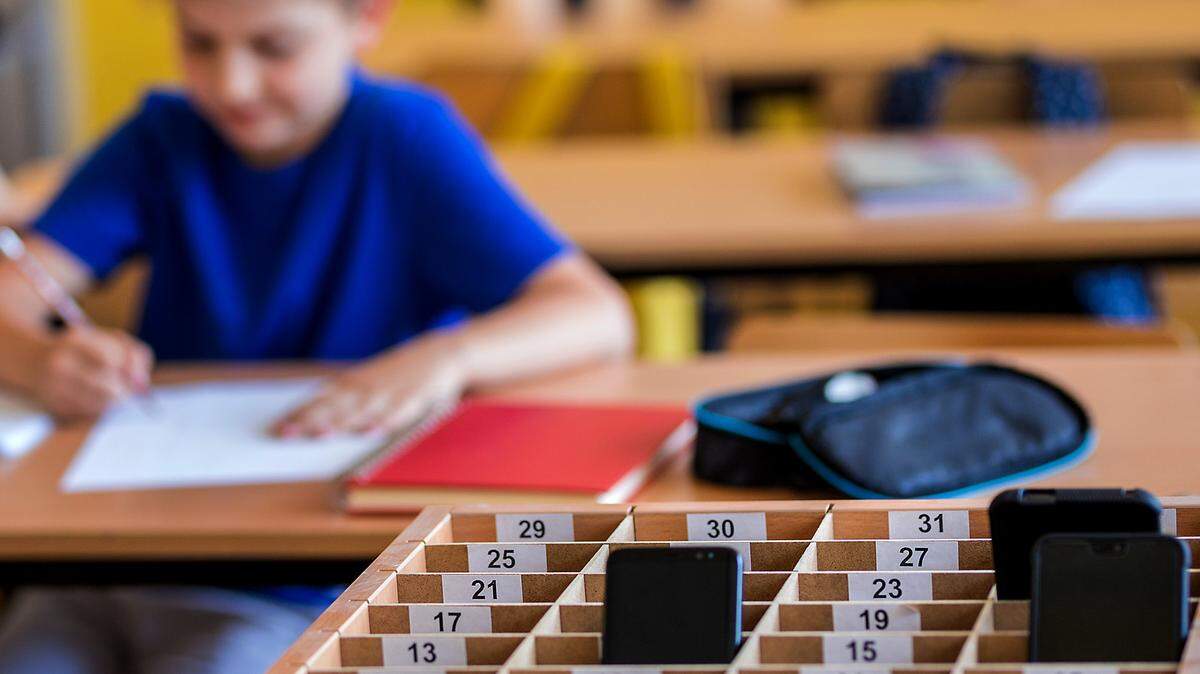
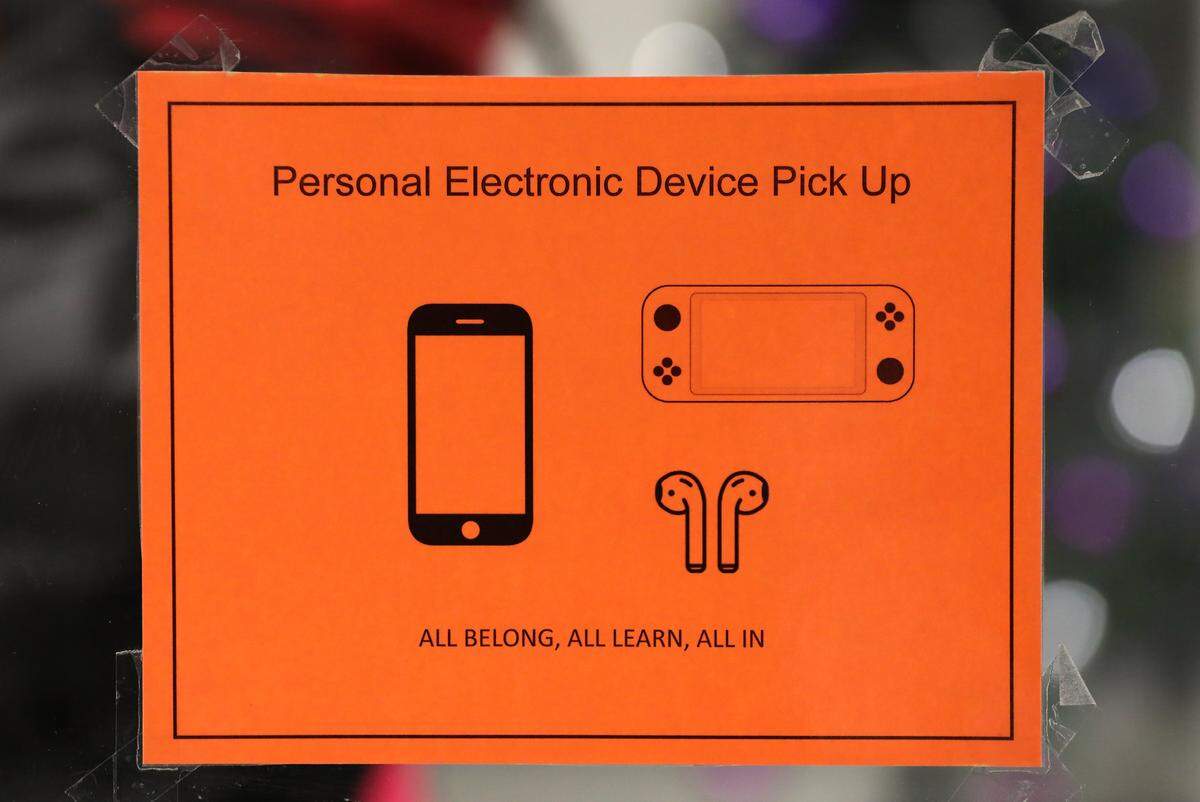
Elementary and middle school students in Richland are expected to have their cellphones turned off and in their backpack throughout the entire school day, including during lunch and in the hallways.
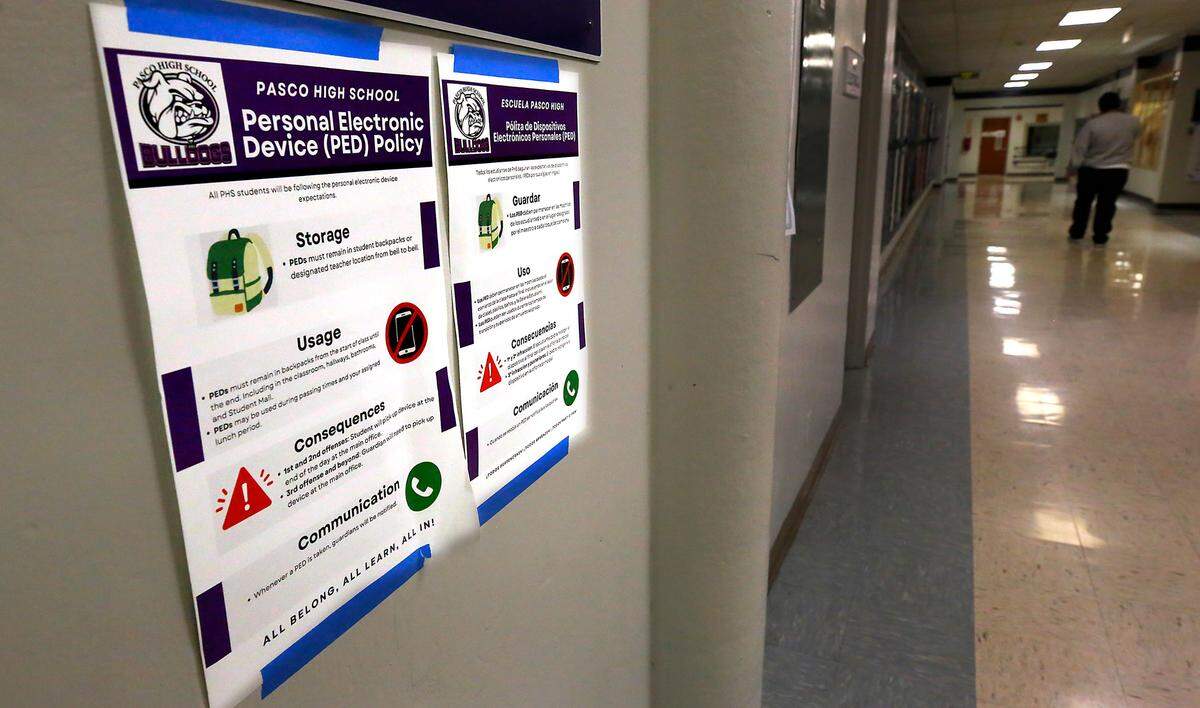
High schools, middle schools and elementary schools in the Pasco School District have similar policies to Richland.
Kennewick School District has had a policy on the books since 2022 restricting all students, from prekindergarten to 12th grade, from accessing or using their phones during class time, unless permission is granted by a teacher.
That policy also mentions prohibiting cyberbullying and harassment, filming someone without their permission, using devices to engage in academic dishonesty, accessing unauthorized networks, and hacking devices.
31 states restricting phone use
Public schools across the U.S. in recent years have cracked down on cellphones as growing research shows a correlation between increased use and more anxiety, bullying, depression and distractions.
At least 31 states and Washington, D.C., require school districts to restrict students’ use in schools in one form or another, according to an article tracking legislation from Education Week.
Just four states — Florida, Louisiana, South Carolina and Utah — require all districts to prohibit any and all use of personal devices during the school day.
While Washington state currently leaves it up to individual districts to make that call, state Sen. Marko Liias, D-Edmonds, Rep. Stephanie McClintock, R-Vancouver, and a bipartisan coalition of lawmakers introduced legislation earlier this year that would have required districts to adopt some level of restriction during instructional hours before the 2026-27 school year.
The bill — which failed to get traction in either the House or Senate — would have also tasked the Washington State School Directors’ Association with creating model policy for districts to reference.
The movement to get digital devices out of classrooms has largely been driven by teachers. It’s also broadly popular.
A 2024 October survey conducted by Pew Research Center found nearly 70% of Americans support cellphone bans in class and 36% support all-day bans.
Still, young students have been largely resistant to changes in their media consumption. Nearly 95% of students age 13-17 in a 2023 Surgeon General’s report said they use social media apps like TikTok, Snapchat and Instagram “almost constantly.”
“Teaching with technology is a blessing and a curse,” said Anderson, who remembers teaching in the days of flip phones, when text messaging was the craze.
‘A bit of relief’ for stressed students
Mike Johnson, principal in neighboring Hanford High School, said teachers in both schools came to the realization around the same time that phones were the problem — they were creating a distraction for students who couldn’t concentrate in class.
Their work eventually reached the school board and teachers from both schools began working together on twin policies.
There was an “immediate impact” with their united front, Johnson says. Kids got it and understood the repercussions of having their devices confiscated.
“For students it was a bit of a relief because it gave them the opportunity to put the phone away and focus on the instruction of the class and interactions with their peers,” he said.
By the end of last school year, Johnson said, he could see a serious difference in the way students were engaging in the classroom. Less time reminding students about their phones also meant more quality time on the curriculum.
“There still are students who are trying to get around it and sneak their phones, but I think it’s become less an issue for teachers and it’s not the focus anymore,” he said.
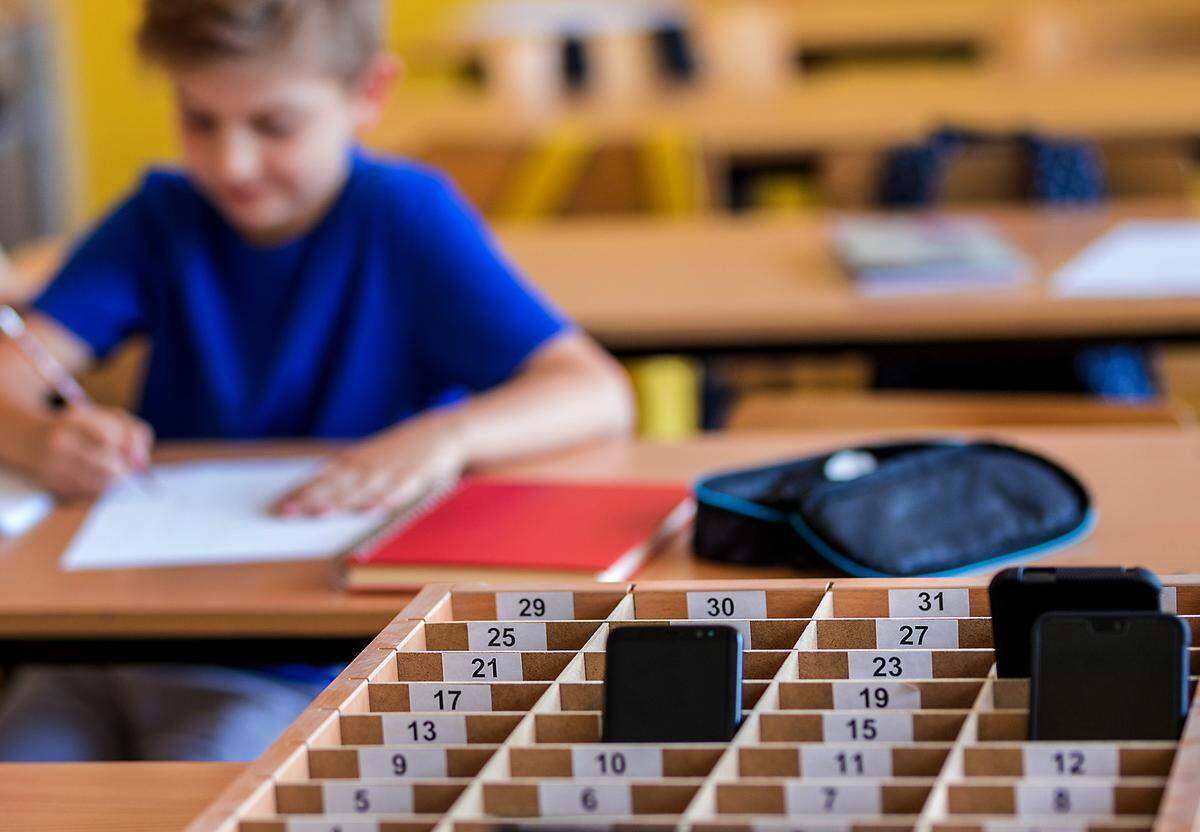
Johnson leaves it up to teachers on how to operate with the policy: Most require students to stow devices in their backpack, but some will lock them in cubbies.
“If it’s on their body, it’s going to be constantly distracting them,” he said.