Are phone bans working in Tri-Cities schools? What some teachers, students have to say
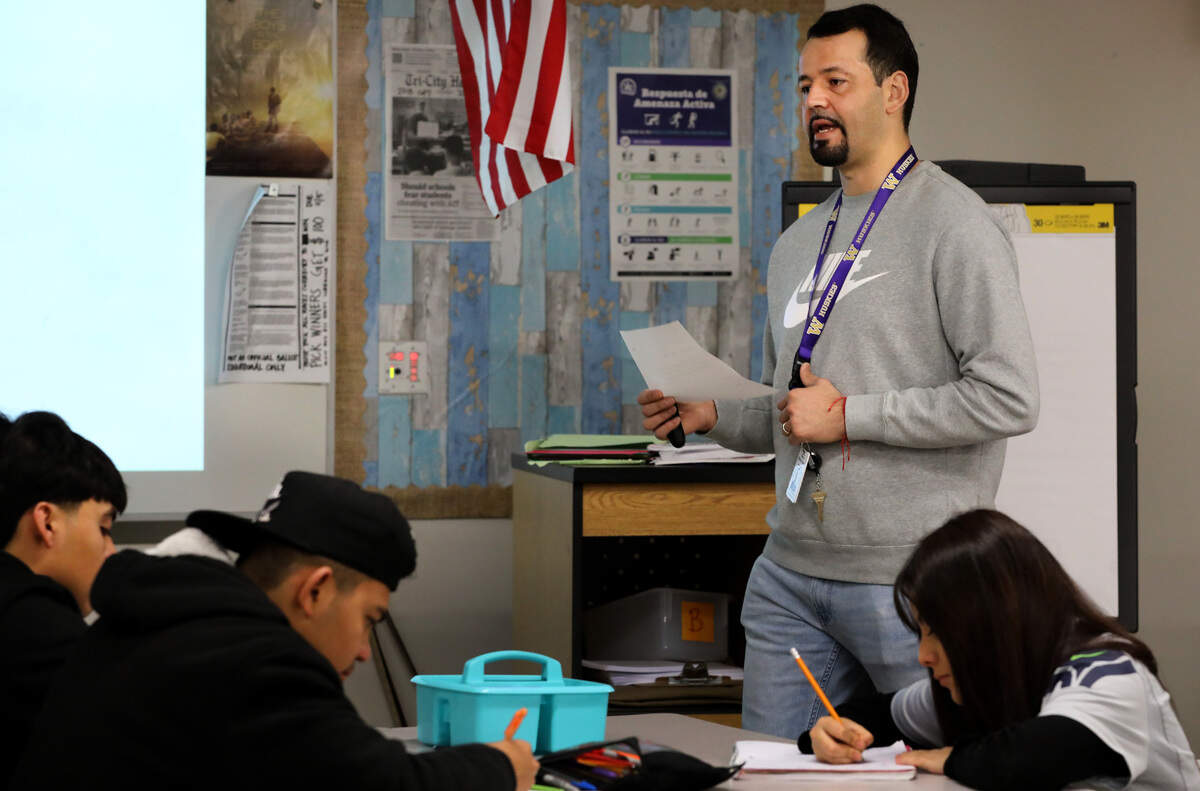
For Fabian Mendoza and other teachers at Pasco High School, education often starts out with a little trust and personal connection.
It’s why he greets students in the hallway before class, gets to know their interests and even shares anecdotes from his own background.
“They’re small things, but create a big difference in the way they approach you and the trust they have with you,” the English language development and career-tech teacher says. “At the end of the day, I just want my students to walk away with a meaningful experience.”
It’s also a reason why he and other educators are leading by example when it comes to new restrictions on cellphone use in the classroom.
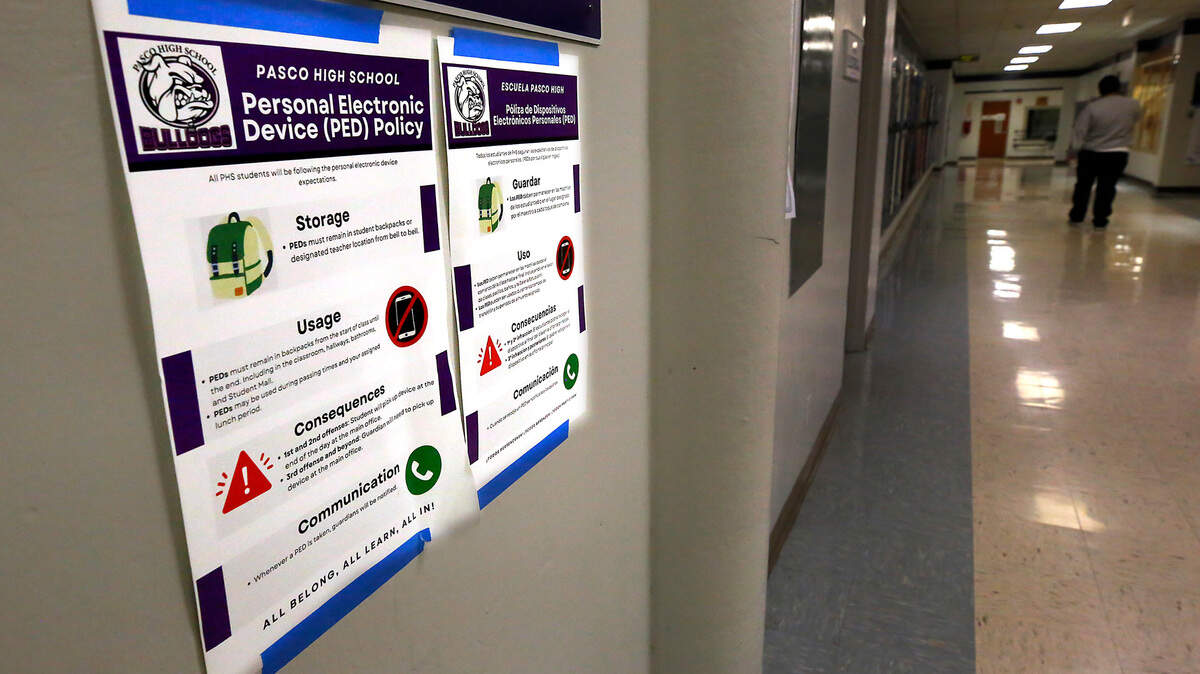
Starting this school year, students at Pasco High, Chiawana High, Delta High and New Horizons High School are no longer allowed to use their phones and personal devices during instruction time.
It’s part of a broader nationwide crackdown to curb distraction and increase engagement, and follows the success of guidance put in place last year requiring Pasco middle school students to keep their phones in their backpacks while on campus.
The Richland School Board just approved harsher restrictions after receiving positive feedback from its staff about cellphone rules in middle and high school classes.
Pasco plans to do the same.
School district leaders plan to draft more consistent guidelines around cellphone use in high schools leading up to the opening this fall of Sageview High School.
Setting an example in class
Mendoza says he intentionally leaves his own personal cellphone out on his desk and makes an example of not using it.
That kind of action from teachers instills confidence in students, making them feel less anxious about putting their phones away to focus on work and to not be burdened by what’s going on outside the classroom.
“When they’re doing it, it kind of compels you to go, ‘Oh, I can put my phone away for this class and pay attention to him while he’s instructing,’” says Owen Bergstrom, a Pasco High senior.

“I think the majority of students understand that it will help them out and improve their interactions,” adds Bergstrom, who also serves as a student representative on the Pasco School Board.
The new restrictions appear to be working, too.
“Our discipline referrals are down overall, but that could be attributed to a couple other policies we’ve revamped and implemented this year,” Chiawana Principal Jaime Morales recently told the school board. “Our students overall have been very compliant.”
Mendoza says students are more engaged in curriculum and teachers are happy with the collaboration they’re seeing. He says it’s also preparing pupils for life after high school, when they’ll need to be fully engaged in college coursework, their careers or other work.
This week, Bergstrom and his fellow school board student reps presented some improvements that could be made and that were suggested by the superintendent’s student advisory council.
Students’ thoughts on the new policy are a “mixed bag” — it’s a new inconvenience, but it’s not the end of the world — but some teachers and students have become lenient since they began in September.
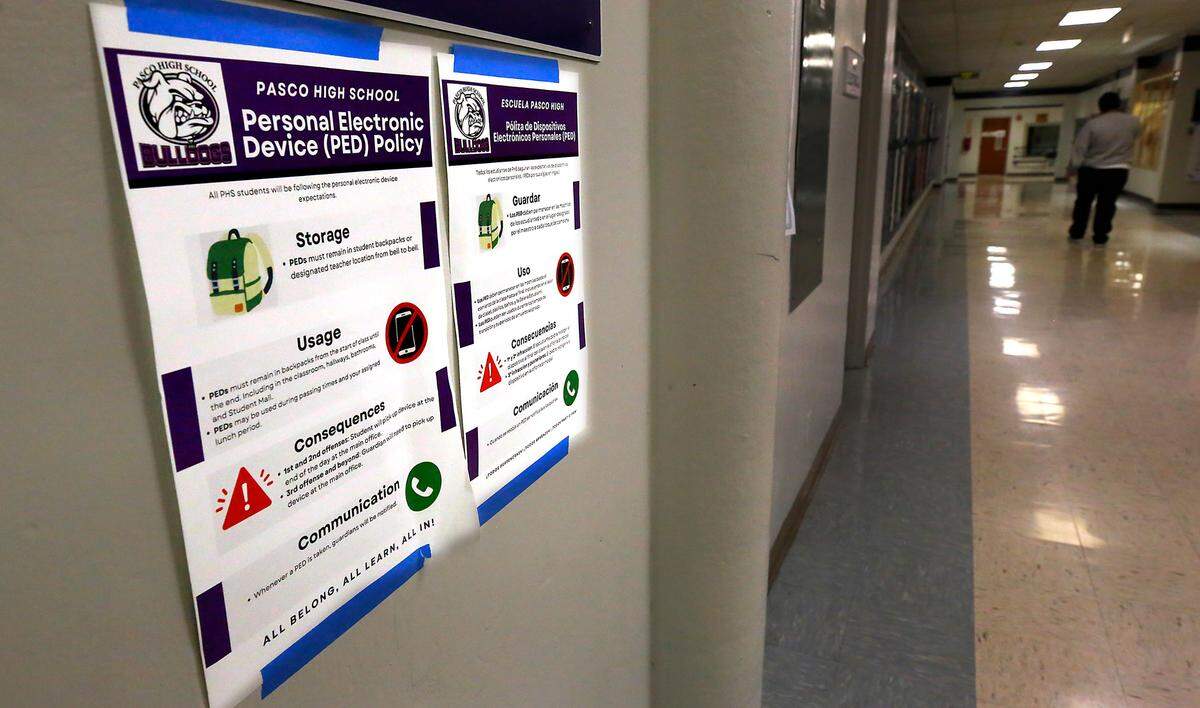
The advisory council recommended school leaders demonstrate a sensitivity around phone use during an emergency, to redraft policy to be less punitive, to provide “phone caddies” for classrooms, and to consider leniency for parents who may not be able to retrieve their student’s phone from the school for policy violations.
K-12 schools in WA, national crackdown
Pasco’s phone efforts are part of a broader trend of states, districts and schools that are tightening use as growing research shows a correlation between increased use and more anxiety, bullying, depression and distractions.
Washington Superintendent of Public Instruction Chris Reykdal in August challenged the state’s 295 school districts to curb distractions during teaching time by creating new policies for cellphone use in time for the 2025-26 school year.
“The research is clear: Reducing the use of cellphones in class improves concentration and learning, improves mental and physical health, and reduces pressures caused by social media,” he wrote in a letter.
He encouraged engagement with communities and parents but Reykdal did not push any specific policy.
Social media use is nearly universal, with close to 95% of students age 13-17 saying they use social media “almost constantly,” according to a 2023 surgeon general’s report. It also linked social media addiction with poor sleep, depression and other unhealthy behaviors.
“Studies show that social media and other screen addictions are similar to, say, a drug or alcohol addiction,” says Carol Vidal, an assistant professor of psychiatry and behavioral sciences at Johns Hopkins University.
Social media engagement can release the neurotransmitter dopamine in similar ways to more lethal addictions, she says.
An October survey conducted by Pew Research Center found nearly 70% of Americans support cellphone bans in class and 36% support all-day bans.
The most common reason given for support was so students would have fewer distractions, while the most common reason against restrictions was so parents could contact their children when needed.
At least 15 states have passed laws enacting some form of restriction on students’ use of phones during the school day, according to the National Education Association, and the movement has largely been driven by teachers.
What Richland, Kennewick are doing
Last month, the Richland School Board approved a new policy restricting the use of cellphones and personal communication devices in classes.
Pilot policies went into effect at the beginning of the school year at Richland and Hanford high schools, as well as at Enterprise and Carmichael middle schools, with students and staff giving generally positive feedback.
The approved policies differ a bit between middle schools and high schools, but broadly include phones, earbuds and headphones, smart watches and any device not issued by the district.
Elementary and middle school students cannot use their devices between the first and last bell of the day, including between classes or at lunch breaks. If a parent requires a student to have a communication device on them, it must be silenced or turned off and in their backpack.
High school students cannot use their devices during class time — that includes during restroom breaks and activities that may take them out of the classroom. But they can use them between classes and during lunch.
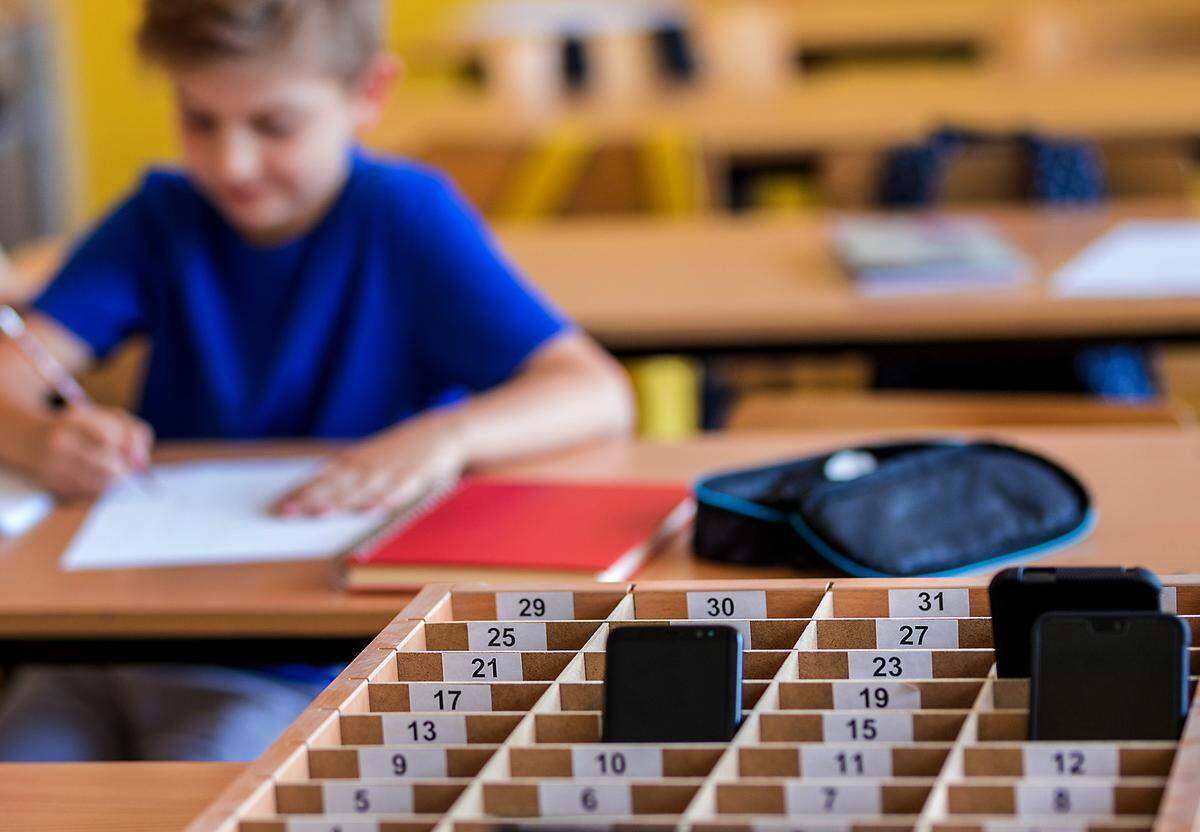
“Students may keep personal electronic communication devices in a classroom phone caddy, classroom locked cupboard or in their backpacks,” the policy reads.
“Earbuds and wireless headphones can be used to connect to a school district issued Chromebook with teacher permission for academic purposes only,” it continues.
Richland’s new policy allows for exceptions, including for medical conditions and disability accommodations.
Kennewick School District has had policy in the books since 2022 restricting all students, from prekindergarten to 12th grade, from accessing or using their personal electronic device during class time, unless permission is granted by a teacher.
That policy also mentions prohibition of cyberbullying and harassment, filming someone without their permission, using devices to engage in academic dishonesty, accessing unauthorized networks, and hacking devices.