WA superintendent urges harsher school cellphone limits. Tri-Cities is cracking down
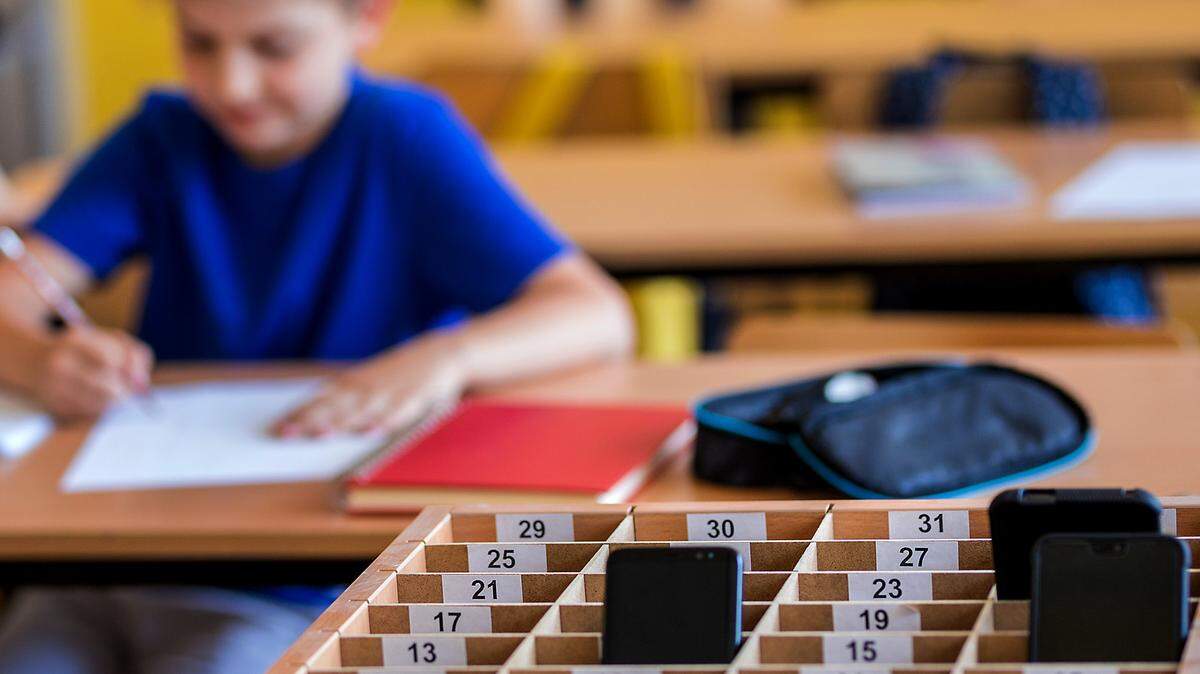
New rules around cellphones went into effect this week at several Tri-Cities schools just as the state superintendent for public education challenged all districts to consider stricter phone rules.
It’s all part of a broader trend of states, districts and schools cracking down on student cellphone access as growing research shows a correlation between increased phone use and more anxiety, bullying, depression and distraction.
“The research is clear: Reducing the use of cellphones in class improves concentration and learning, improves mental and physical health, and reduces pressures caused by social media,” Superintendent Chris Reykdal said in a Wednesday statement.
“I am challenging all Washington school districts to engage their communities over the next year with a goal to reduce distractions during instructional time and determine a path for restricting cellphone and smart device use in class by the start of the 2025-26 school year,” he continued.
Starting this year, most high schools in the Tri-Cities will begin enforcing rules to restrict cellphones during class time, if they already weren’t, while middle schools adopt a stricter “away for the day” policy.
Most allow exceptions for health reasons, students on individualized education programs or for students with disabilities.
- Enterprise and Carmichael middle school students in the Richland School District are expected to keep their cellphones “away and out of sight” from the first bell of the school day to the last. Students who violate the new policy will be asked to take their devices to the office to be picked up at the end of the school day. That includes smart watches.
- Richland and Hanford high school students in Richland cannot use their phones or earbuds during class time, but may use them during passing periods and at lunch. Earbuds can be used on Chromebooks for school work.
- Kennewick School District does not allow any student, from prekindergarten to 12th grade, to access or use their personal electronic device during class time, unless permission is granted by a teacher. This policy has been in the books since 2022, and Kennewick High School reportedly sent out a letter to parents before the start of school reminding them of it.
- Students at Pasco High School, Chiawana High School, Delta High School and New Horizons High School can use their phones during passing periods and lunch, but will no longer be allowed to use them during class.
- McLoughlin Middle School, Ochoa Middle School, Reynolds Middle School and Stevens Middle School students have been required since last year to keep their phones in their backpack and out of sight from the time they arrive on campus to the time they leave.
At its Tuesday night meeting, the Richland School Board agreed to study the issue of stricter cellphone policies over the coming months while also engaging parents and teachers.
Board member Bonnie Mitchell said they’ve received emails from parents who are onboard with limiting phones
Four of its schools are piloting new guidelines and, if they’re successful, could result in regulation district-wide. That new policy could be adopted and implemented as early as the second semester.
Kennewick Superintendent Traci Pierce said in an email the intent of their district-wide policy is to limit distractions and promote engagement in academic activities.
“Schools across the district are renewing efforts to ensure the policy is consistently implemented,” Pierce said. “It is not surprising that the Office of Superintendent of Public Instruction (OSPI) is working to address the issue of cellphone use on a statewide level, and our local district policy aligns well with the new state guidance.”
Piling cellphone research
Teachers say students are more distracted than ever, and cellphones are often a leading cause.
Nearly three-quarters of high school teachers say students being distracted by cellphones is a “major problem” in their classroom, according to a November survey from the Pew Research Center.
The share of middle and elementary school teachers who shared the same sentiment in the survey was 33% and 6%, respectively.
Several years of research has shown unregulated cellphone use is detrimental to the mental health, focus and socialization of kids and teenagers, with reports showing that social media can leave them especially stressed, depressed and burdened.
Children can also develop a separation anxiety to their devices known as “nomophobia,” as well as an addiction to the internet. These issues have the potential to impact a student’s overall academic performance.
New OSPI guidance
Cellphone ownership and social media use is “nearly universal” among teenagers and young adults, OSPI says, and research shows a link between social media use and poor sleep or depression.
While many school districts have in place policies limiting phones, few have ones that expressly say where and how phones should be stored when not in use, the state agency says.
“Uniform school-wide policies that limit cellphone access during instructional time create ongoing and consistent expectations for students, staff and families,” Reykdal said.
“District and building leaders may consider exceptions to consistent policies when an educator is expressly using devices as part of a lesson plan, or in the event of an emergency consistent with locally adopted policies.”
OSPI says schools should consider several aspects when re-examining phone policy and adopting new guidance, including instructional use, the learning environment, student mental and physical health, accommodations and safety.
Efforts undertaken by the Reardon-Edwall School District are being highlighted by OSPI as it releases its new guidance.
After the 2022-23 school year, the small Eastern Washington district made students keep their phones either in their lockers or cubbies. High school students are allowed to use their devices during the morning break or at lunch, while elementary students can give their phones to their teachers at the beginning of the day.
To contact a student, parents or guardians leave a message with the school’s front office.
“Truthfully, it went way better than I thought it would last year,” said Reardan-Edwall Superintendent Eric Sobotta in a statement provided to OSPI.
“It has not gone perfectly, but it did go well and we are continuing our stance going into the 2024-25 school year. As the saying goes, ‘now that we know better, we need to do better,’” he continued.
In the last couple years, seven states have either adopted policies or statewide restrictions on cellphone use for students while either on campus or during class time. Those are Florida, Indiana, Louisiana, Minnesota, Ohio, South Carolina and Virginia, according to Education Week.
Earlier this year, the Washington Legislature considered a bill that would have piloted cellphone restrictions in some schools, tasked the Washington State School Directors’ Association with developing model policy, and eventually required school districts to adopt a policy “restricting student mobile device use” during class time. It ultimately failed to pass.
Current Washington law does not expressly prohibit cellphones from school grounds or in classrooms, but instead allows individual school districts and boards the discretion to adopt and implement policy how they see fit.
Pasco and Richland schools returned to class Tuesday, Aug. 27, and Kennewick returned Wednesday, Aug. 28.
This story was originally published August 29, 2024 at 5:00 AM.