1st of a kind Tri-Cities partnership could put 21 armed officers in schools
READ MORE
Learn more about Kennewick’s 2023 levy initiative
As the Kennewick School District asks voters to renew their operations levy in February 2023, the Tri-City Herald is highlighting how those local dollars will keep students safe, healthy and learning.
Expand All
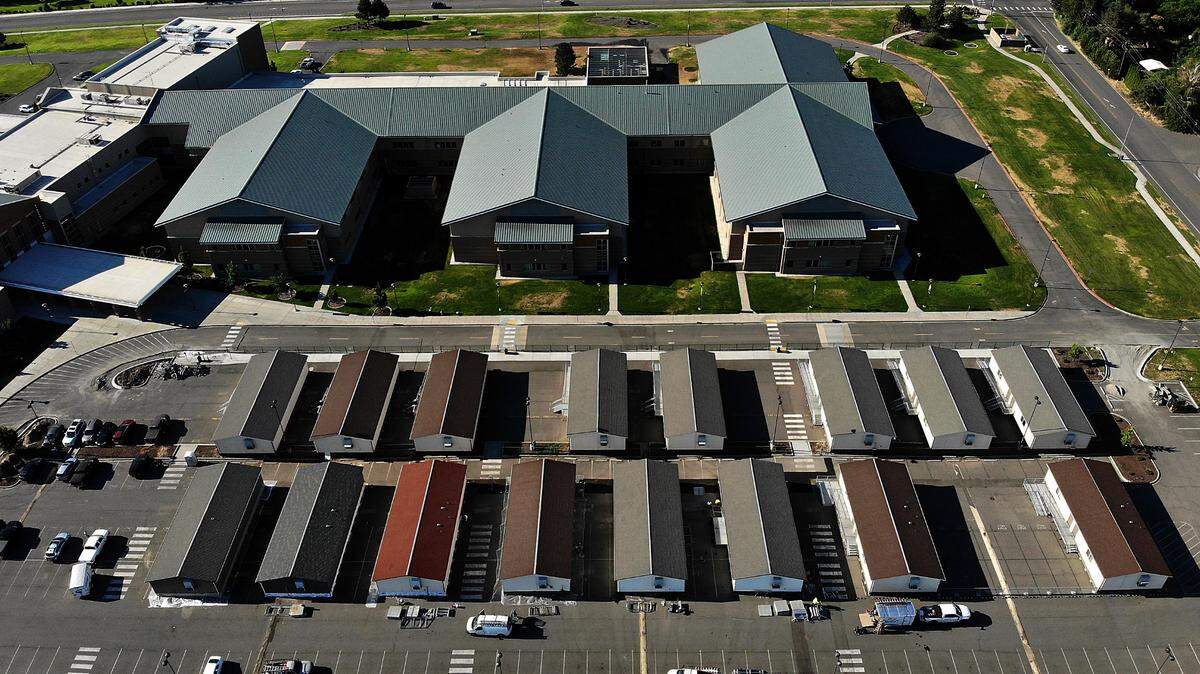
Kennewick School District wants to beef up security in its schools by hiring 21 new officers starting next school year.
But voters must first agree to pass a levy set for a Feb. 14 special election ballot.
The proposal would be a significant overhaul in security at Kennewick schools, and a first-of-its-kind partnership between a Tri-City school district and police department. And it may be a first in the state of Washington.
But it also underscores a larger discussion that school districts around the country are having about school safety and how to better protect students and staff.
Discussions escalated after the mass shooting in Uvalde, Texas earlier this year, where 19 elementary students and two employees at Robb Hill Elementary School were murdered by a lone gunman.
Kennewick’s plan would put three new school resource officers (SROs) in Chinook, Desert Hills and Horse Heaven Hills middle schools, as well as place a limited commission officer in all 17 elementary schools and one at both Legacy and Phoenix alternative high schools.
Kennewick Schools Superintendent Traci Pierce said the community would expect a “higher level of safety” in elementary schools with the new limited officer program.
“Yes, they’re there if the tragic situation were to occur — and they’re also there to be that positive presence,” Pierce told the Tri-City Herald.
“To interact with kids, to be on the playground, to be out front helping welcome kids. Doing all that same safety supervision that SROs do at the middle and high schools, and working the same schedule that kids go to school.”
The funding for these new officers would come from $1.2 million in annual funding tucked in Kennewick School District’s upcoming programs and operations levy.
Adding three SROs would cost the district about $255,000, and funding the 18 limited commission officers would cost about $1 million.
On top of that, more than $5.2 million annually in health and safety programs — including funding for nurses, psychologists and drug and alcohol prevention programs — would be funded by the levy.
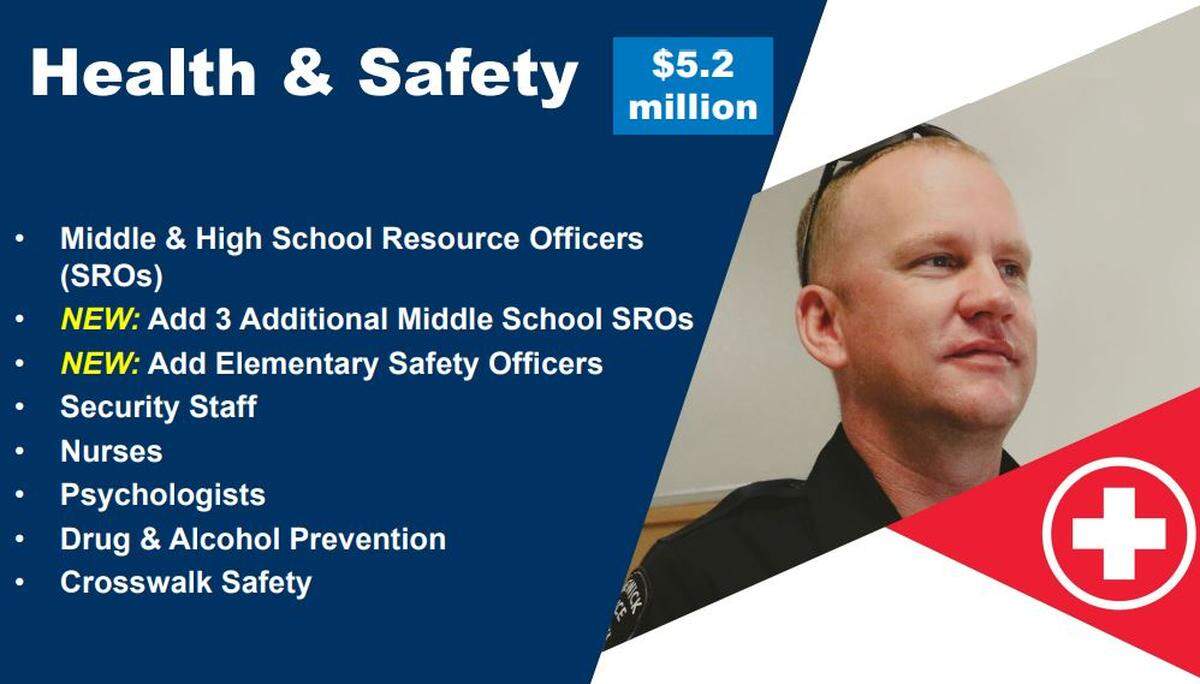
On Feb. 14, Kennewick School District voters will be asked to pass a three-year, nearly $72-million levy to fund health and safety programs, instructional support, special education support and advance placement programs, student learning and staffing, and athletics and extracurricular activities.
The annual burden on a home valued at $300,000 would be about $490 to $520 a year. But Washington state also plans to chip in $15 million in levy equalization assistance funding if the measure passes.
Next year, Kennewick schools will lose out on $34 million in local and state-matching funds after its initial levy requests failed to pass earlier this year.
A survey conducted in early August with 400 Kennewick School District residents found that they wanted the district to prioritize levy funding around safety upgrades, SROs, mental health resources and counselors.
And a Kennewick student safety survey earlier this year showed that about 90% of students said they felt safe, included and welcomed at school. But more than half of students at several schools said they remember seeing “unsafe behavior.”
Ambitious proposal
Five Kennewick Police Department officers currently serve as active SROs at Kennewick high schools and middle schools. Senior police officers are usually the ones who serve in these positions, and they make on average between $75,000 and $100,000.
It’s a “coveted position” that requires additional training and the school’s partnership, says Kennewick Police Chief Chris Guerrero.
“The day-to-day could look completely different,” Guerrero said. “They should be engaged with the school.”
SROs, or school resource officers, are a form of community policing that took off in the last couple decades because of rising juvenile crime rates, the 1994 crime bill and the establishment of the Community Oriented Policing Services hiring programs, and the 1999 Columbine High School shooting.
The mission of an SRO is to build positive relationships with students, mostly at high schools, and respond to crimes that take place in or around K-12 schools.
SROs are fully-commissioned police officers who carry firearms, can make arrests and issue fines, although the focus is mostly to educate and keep students out of the criminal justice system, according to the Washington Office of Superintendent of Public Instruction.
Guerrero says there are a number of distinct differences between SROs and limited commission officers.
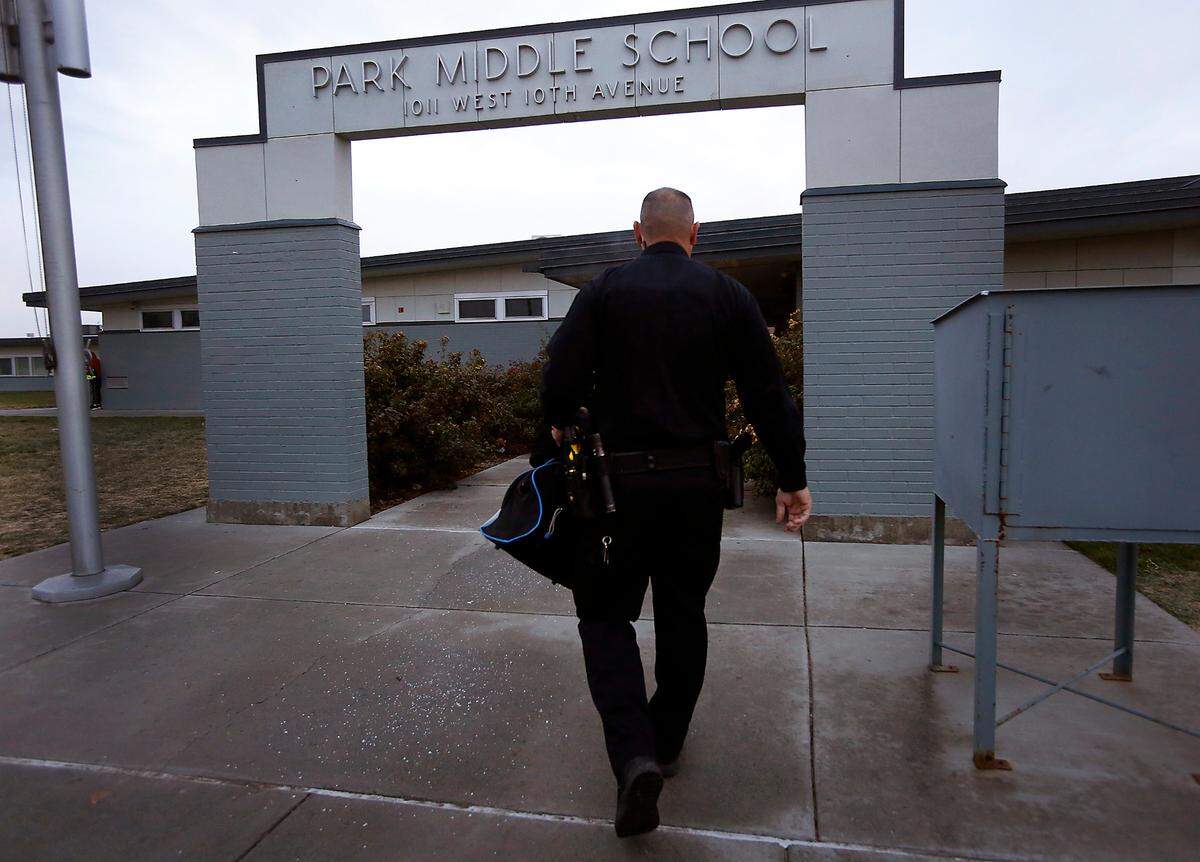
To start, limited officers are not fully-commissioned police officers. While they would be trained by the Kennewick Police Department and be held to the same policing standards, they would be employed by the school district.
Limited commission officers will not be able to make arrests, issue fines or file police reports. They will, however, be armed with a handgun while conducting work in elementary schools.
The goal of these positions is to be a positive presence to students and teachers, and to serve as a first responder or witness if any crimes were to be committed on school grounds. Limited commissioned officers would also have a direct radio to the police department.
Pierce said they plan to exclusively hire retired Tri-City police officers to these limited commission positions because they’re the most experienced. The district is still drafting the job description, though, and a pay range has not been determined.
Guerrero said he’s had more retirements in the last two years at his department than at any point in his tenure.
“The interesting part is I’ve talked with active officers who, if this comes, they’re ready to retire” and take the job, he said. “This could easily be that pipeline. You’re not dealing with really good people having a bad day — you get the happiest kids to work with, the greatest teachers, with a perfect schedule.”
How did we get here?
Pierce said this ambitious plan to hire 18 limited commission officers came together with input from the police department, city council members, school board members and the community.
“The partnership between the police department and the school district is amazing, and it’s because of that amazing partnership that we can think up these creative ideas together and really continue to work on how we can make our schools and community as safe as possible,” Pierce said.
Guerrero said it’s been a priority of the police department’s for many years to get more SROs in Kennewick schools. The school district and police department split the salary costs 50/50, though the limited officers would be fully funded by the district.
Pierce said Kennewick School District already had several retired police officers working in the school district as bus drivers and in other positions.
If the district instead hired retired police officers instead of expanding their SRO program, that would also put less stress on the police department, which is stressed on staffing and currently has 13 openings for police officers.
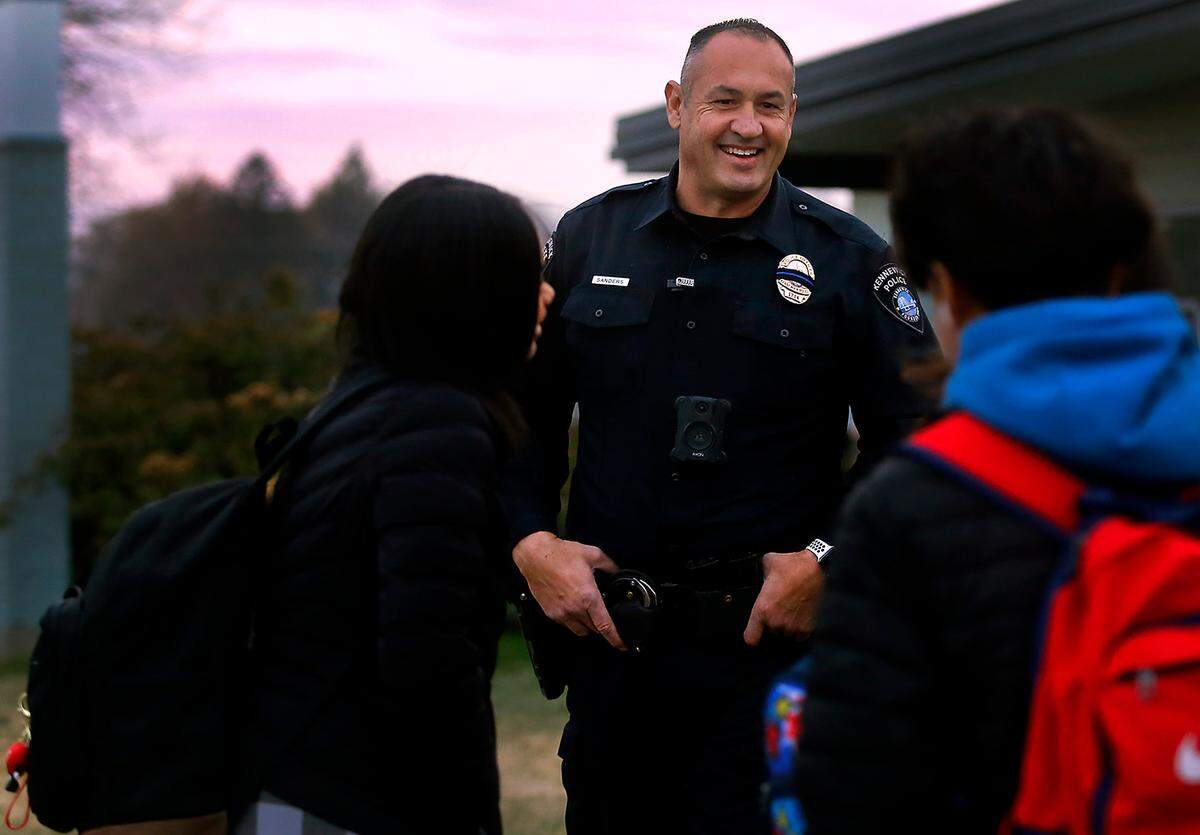
“This year we were able to do (active shooter training) at Kamiakin,” said Guerrero. “We invited board members from the school district and council members from the city of Kennewick to attend because it’s a hot topic, and I think nationwide people are trying to figure this out. What is the best way to have officers in schools? You’ve got to be careful. It’s a balance.”
Guerrero said they floated arming teachers and getting one SRO in every school — but both of those seemed unfeasible.
The discussion then turned to retired cops.
“Bringing in retirees makes complete sense. You have those people who are trained, they know about active shooter (protocol)... they know that standard, and the standard is you stop the threat at all costs and time is of the essence,” Guerrero said.
“It’s not foreign to them,” he added.
But how do you measure the success of policing programs in schools?
Guerrero said it’s all about talking with families and students about how these programs have affected them.
He compared it to the stories of success the police department receives with the D.A.R.E. (Drug Abuse Resistance Education) program, which has been a staple in Kennewick schools since 1988.
This story was originally published December 5, 2022 at 5:00 AM.