Student demand for flexibility fuels increase in online classes. CBC enrollment climbs
Columbia Basin College is bucking the trend on college enrollment.
Most colleges and four-year universities are still reporting losses in enrollment caused by the COVID pandemic, a strong job market and inflation. But CBC’s fall enrollment numbers are showing modest gains.
The Pasco-based community college is seeing a 7% gain in full-time students and 2.8% total increase overall, compared with numbers posted from fall quarter 2021.
CBC’s current headcount is about 6,081 — or 4,727 full-time equivalent students. Those numbers are likely to grow by several hundred throughout the quarter as more students enroll in “off-cycle” programs.
“I would have been very pleased to see us maintaining, but to see this increase is a pleasant surprise,” said CBC President Rebekah Woods. “It’s not related to one particular program over another, it’s a reflection of many things.”
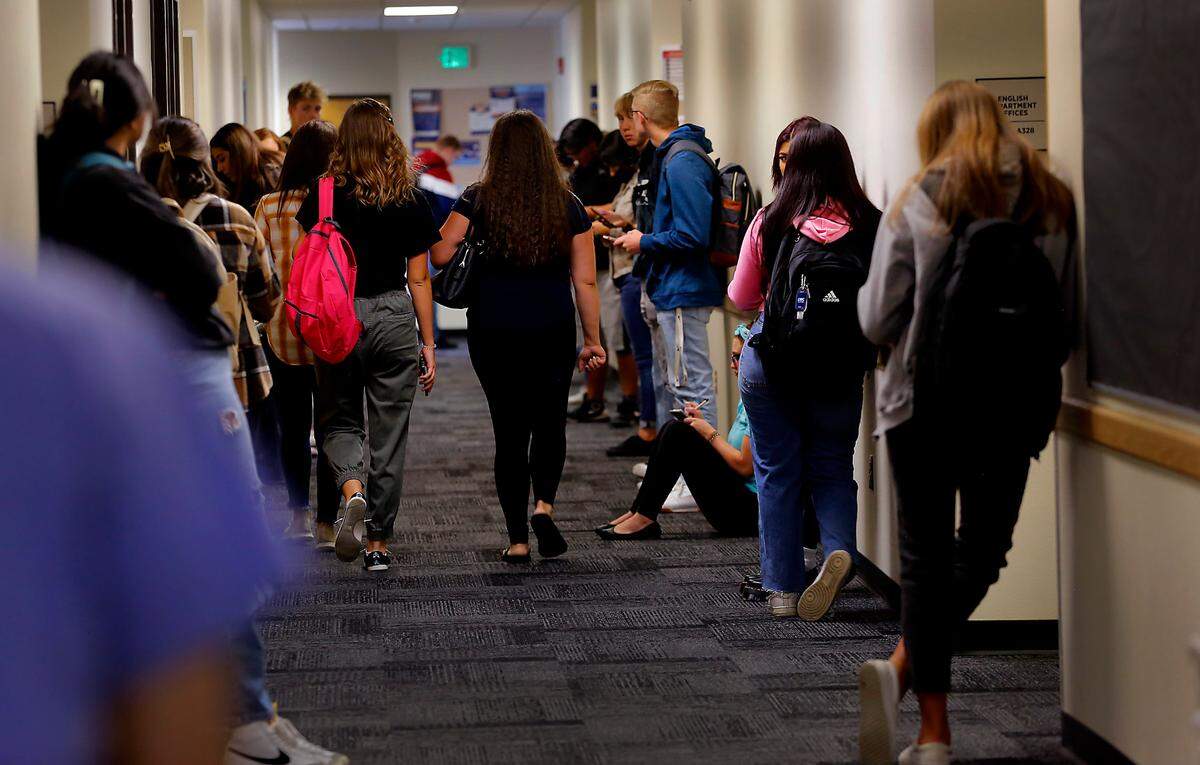
The growth is system-wide, she said. Students are more comfortable coming back to class in-person, and students are back in a “significant way.”
The rapid growth CBC was seeing prior to COVID also likely softened any blow to enrollment. The college also has focused heavily on recruitment.
In the lead-up to spring 2020, Woods said they were projecting another increase in enrollment to cap a “banner year.”
The initial impacts of the pandemic cut their attendance about 5%, she said. But total enrollment has dropped significantly the last two years.
Enrollment at Washington State University Tri-Cities has struggled more. Last month’s fall headcount showed about 8% fewer students were enrolled in fall classes.
This September, CBC removed its COVID vaccine requirement, though it’s unclear how much that has benefited enrollment, if at all.
Meanwhile, WSU Tri-Cities has chosen to keep its vaccine requirement in place if students want to attend in-person classes or to be on campus.
As Washington ends its COVID emergency on Oct. 31, it’s unclear if CBC will continue to require its instructors and employees to be fully vaccinated, Woods said.
Online classrooms
The pandemic has had another affect. Classes continue to shift online at CBC.
Prior to COVID, about a quarter of all classes were offered online. The other 75% were either a hybrid mix of in-person and online, or completely in-person.
Today, that the online number is about 35%, Woods said.
Students are driving this shift as they cite a need for flexibility.
Most of the online classes are in the fields of history, sociology, geology and other arts and science classes. Some entire programs, including nuclear technology and computer science, are completely online.
Between their first year and second year, CBC retains about 54% of its students.
That’s on par with the state’s average, though slightly lower than the 59% retention level they’ve seen in the last eight years.
WSU, and specifically WSU Tri-Cities, remains one of the most popular four-year universities for CBC students to transfer to. During the last 12 years, about 3,800 students have transferred there.
Though the number of students graduating with transfer degrees has declined, the graduation percentage has remained consistent with pre-pandemic levels, say CBC officials.
“We have a great educational product to provide to our community and we’re intentional to make sure our programs are directly relevant to business and industries,” Woods said.
She said there were no noticeable trends on the types of classes returning students were favoring or the demographic of the students returning.