WSU Tri-Cities’ fall enrollment drops for 5th year. Is the pandemic still to blame?
The numbers are in — and they’re not promising.
Washington State University recently published their fall headcount numbers, showing that about 8.2% fewer students are enrolled in fall classes at the college’s Tri-City campus. Fall classes for all WSU students started Aug. 22.
This is the fifth fall semester of declining enrollment at WSU Tri-Cities, and third for the university at large.
But Columbia Basin College, which started classes on Monday, is reporting positive trends in initial enrollment.
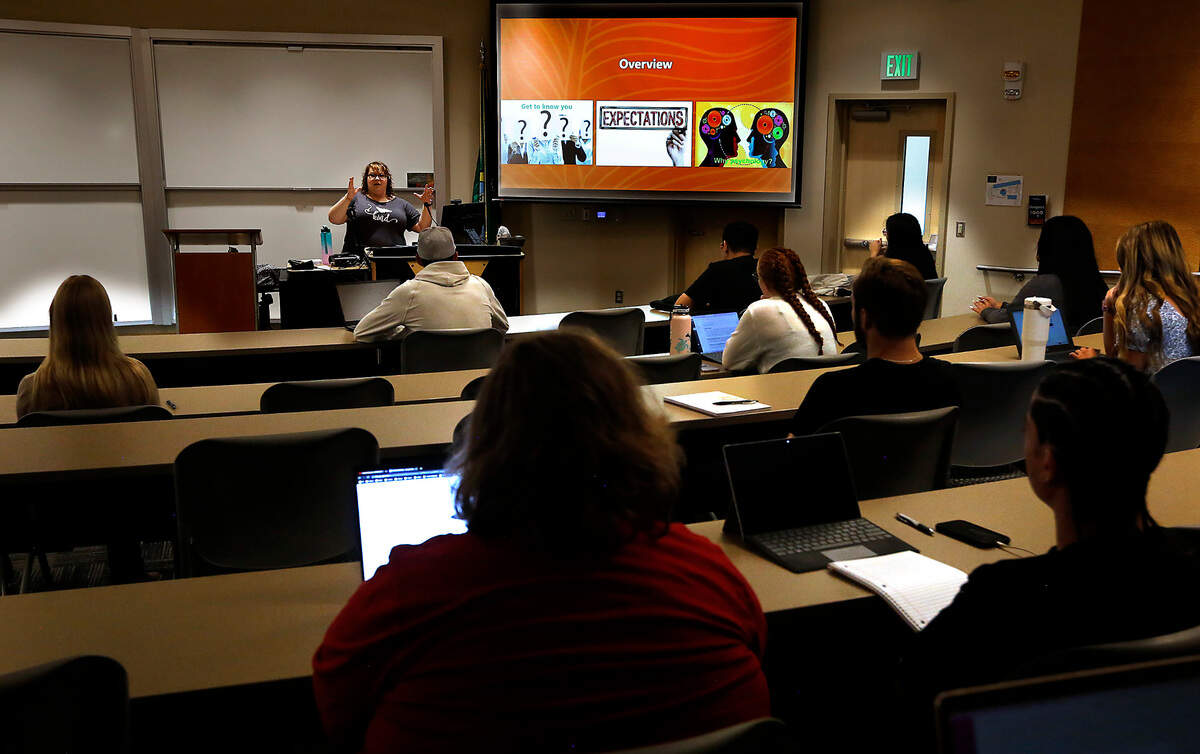
WSU leadership say lingering effects of the COVID pandemic, low community college enrollment and a strong job market are among the reasons for their dwindling numbers.
The college also continues to require its students provide proof that they’ve received the first two doses of the COVID vaccine in order to attend classes and activities on campus. Masks are not required to attend, though.
“While across the nation higher education faces significant enrollment challenges, at WSU we have retained 80% of the more than 6,300 students who started in the fall of 2021,” WSU Provost and Executive Vice President Elizabeth Chilton said in a statement. “All of our campuses are working together to attract, retain and ultimately graduate the next generation of Cougs.”
Enrollment at the Tri-Cities campus fell from 1,558 students in fall 2021 to 1,430 this semester.
The number of first-year and transfer students also dropped: About 7.7% and 1.8%, respectively. Fall enrollment peaked in 2017 with 1,937 students.
WSU Tri-Cities serves a diverse population of students. About half who attend class at the Richland campus are students of color, and 46% are first-generation students.
In addition to undergraduate studies, the campus is also a leading public research university focused in the fields of energy, environmental sciences and agriculture and wine.
WSU Tri-Cities’ dip in enrollment this semester doesn’t appear to be as drastic as other campuses of its size.
Campuses in Vancouver, Spokane and Everett reported double-digit drops, due mostly in part to large dropoffs in new transfer students that the Tri-Cities didn’t see.
Across all campuses, WSU saw enrollment drop 7.7% — about 2,304 students total — compared to numbers from last fall.
Enrollment now stands at 27,539. The university says it’s struggling to attract new students to replace the record number of enrollment it saw prior to the COVID pandemic.
“When we see declines in enrollment, that does affect our bottom line,” said Phil Weiler, WSU’s vice president of university marketing and communications.
The university is heavily dependent on enrollment for its budget. About half of WSU’s revenue comes from tuition and fees, with the other half coming from allocation through the state Legislature.
Weiler said WSU budgets in a way that each campus is not fiscally responsible for any sudden influxes in enrollment, so there won’t be any immediate impact to college campuses that saw a huge dip this fall.
The university plans on re-engaging transfer students and those who stopped attending during the pandemic to help turn their enrollment around.
“You don’t want that investment to go to waste. It’s really important for people to come back and complete that four-year degree, and there’s many ways to do that,” Weiler said.
WSU is not alone in its enrollment woes as colleges and universities across the U.S. continue to reel from the impacts of the pandemic on schools.
Postsecondary institutions have lost nearly 1.3 million students since spring 2020, according to the National Student Clearhinghouse Research Center, and community colleges have lost more than 827,000 students since the start of the pandemic.
Community and technical colleges experienced a combined 24% drop between fall 2019 and fall 2021, according to the Seattle Times. And four-year universities saw a decline of almost 7%.
CBC enrollment up
Columbia Basin College appears to be bucking the trend on enrollment.
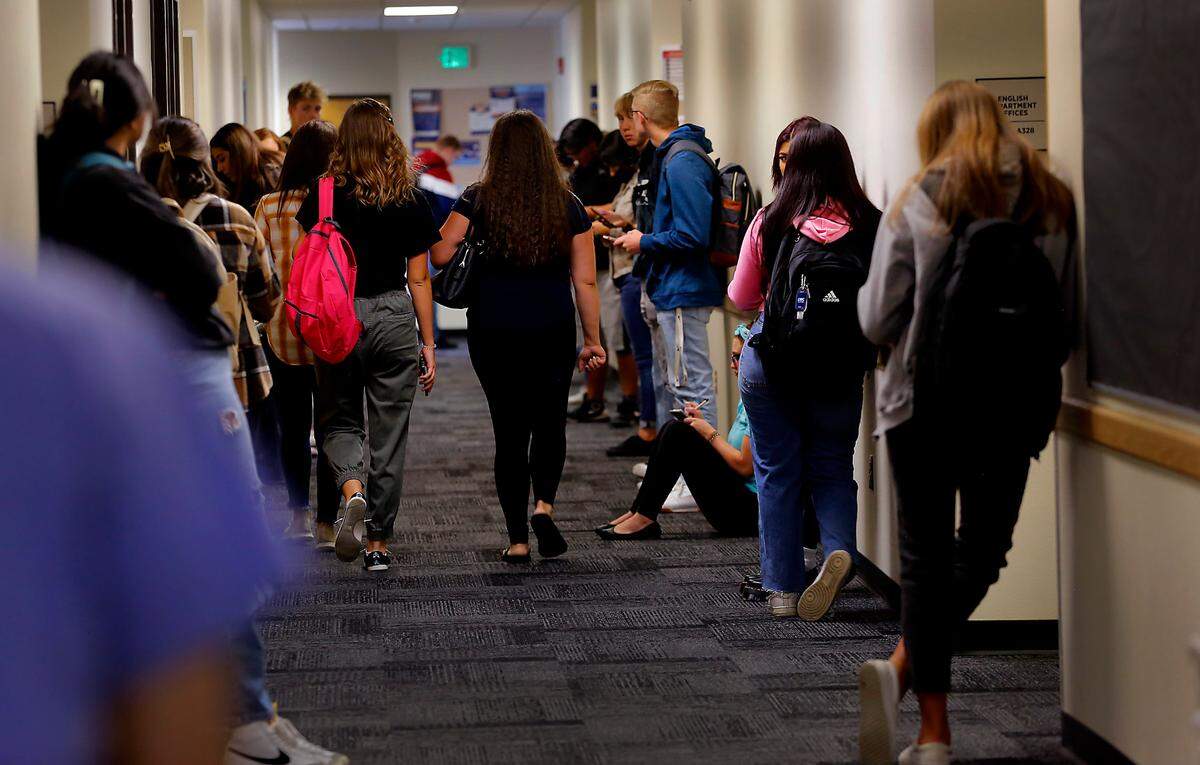
That’s according to a rough first-day tally the college released Monday morning, right as students were returning to campus.
Elizabeth Burtner, CBC’s interim assistant vice president for communications and external relations, said first-day numbers are up 6.4% over last year’s. About 5,960 students are enrolled.
As of Sept. 12, the college is no longer requiring COVID vaccination attestation for students to attend on-campus events and classes. Face masking remains optional.
CBC’s enrollment numbers will likely change here soon, though.
Friday is the deadline for most students to withdraw from classes in order to receive a 100% refund, and Oct. 10 is the last day to withdraw for 50% refund. The final day to withdraw is Nov. 14, nearly eight weeks from now.
Like other colleges, CBC will officially report their fall enrollment numbers on the 10th day of class, after most students have finalized their schedule for the rest of the quarter.
CBC’s official fall 2021 headcount showed 6,632 students.
That was a decline of about 8% when compared with the 7,233 students enrolled in fall quarter 2020. Enrollment peaked for the community college with 8,070 students in fall 2019.