
Half the grades at one high school were F’s last fall. How Tri-Cities teachers are turning it around
Clarification: The original version of this story failed to say that Gabe Galbraith is a candidate for the Kennewick School Board and is an outspoken critic of how the government has handled the COVD-19 pandemic, including school closures.
--------
High students failed nearly a third of their classes the second trimester — more than twice as many as in March 2020.
But that was better than school leaders had feared after an initial check-in on student progress a few months earlier.
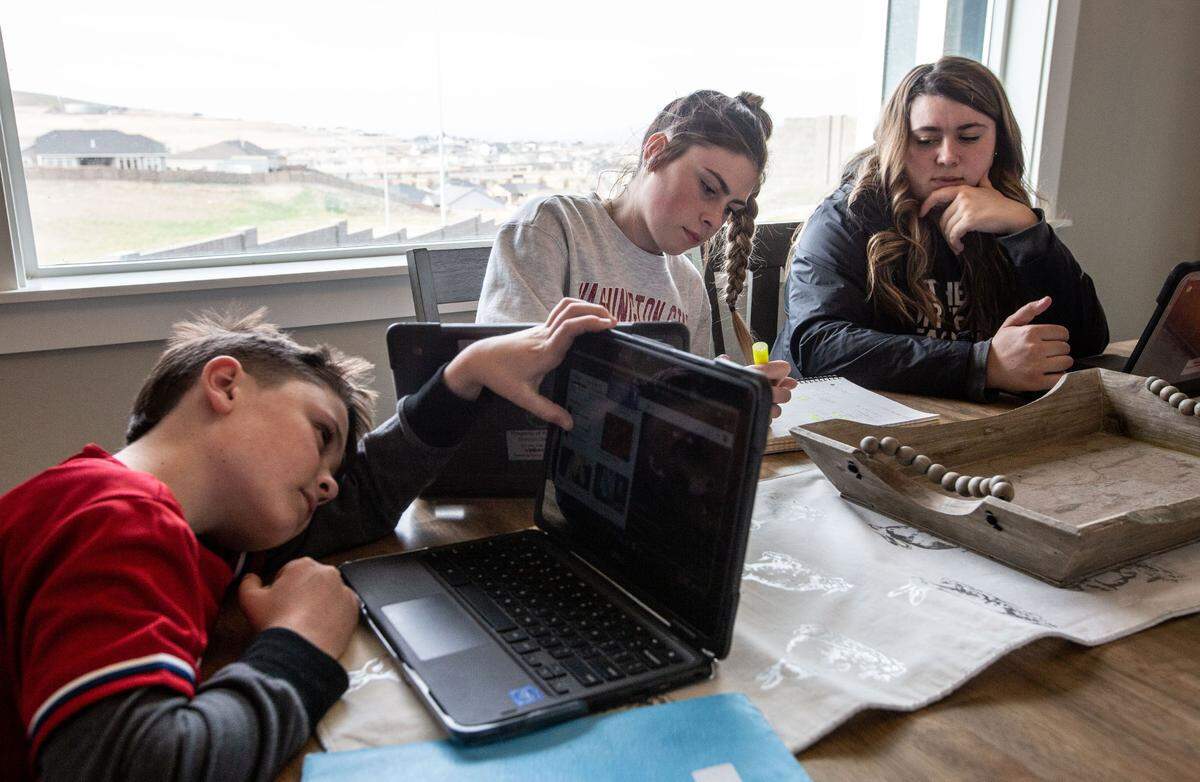
Last October, after students had been back in virtual classes for about a month, half of the 11,000 grades that would have been handed out if it was report card time would have been F’s.
In November, Richland reported that 20 percent of its nearly 4,300 high school students were failing a class.
And while Kennewick officials were not able to provide their failure rates, they saw “a significantly higher number of middle and high schools students with one to three failing grades,” said Robyn Chastain, the district’s executive director of communications and public relations.
Now, Tri-Cities school district officials say they are making progress on getting students back on track.
Pasco High progress
Before COVID hit, Pasco High was a Cinderella story among the Tri-Cities high schools.
Nearly three-quarters of Pasco High’s students are low income and a third are still learning English. Both often indicate that students could struggle more in school.
With extra focus for those students, educators managed to bring the number of F’s down to 15 percent in the first trimester of 2020, and 17 percent in the second trimester. A fact that Principal Jake Stueckle said was amazing.
But a combination of social isolation, lack of structure and parents struggling to access the technology to track their kids’ progress contributed to failing grades climbing across the Tri-Cities.
At both Pasco high schools, the swing in the number of failing grades handed out has been high.
Before remote learning more than 80 percent of students were passing at Chiawana and Pasco.
At the end of the second trimester on March 11, Chiawana had a passing rate of 73 percent and Pasco High had a passing rate of 69 percent.
Now that students are heading back into classrooms, schools are having to look at how to close that gap for the students heading off to college in the next couple years.
Pasco successes
Stueckle is proud of what his teachers have been able to achieve this year.
When they checked in and found the failing rate was at 50 percent, the school started by bringing in the students who were most at-risk for study sessions.
“Most of those at-risk students were pulling four to five Fs,” he said. “For our students that took us up for the 2 1/2-hour study block. If they made the commitment to come regularly, their grades drastically improved.”
They spent time helping the students with organizing what they were going to work on, checking on their grades and helping them with basic study skills.
For many of the students they weren’t prepared for working on their own at home.
By the end of the first trimester, they brought the number of failing grades down to 37 percent. They continued to build on those successes and they committed to checking in with parents.
As a district, Pasco increased the number of virtual parent nights, holding one in Spanish and one in English every month. They looked for ways to support parents at home, including teaching them how to check on student homework.
They continued to see success, climbing to 31 percent. While it may not seem like a large achievement, Stueckle pointed out if the whole school’s passing rate rose by 4 percent in other circumstances people would be happy.
Richland, Kennewick schools
Richland and Kennewick tried similar tactics when they saw grades slumping. Richland high schools in particular brought in their most at-risk students.
They still saw a 3 percent increase in the number of failing students between fall semester 2019 and fall semester 2020, but that was an improvement from earlier in the year.
And Richland officials pointed out that distance learning worked fine for some students.
Richland’s two high schools saw an increase in the number of A’s earned in high school credit courses. It went up from 33 percent to 38 percent of students.
And the failing rate fell in half, from 20 percent in November to 10 percent by the end of January.
Kennewick also saw grades improve after students returned to in-person classes, Chastain said.
“Schools are providing additional supports and interventions for students who continue to struggle,” she told the Herald. “For example, schools are providing in-person supports on Wednesdays, extended day learning opportunities, and making personalized plans based on student academic and social-emotional needs.”
Kennewick father Gabe Galbraith is confident that his daughters will be able to make up for the lost ground now that they are physically back in class.
“I’d be surprised if anybody thought the kids didn’t miss out on education,” he said. “Typically kids are going to school and having six hours of math class. They’ve been getting, at the most, 90 minutes of instruction.”
While he’s not concerned about his daughters, he worries about other students who may be behind. He hopes that there will be resources for them.
Galbraith is running for school board this fall for the seat currently held by Dawn Adams. He has been an outspoken critic of how the government has handled the COVD-19 pandemic, including school closures.
What comes next
David Beard, the policy and advocacy director at School’s Out Washington, has seen high school students struggle with being cooped up across the state.
The organization works with after school and summer programs across the state, including the 21st Century programs in the Tri-Cities.
Returning the students to normalcy will let them plan ahead, he said. Schools need to start working with them on what their goals are and colleges will likely need to prepare to help students who may have lost ground by not being in the classroom.
“Our high schoolers don’t have a long runway,” he said. “I think this is a great concern around elementary aged children ... I think our teenagers are a lost story. They’re still children. They’re not fully developed.”
Beard and Stueckle agreed that it’s hard to know how far behind students are. One of the main tools to measure that is the Smarter Balanced Assessment, which has been canceled for the past two years.
But Tri-City school districts are providing summer school this year so students can catch up.
Pasco teachers are looking at ways to incorporate elements from earlier classes into ones students will be taking next year, Stueckle said. For instance, they may have take elements that were missed while teaching algebra and incorporate them in geometry.
“That doesn’t mean they’re going to be pausing geometry standards,” he said. “They’re going to have to really focus in on what those essential standards are.”
This story was originally published April 13, 2021 at 5:00 AM.