
Here’s how close Tri-City teachers are to getting back to class
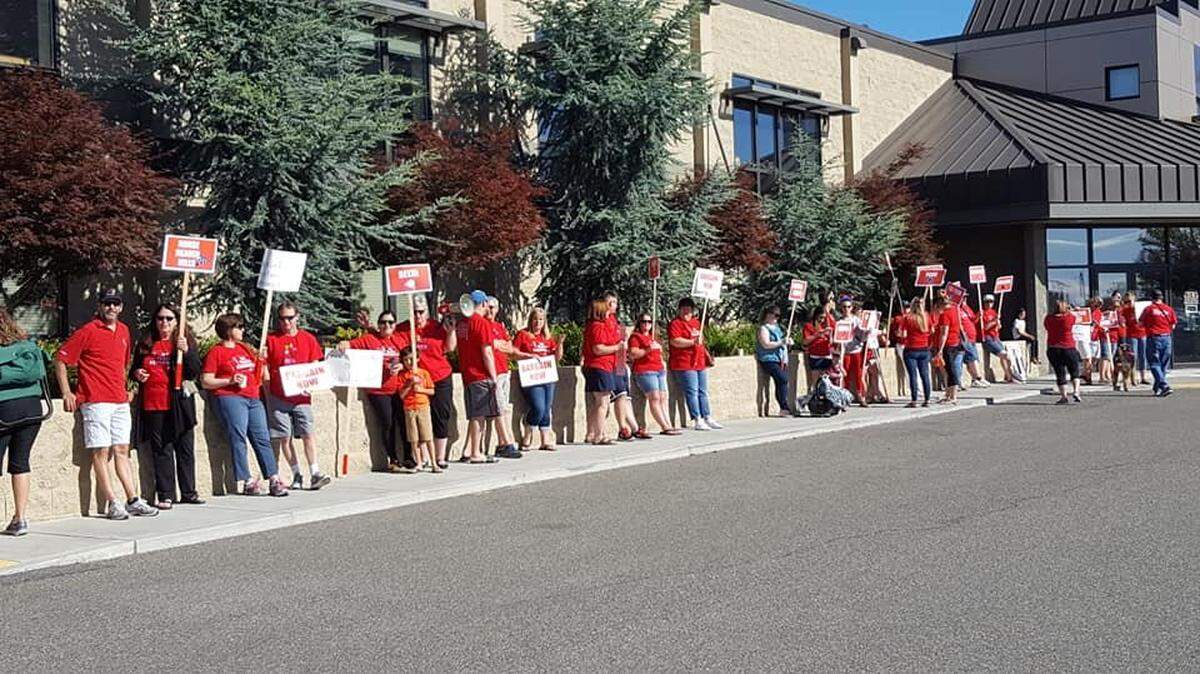
As the start of the new school year quickly approaches, some Tri-City area districts and teachers unions are getting closer to settling over pay raises.
Others have farther to go.
Kennewick falls into the first camp.
District and union officials reached a tentative agreement for a new salary schedule earlier this week, with help from a mediator. Neither group is releasing details ahead of Monday’s union meeting, where teachers will decide whether to ratify the agreement.
If a simple majority of those at the meeting give their approval, the pact will move forward.
If not, a strike could happen, although a separate vote — with a higher threshold for passage — would be needed to start down that path.
Meanwhile, Pasco negotiators are heading back to the bargaining table Monday after multiple days spent negotiating this week.
In Richland, district and union leaders were going back and forth Friday.
A union official posted Facebook in the late afternoon that, “it’ll be a late night.”
Kiona-Benton City officials and teachers also haven’t come to an agreement.
Superintendent Pete Peterson said that, “we’re doing some workups and seeing whether we move forward with bargaining or go to mediation.”
In Columbia-Burbank, the district and union have a tentative agreement, which could be finalized next week, Superintendent Todd Hilberg has said.
Finley School District and its teachers union have settled on a 13 percent raise.
Wage negotiations aren’t limited to the Tri-Cities — they’re happening in districts across Washington, following a seismic shift in the education funding system brought on by the state Supreme Court’s 2012 McCleary decision.
The Washington Education Association is urging local unions to push for double-digit raises, pointing to a $2 billion infusion for educator pay as part of the shift.
But some districts say the changes — including capping the amount that can be collected through local levies, limiting what the levy money can cover and nixing the old way of paying for teachers — put a dent in or wipe out any infusion.