Tri-Citians losing millions on crypto ATM scams. Are bans next?
AI-generated summary reviewed by our newsroom.
- Tri-City residents reported $2.4 million in losses to police over the last three years.
- Kennewick proposal would give businesses 180 days to remove kiosks.
- Since Spokane's kiosk ban, police have seen a dramatic decrease in fraud transactions.
Online cryptocurrency scams have likely stolen multiple millions from unsuspecting Tri-Citians, most by way of digital ATMs found in stores around the region.
And the thefts are expected to escalate unless cities step up their regulations, said Spokane police Detective Tim Schwering, whose city was the first in Washington to ban cryptocurrency kiosk terminals.
“The best example I can give ... is it would be like setting a loaded bear trap in a grocery store and acting surprised when people stepped in it,” he told the Kennewick City Council this week.
“You can still buy bear traps somewhere else, but you just shouldn’t have a loaded one in a grocery store where people are walking around.”
In the last three years, Tri-Citians have reported to police the loss of $2.4 million in cryptocurrency scams.
Schwering believes that’s a faction of what’s really been stolen. Just 2% to 6% of victims report their losses to the police or Federal Trade Commission, he said, nothing scammers often prey on victims who know very little about digital assets.
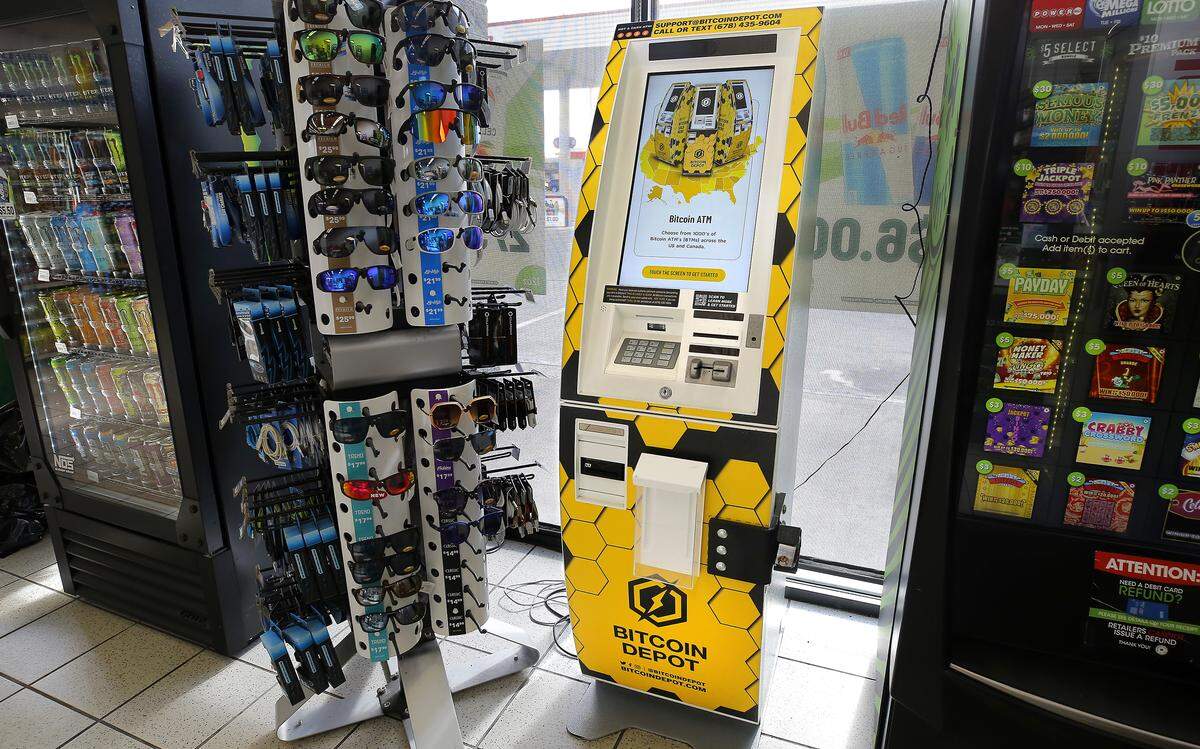
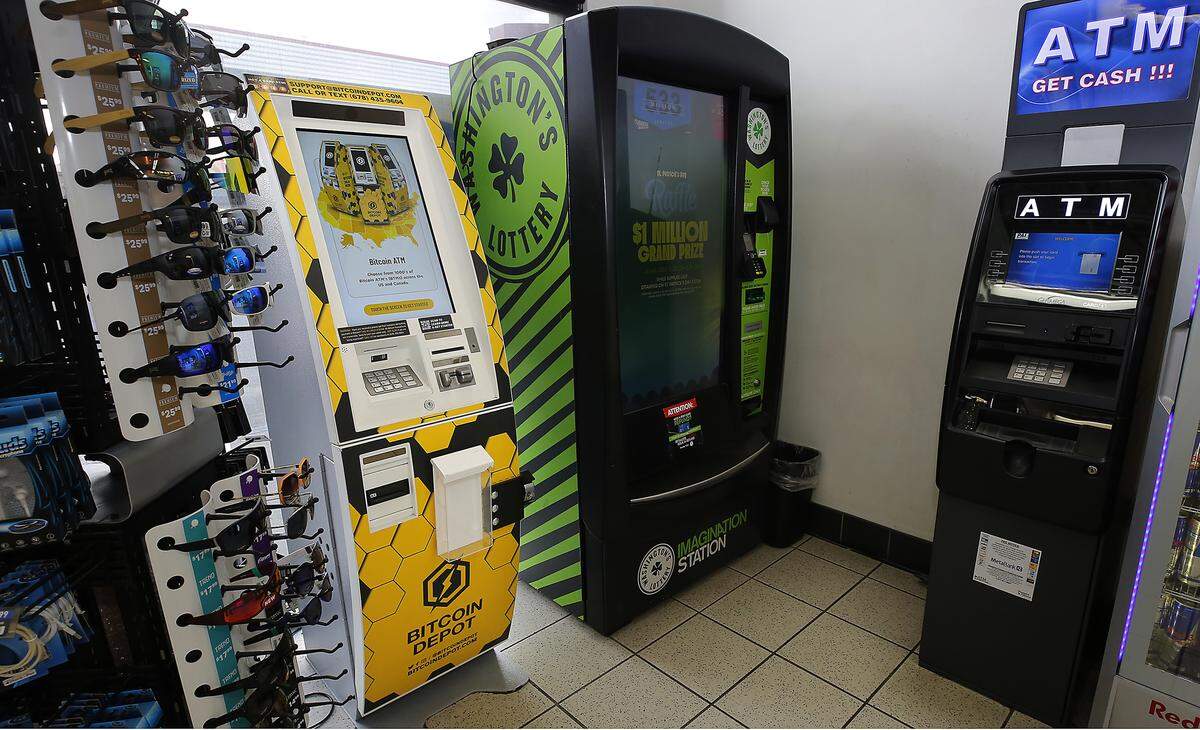
Kennewick is the first in the Tri-Cities to consider banning cryptocurrency ATMs from operating in city limits. There currently are 76 kiosks in the Tri-Cities, and companies are adding more machines each year.
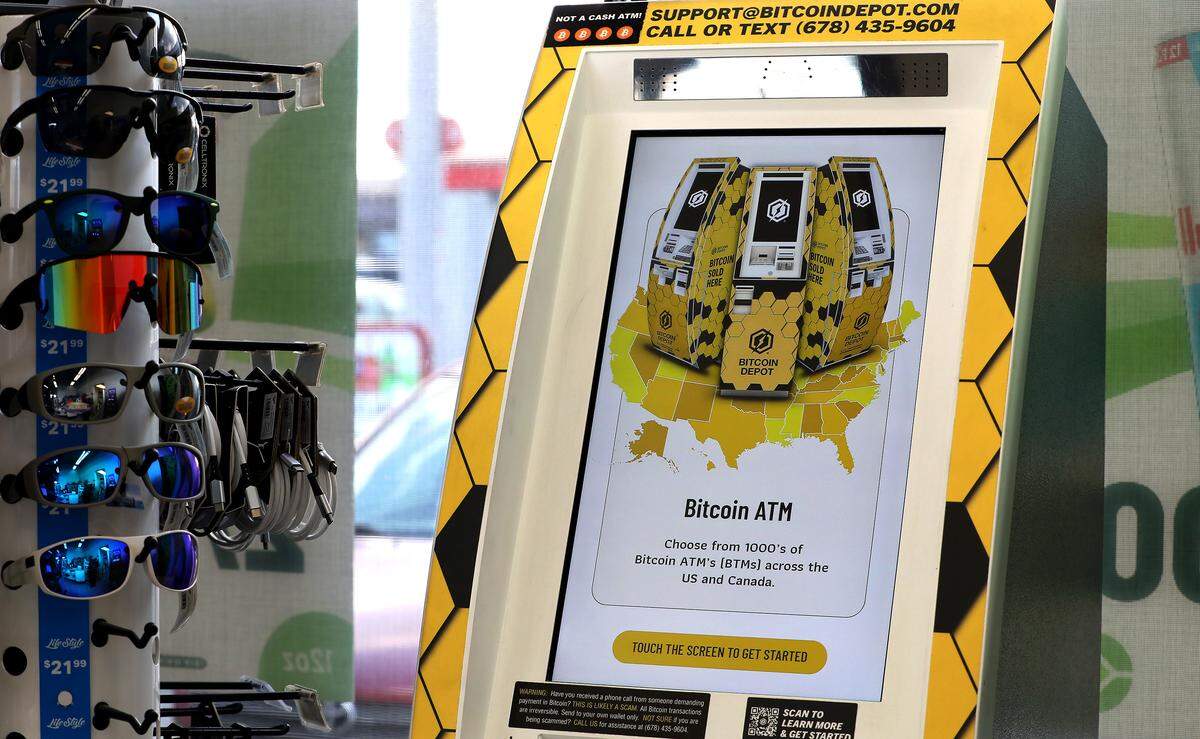
Officials in Pasco and Richland they are aware of Kennewick’s proposed ordinance, but neither have started their own efforts to restrict or regulate the ATMs.
Nearby, in Moses Lake, police recently issued a public warning after seeing a spike in recent weeks of cryptocurrency ATM ripoffs.
Complicating the issue is that the Trump administration has largely embraced digital currencies, and federal legislators have been relatively mum about a ban that would impact ATMs.
That’s left regulation up to individual states and municipal governments.
How the scams work
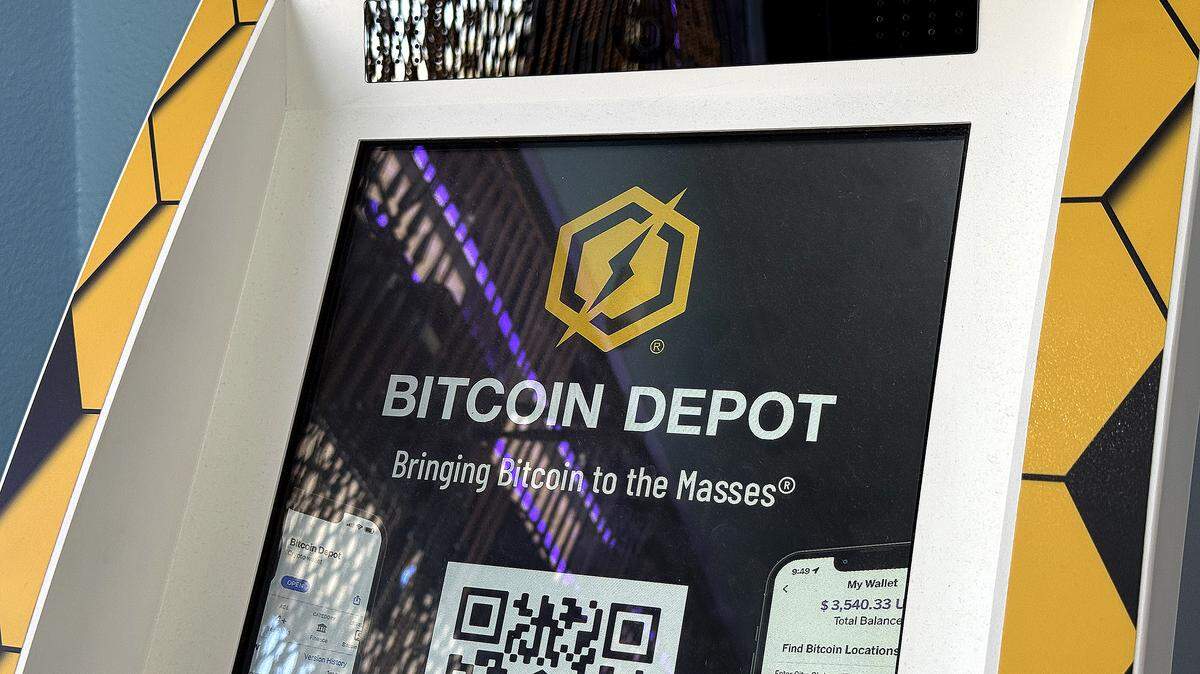
These ATM kiosks allow residents to buy and sell cryptocurrencies, such as Bitcoin, using cash or debit cards. Instead of bank accounts, they connect to anonymous crypto wallets.
Cryptocurrencies are unregulated digital assets that use decentralized systems to record transactions and rely on online cryptography to prevent counterfeit or fraud transactions.
Victims often transfer large sums of cash — sometimes their entire life savings, worth tens of thousands of dollars — to overseas swindlers.
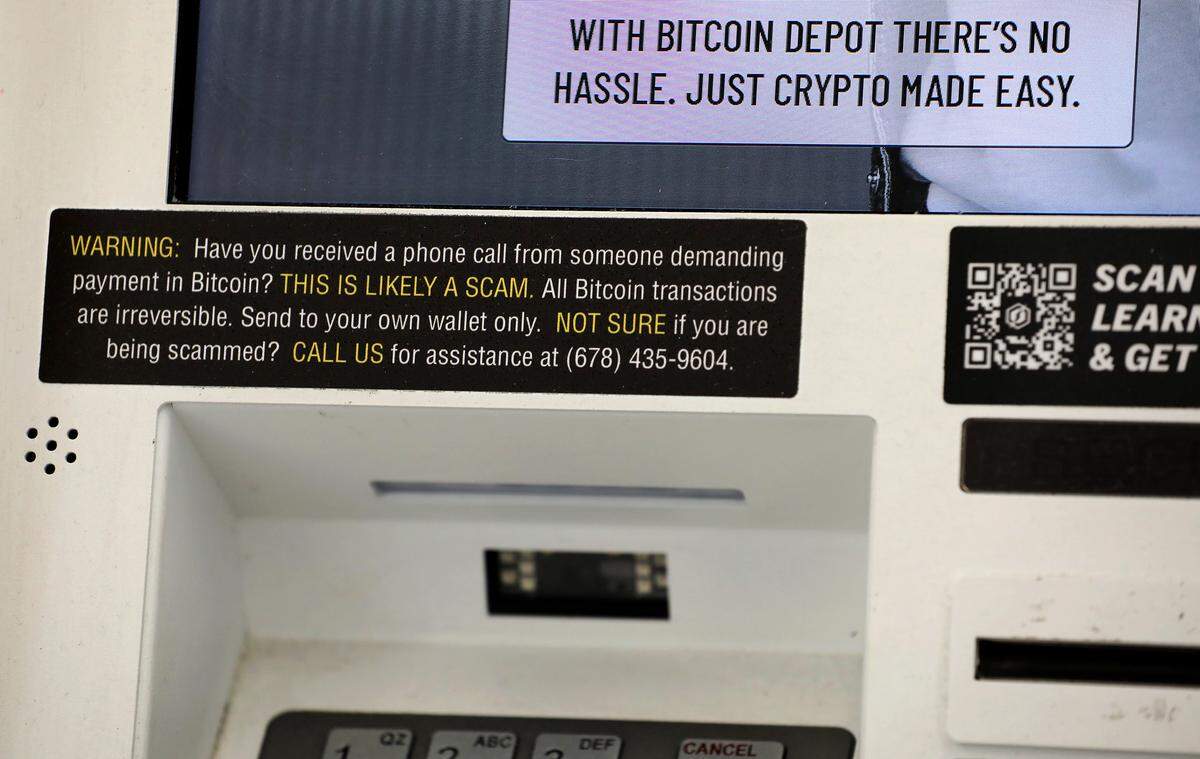
Transactions are often instant and irreversible making prosecution and money recovery incredibly rare.

Scammers disguise themselves as government officials, police or romantic partners the victims met online. They’ve also begun using AI technology to create voice replicas of loved ones to fraudulently demand money.
Police say the crypto machines are susceptible to fraud because scammers direct victims to deposit money into their “wallets.” They often use money exchanges or wallet layers to hide their identities.
Washington state has not passed a comprehensive bill to help prevent fraud cryptocurrency transactions. The Legislature in recent years has considered a bill that would establish daily transaction limits, fee restrictions and receipt requirements, but it died in committee during the 2026 session.
Schwering, who has backed the state legislation, called it a “Sisyphean task” because many don’t know what cryptocurrency really is.
Spokane leads the way in ATM bans
Schwering didn’t aim to become a regional expert in cryptocurrency scams, but he’s fallen into the role after Spokane passed an ordinance banning the ATM kiosks, starting last June.
The move received scant public pushback, and didn’t prevent residents from managing digital assets through smartphone applications.
About three years ago, when he became a detective, Schwering was assigned to the city’s drug unit. While working cases that involved drug houses, he noticed increasingly that criminals were using digital means to transfer money, including apps like CashApp and Venmo, before laundered funds through a cryptocurrency.
Then scams began to propagate with the rise of Bitcoin ATMs in Spokane.
“What was happening is people were putting in thousands upon thousands upon thousands of dollars in these cryptocurrency ATM machines, and they were losing their money,” he said.
Schwering traced the transactions to wallets all around the globe, including many countries that did not have strong diplomatic ties to the U.S., such as Russia, Nigeria and China.
“I probably did over a hundred cases where I was literally tracing money overseas, getting absolutely nowhere,” he said. “Then we really downshifted to really doing it as a public awareness campaign... I joked that if there was a Spokane knitting club with three people, I’d be happy to talk to them just because it was so important to get the word out.”
What Schwering found out was that many people were either personally contacted by scammers or knew someone who was. It is expanding “at an unbelievable rate,” he said.
Since the ATM ban, Spokane police has seen a dramatic decrease in cases that reference cryptocurrencies. They’re still looking at the data to see how much of an impact it has had. Banks traditionally have helped to prevent customers from falling to fraud due to reporting requirements and tellers recognizing the signs of fraud.
“I haven’t worked these cases on the individual level here in about a year, but out of those cases that when I was working it, I had three suicides of people who had killed themselves over the complete loss of their finances,” Schwering said.
Kennewick council weighs in
Kennewick City Council has had many questions about a future ban, but has been relatively amicable to the idea.
The city’s proposed ordinance would give businesses 180 days notice to remove kiosks and would ban any future ATMs from being installed. Kennewick is also planning a public outreach campaign to prevent future scams.
It will likely come before the city council at the April 21 business meeting.
Councilman Brad Beauchamp said he’s actively been involved with cryptocurrency for 10 years, and he said that these types of assets get a bad rap.
He said many retirement or savings portfolios are directly tied to cryptocurrency assets. But Beauchamp acknowledged the kiosks in convenience stores are a problem in Kennewick.
“Most people say Bitcoin, and they think it’s just for drugs,” he said. “The problem I have with that is 5% of cash transactions are illegal — I think is what they say — and about 5% of crypto transactions are illegal.
Councilman Loren Anderson, who supports the use of digital assets, said he has a “dear friend” who fell victim to a cryptocurrency ATM scam. The scammer was convincing, was familiar with Washington laws and knew personal details about their family and mortgage.
“It was very scary. The spouse went to the bank, and pulled out the money, put it in the kiosk and it was gone,” said Anderson, who noted the amount was $11,000.
He also had an older relative almost fall victim to a scam, but was stopped at the bank from withdrawing $20,000.
“It’s a rough experience when you watch someone go through this. It’s not like they were stupid... These are people who have good jobs, good families, living in the neighborhoods here in Kennewick, and they got scammed,” Anderson said.
Councilman Brad Klippert, a Benton County sheriff’s deputy, said he supports banning the kiosks.
Both Beauchamp and Mayor Jason McShane questioned the number of legitimate and lawful transactions that were being made at the kiosks.
Billions lost in U.S. to crypto scams
U.S. residents are scammed out of billions of dollars each year from fraudulent cryptocurrency schemes, and it’s become a rapidly growing issue in recent years.
Nearly 150,000 victims were tied to more than $9 billion in losses in 2024, according to an FBI report. Most are between 20 and 40 years old, but older adults reported larger sums lost.
It’s becoming an issue in Kennewick, where more than three dozen residents have collectively reported losses of more than $920,000 since 2023. Victims varied in age range, but adults in their 70s suffered the largest losses in terms of dollar amount. They often involved their life savings and the results were “life altering,”
Scammers often communicate with victims under the guise of investment opportunities, celebrity impersonations, financial grooming, extortion, or romance scams, according to AARP. They often pressure or coerce individuals to act quickly.
In order to avoid becoming a victim, avoid responding to messages or calls that promise quick investment returns or purchases, and never mix online dating with investment advice, the FTC warns.
Be wary of bogus business, government or job impersonators, and make sure to conduct thorough research on whomever may be contacting you. The FBI recommends reporting blackmail and criminal extortion online at reportfraud.ftc.gov.