
Update: Murderer says his sentence is too long. He’s done 32 years for killing Pasco teen
AI-generated summary reviewed by our newsroom.
- Convicted Pasco shooter seeks release about 10 years early, says 45 years applies.
- Prosecutors say 56-year exceptional sentence was proper, tied to multiple violent counts.
- Judge and attorneys agreed the Court of Appeals should review.
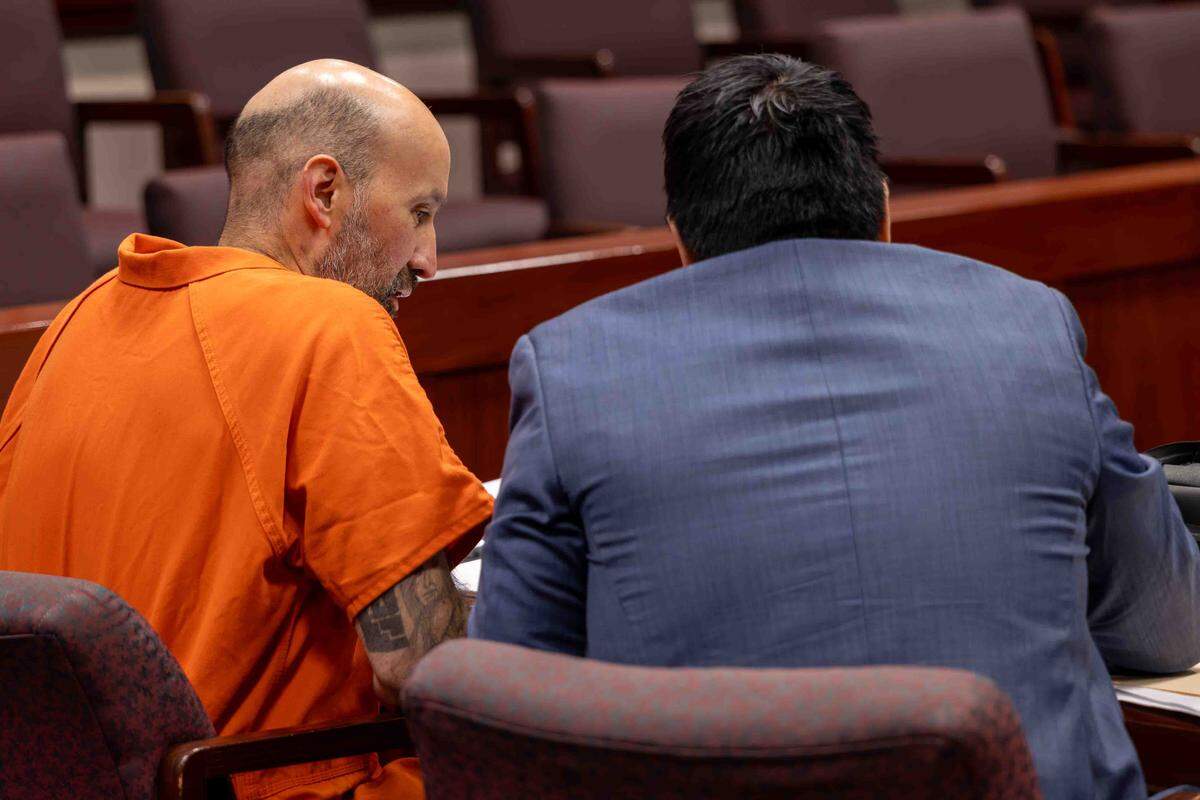
A convicted Pasco murderer returned to the Franklin County Courthouse on Wednesday to ask to be released about 10 years early.
Javier F. Martinez has been serving 56 years in prison after he and another youth were convicted of killing 18-year-old Joey Mendoza and shooting at others in a pickup in Pasco in July 1993.
Martinez was 20 when he got into a confrontation about 2:30 a.m. following the Tri-Cities Water Follies hydroplane races. The shooting stemmed from the victims and the defendants taunting each other, the Tri-City Herald reported at the time.
A jury found Martinez guilty of first-degree murder, two counts of second-degree assault and seven counts of first-degree reckless endangerment.
While he faced a 45-year sentence, the judge agreed with the prosecutors’ recommendation for 56 years.
The exceptional sentence is expected to keep him in prison until 2041, according to the state Department of Corrections.
Martinez argued in a motion filed in November that his sentence should be 45 years. He was brought to Pasco from the Monroe Correctional Complex to argue his case.
But on Wednesday, Superior Court Judge Diana Ruff questioned why the issue wasn’t being handled by the Washington Court of Appeals.

“I have to say that I don’t understand why there is briefing on this. I don’t understand why we’re here,” Ruff said. “Why are we not just transferring this to the Court of Appeals?”
Deputy Prosecutor Kim Kremer and Defense Attorney Michael Nguyen agreed that it should be handled by the higher court.
Kremer explained that the hearing was delayed because the previous judge on the case, Norma Rodriguez, said that she remembered the shooting and had personal ties to people involved.
Martinez has made regular appeals since he was sentenced. Several followed a similar pattern when Martinez was brought back to Pasco and then the case was transferred to the appeals court.
‘Never forgotten’
Mendoza’s sister-in-law Stella Mendoza was surprised to learn of Martinez’s attempt to get his sentence reduced. She told the Herald on Thursday she hadn’t heard about his previous attempts to get out of prison early.
Decades later, his family still remembers the kind-hearted Pasco High School student. Of all the years that Stella Mendoza knew Joey, he was never unhappy.
“You never forget,” she told the Herald. “You wonder who he would have married, and you wonder what his kids would have looked like.”
The teen normally followed the rules, but the night after the end of the Tri-Cities Water Follies, he sneaked out his house to spend time with friends “go cruising” on Court Street.
His mother thought the teen was still asleep when police and a priest arrived at the home later that day.
“He was never the type to sneak out. What made him do it that night, I don’t know,” Stella Mendoza said. “He was always the type of kid that always obeyed what his parents said and never got in trouble.”
She said throughout the trial, Martinez and his co-defendant were joking around and laughing. She believed that Martinez, the suspected shooter, got a fair sentence.
Time in WA prison
When Martinez was sentenced in 1994, prosecutors called for a sentence that was 11 years longer than the normal term he would have gotten.
Judge Carolyn Brown agreed at the time, according to a 1994 Tri-City Herald story.
“I can not understand the acts,” she said. “It appears to be random and without concern for the consequences. ... Each of the victims carries a mental scar of having been shot at.”

Normally, people face a sentencing range that is based on a combination of the seriousness of the crime and the number and type of crimes the person has committed.
Martinez argued that one of his crimes was wrongly counted twice.
That can be ignored if a judge finds that a crime was “exceptional.” Kremer argued that was what Brown did in 1994.
“Defendant states the calculation of his offender score is ‘axiomatically done wrong’ but offers no support for that assertion,” she wrote. “The sentencing court correctly calculated his offender score.”
This story was originally published March 26, 2026 at 6:15 AM.