
Cold killer or victim of a broken mind? Jury hears 2 versions of Pasco bus attack
AI-generated summary reviewed by our newsroom.
- Prosecutors portray Davis as calculated attacker who stabbed driver before fleeing.
- Defense argues schizophrenia erased Davis’s grasp of right and wrong at attack.
- Trial hinges on dueling psychiatric experts and evidence of prior system failures.
Joshua D. Davis attacked a longtime Pasco bus driver in front of a bus full of elementary school students outside Longfellow Elementary School more than four years ago.
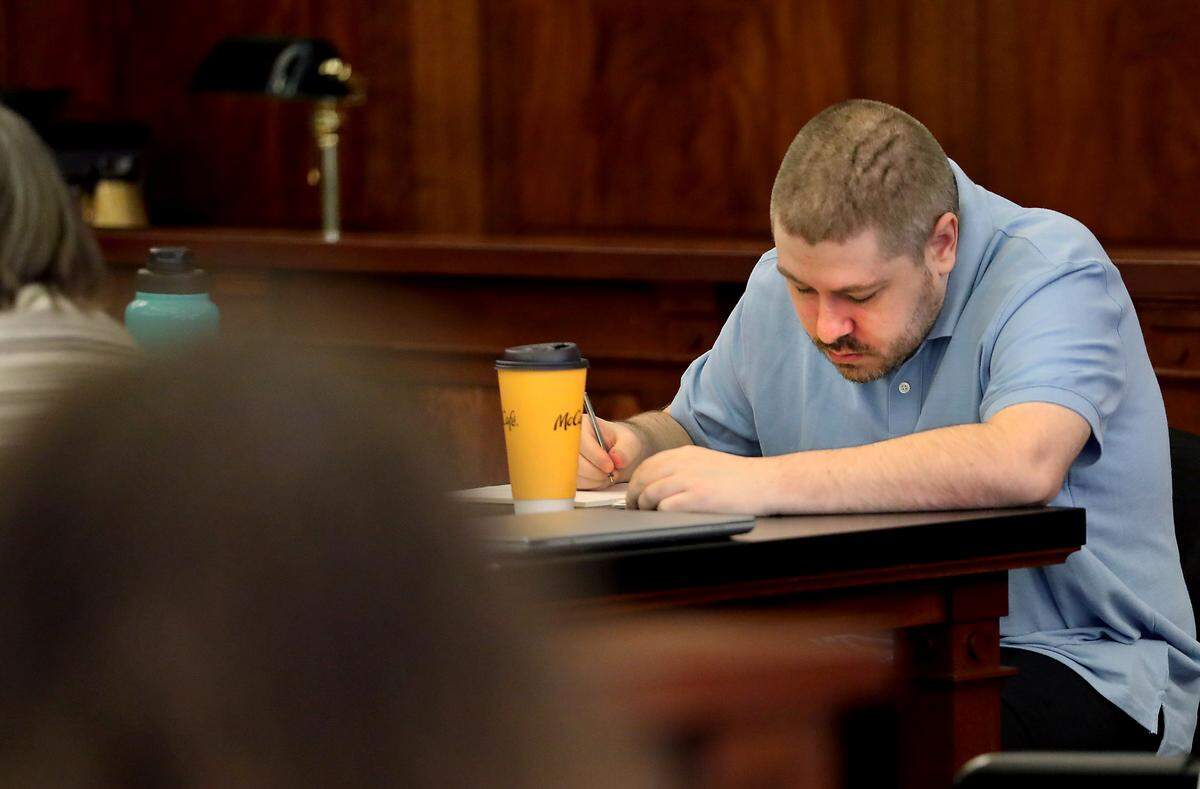
Davis’ mental state at the time when he stabbed and killed Richard “Dick” Lenhart, 72, became the focus of Thursday’s opening statements in his trial for first-degree murder. The 38-year-old Richland man has pleaded not guilty by reason of insanity to the charge.
Prosecutors painted an image of a cold, calculated killer who used deception to set Lenhart at ease before suddenly turning and brutally attacking him in front of a bus load of screaming children.
“He stabs him repeatedly, over and over again,” Deputy Prosecutor Erek Puccio said, describing a video showing the attack. “Mr. Davis ... got Mr. Lenhart in the neck and then drug the knife across his face.”
But defense attorney Shelley Ajax told jurors that Davis, 38, was out of touch with reality after years of suffering from an undiagnosed and debilitating mental illness.
“This case is the story of another tragedy,” Ajax told the jurors. “It’s the story of a young man, whose brain slowly and invisibly started to turn on him. “
The arguments are a prelude to dueling forensic psychologists, who agree Davis suffered from schizophrenia, but disagree about whether he understood right from wrong at the time of the murder.
Prosecution expert Richard Yocum has previously explained that the way Davis acted suggested he understood what he was doing and that it was wrong. That included turning away from Lenhart before turning back and attacking him.
Defense expert Alexander Patterson is expected to testify that Davis has a lengthy history of mental illness. The mental condition left an otherwise healthy man in debilitating pain, and unable to understand the difference between wrong and right, said the defense.
Day of the stabbing
The prosecution’s opening statements and first few witnesses focused on the day of the murder, Friday, Sept. 24, 2021. School had just finished at Longfellow when Davis approached bus No. 4.
Lenhart, a well-liked and longtime bus driver, had about 35 children ready to go home for the weekend. He had closed the door and was just waiting for a few more students before leaving, Puccio said.

Video from the bus showed Davis approach the door. After Lenhart opened the doors, Davis stepped onboard and asked if the bus was heading to Road 100.
After Lenhart said it wasn’t, Davis turned to leave. And when Lenhart looked away, Davis pulled a knife from his pocket and attacked him.
In all, Davis stabbed him 13 times, including once in the neck and twice in the stomach, Puccio said. Sometimes burying the entire 3 1/2-inch blade.
Lenhart tried to push his attacker away, but the safety belt made it hard to fight back. The attack only stopped when the bus started moving. Davis turned away and jumped from the bus before it rolled to a stop in some bushes.

School employees and parents heard the bus crash and responded quickly. Puccio noted one of the school employees spotted Davis stumble and fall out. When she approached him, he told the employee that he was the “assailant.”
Officer Joshua Madsen soon found Davis still in the parking lot. After introducing himself as “Josh,” Davis said that he was sorry that he had ruined his name.
“The defendant knows who he is. He knows his own name, and he knows what he did,” Puccio argued.
A ruling earlier in the day allowed attorneys to mention one other key piece of evidence – a note found on the bed of Davis’ roommate. It said he had just murdered children and to take his two new kittens to his mother.
Lost connection with reality
When the officers met Davis outside the bus, they testified that his head was partially shaved, and he had a “thousand-yard stare.” He also told Officer Madsen that his cellphone was in his truck and the FBI would be interested about what was on it.
The bizarre behavior were signs of what Ajax characterized as a man who’d lost his grip on reality and didn’t even realize it.
“Before this, Mr. Davis was a bright, polite, curious and kind young man who was protective of children,” Ajax told the jury. “He was the type of person you would never think would be standing here today, facing these types of charges.”
Davis came to believe he was targeted by a secret U.S. military ultrasonic weapon, and that the government had invaded his brain and filled it with violent images and voices, and they were trying to get him to do things.
As the problems continued, Davis reached out to doctors for help. He contacted government agencies, and not a single person provided the psychiatric help he needed.
Every month that it progressed, Davis became more scared, but nothing was done, Ajax said.
“What to any of us would seem impossible, to him, became true,” she said. “The voices were real. The fact that the government was controlling him was real.”
She said the case wasn’t about whether the murder occurred, but that it could have been prevented if Davis had been given help.
“It’s about our community,” she said. “This young man tried to get help and was failed by our system — over and over again — until his illness took completely over.”
This story was originally published November 7, 2025 at 5:00 AM.