
Benton sheriff placed on ‘Brady’ impeachment list for court testimony
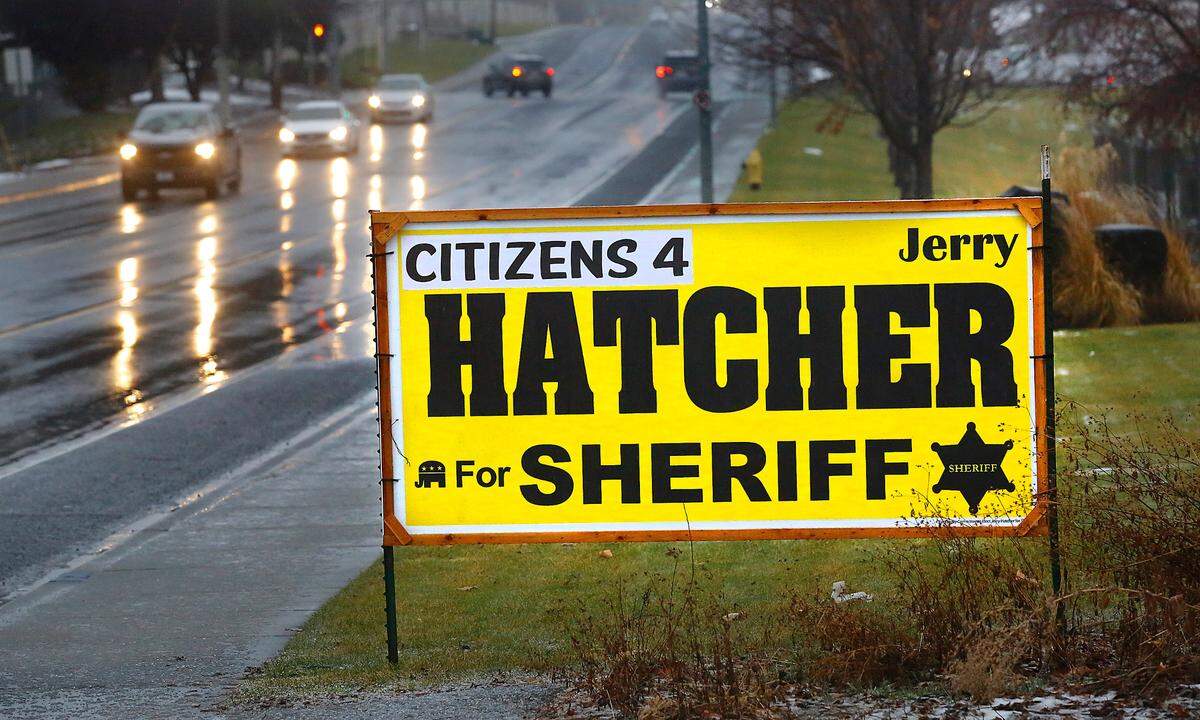
Benton County Sheriff Jerry Hatcher has been placed on an “impeachment” list that could call into question his credibility as a witness in any criminal case.
Prosecutors in Benton County placed Hatcher on the list when he was a possible witness in the upcoming trial of a jail escapee.
Hatcher helped tackle and arrest the fleeing inmate in October. The suspect pleaded guilty last week.
But before that happened, Prosecutor Andy Miller told his staff via email, “There’s a consensus that we should put Sheriff Hatcher on the PID/Brady list.”
“We can review that if Jerry has an objection,” Miller continued in the Jan. 13 email obtained by the Tri-City Herald. “I have forwarded the option to him, but in the meantime he should be on it.”
He said a Nov. 6 order by the Washington state Supreme Court was “key” in determining that Hatcher should be on the list.
That order, signed by all nine Supreme Court justices, denied an appeal by Hatcher and gave the go-ahead for a recall petition brought by one of his employees.
Two of Hatcher’s employees quit in December after learning that Hatcher had unsuccessfully tried to place members of his own leadership staff on the same “Brady” list because of their cooperation in a whistleblower investigation of the sheriff.
Brady list
On Monday, Hatcher told the Herald that he was placed on the list for “completely unsubstantiated allegations” based on the recall petition.
He argued that while the petition went before a Superior Court judge and the Supreme Court, they all had to assume the allegations were factual and did not require a burden of proof before allowing the recall to move forward.
“Being placed on this list is nothing more than — it doesn’t mean you’re not truthful — it just means that there’s allegations made against you that would call that into question, and so (prosecutors) have to disclose that to the defense side,” said Hatcher.
“I would not want to be on the ‘Brady list’ if I was caught lying and doing something that is unethical, because there are officers on there for those reasons. ... But for the recall, it could be completely unsubstantiated allegations, which is clearly the case with mine.”
Miller’s in-house email, which came two months after the high court’s initial order, referred to a “Potential Impeachment Disclosure” list — often called a “Brady list” — that is maintained by local prosecutors.
He told staff he would provide “different emails” to support Hatcher’s addition to the list.
One day after Miller added the sheriff, the Supreme Court issued a 47-page opinion that criticized Hatcher for his alleged behavior including retaliatory acts, intimidation, abuse of discretion, and tampering with and destruction of evidence.
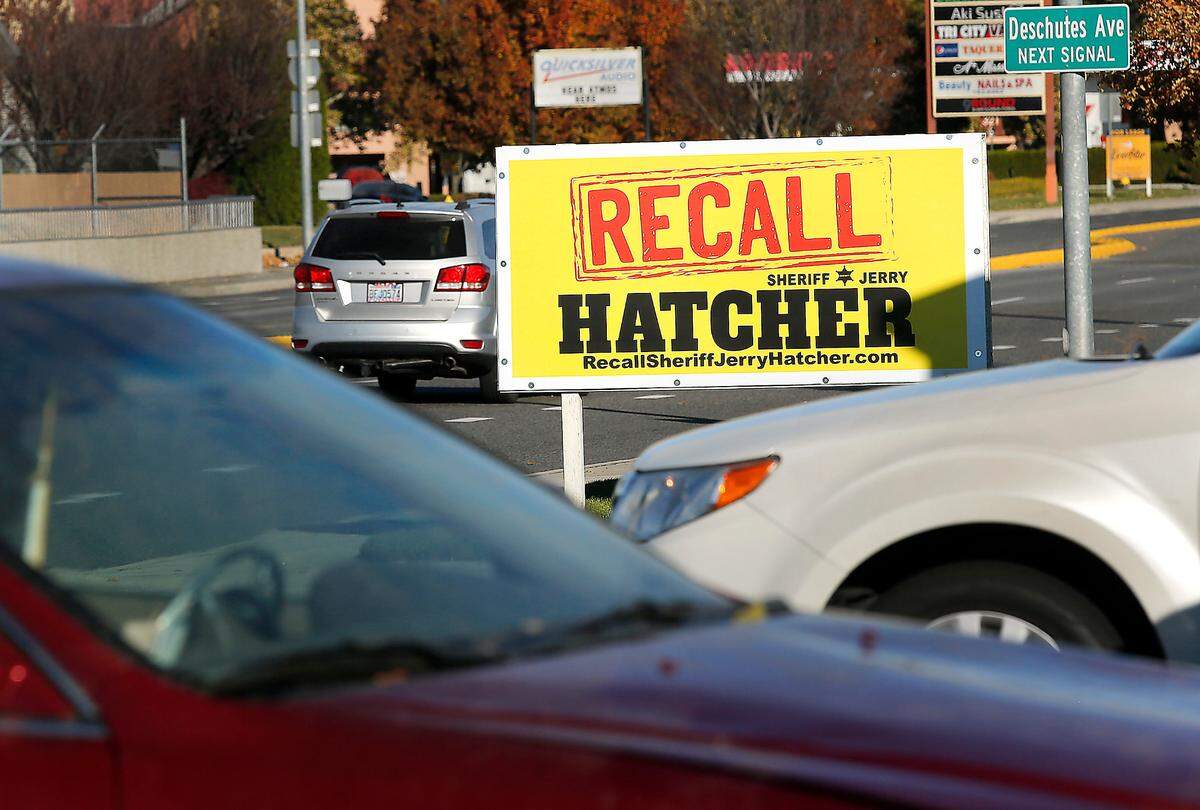
Last fall, Hatcher asked Miller to consider adding the names of several members of his command staff to the list. The sheriff said he believed his supervisors lied and gave misleading statements during an official investigation stemming from a complaint against Hatcher.
Miller rejected the request, saying Hatcher’s opinion about the independent investigator’s report is not objective.
The prosecutor said in a lengthy email thread with Hatcher that just because the sheriff believes findings that he engaged in retaliation are wrong does not mean his employees made statements “in conflict with the truth.”
Benton County’s current Potential Impeachment Disclosure list has 60 names, some going back to 2015.
Copies of Miller’s email placing Hatcher on the Potential Impeachment Disclosure list, the email exchange between Hatcher and Miller and the updated list.
The list includes current and former officers and agents with Kennewick, Richland and Prosser police, the sheriff’s office, the Washington State Patrol, the Washington Department of Fish and Wildlife and the Washington state Liquor and Cannabis Board.
The state patrol’s Crime Laboratory Division and some lab scientists also are on the list.
1963 court ruling
Under the landmark U.S. Supreme Court ruling in the 1963 Brady v. Maryland case, prosecutors are required to disclose all evidence that is favorable to the defense, whether it is something that might be used to impeach a witness or could clear the accused.
It is intended to protect the defendant’s due process rights, and must be done without any specific request from the defense team.
As part of that case, law enforcement agencies are obligated to document and turn over any potential impeachment information on officers and employees. That can include factually supported evidence of dishonesty or misconduct.
Prosecutors note that the disclosures also can include non-government witnesses, like a domestic violence victim who has recanted their allegations, a confidential informant who has a beef to settle or a witness who’s made inconsistent statements.
“Impeachment evidence is evidence that demonstrates that a witness is biased or prejudiced against a party, has some other motive to fabricate testimony, has a poor reputation for truthfulness or has past specific incidents that are probative of the witness’ truthfulness or untruthfulness,” the Washington Association of Sheriffs & Police Chiefs states in its model policy.
Referrals of potential impeachment information can come from different sources, not just law enforcement. It is up to prosecutors to review the information provided to them and decide if it is credible enough to support inclusion on the list.
The designation does not mean that the witness is barred from testifying. A trial judge decides whether the defense can use disclosed evidence in their case.
Witness lists
Pamela Loginsky, staff attorney for the Washington Association of Prosecuting Attorneys, said law enforcement officers often fear their reputation is ruined and career is over once they are included on the list.
She pointed to the much-used phrase that perpetuates that belief — being called a “Brady cop” — and said prosecutors don’t like to use that term because it just isn’t true.
“There is not a person in this world called as a witness who does not have potential impeachment information related to them,” Loginsky told the Herald. “Officers should never feel like just because there is potential impeachment information, their career is over.”
Potential Impeachment Disclosure lists have no reflection on whether a person is a good officer or bad officer, or whether they should maintain employment with an agency, she said.
When it comes to law enforcement, the Washington state Legislature adopted a law in 2018 saying “adverse personnel action” like discipline or termination cannot be taken by an agency against an officer because their name is on the list.
Such action should be “based on the underlying acts or omissions for which that officer’s name was placed on a prosecutor-maintained list,” the law states.
The Washington state Fraternal Order of Police on Monday issued a statement in support of Hatcher’s placement on the Benton County list, calling it “the correct course of action.”
“Credibility and truthfulness are at the core of what we do and our ability to serve the public,” FOP president and Kennewick police Detective Marco Monteblanco said. “Our members agree with this listing and the (Supreme Court’s) decision allowing the petition to proceed.”
Hatcher, hearing that the FOP sent out a news release on it, said it shows motive because the organization usually fights against officers being put on the list.
2 resignations
Two of Hatcher’s employees quit in December after his earlier email exchange with Miller came to light.
Commander Steve Caughey retired after 27 years with the department.
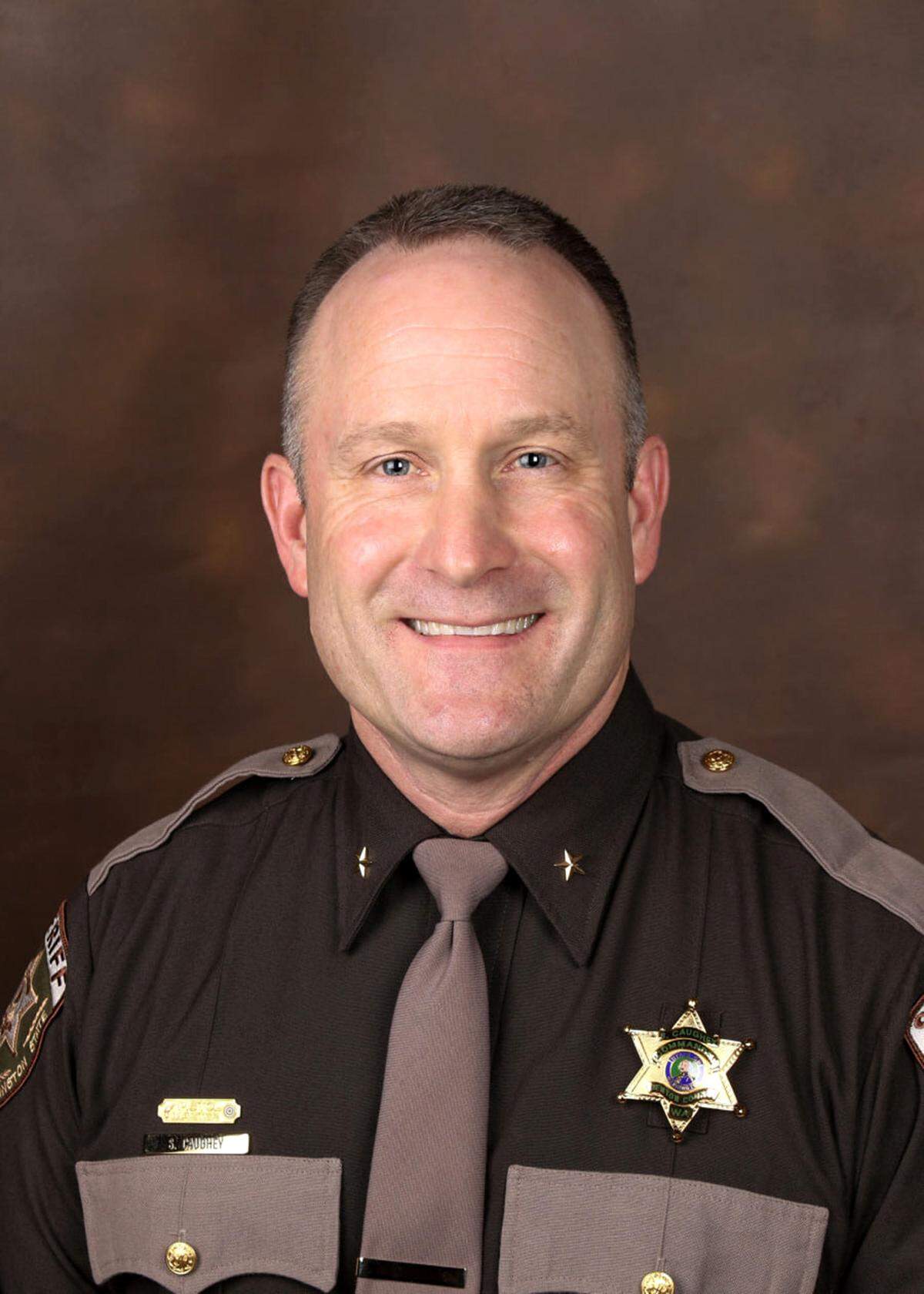
In a three-page letter to the county, Caughey said his voluntary resignation via retirement was premature and he had intended to work for another seven to eight years. He said it was in the best interests of his health and the well-being of his family to leave now.
Caughey detailed the “stressful environment” in the office, particularly for the command staff, over the past 1 1/2 years as the embattled sheriff has dealt with numerous complaints, investigations and legal battles.
He said after learning his boss had requested that he be placed on the impeachment list, “it became crystal clear that there was no level below which Sheriff Hatcher would stoop to attack the credibility of those who he viewed as a threat.”
“It is again another attempt by Sheriff Hatcher at retaliation against myself and my fellow command staff for doing what is right and honest,” Caughey continued, referencing his own statements in the investigations. “It is also another ongoing attempt by Sheriff Hatcher in trying to deflect from his actions that are legally questionable or appeared to be unlawful.”
Caughey noted that the “Brady effort” by the sheriff was made at the same time his petition for recall was before the Supreme Court for consideration and a whistleblower retaliation claim was pending before an administrative law judge,
“It is clear to me that Sheriff Hatcher’s unchecked power allows him to attempt to ruin the careers of those who oppose him without consideration to facts or the truth,” said Caughey.
Another deputy who resigned in December wrote a letter to Hatcher obtained by the Herald, saying that his “baseless accusations” against others in the department were “the final straw” in his decision to leave the sheriff’s office.
Jail escape
Hatcher was a witness in the criminal case of Gerardo T. Uribe Jr., a 47-year-old inmate who escaped from the Benton County jail on Oct. 29.
According to an earlier report by Corrections Department Chief Souza and court documents, Uribe was working in the jail kitchen over lunch when he decided to take advantage of an open door.
Construction contractors working on a courtroom renovation project saw the inmate walk past and, realizing something was wrong, notified jail staff.
Uribe scaled a wall and ran to a nearby Columbia Center Boulevard store, where he took clothes and put them over his jail uniform. He then crossed over the busy Kennewick road before being tracked down by a sheriff’s deputy.
During the pursuit, Uribe turned toward the deputy and, while reaching for his waistband, said, “I have a gun, shoot me. I am going to kill you. Shoot me,” documents said.
Sheriff Hatcher arrived at the scene to back up a deputy, and helped physically take Uribe to the ground before placing the suspect in handcuffs, documents said.
Uribe’s trial had been scheduled for early February. He pleaded guilty last week to second-degree escape from custody, and was sentenced to two years and nine months in prison.
It is not clear if either the prosecution or defense planned to call Hatcher to the witness stand if Uribe’s case had gone to trial.
This story was originally published January 25, 2021 at 2:44 PM.