
4 Tri-Cities shootings, 1 arrest death pending. Local unit paved way for statewide police reviews
Police Officer Antonio Bustamante was responding to a call about would-be robbers at a Prosser apartment last August when he learned shots were fired.
He saw someone running as he pulled into the complex, so he hopped out of his patrol car and started running after the man.
The suspect turned suddenly and shot, hitting him once in the right leg, according to police and court documents.
Despite being wounded, Bustamante returned fire. The suspect escaped and officials have never said if the believe the man was wounded.
Nearly 11 months later, the incident remains one of five Tri-Cities cases of officer-involved shootings or use of deadly force still under investigation.
Three cases involved suspects killed by officers in the line of duty.
The fifth is a man who died during an arrest.
The cases are under the purview of the Special investigations Unit, a law enforcement team formed 10 years ago to independently review use-of-deadly-force incidents.
The Tri-Cities was one of the first communities in Washington state to assemble such a group of specially trained detectives, supervisors, command-level staff and civilian employees, like evidence technicians.
The Special Investigations Unit, or SIU, — covering Benton, Franklin and Walla Walla counties — excludes members of the involved agency when looking into officer-involved incidents and in-custody deaths.
“We are responsible to conduct the criminal investigation into everything that occurred,” said Kennewick police Commander Randy Maynard, who took over the team’s leadership in 2018. “Our job, by law and by policy, is not to do the administrative investigation, which evaluates whether or not the officer followed their department policy.”
“The criminal investigation researches and reports facts regarding everyone’s potential involvement in criminal activity before or during the incident,” he added.
None of the Tri-Cities cases in the past decade have led to criminal charges against a law enforcement officer.
Initiative 940
In November 2018, voters passed Initiative 940 making it mandatory across the entire state for independent investigations “of all instances when law enforcement uses deadly force resulting in death or substantial bodily harm,” said the Attorney General’s Office.
The law details specific things that agencies must follow, including the appointment of at least two community members and the requirement that the investigative team release weekly media updates.
Those rules, as passed by the Criminal Justice Training Commission, went into effect January 2020.
Then last week, Attorney General Bob Ferguson ordered a statewide inquiry into 30 cases so far in 2020 where law enforcement used deadly force. The purpose is to make sure every agency is complying with the law.
It is in response to recent revelations that the Pierce County Sheriff’s Office failed to follow several of the requirements when investigating the March death of Manuel Ellis.
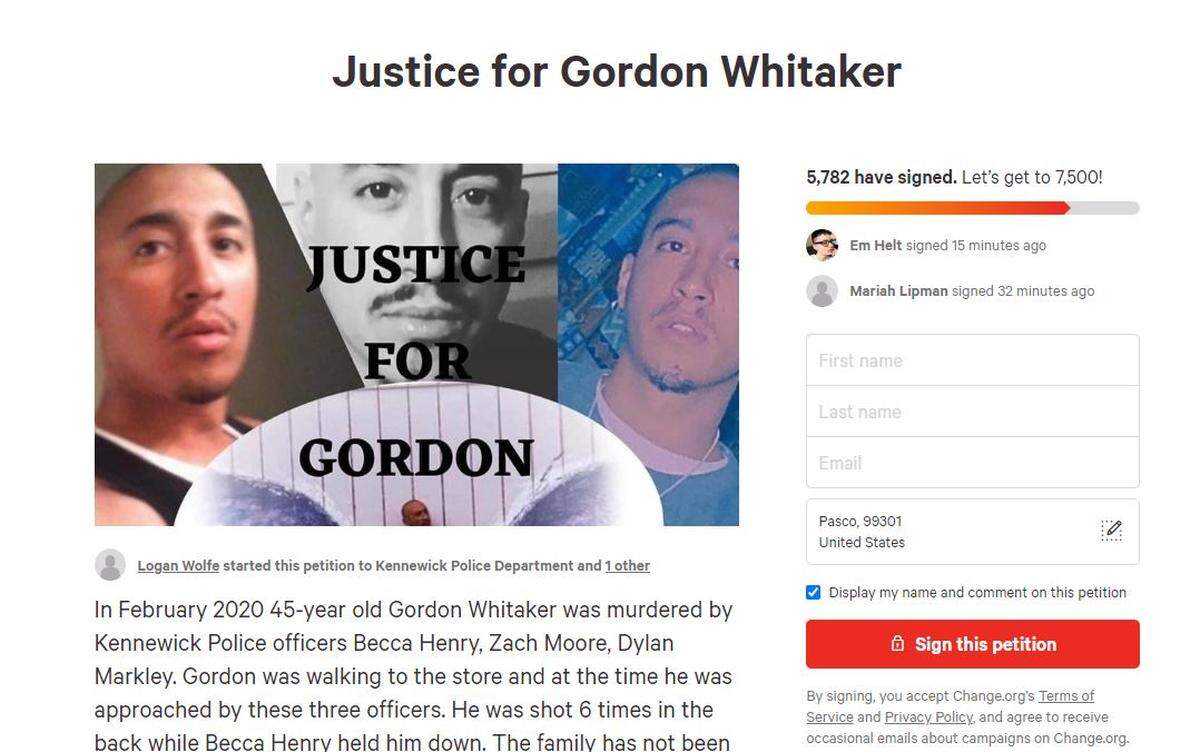
Two of the cases under review are from the Tri-Cities: the Feb. 9 fatal shooting of Gordon Whitaker near downtown Kennewick and the May 17 shooting in Pasco that left one murder suspect dead and a second one locked up.
Maynard, who recently spoke with the Tri-City Herald about the unit’s history, said not every SIU investigation stems from a death or even a major incident.
And, even with the new law, the Special Investigations Unit is not a mandated response.
An agency’s chief or sheriff, as members of the SIU’s interlocal agreement, still have the authority to ask the Washington State Patrol or another regional, but independent department to handle an investigation.
The benefit of the SIU is it’s an accumulation of the best resources available to all local agencies and the work is spread out among 30 to 35 team members, said Maynard.
The team does not have jurisdiction if the involved officer is an FBI agent or from another federal agency.
Created 10 years ago
The Special Investigations Unit started in the Tri-Cities in 2010, and in the last three years has expanded to include both Walla Walla city and county, and College Place.
Not every agency in the three-county coverage area contribute members to the team, although most try, said Maynard. Each member must apply to be on the team with support from their supervisors, and must meet stringent training requirements before selected and once onboard.
The SIU has had 42 investigations in the past decade, with two so far this year.
In 2019, the team averaged one activation every 41 days for a total of nine investigations.
There was no SIU — or Law Enforcement Training and Community Safety Act — on the state books before the 2018 election.
Maynard said there was a push for legislative change because some stakeholder groups had a distrust of the investigative process or of police in general.
He said even with the law now in place, his team has always tried for the utmost transparency and to maintain the integrity of the investigation.
Citizen members
The only “substantive areas of change” the regional team had to make because of I-940 were the addition of citizen members and issuing weekly updates on the investigation to the media.
The citizens are handpicked in advance of a team activation.
For instance, in the case of the May shooting with cousins Juan and Miguel Montalvo, Pasco Police Chief Ken Roske already had people in place who were notified that day that they were needed.
They are not permitted to respond to the scene or the command post, or any part of the initial response, said Maynard. But citizen members meet with the chief and team leaders at the outset of the investigation, attend briefings and can review the case file once it is done and the county prosecutor has issued a decision.
The citizen representatives also participate in the interview process for team members, and review conflict-of-interests assessments for every activation to make sure a member does not have a conflicting relationship with any of the involved parties.
“Essentially they are a voice representing the community, and it’s our hope that they report back to the community that the SIU investigation is following or exceeding, if they can, the requirements of the law and rules,” said Maynard. “It’s a checks and balances, if you will.”
Maynard said the state’s administrative code permits these layman members to be involved in several different areas of the investigation so that they might “stand before their own community and say, ‘I assure you that they’re doing it by law and policy.’”
Prosser Police Chief David Giles recently put out a request for interested volunteers to contact his agency.
Investigations can take months
Maynard said there are two components to the early days of the investigation: the initial response gathering evidence, taking photographs, videos and any measurements, and collection of the involved officer’s uniform and equipment; and interviews of all potential witnesses.
The average time it takes a team to wrap up the investigation is between 60 days and six months, he said.
Maynard reiterated that investigators are only looking at the officer’s criminal culpability, and not whether or not the officer followed some language from their own department policy. That is up to the officer’s own agency to determine with an administrative, or internal review.
The team’s report then is sent to the county prosecutor’s office. It does not include an opinion as to whether the officer was justified or a recommendation for charges, only the facts as to what happened.
“One of the things we commonly tell officers is it is not our job to decide whether you followed the law or policy. But if you choose to follow the law and policy, then our investigative report will reflect that,” said Maynard. “If you don’t follow the law, then our report will reflect that you didn’t follow the law.”
Maynard said he realizes there is a skewed perspective, but added that he doesn’t understand the logic behind statements that citizens should be allowed to come in and do the investigations.
Citizens do not have extensive criminal training, nor do they have authority to ask the court for a search warrant or arrest warrant, he said.
Asked if the law enforcement team can truly be objective and independent in determining if the force used was criminal or not, Maynard said he welcomes any critic to come judge his work.
“We’re always going to be criticized, it’s the nature of the business ..., “ he said. “I don’t get paid nearly enough money to jeopardize my own integrity or my own professional well-being to cover up for some officer who chose not to follow the law or policy. That’s not my job.”
Five cases still open
The five Tri-Cities cases still awaiting a final determination are:
▪ Werner Anderson, 54, died after being taken into custody by Pasco police in September 2018. Very few details have been made public about that incident, but Maynard said it was not the result of a shooting. The team’s report was delivered to Franklin Prosecutor Shawn Sant in August 2019. It’s unclear if Sant has reached a decision in the case.
▪ Prosser police were called Aug. 5 to Canyon Park Apartments for reports of Isaiah M. Colley and Abdiel B. Vargas trying to get inside the caller’s home. A neighbor then heard someone knock on his window and was headed toward it when shots were fired and he realized he’d been hit.
The two 19-year-old suspects took off but not before Officer Bustamante arrived in the parking lot. The officer estimated 10 to 20 rounds were fired at him, and that he got off several rounds after being hit in the leg.
Isaiah M. Colley is awaiting trial on first-degree theft. Charges of first-degree assault with a deadly weapon and first-degree robbery were dropped in November. Abdiel B. Vargas has a trial date of Aug. 31 on two counts of first-degree assault with a deadly weapon and one count of first-degree robbery.
They are the only two named suspects, but Maynard said the SIU investigation remains active because, “We are still trying to identify and locate potential offenders.”
▪ Dante R. Jones was shot several times early Nov. 18 following a car chase with Franklin County sheriff’s deputies.
Deputy Cody Quantrell tried to crawl into Jones’ car and grab the keys while it was stopped at one point on a rural road, but he alleges Jones then put the car into gear and started to drive. Quantrell, fearing he would be drug under the car or run over, shot at the driver.
Jones, a 28-year-old former Marine, was said to be high on methamphetamine and possibly hallucinating. He died on his way to the hospital.
The SIU report on his case recently was turned over to Sant’s office.
▪ Whitaker, a 45-year-old father of seven, was stopped and questioned by officers patrolling near Fruitland Street and Columbia Park Trail.
Police, who have released few details, say officers were in the process of detaining him when Whitaker allegedly pulled out a gun. At least one of three officers fired in response to the threat, said police.
Whitaker died at the scene. Family says he had been walking to the store, and was held down by one officer as he was shot six times in the back.
The case is still in the investigative phase.
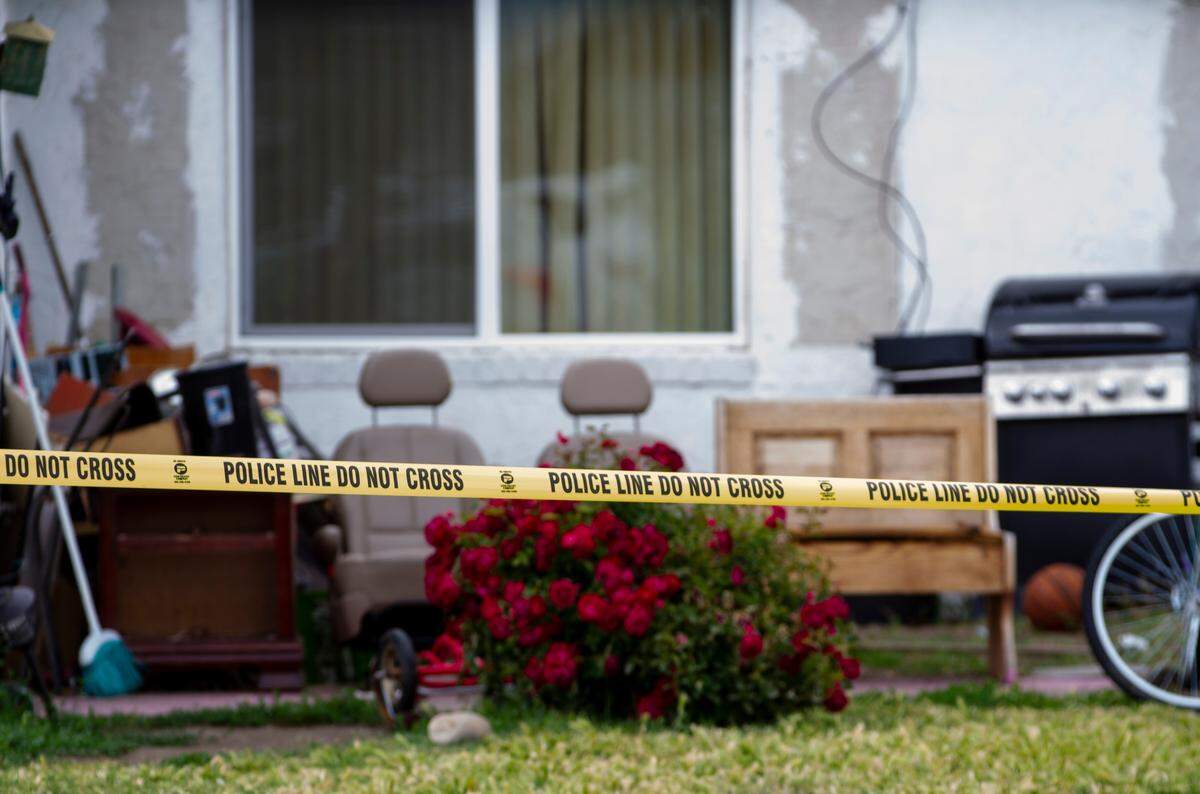
▪ The Montalvos were wanted for an April 29 murder and assault at an east Pasco home when police got word the cousins allegedly returned to the scene on May 17, possibly to kill witnesses to the earlier crime.
Two people were shot in the second crime and a man was placed in his trunk during a carjacking.
Hours later, police surrounded another Pasco home after getting word the Montalvos may be inside.
The Montalvos then allegedly ran out of the home towards an alley and started firing at officers. Two officers returned fire, killing Juan Montalvo and injuring Miguel Montalvo.
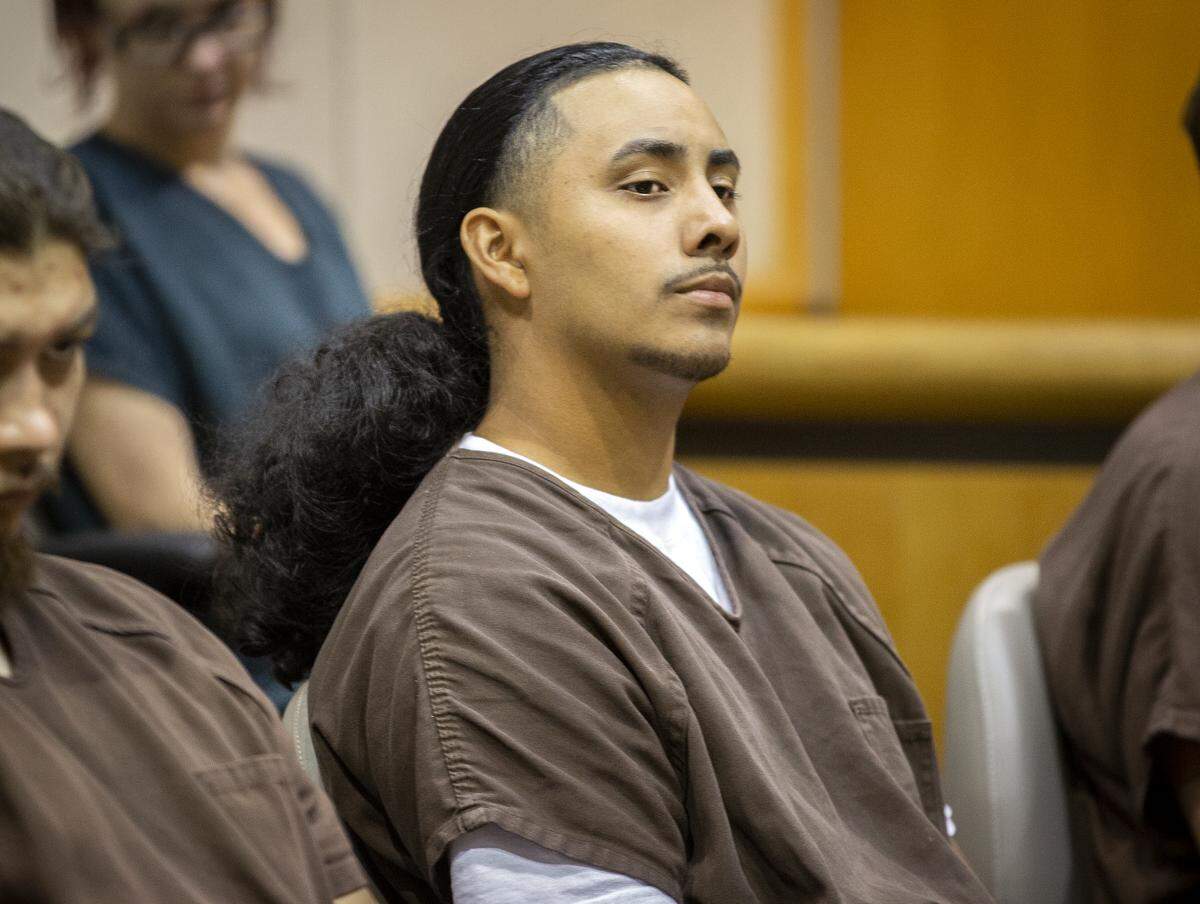
Miguel Montalvo is charged with murder and assault for the April shooting. Court records show he has not yet been charged with the shooting involving police.
The SIU report on that case is close to being done and will be sent to prosecutors, said Maynard.