
Update: Why are a barge, crane and divers under the cable bridge in Tri-Cities?
AI-generated summary reviewed by our newsroom.
- Corps installs turbidity curtain below cable bridge to trap silt before intake
- Kennewick plant reports sediment levels six to eight times normal, straining filters
- Causeway removal aimed to restore salmon habitat despite increased short-term sediment
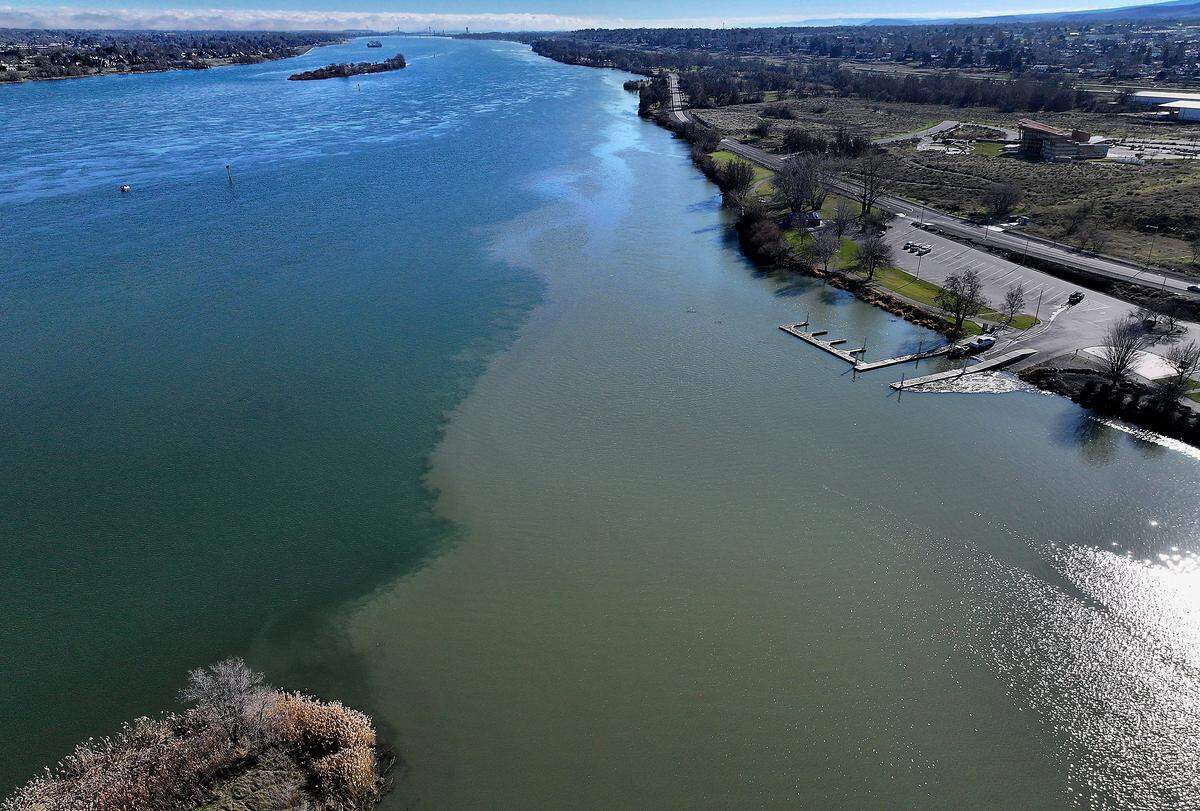
Work was underway Tuesday in the Columbia River to address sediment in the river, which Kennewick city officials suspect is linked to the removal of the Bateman Island causeway in Richland.
Increased sediment in the river has caused the filtration system at the Kennewick water treatment plant near the cable bridge to work harder, said Jillian Henze of the city of Kennewick.
The city is measuring sediment levels at the plant that are six to eight times higher than usual, she said. The plant just down river of Clover Island and about six miles from the former Bateman Island causeway, supplies about 40% of Kennewick’s water supply annually.
However, The Army Corps questions whether its work to tear out the causeway is the cause of increased sediment in the river.
It says turbidity monitors installed upstream from the former causeway and downstream have had comparable readings.
“Turbidity is a natural process in river systems, and increases can often be tied to events like flooding and increased seasonal flows,” it said. “There have been increased flows and basin flooding along the Yakima and Columbia Rivers in recent weeks and months, which can elevate turbidity.”
On Tuesday, the Army Corps of Engineers had a barge with a crane and a dive team stationed at the cable bridge to install a turbidity curtain. The fabric curtain hangs from floats and is attached to the bottom of the river.
It allows water to flow through, but is intended to filter silt before particles reach the city’s drinking water intake.
Even before work started to remove the Bateman Island causeway, the Kennewick and Corps had been talking about sediment concerns, Henze said.
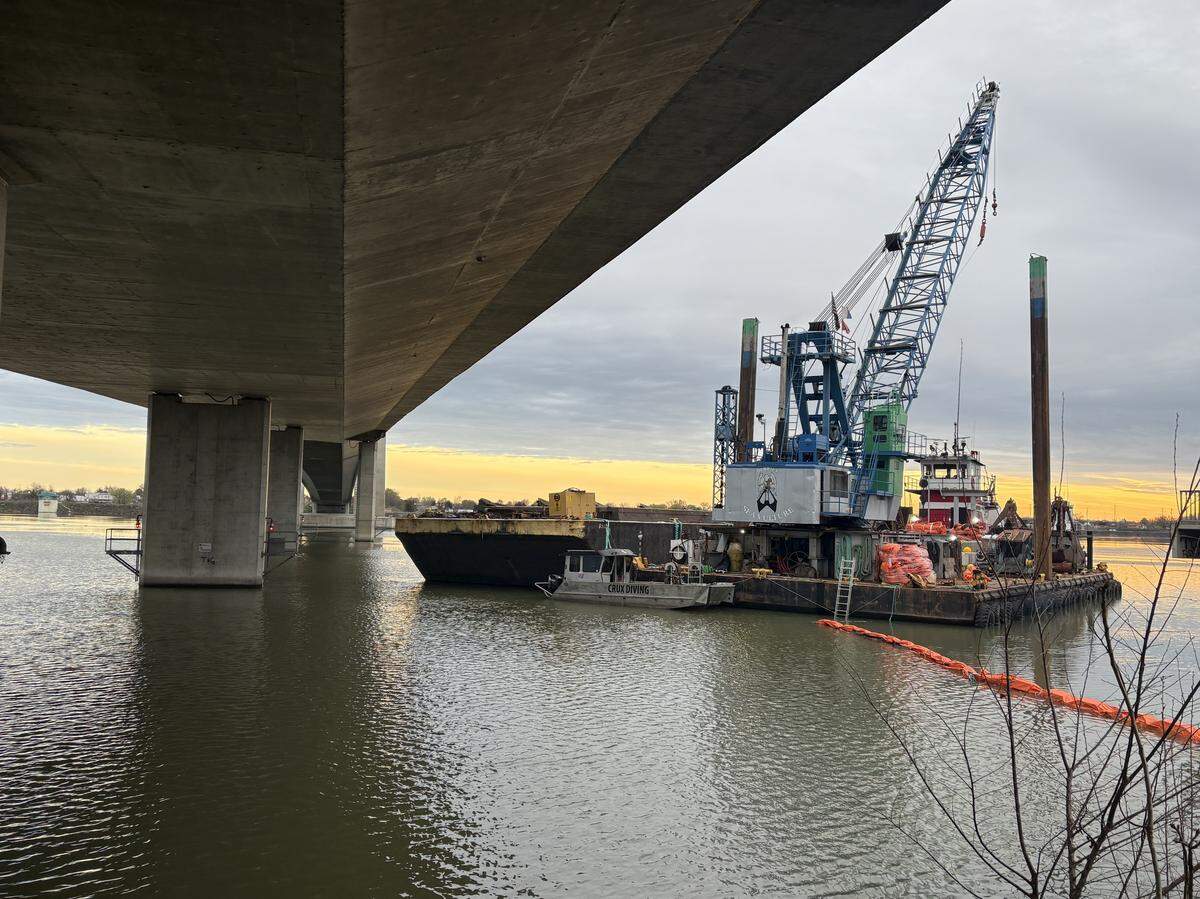
The Walla Walla District of the Corps has been working closely with the city and the installation of the turbidity curtain is a result of that partnership, said Dylan Peters of the Corps.
The corps is surveying the river bottom near the former causeway to better understand how the accumulated sediments have shifted, Peters said.
What has changed following the removal of the causeway is that sediment that previously pooled behind it can now continue downstream, as was predicted before the causeway was removed, according to the Corps.
It said the turbidity curtain is a precautionary measure requested by the city of Kennewick.
In mid-January the Army Corps breached the 85-year-old earthen causeway that allowed people to walk onto the island at the confluence of the Yakima and Columbia rivers.
Weeks later the 500-foot-long causeway was history, with about 18,000 cubic yards of soil, rock and clay excavated and hauled away by contractor Pipkin Inc.
The causeway was removed to help endangered salmon, including juveniles that migrated downstream to the ocean in the spring and adult salmon that returned to spawn in summer and fall.
The causeway created warm stagnant water, perfect for invasive fish and native Northern pikeminnow to thrive and feed on migrating juvenile salmon.
It also provided an area favorable for mosquitoes, algal blooms and an overgrowth of water stargrass.
This story was originally published March 31, 2026 at 5:28 PM.