
These common batteries pose huge risks in Tri-Cities. Toxic smoke, intense heat
AI-generated summary reviewed by our newsroom.
- Batteries can reignite, burn repeatedly and reach ~4,000° peaks.
- Damaged or poor-quality batteries can cause home, vehicle and garbage-truck fires.
- Buy vetted batteries, use manufacturer chargers, and avoid charging near beds.
When lithium-ion batteries burn, they reach temperatures that can melt steel. Once they start, they’re difficult to stop.
That’s not to mention the toxic smoke.
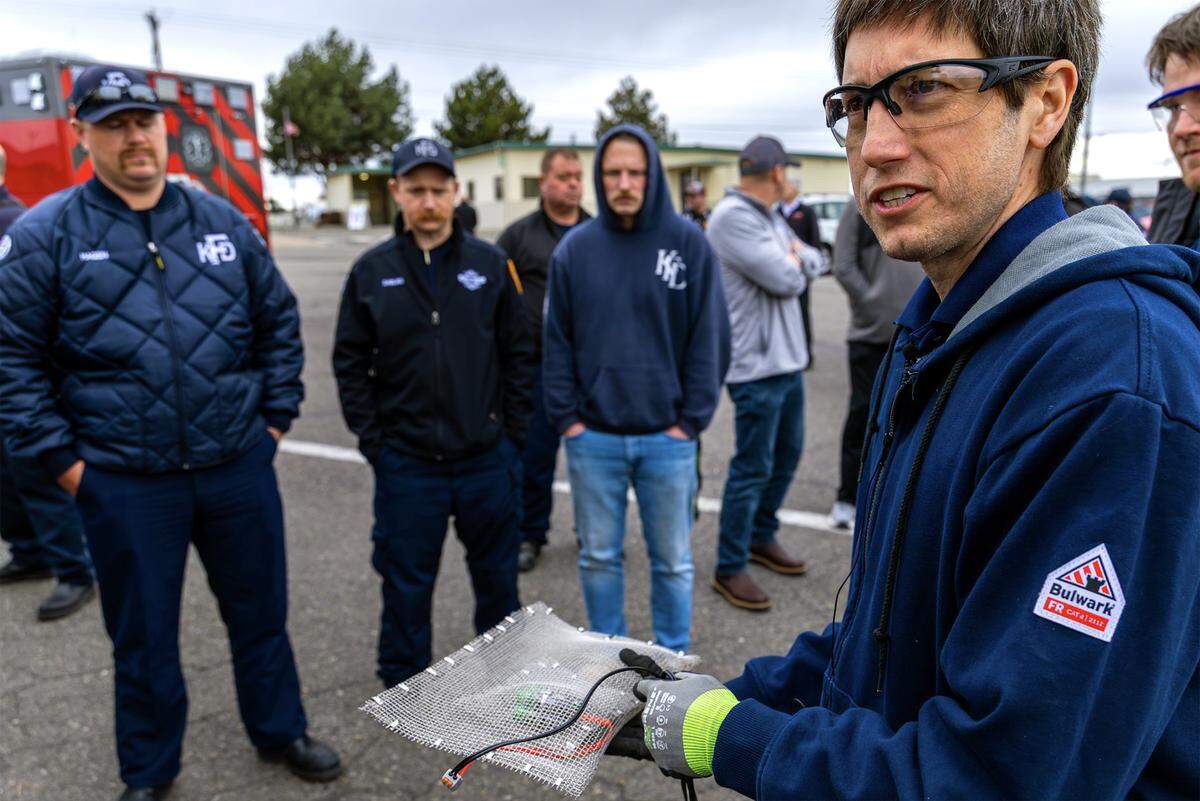
Kennewick firefighters were joined by others from across the region, as well as state and federal officials Thursday to discuss how to address fires that start with the power source of many modern devices.
While lithium-ion batteries are not new, they have become increasingly common. They power cellphones, tablets, laptops, smartwatches and scooters.
“The world is still trying to learn how these are going to be dangerous to us. So that’s what we’re trying to find out too,” Kennewick Battalion Chief Andrew Streibeck told the Tri-City Herald.
He said a damaged battery left next to a bed can erupt into a dangerous fire. They are made more difficult because unlike other fires they need to be extinguished several times.
“If you wanted to smother a candle, you would take all the oxygen away. Well, it turns out that in a battery, it’s got the oxidizer in it, so it doesn’t need oxygen. It will burn on its own,” Streibeck said. “It’ll keep burning and keep burning and light itself back on fire.”
While water can be used to put it out, it will likely need to be doused several times before it stops burning.
It also burns much hotter than a normal fire with peaks of 4,000 degrees, and produce dangerous gases such as hydrogen fluoride, Streibeck said. They can release flammable gasses as well.
He also noted that quality of the batteries can vary. The batteries in many commercial products are likely to be safe, but inexpensive electronics bought from less reputable sources come with higher risks.
“iPhones we’re not worried about. Everyone’s got an iPhone. They spent a lot of time making sure that those batteries are safe,” Streibeck said. “But who knows what people are going to get on Etsy or Amazon or somewhere else. ... Just because it’s cheaper doesn’t mean it’s a good deal in the long term.”
What fires are they seeing?
As an example of the fires that they are seeing started because of lithium-ion batteries, Streibeck told a story about a vape pen that was thrown in the trash.
When it’s picked up in the truck, the trash is compacted and the battery in the vape pen is damaged.
“So the most common is going to be a garbage truck fire, right,” he said.
There are other scenarios firefighters are considering, such as electric cars in crashes. The damaged batteries can catch on fire. Solar panels in people’s homes that store the power in lithium-ion batteries can also get damaged.
How to stay safe
Streibeck said safety starts when buying products. Make sure the batteries are from a vetted company.
The U.S. Fire Administration suggests going to the Consumer Product Safety Commission’s website to check for recall information on the products. Look for a nationally recognized testing laboratory stamp on the packaging.
“We want you to have batteries in your possession that have been well-vetted and well-tested,” Streibeck said.
Officials also urge people to use chargers provided by the manufacturer of their devices and avoid overloading outlets.
Steps can also be taken to keep potential hazards away from sleeping areas, such as charging electric scooters in the garage or plugging in cellphones outside the bedroom.
If they don’t have that option, they should consider putting a barrier between themselves and a potential fire.
“You have to think, can we stick it in the closet?” Streibeck said. “Can you put a barrier, maybe a door or something, between you and whatever decides to go off.”
Danger signs that a lithium-ion battery is failing include:
• Bulging
• Popping or hissing
• Damage to the battery such as cracking
• Rising temperature
• Visible gases venting