
Judge rules in Franklin County gun battle with sheriff
AI-generated summary reviewed by our newsroom.
- Judge rules on fight over guns from Franklin County jail.
- Judge also makes decision on fingerprint machine and vehicle.
- Attorneys argue its an issue of policy and control.
A Walla Walla County judge ordered the county take over the registration of more than 30 guns at the Franklin County jail.
Judge Brandon Johnson’s Tuesday morning ruling came as part of the continuing legal battle between Franklin County Sheriff Jim Raymond and the county’s board of commissioners.
Attorneys for both sides argued over custody of the guns, a fingerprint machine and a vehicle in a Tuesday morning hearing. Johnson ruled in the county’s favor on the machine and vehicle.
Who can have a gun
“This is not a safety issue,” the county’s attorney Megan Clark said while they argued about access to a software program. “This is a control issue and you will see this throughout our discussion today that there is a clear tension of the bounds of everyone’s power.”
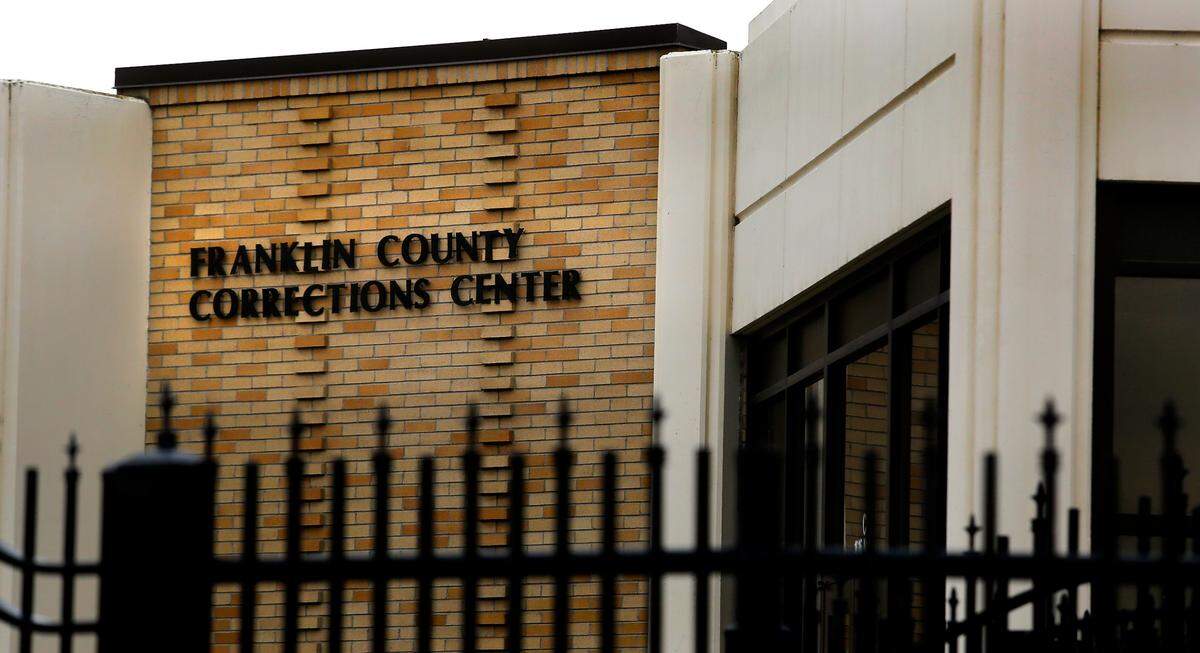
The legal wrangling came as part of efforts to settle the fallout after the Franklin County commissioners’ sudden April decision to strip control of the jail away from the sheriff.
The move prompted Sheriff Jim Raymond to defy a court order and take 30 guns used by corrections officers when transporting inmates outside of the jail.
This brought Franklin County and Raymond to court in front of Johnson last May after Benton Franklin Superior Court asked him to take over the case due to conflicts of interest. He ordered the guns returned while the attorneys worked on hammering out the details of dividing the two departments.
But Raymond has not backed down from his contention that the guns shouldn’t be in the hands of corrections officers without his approval.
The sheriff has argued that state law requires the corrections officers to get a limited commission from him to be able to carry the guns in places where it’s normally restricted, including the courthouse.
Megan Clark, the attorney representing the county, argued that the theory doesn’t make sense, and the authority for a limited commission comes from the state Criminal Justice Training Commission.
Armed corrections officers
There are 56 firearms at the center of the dispute between commissioners and the sheriff. Most of those are in the jail’s armory, and are used when transporting people from the jail. Six of the guns were in the sheriff’s armory.
All of the weapons are registered with the Bureau of Alcohol, Tobacco, Firearms and Explosives, said Rebecca Boatright, one of the attorneys representing Raymond.
To carry a gun in places where only a police officer would normally be able to, the corrections officers needed to be granted authority by a law enforcement agency, Boatright argued.
She said this puts both the county and the sheriff at risk for future lawsuits.
“Department of Corrections employees are walking around carrying a firearm that is registered to the sheriff and that violates every aspect of the statutory scheme that the state of Washington has set forth,” Boatright said. “I don’t know how to be more clear than that.”
Clark said Boatright’s argument was an “erroneous reading of the statute.” She noted that counties across the state have created separate department of corrections, including both Benton and Walla Walla counties.
“It’s an absurd result that you can create a Department of Corrections, but those individuals can’t have any weapons,” she said. “The sheriff does not point to any real law. He points to these (standard operating procedures) that were in place prior to the resolutions being passed.”
She argued that the Criminal Justice Training Commission provided the authority for who could have the guns. She noted that jail Chief Keilen Harmon and the other corrections officers had received this certification from the commission.
Johnson ruled that other agencies could determine if the corrections officers could legally carry the guns. But he did want the registrations for the weapons to be moved from the sheriff’s office, so that Raymond wasn’t legally responsible for them.
“Owning property is under the umbrella of the county,” Johnson said. “The county commissioners decide which different departments are going to use what property that’s all owned by the county.”
.jpg "Franklin County Courthouse Complex_12202025-9843 1 (1).jpg")
Fingerprint machine and vehicle
The judge also ruled that the sheriff’s office needed to hand over a fingerprint machine that was obtained with a grant obtained through the jail and a pickup that was used by the corrections department captain before the split.
Raymond’s attorney Bob Christie argued the county hadn’t shown that they needed those items.
Johnson pointed out that whether the sheriff’s office should have those the items was a policy decision and not a legal one. And residents could vote the commissioners out of the office if they disagreed with the policies that they set.
“I have two screens hooked up to my computer right now, which I enjoy very much, and it makes my job much easier,” the judge said. “If the county commissioners decided ‘we’ve hired a new employee Judge Johnson, and we are not limiting you to one screen ... ‘“
“I could get upset for that. I could probably ask for time at a county commissioner meeting, and I could go across the street and talk about the injustice that has befallen me and that I’m not able to operate efficiently, but that’s all I can do.”
Johnson also agreed to give Raymond access to the security logs for who accesses doors into the courthouse.
The judge set a review date to make sure the handoff of equipment and vehicle takes place. It’s unclear if deputies intend to move forward with a separate lawsuit related to Raymond ordering them to take the guns.
This story was originally published February 11, 2026 at 5:00 AM.