Cougar spotted climbing on construction equipment in Pasco. Or was it?
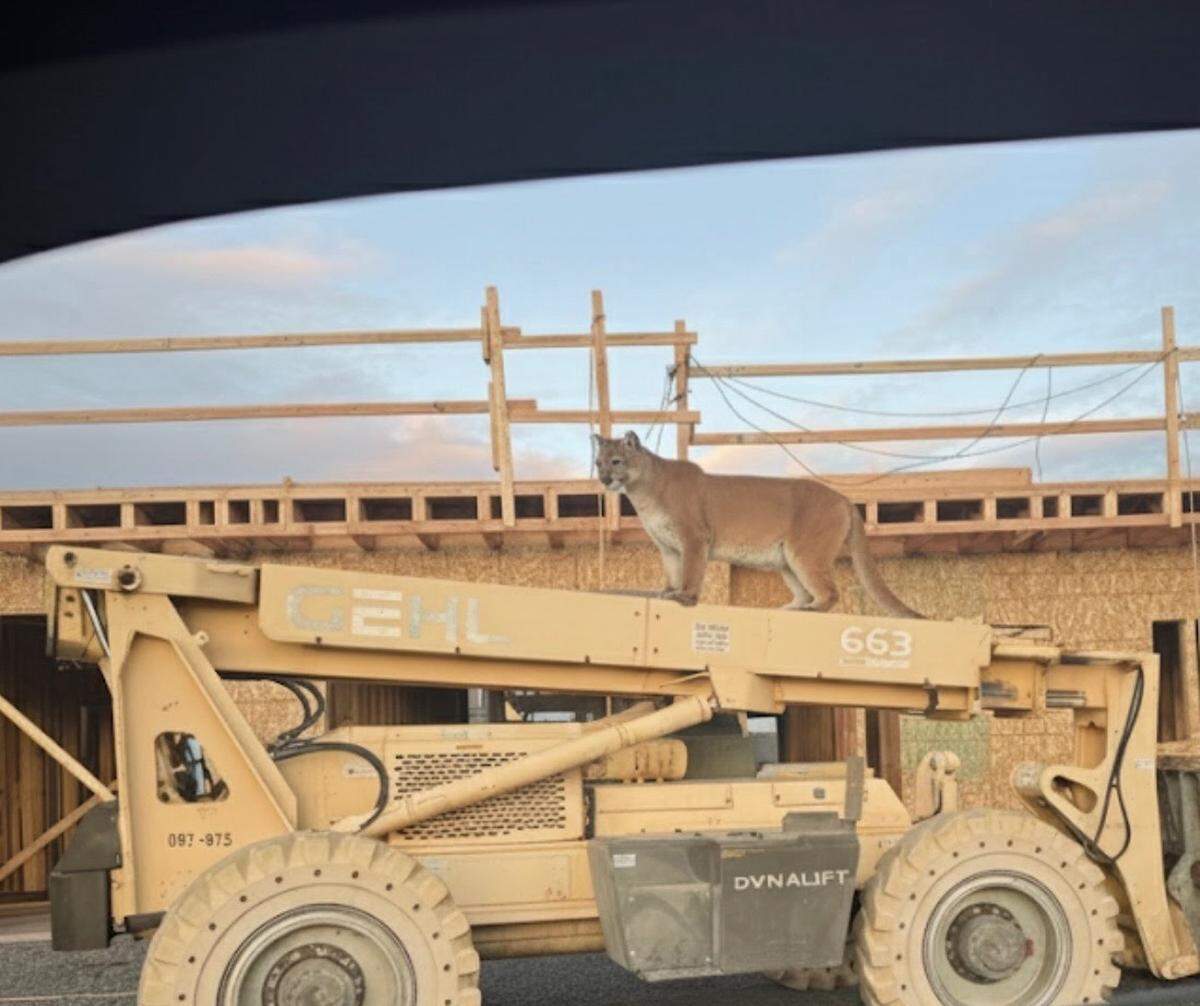
Photos of a cougar standing boldly on a piece of construction equipment in Pasco began circulating on Tri-Cities social media sites on Wednesday.
News about the sighting at Columbia Shores, the future location of houses and townhomes, spread quickly.
But by early evening it started to unravel and looked more like an AI hoax by a construction crew on neighbors.
Department of Fish and Wildlife officials told the Herald earlier on Wednesday that their enforcement team visited the construction site but couldn’t confirm the sighting.
The Columbia Shores is a development at the former location of Harris Farm on West Court Street, across the Columbia River from Richland.
Salina Savage told the Herald she received a text message Monday night from a construction worker who said they’d seen the cougar in the afternoon and contacted her with photos to warn her.
The images of the big cat appeared to be taken from a pickup truck.
Savage told the Herald she’s accustomed to “crazy critters” on her property, but she’d never seen a cougar.
At the end of July, a large buck deer had wandered onto her back porch.
Other neighbors learned later on Wednesday that the photos she was sent were likely fake.
The construction company could not be reached on Wednesday night about the photos.
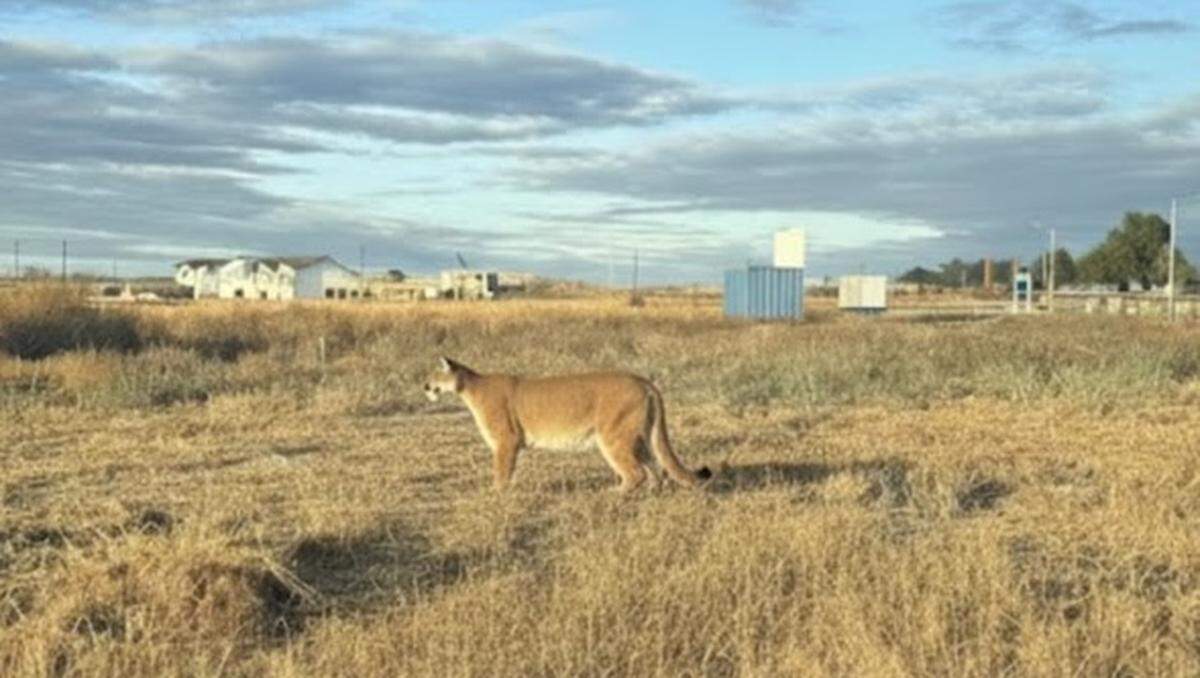
Cougars have been seen many times around the Tri-Cities region, though more often in the spring.
Most cougars in Washington state live in forested areas, though a few live in the wildland habitat of the Columbia Basin surrounding the Tri-Cities, Jason Fidorra, a local biologist with the Department of Fish and Wildlife, previously told the Herald.
The mountain lions spotted in areas where people live or work are likely passing through, rather than animals who live long-term nearby, he has said.
Young, maturing males often go looking in the spring to find their own territories and to seek a potential mate, however, since they breed year-round that’s not the only time of year they may pass through a new area, say biologists.
The natural corridors that in many cases are easiest to follow as they disperse over long distances are rivers.
“And all the rivers seem to lead to the Tri-Cities,” Fidorra said.
There have long been cougars moving through the area, perhaps finding cover along its rivers, he said.
But now there are more people in the Tri-Cities and more development that gives them fewer places to hide.
If you see a cougar in your area, report your sighting to the Department of Fish and Wildlife at 360-902-2936 option 1 or email Wildcomm@dfw.wa.gov. If you’re concerned for your safety, dial 911.
If you meet a cougar
Few people will ever catch a glimpse of a cougar, much less confront one.
If you do come face to face with a cougar, here’s what state wildlife officials say you should know:
▪ Pick up small children and pets, but don’t run. At close range, a cougar’s instinct is to chase.
▪ Face the cougar and talk to it firmly as you slowly back away. Leave the animal an escape route.
▪ Try to look larger than the cougar. Hold your jacket open to look larger and stand shoulder-to-shoulder with anyone you may be with.
▪ Don’t take your eyes off the cougar or turn your back. Do not try to hide or crouch down.
▪ If the cougar does not flee or shows signs of aggression — crouching with ears back, teeth bared, hissing, tail twitching and hind feet pumping in preparation to jump — wave your arms and throw anything you have, like a water bottle, at the animal.
▪ Use bear spray if you have it.
▪ If the cougar attacks, fight back and try to stay on your feet. Cougars have been driven away by people who fought back using sticks, rocks, shovels backpacks, clothing and even their bare hands. If you are aggressive enough, the cougar will realize it has made a mistake and flee.
This story was originally published October 15, 2025 at 4:03 PM.