
Yes, cougars live near Tri-Cities. But why are we seeing so many this spring?
Cougars spotted this spring in the Tri-Cities likely didn’t want to around homes any more than the people wanted them in their neighborhood.
It’s highly unusual for two — possibly three — cougars to be spotted in a matter of days.
Most cougars in Washington state live in forested areas, but there are some that live in the wildland habitat of the Columbia Basin surrounding the Tri-Cities — just not many, said Jason Fidorra, a Washington state Department of Fish and Wildlife biologist for Benton and Franklin counties.
But the mountain lions spotted in areas of the community where people live or work likely are passing through, rather than animals who live long-term nearby, Fidorra said.
Young males may mature and be ready to disperse to find their own territories and seek a potential mate in the spring. However, that’s not the only time of year they may pass through since cougars can breed throughout the year.
The natural corridors that in many cases are easiest to follow as they disperse over long distances are rivers.
“And all the rivers seem to lead to the Tri-Cities,” Fidorra said.
There have long been cougars moving through the area, perhaps finding cover along its rivers, he said.
But now there are more people in the Tri-Cities and more development that gives them fewer places to hide.
The cougar spotted the night of March 29 in Kennewick — both in a tree in the 200 block of East 41st Place and later in the yard of a house near West Fourth Avenue and Huntington Place — was a young adult male, maybe 2 to 3 years old, Fidorra said.
It was shot mid morning the next day after orchard workers saw it as they worked on Game Farm Road.
Benton County Sheriff’s Office deputies were concerned that the cougar was in a populated area and that it appeared to stalk deputies as they started to set up a containment area.
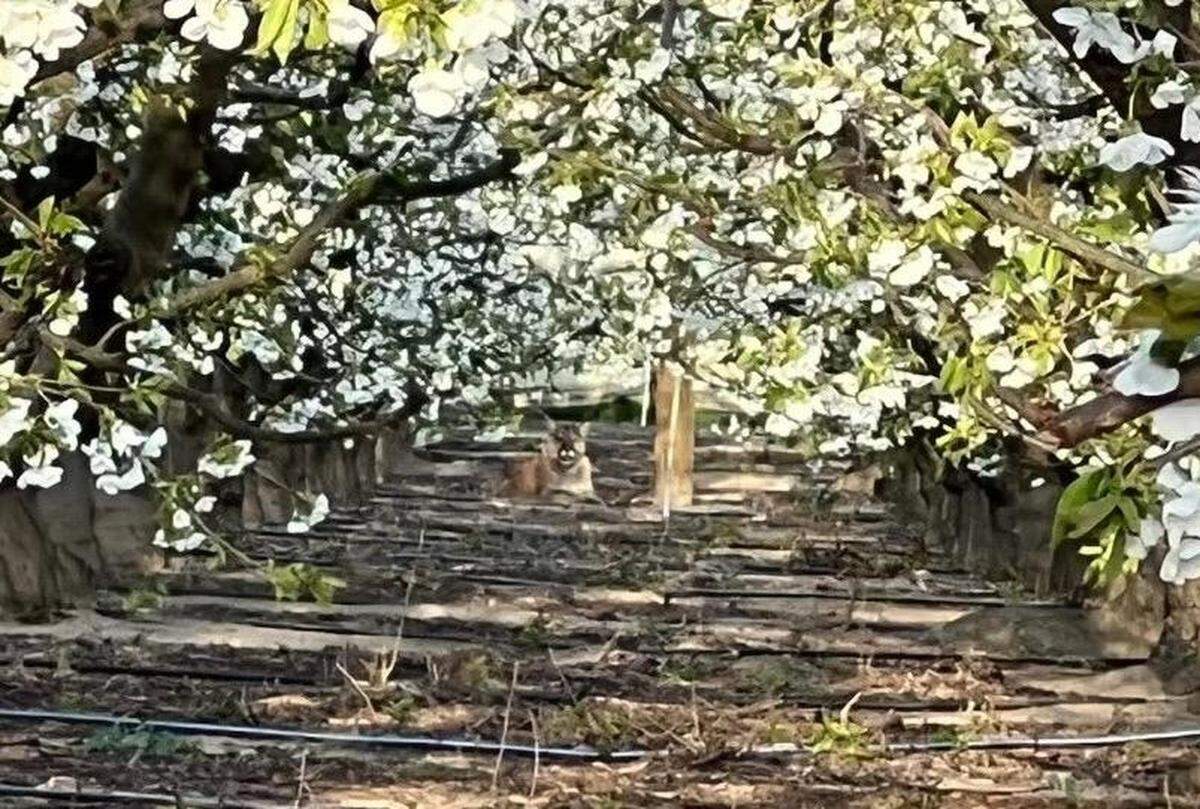
The cougar had a serious eye injury and likely was blind in that eye, Fidorra said.
However, Fish and Wildlife officials do not know what caused the injury nor did they think it had any bearing on the animal wandering through residential areas.
Cougar DNA collected
From the dead animal state wildlife officials collected a DNA sample and a tooth, similar to what hunters who shoot a cougar in Washington state also must make available to state biologists.
The DNA sample will be stored for any future research that might need it, and the tooth will be used to verify the age of the animal. It likely will be about a year before the tooth is analyzed.
The other dead cougar that officials collected samples from in the Tri-Cities was discovered dead on the shoulder of Highway 240 between the Columbia Park golf course and Edison Street in Kennewick in fall 2019. It had apparently been hit by a vehicle.
It also was a young male, Fidorra said.
A day after the cougar was shot in Kennewick this year, another cougar was reported in the early morning at Road 90 and Sandifur Parkway in Pasco.
Although police were not able to find it, the sighting was verified by a video taken by a Pasco resident of a mountain lion loping down a sidewalk in front of west Pasco homes.
Then on April 4 workers at a new subdivision being built at Clodfelter and Tripple Vista roads just south of Kennewick reported seeing a cougar midday but it wasn’t seen again to be confirmed by officials.
Cougar attacks rare
The multiple sightings, while surprising, are not cause for panic, Fidorra said.
An animal in a residential area most likely does not want to be there and is looking for a way out, he said.
“These are animals looking in almost all cases to avoid contact with humans,” he said.
While cougars may live in wildland outside the Tri-Cities, they are few compared to those that live in wooded areas of the state.
“We have millions of citizens in Washington who recreate on a regular basis and live in areas with much greater densities than we would expect ever around the Tri-Cities region and are doing so without incident,” Fidorra said.
Cougar attacks on humans are extremely rare, according to the Washington state cougar information website. In 94 years, as of 2018, there had been two encounters in the state proving fatal for the person. Nineteen other human encounters with cougars that left a person injured.
There are steps people can take to help make sure they are not among the very few who meet a mountain lion in the Tri-Cities area, particularly if they live in outlying areas.
The Washington state Department of Fish and Wildlife recommends securing garbage and not leaving out pet food or other food that could draw in wildlife. Garbage and pet food can attract small mammals that, in turn, attract cougars.
Bring pets inside at night to prevent them from being prey to a cougar or coyote, and be aware that cougars may prey on small farm animals, including goats and chicken.
If you meet a cougar
Few people will ever catch a glimpse of a cougar, much less confront one.
If you do come face to face with a cougar, here’s what state wildlife officials say you should know:
▪ Pick up small children and pets. but don’t run. At close range, a cougar’s instinct is to chase.
▪ Face the cougar and talk to it firmly as you slowly back away. Leave the animal an escape route.
▪ Try to look larger than the cougar. Hold your jacket open to look larger and stand shoulder-to-shoulder with anyone you may be with.
▪ Don’t take your eyes off the cougar or turn your back. Do not try to hide.
▪ If the cougar does not flee or shows signs of aggression — crouching with ears back, teeth bared, hissing, tail twitching and hind feet pumping in preparation to jump — wave your arms and throw anything you have, like a water bottle, at the animal.
▪ If the cougar attacks, fight back and try to stay on your feet. Cougars have been driven away by people who fought back using sticks, rocks, shovels backpacks, clothing and even their bare hands. If you are aggressive enough the cougar will realize it has made a mistake and flee.