
‘Jail is easier.’ Franklin Co. drug court grad says program changed his life
AI-generated summary reviewed by our newsroom.
- Franklin County launched a therapeutic court in February 2024.
- Program requires treatment, testing and sanctions to curb recidivism and compel work.
- Graduate credits the program with housing aid, transport support, counseling and steady work.
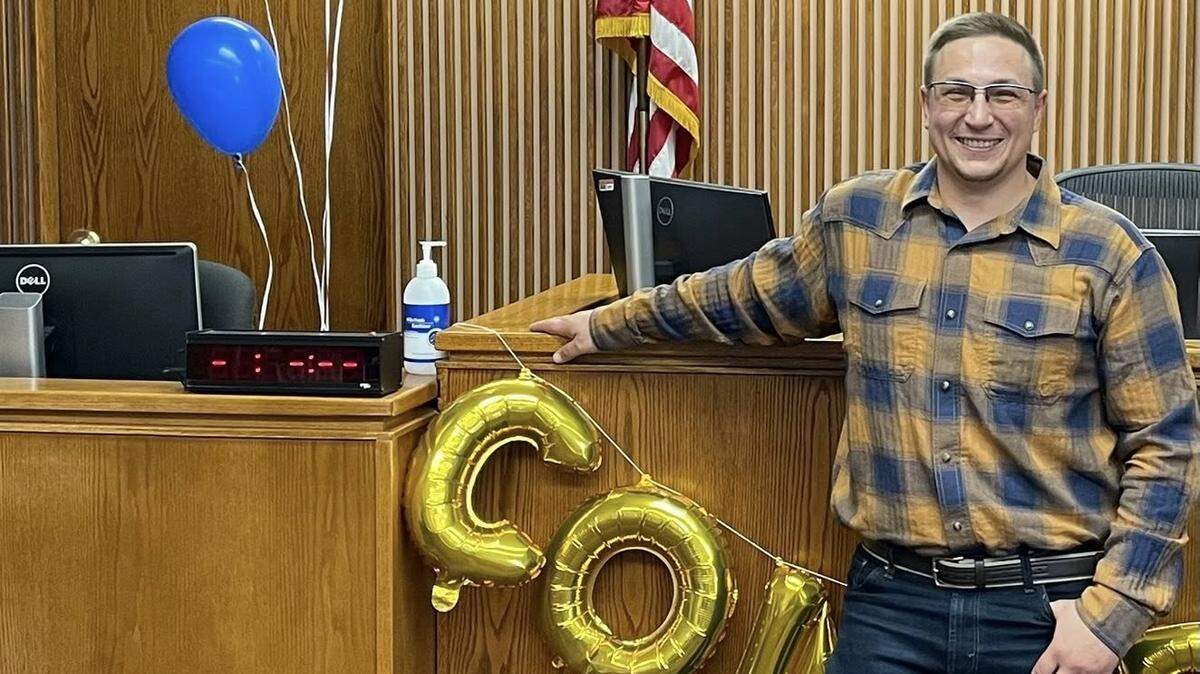
Dustin Sydnes would be the first to say that Franklin County’s therapeutic court is not the easy choice.
When the 39-year-old began the program, he suddenly found himself responsible for going to inpatient treatment several times a week, attending regular meetings with his caseworker and other classes. All at the same time he was going for regular drug testing and court hearings.
Missing any of the meetings could lead to sanctions and, if it happened often enough, lead to him getting booted out of the program.
“Jail is easier,” Sydnes told the Tri-City Herald after his recent graduation. “People who enter into recovery court, they have to be motivated to stay clean and to have whatever charges dropped.”
But for Sydnes, who battled drug addiction for more than a decade, Franklin County’s Therapeutic Court seemed like a way to escape the cycle of finding himself drawn back to using drugs and then committing crimes, he said.
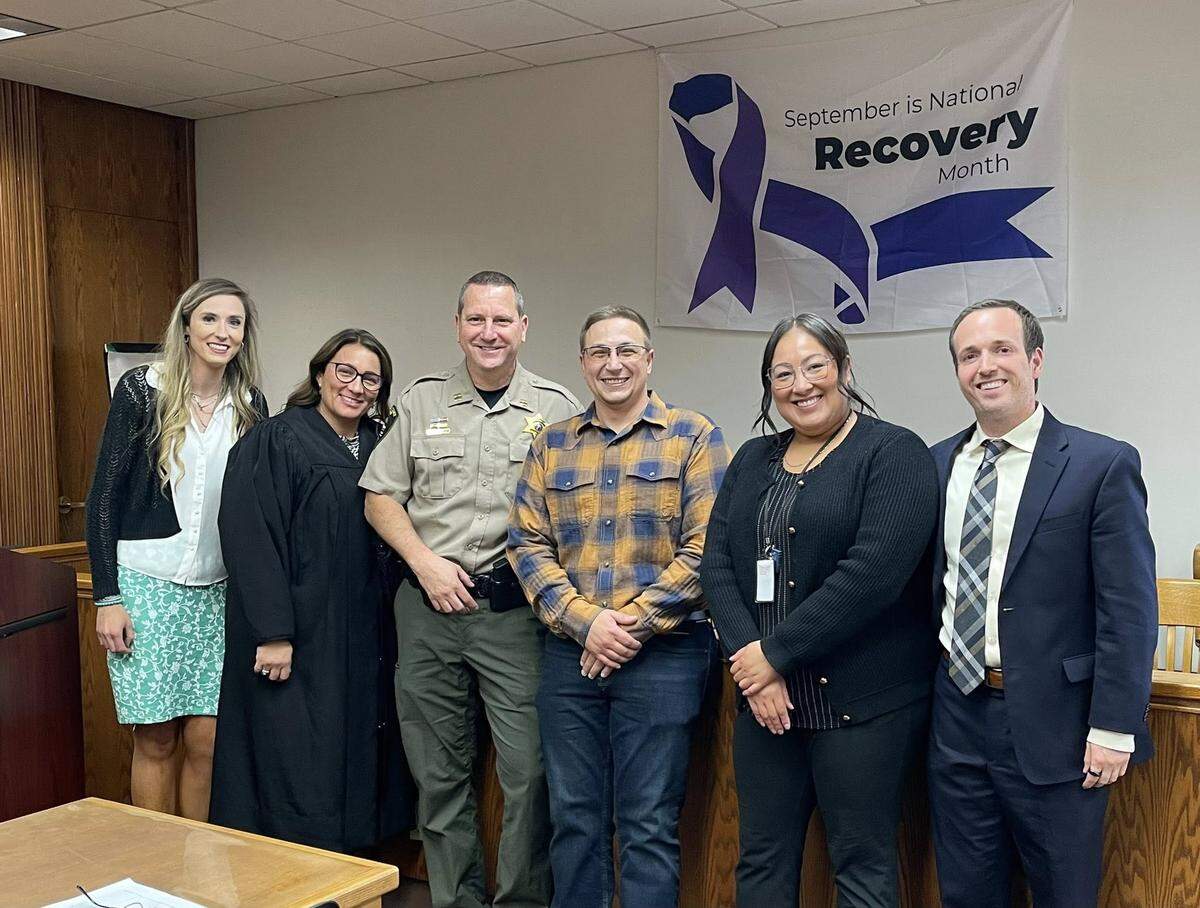
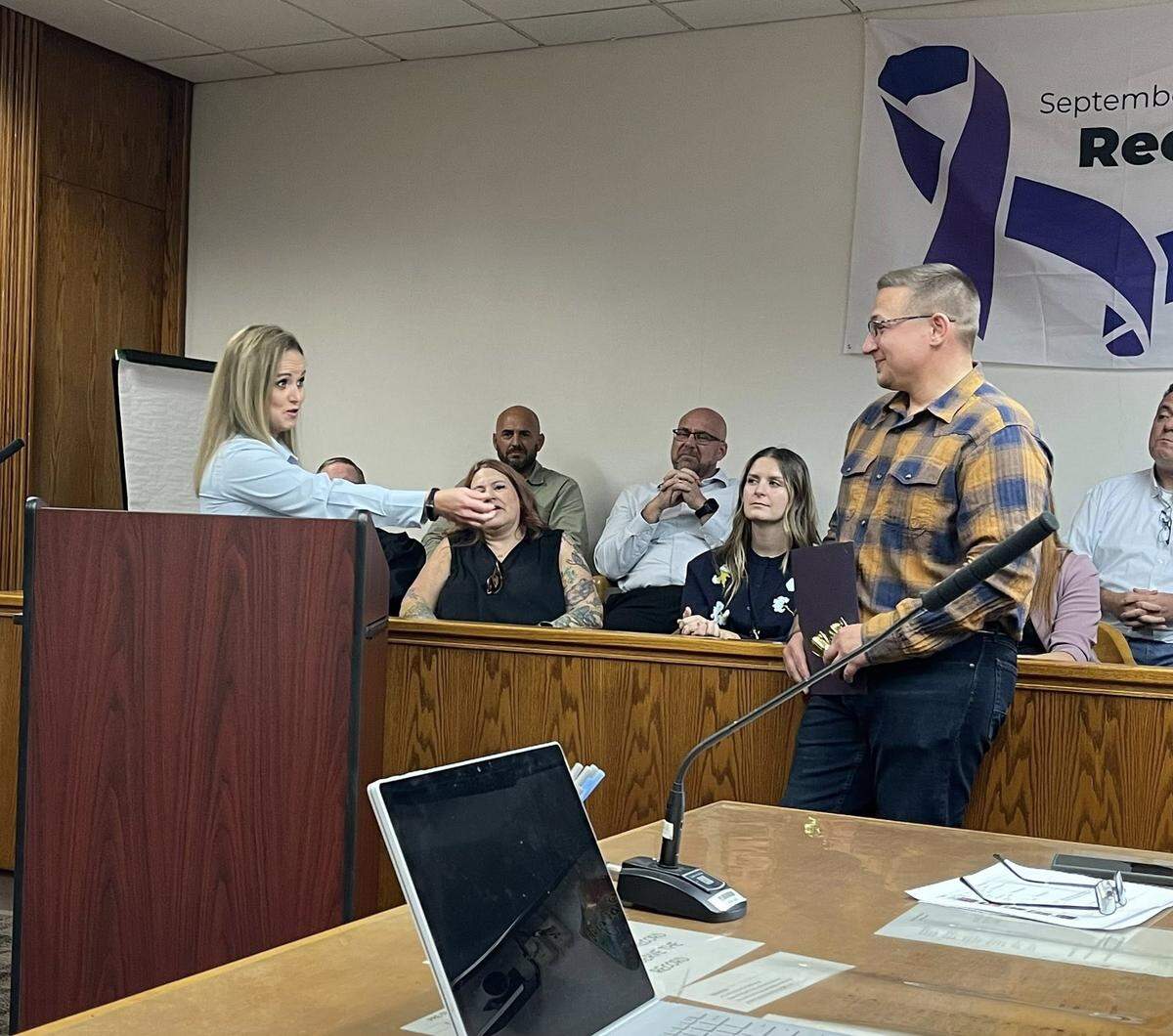
Sydnes was the second graduate from the Franklin County program, which started in February 2024. It aims to give people struggling with addiction the tools they need to stop using drugs. It was started by Franklin County District Court Judge Trinity Orosco.
“I really want to emphasize that this program has changed my life for the best,” he said. “Anyone with any history of addictions should consider the program.”
The program is separate from the bi-county adult drug court program administered by Benton Franklin Superior Court Judge Joe Burrowes. Having the separate program allows more seats to open up in Benton County.
There are presently 21 participants and another six that are being referred to it, Dr. Alyssa Pearce, the program’s coordinator, told the Tri-City Herald.
The program isn’t available to everyone. Those with a previous serious violent crime, who used a gun, or were convicted of a sex offense or vehicular homicide aren’t eligible.
Sydnes spent a year and a half working through the program, and outside of one time, he had a sterling record.
Pearce said the entire team was proud of what Sydnes had accomplished.
“He is an amazing person who made some poor decisions due to his addiction and has taken accountability for those choices,” she told the Herald in an email. “Dustin did all of the hard work to get to where he’s at and it was truly our honor to assist him with his recovery journey.”
Opioids and meth
Sydnes’ struggle with drugs started in 2012 with a motorcycle crash when he was 22 years old. He remembered being in excruciating pain from two broken bones in his leg.
“I was literally howling in pain,” he said. “The medicine was not touching my pain.”
Doctors needed to administer large doses of oxycodone to treat him, he said.
His doctor continued to prescribe the oxycodone even after his release from the hospital. After a couple of years, his doctor lost her license for over prescription.
When he asked around for another source of the medication, people turned him onto heroin. He soon added methamphetamine.
When he went to prison in Idaho for a year. He decided he was going to kick the addiction. For the next three years, he was successful.
But he ended up relapsing in August 2023, and he stole a forklift and two large toolboxes.
“I was making $30 an hour, so I didn’t need the money. I just did drugs and thought I needed to steal things,” he said.
When the detective talked to him, he explained that he was a drug addict and he needed help.
Getting help
Sydnes handed over the last of his methamphetamine when he was let out of jail, and he decided that he would get better.
“I felt like if I used again I wouldn’t be able to stop and it would be that much harder,” he said.
He officially entered the program in 2024, and learned it would take work to successfully complete it.
Drug addicts often have little responsibility in their lives and they get used to no one requiring much from them, Sydnes said. But the philosophy of the drug court is to “show up, do the work and tell the truth.”
The only time that he missed a meeting was early in his treatment, when he overslept before going to a group therapy session. He ended up showing up, but wasn’t allowed to attend.
That sanction only pushed him to make sure he worked harder.
He also faced other challenges, including losing his father and having a woman wrongfully accuse him of being her child’s father.
His boss at the auto shop where he worked relapsed into his meth addiction. When his boss wouldn’t stop, he knew that he needed to get out of the situation.
His case manager helped him find a way to help him pay his rent, and the court provided him with gift cards for gas and food.
“The recovery court program supported me in every way that I asked,” he said. “They helped me in ways I didn’t think was possible.”
Since Franklin County’s program is still new, they do not have statistics showing how successful it is. But Pearce said nationally, therapeutic courts reduce recidivism as much as 58%.
Pearce said Sydnes was open-minded and humble when he went into the program, which helped him succeed.
“He was honest with himself and the therapeutic court team, even when it was tough to do so, and we were able to help him because of this,” she told the Tri-City Herald. “Dustin is a dedicated and motivated man who was tired of the toll addiction was taking on his life. He wanted to better himself, no matter how difficult that process was.”
Successful treatment
The program, which he spent about a year and a half in, helped him build the skills he needed to deal with his addiction, he said.
He is now working full-time, and credits the therapeutic court for giving him the tools he needed. He knows that he couldn’t have done it without the program, because he already tried to do it once.
Sydnes said he would like to share his story because he believes it can help others see that there is hope for recovery.
“I want to be a guiding light. I want to help other addicts get better,” he said. “I never believed I could stay clean. We can change and we can do better. The things we have done in our addiction don’t define who we are.”