‘Hope, dignity and healing.’ Family gives $1M+ to Tri-Cities recovery center
AI-generated summary reviewed by our newsroom.
- A Tri-Cities family donated $1.1M to fund a new kitchen at a recovery center.
- The Columbia Valley Center for Recovery will open in early 2026 in Tri-Cities.
- The facility will offer crisis stabilization, detox, and public residential treatment.
The Otness family knows what it’s like to struggle finding mental health resources for a loved one. That’s why the Tri-Cities family has donated more than $1 million to the region’s first public recovery center.
Darrel and Melody Otness announced a $1.1 million gift for the Columbia Valley Center for Recovery at a recent event hosted by former Benton County Prosecutor Andy Miller.
The gift will help fund a new kitchen and dining facility for the transitional housing portion of the recovery center, according to a news relase from the county. That area will be known as “Daniel’s Den” in honor of their son.
The Otnesses were introduced by Michele Gerber, President of the Benton Franklin Recovery Coalition, who highlighted their longstanding support for recovery and mental health initiatives throughout Benton and Franklin Counties, the release said.
The Otnesses said that their passion for supporting recovery projects began in 1994 when their son came home from his first year of playing college football for Washington State University. It was the same year they started their family business, Washington Producers.
Struggling to find help
Darrel Otness said they knew something was with their son Danny, but finding help wasn’t so simple. It was the beginning of a 30-year journey of trying to get him help with mental illness.
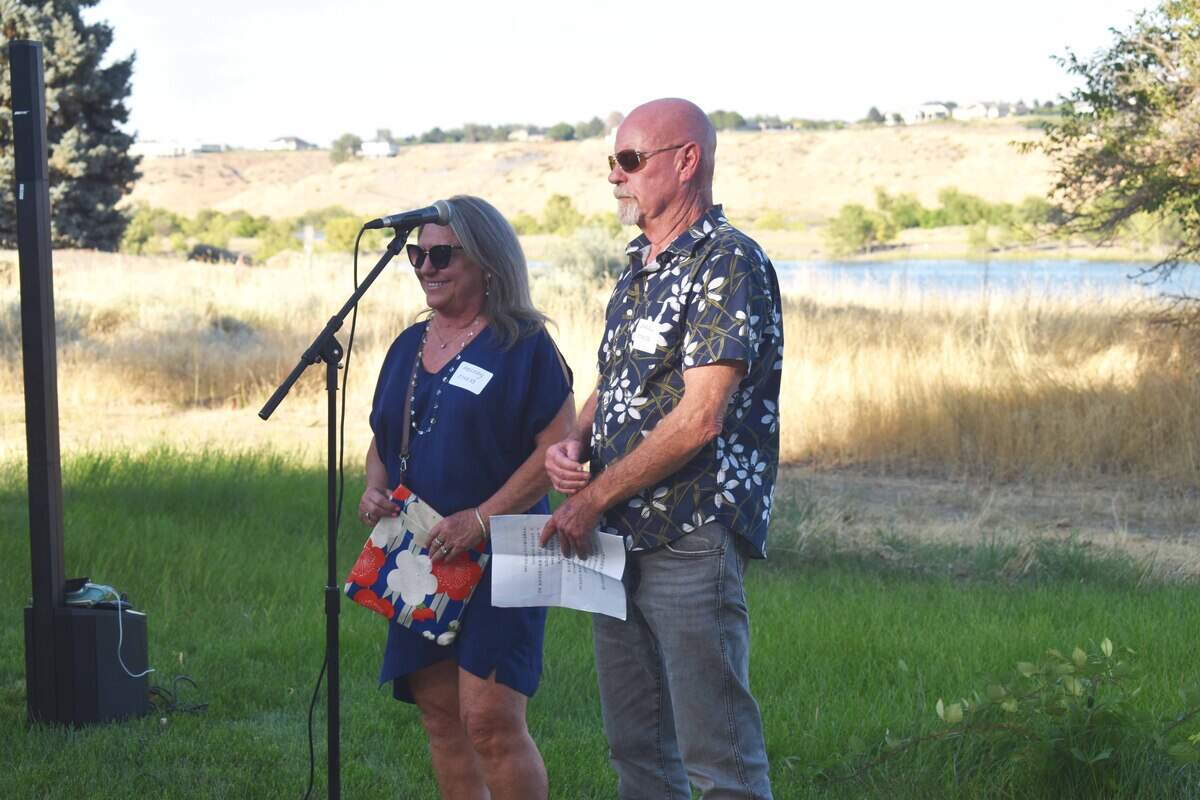
Darrel threw himself into work, but it was Melody who chose to fight at a time when very little resources were available. Over the past 20 years she’s served with the local chapter of NAMI, the National Alliance on Mental Illness, and was later appointed to the Benton Franklin Mental Health Advisory board.
Otness said that rather than trying to recount how the coalition came to be, he wanted to “give credit to the heartbroken who came before this coalition and helped lay the foundation of this movement.”
Their financial advisor recommended donating stock instead of a cash donation. Otness said the idea immediately paid off when the first day after they made the $1 million donation the stock price jumped significantly, increasing its value to $1.1 million.
By the time the coalition liquidated it, the value had grown to $1,116,911.
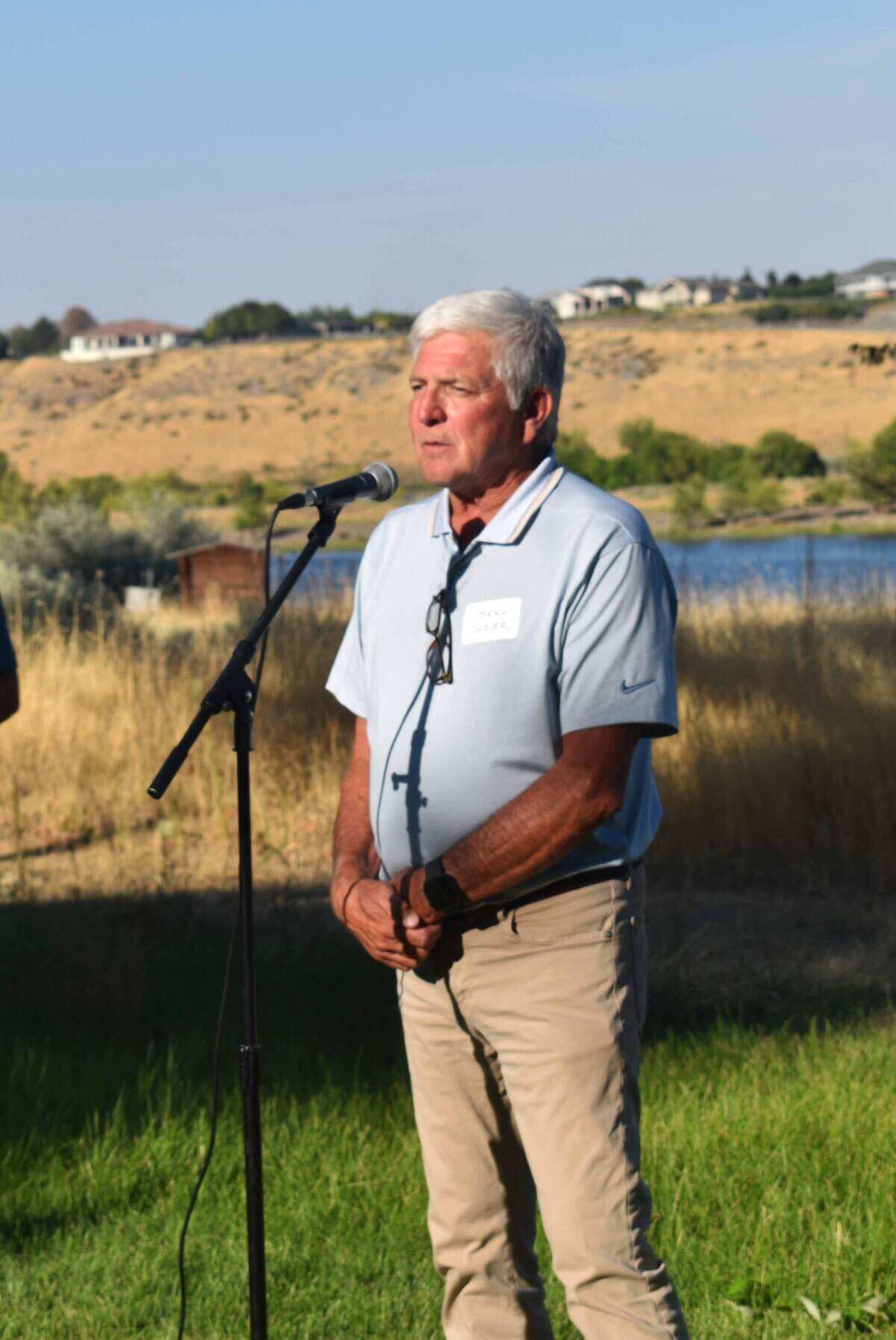
“We couldn’t be happier that our goal had been exceeded,” Darrel Otness said. “Thank you to everyone — human and divine — who made that possible. Many of you are here today, and your efforts continue to bring hope, dignity, and healing to those who need it most.”
The event featured remarks from community leaders including Kennewick Police Chief Chris Guerrero, State Senator Perry Dozier, Benton County Deputy County Administrator Matt Rasmussen, housing advocate Jason Bliss, and recovery coalition leader Nancy Roach.
As the recovery center nears its projected early 2026 opening date, major gifts have been ramping up.
In April community members pitched in $675,000 toward improving the quality of life for patients.
The Benton County Recovery Coalition raised $175,000 at their annual Unite for Recovery Breakfast raise $175,000. They also received two gifts of $250,000 each for improvements at the future Columbia Valley Center for Recovery. The gifts come from the Columbia Center Rotary Charity and philanthropist Sue Frost, according to a news release from the coalition.
Tri-Cities recovery center
The recovery center will bring critically needed addiction treatment and crisis mental health services to the region in a public setting.
Currently when someone is suffering from an addiction or mental health related crisis, options in the Tri-Cities are limited. Police have nowhere to take someone other than jail or an emergency room.
They’re not the same as rehabilitation or long-term, in-patient mental health services though.
The recovery center will be focused on the missing stabilization needed to get someone into long-term care. Where they go next depends on the level of care, but most of the those long term services are also not located in the Tri-Cities.
What services will it offer?
Short-Term/Sobering — a 23-hour observation unit that focuses on stabilization and sobering up. This unit will be structured like a living room setting with recliners. Patients will be assessed here to determine longer care needs.
Crisis Stabilization —This unit is designed for clients whose primary diagnosis is mental illness related. Services will include assessment, diagnosis and treatment for those without the need for longer stays. Typically they’ll spend five days or fewer here, but longer stays can happen voluntarily or by court order.
Withdrawal Management —This unit will provide secure withdrawal management and stabilization services. Patients will be assessed, stabilized and cared for while detoxing. There will be two levels of detox, one with monitoring and patient administered medication and the other with 24-hour medical care by nurses and doctors.
Residential Substance Use Treatment —This unit will be for longer-term substance use treatment. The length of the stay will depend on ongoing assessments and progress toward treatment goals.
Who will it serve?
The Columbia Valley Center for Recovery is designed to be a “no wrong door” treatment center.
That means they will serve anyone with a need, regardless of their insurance status or ability to pay.
This approach is critical for law enforcement intervention. It means people who actually need medical care will not be turned away and just sent to jail. It will allow officers to bring in someone in crisis without having to involve them in the criminal justice system. Because it is a publicly-owned facility, services are available to anyone who is able to come in. There is no geographic restriction, despite being owned by Benton County. The broader name of the facility was decided on because it will serve a larger regional need.
That doesn’t mean Tri-Cities tax dollars will be paying for people out of the area though. Comprehensive Healthcare will manage reimbursements, and relatives staying in the area while a loved one is treated will be contributing to the local economy.
The facility will be open to the public, meaning anyone can voluntarily seek services.
There also will be involuntary treatment through court orders for people in active crisis.
There will be a public entrance and a dedicated first responder entrance where police or EMTs can bring in patients in a secure manner.
What about the rest of the space?
There’s plenty of room for growth at the nearly 200,000-square-foot facility. For perspective, the building is about 10,000-square-feet bigger than the new larger second Costco in Richland.
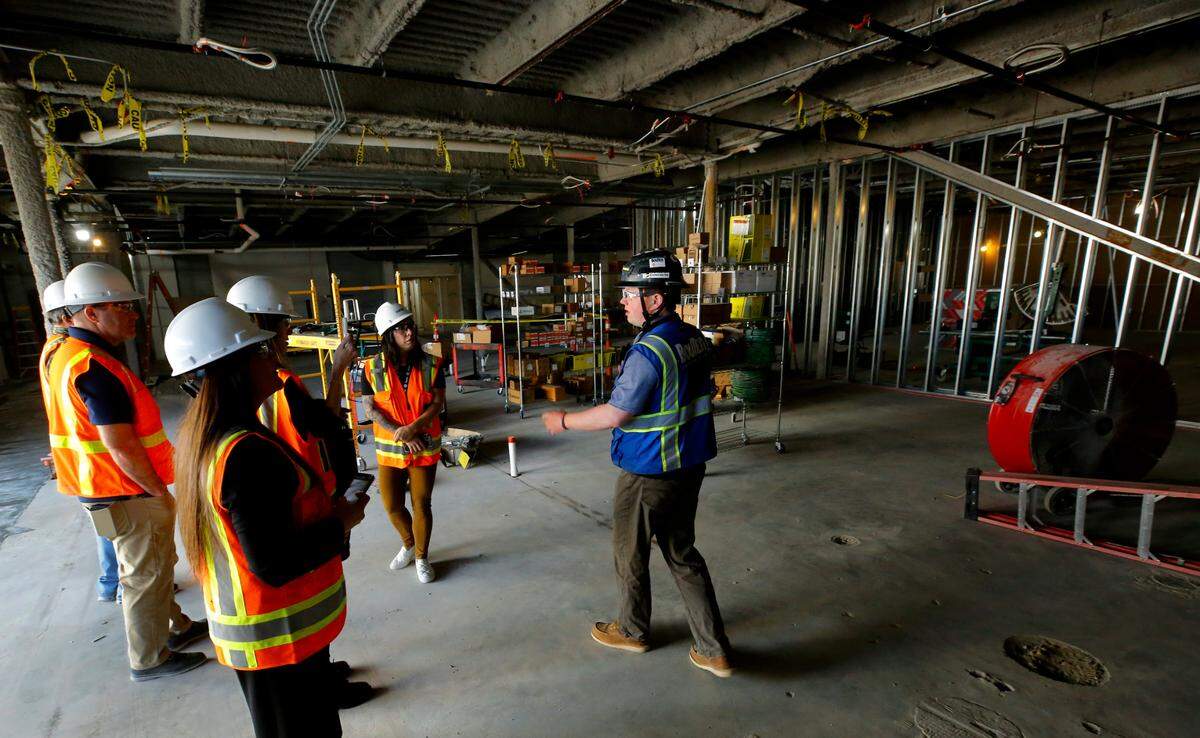
The initial footprint is being built out in the newest portions of the hospital, largely the former Trios Birthing Center area.
Benton and Franklin County also recently agreed to split an $11 million bill for “betterments” for the first construction phase.
That cost includes building a full commercial kitchen, a 5,000-square foot expansion of the program area, an outdoor courtyard area, converting some of the planned dual rooms into single rooms for the in-patient treatment programs and upgrades to the aging hospital’s generators.
It also includes some money for security improvements and landscaping.
While the plans for the facility include plenty of options for future additions, the county is actively pursuing one plan to kick off phase two.
Benton County has secured about half of the $7.4 million needed to help fund converting 14,000 square feet of old hospital rooms on the second floor into 17 double occupancy apartments. There also would be an apartment for an on-site program manager.
This is where the Daniel’s Den kitchen and dining area will be built.
Youth mental health and addiction services also are part of long-term plans for the facility. Those aren’t included in the initial services because the adults and youth have to be treated separately.
Other services included in the preliminary plans could eventually include day treatment for youth and adults, a technical skills classroom, art therapy and library rooms, eating disorder treatment and intensive outpatient treatment.
The second floor could be used for more transitional housing, respite/diversion beds and youth inpatient and children’s long-term treatment. The second and third floor of the Spaulding offices will be set aside for future office use.