
19,348 days. A family’s search for a Kennewick High grad MIA in Vietnam
This Veterans Day makes day 19,348 that the family of a Burbank man has been waiting to hear that he’s been found after his F-4 Phantom jet fighter was shot down over North Vietnam.
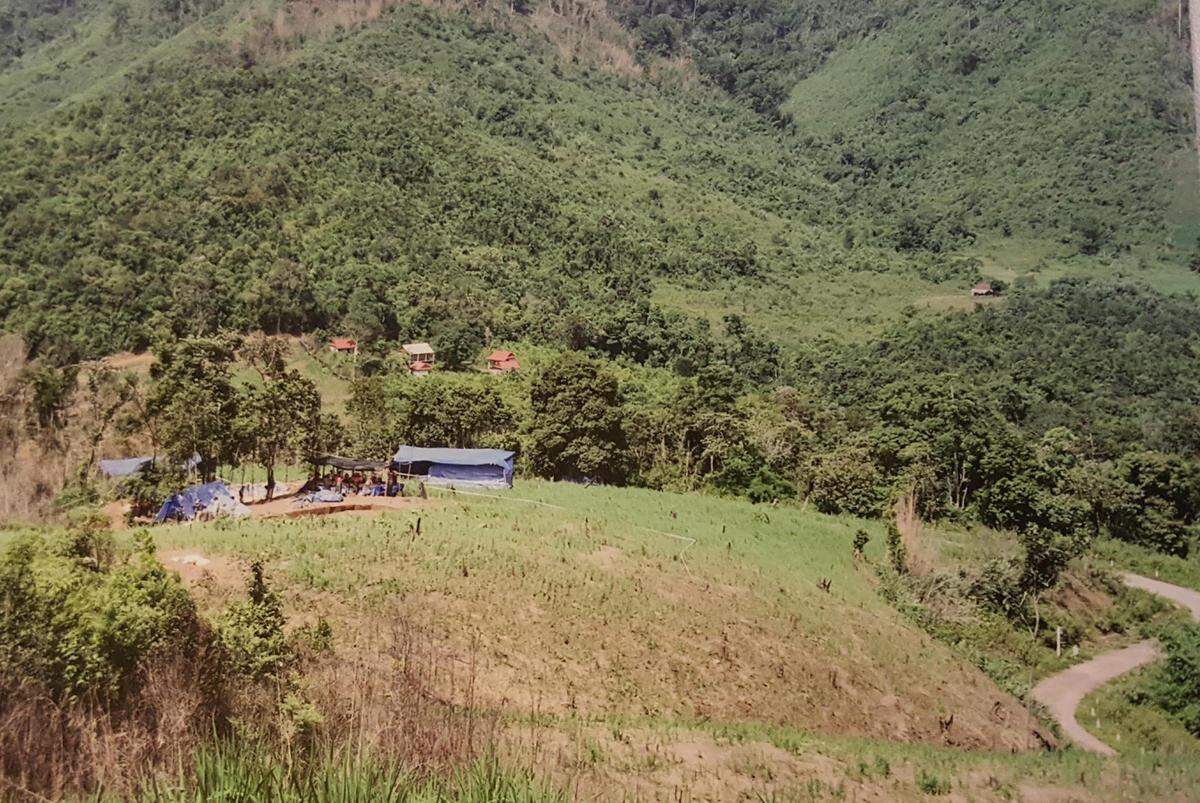
Two new sites where Major San D. Francisco’s body may have been buried in 1968 have been identified.
The U.S. Department of Defense POW/MIA Accounting Agency told the Francisco family that a man who helped bury Francisco and another who stood guard by a tunnel and watched as Francisco’s parachute came down had information about his burial that could be viable.
“Both witnesses were confident and provided areas that are proximate and discrete enough to warrant pursuit of further fieldwork,” said a Department of Defense report.
However, Department of Defense excavations in Vietnam have stopped during the COVID-19 pandemic.
Officials were concerned that required quarantines can cut excavations scheduled for 45 days to as little as half of that, according to Francisco’s sister, Terri Francisco-Farrell, of Kennewick.
Previous excavations covering hundreds of square feet in two locations have failed to find Francisco’s body and he remains listed as missing in action.
Francisco graduated from Kennewick High in 1962 and then graduated from Air Force Reserve Officer Training Corps at what is now Central Washington University. He was promoted to major after his death.
Francisco-Farrell remembers him as “a pretty mellow, laid back type of a person” but with a good poker face followed by a big smile if he was joking with you.
On Nov. 25, 1968, he was a first lieutenant co-piloting an F-4 Phantom jet fighter on a reconnaissance mission over the Ho Chi Minh Trail.
His jet fighter was shot down. Both pilot and co-pilot survived, but Francisco had two broken legs, his sister said.
The pilot was killed resisting capture.
There was garbled radio contact for about 30 minutes after the plane went down, but it is not known if it was Francisco or the pilot, Francisco-Farrell said.
Vietnamese witnesses say that as Francisco was being taken into captivity, he was hit by shrapnel from American bombs, his sisters have been told.
However, Franciso-Farrell said she has doubts about the validity of reports from witnesses who were paid for information.
She believes he died saving the lives of those on the search and rescue mission.
He was dragged into an open area by his captors, his sister believes, in an attempt to ambush the Americans looking for him.
She believes that’s when a rescue helicopter arrived and he was spotted.
But he would not lift his hands to the ladder and put the rescue crew in danger, which prompted the start of the ambush.
American aircraft came in low and strafed the area, and her brother’s captors ran, Francisco-Farrell said.
U.S. officials believe Francisco’s body was placed in a bomb crater, then dug up within days so photographs could be taken for Vietnamese Army propaganda because of the claim that his was the 2,000th plane shot down during the war.
He was reburied in the same area.
But it’s difficult to be sure of the exact location, as landmarks have changed in Vietnam’s thick vegetation after a half century.
Finding his body could reveal how he died.
This story was originally published November 10, 2021 at 5:00 AM.