
Alert | Columbia River shore in Richland ordered closed. Kids and dog at risk
The Benton Franklin Health District ordered part of Richland’s Columbia River shoreline to close Thursday night because of toxic bacteria in the water.
Test results show there were elevated levels of a neurotoxin that is especially dangerous for small children and animals, said a district news release.
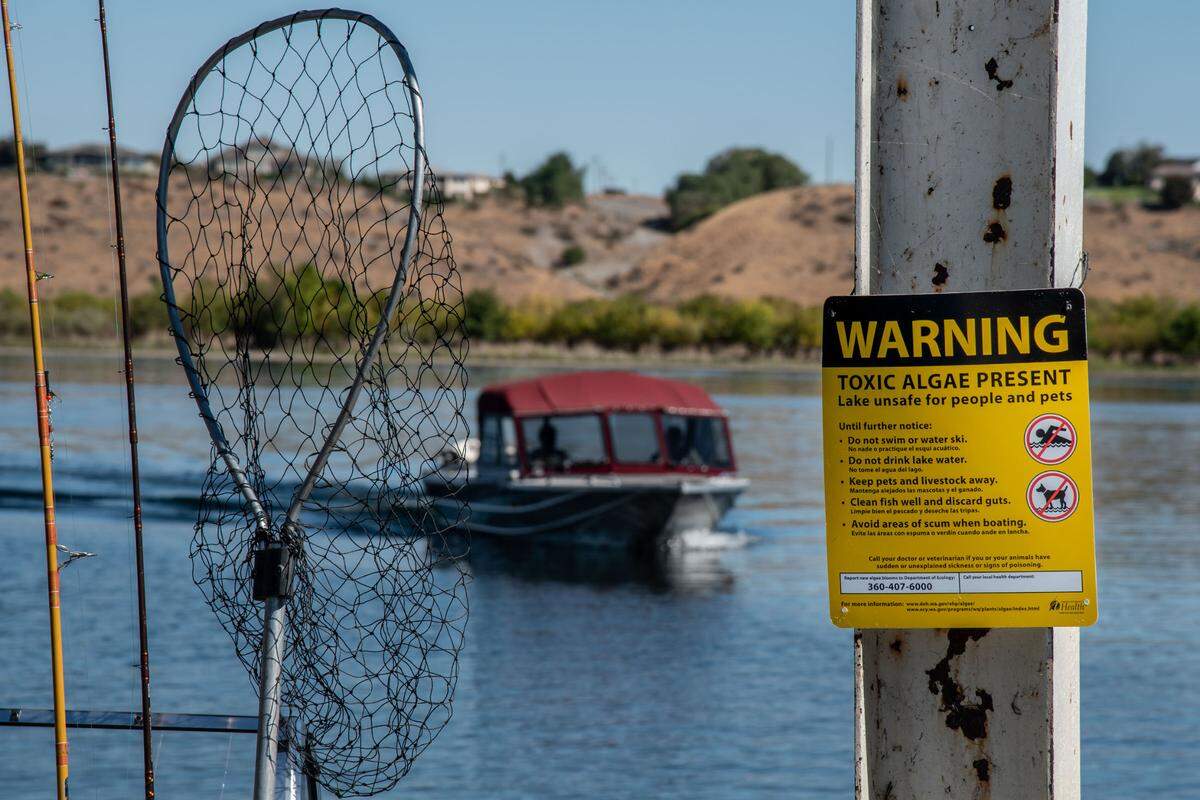
On Wednesday, officials began posting warning signs at access points along the Columbia River near Tri-Cities after reports of four dogs dying and two more getting sick from being in the water.
By 5 p.m. Thursday, the shoreline closure order was issued for the area from the boat launch at Howard Amon Park south to the confluence of the Yakima River, near Bateman Island.
Health officials said recreational use should be avoided and children and pets should be kept out of the water until further tests show the toxins drop to safe levels.
Toxins can accumulate in fish, especially in the liver, kidneys and other organs, said officials. They warned people to be cautious of eating fish caught in areas with toxic algae blooms.
At the very least, remove internal organs before eating the fish, they said.
Symptoms
Exposure to Anatoxin-a can be fatal, said health officials.
If people and animals ingest tainted water they can suffer from symptoms within 15-20 minutes.
Exposure in animals may result in weakness, staggering, difficulty breathing, convulsions and death.
People can experience numbness in their lips, tingling fingers and toes and dizziness.
Health officials are investigating the deaths of four dogs between Sept. 12-14 and two others that were sick earlier in the month.
Health District Senior Manager Rick Dawson said during a news media briefing Thursday morning that water samples were sent to a King County environmental lab for testing.
And veterinarians were helping with testing on the pets who got sick.
And he said the state Department of Health is working with the health district to make sure the cities drinking water systems remain safe. The river is the Tri-Cities main drinking water source and it’s tested for toxic algae both when it’s taken from the river and after it’s treated.
How to spot toxic algae
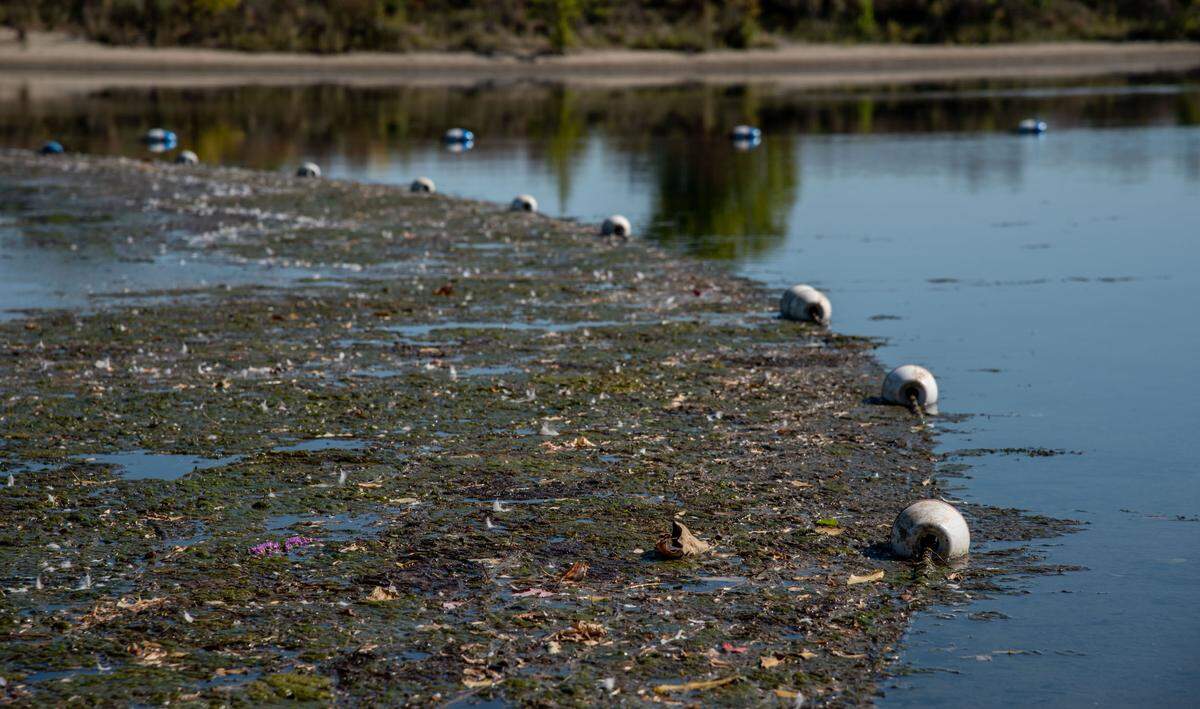
Toxic algae blooms vary in appearance, but commonly look like pea soup or are blue-green or turquoise in color.
The toxicity of each bloom can vary and is difficult to predict, according to the Washington state Department of Health.
It can change day to day. Only testing can tell how dangerous it is.
The blooms often look like paint floating on the water, Dawson said.
“Honestly, it just looks like the water is not right, but it doesn’t look like weeds or things like that. It looks like something is going on in or on top of the water,” he said.
People can also look for dead birds or fish in the area.
They normally show up in lakes or other standing bodies of water. It’s rare, but not unheard of, to see them show up in rivers.
The Scooteney Reservoir in northern Franklin County has an annual problem with the bacteria.
“This is the first time in my 35 years that we’ve had these kinds of reports coming with a potential algae bloom along the Columbia River,” Dawson said during a board of health meeting this week.
“We have toxic algae blooms pretty consistently in some lakes, in the Tri-Cities and the Mid-Columbia, but also Moses Lake and other places.”
Water in slow moving rivers and streams can also be a site for toxic algae.
Most recently, four dogs died in the Spokane area after coming into contact with waterways in August. Three were swimming in the Little Spokane River near Chattaroy and one was swimming in the Spokane River.
Staying safe
Health officials say:
- Don’t swim in water or limit your exposure to water that is under a health advisory or is listed as having a toxic algae bloom on the state’s toxic algae tracking site.
- People who swim or play in the water should shower with soap and water. Contact a healthcare provider immediately if you become ill.
- Wash your pets or livestock immediately to keep them from licking the bacteria off their fur.
- Report suspected toxic algae blooms online at the state toxic algae tracking site or contact your local health department.
This story was originally published September 16, 2021 at 12:32 PM.