
Richland linemen haven’t had a contract for 6 months. Now they’re going door to door
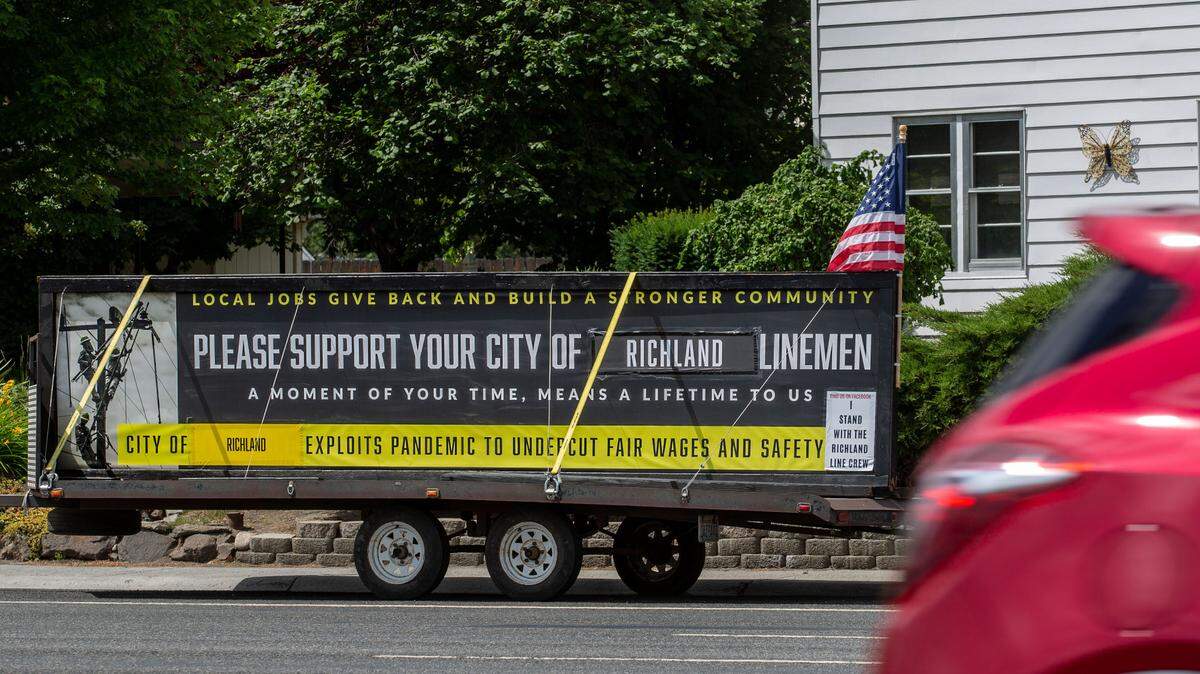
Richland residents may see a future where power outages drag on for hours.
Even now frustrated electrical department workers are saying construction projects are being held up and positions remain unfilled because the city of Richland isn’t paying them a fair wage.
And they are taking their case to the streets, even door to door, to Richland residents.
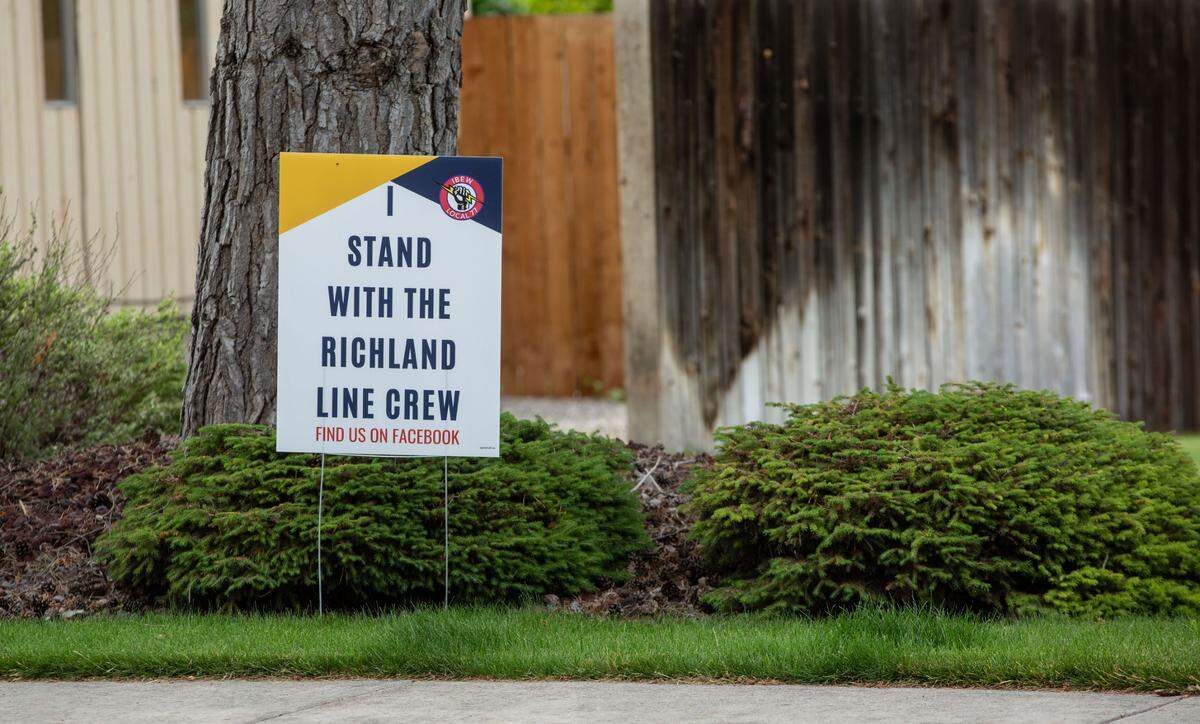
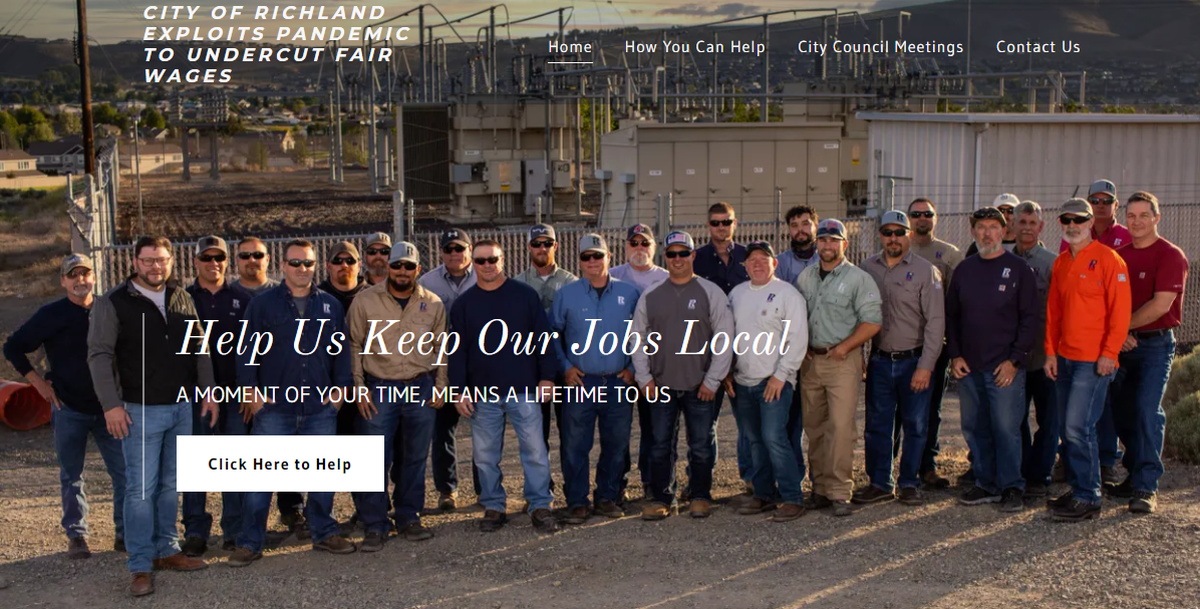
Richland Energy Services employees along with their union, the International Brotherhood of Electrical Workers, are visiting neighborhoods, printing yard signs and posting to a new website in hopes of getting the city to agree to pay raises.
The information campaign is the only option since the workers aren’t allowed to strike under state law.
Their last two-year contract ended in January and, after months of negotiations, they brought in a mediator to help reach an agreement.
However, six months later, the two sides have yet to reach a deal. And now mediation efforts have stalled.
“We’re the second-lowest paid linemen in the state,” argues Richland employee Sam Somes in a video on the website called City of Richland Exploits Pandemic to Undercut Fair Wages.
“We’re putting our lives on the line, leaving our families so we can keep the lights on for the community, and the city of Richland is treating us like our skills, our experiences and our lives aren’t worth a fair wage,” he said.
The union argues the city should have used some of its pandemic relief funding to increase those wages.
Richland city officials have said the pandemic has left them $1.5 million behind in money from electric rates but they’re still offering a fair pay raise.
Hollie Logan, the city’s communication and marketing manager, told the Herald the city cares about the health and well-being of its employee and wants to reach an agreement.
“It is of the utmost priority,” she said. “There are several variables that contribute to these types of negotiations.”
Richland electric services
Richland runs its own power utility and provides electricity to 23,000 customers in a 50-square-mile area. It maintains 552 miles of primary line and eight substations.
Between journeyman power line workers who maintain the electrical lines and people working to install electrical meters the union represents about 30 employees, said Will Power, union business representative.
He said normally there would be 34 workers, but the city lags behind nearly every other power company in Washington state in its line worker pay.
Richland linemen make $35 to $47 an hour depending on experience. Crew foremen can earn up to $54 an hour.
By comparison, Benton PUD linemen start at $35 for the first six months, but once they reach journeyman level, they make $51 an hour. Foremen make $57 an hour. And those rates increase in 2022 under the current contract.
On average, Richland linemen make 7 percent less than those working for the Benton and Franklin PUDs, the Benton Rural Electric Authority and Big Bend Electrical Cooperative, said Power.
The gap makes it hard to recruit employees, which contributes to the workload on current workers, he said.
Line work is dangerous and exacting work that requires thousands of hours of training. It’s considered one of the most dangerous professions, and Power said there are only about 125,000 power line workers in the country.
The only power company to pay its line workers less is the city of Chewelah. The 2,600-person town north of Spokane maintains a two-person electricity service, which is smaller and less complex than Richland’s, Power said.
Power said they are asking for slightly more than the 3 percent increase their neighbors are getting. He says Richland leaders are offering 2 percent.
Logan with the city disputes the city is not losing employees at an “alarming rate.” She said two line workers have left and one retired since January 2020.
The union also argues that Richland’s proposed pay increase will put city employee wages farther behind similar workers elsewhere.
While the city has the option to find outside contractors to fill those spots, Power said it would be costly and slow.
He said Kittitas PUD uses contracted line crews to fix problems, and those employees make $150 a day when they are on call during the weekends, whether they work or not.
They also can take up to three hours to respond to a power outage compared to the half hour for Richland’s on-call staff, Power said.
COVID budget issues
City officials have told negotiators that the electrical services are $1.5 million behind in revenues because there is a state moratorium on shutting off people’s power for nonpayment of their bill during the COVID-19 pandemic.
The union argues eventually the city will either be able to turn off the delinquent accounts or collect the money.
“That money isn’t lost, it just isn’t here today,” Power said.
He maintains before this year the utility received revenue that he said was moved to another part of the budget.
In addition, the city has received money from the federal government, first it received $2.5 million from the CARES Act and now as part of the American Rescue Plan, the city is getting another $7.3 million.
Power claims city officials first classified the electrical workers as essential workers and then as non-essential workers to avoid using the federal funds to pay their wages.
City officials argue there are limits to what the $7.3 million rescue plan money can be spent on.
The CARES funding was split to cover unanticipated costs associated with COIVD-19 and to help people with utility bills. The money was not spent on salary increases.
Power sees it as a way for the city to exploit the pandemic to avoid paying the line workers what they are worth.
“No one else has claimed to be in these dire straits,” he said, referring to other public utilities.
This story was originally published June 16, 2021 at 5:00 AM.