
Tri-Cities hotels, restaurants are hiring. But where are the workers?
As the Washington state and local economies continue to improve, some Tri-Cities restaurants and hotels are struggling to hire enough employees to get back to being fully staffed.
“Labor shortage has been our industry’s latest challenge,” said Taran Patel, managing principal of the family-run A-1 Hospitality Group. “We are bracing for this to only get worse through the rest of the summer.”
A-1 Hospitality Group based in Tri-Cities owns or is building about 10 hotels — mostly in Washington and Oregon, including the Holiday Inn Express and Courtyard by Marriott both in Pasco and the Motel 6 in Kennewick.
It’s the same dilemma across the country.
The hospitality industry is short 90,000 workers nationwide, Anthony Anton, president and CEO of the Washington Hospitality Association told the Tri-City Herald.
Restaurants are trying to get creative to fill their openings.
Texas Roadhouse is planning a nationwide mass hiring event in June, including at the Kennewick location on Columbia Center Boulevard.
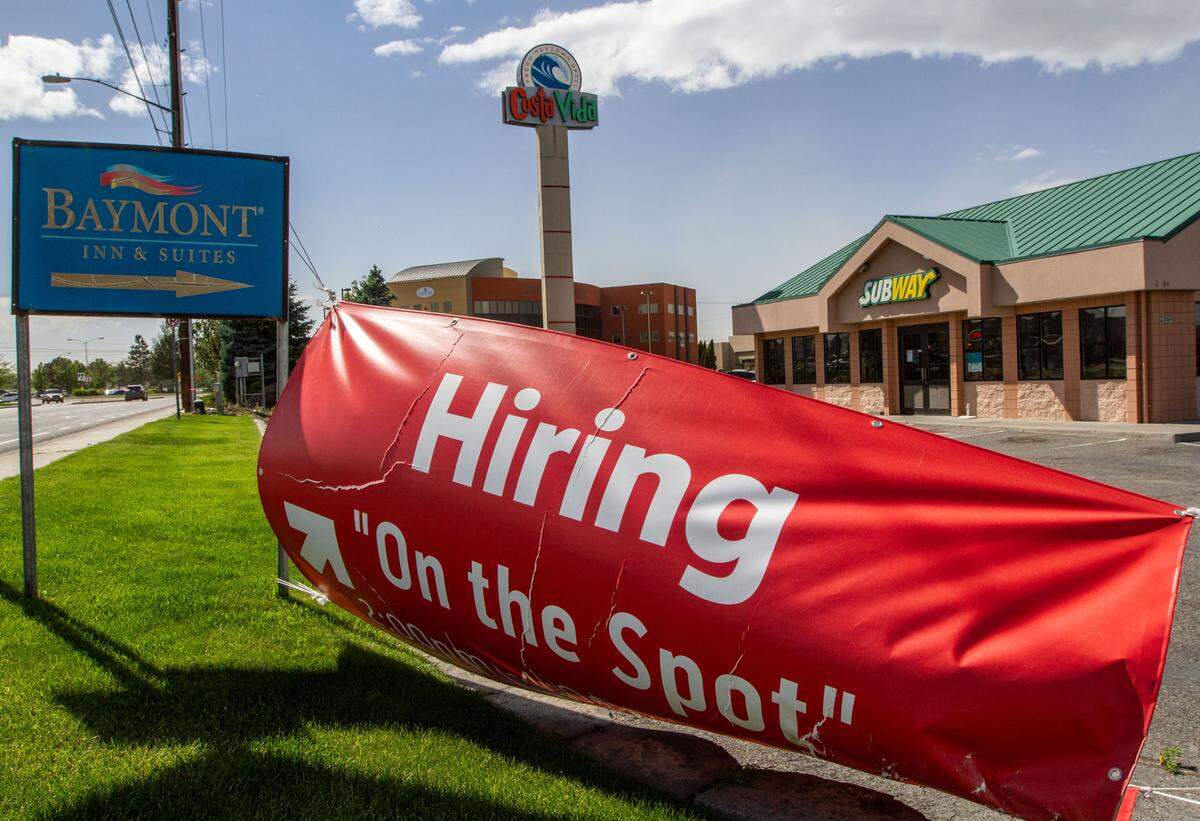
A Subway sandwich shop just off Highway 395 and 27th Avenue is advertising it’s hiring on the spot.
“It has been the hardest times since we first started because, all of a sudden, you just can’t get the help you need,” said Deanne Fielding, owner of Cameo Heights luxury bed and breakfast outside of Touchet.
The mansion that has been converted to a high-end bed a breakfast with upscale dining. She said most of her customers are couples from neighboring towns like Walla Walla and Tri-Cities who are looking for a quick romantic getaway.
She told the Herald that before the pandemic, she had employees who had worked with her for up to a decade. She said that although Cameo Heights is a long drive from the cities, she had no trouble hiring before the pandemic because she paid well.
However, by the time she reopened, all her employees had moved on, either leaving the state, going to work somewhere else or being uncomfortable working so close with customers because of COVID-19.
From housekeepers to servers, Fielding said she had to hire people without any experience and train them.
Employee shortage
“We don’t know how it will play out until the dust settles if its permanent,” said Anton with the hospitality group.
He attributes the shortage in the industry to things like a lack of child care, unemployment paying more some entry-level jobs and restaurants and hotels competing with other industries for workers.
“We are typically everyone’s first job,” Anton said. “But those workers got their first job elsewhere and won’t be in the industry.”
Anton said often young workers start at in entry level jobs whether it be a dishwasher or hotel front desk.
Those workers then often stay in the industry for several years before advancing to management. moving on to college or an entirely new career.
While restaurants were shut down during the pandemic, those employees had to find work elsewhere. And many are finding they like
“Be it delivery or being a stock clerk for online orders at retail store, those jobs are becoming more appealing than traditional jobs that they’d enter into,” said Asja Suljic, a regional labor economist for the Washington State Employment Security Department.
The increase in job opportunities with flexibility like delivery services where a person has more flexibility, are more appealing than a traditional employer where they might work eight hours a day with prescribed breaks, she said.
Suljic said before the pandemic, national surveys showed about 15 percent of employers offered flex time, flex space and telecommuting.
Current surveys show that 68 percent of employers now offer more flexible work options.
“It is expected to stay this way and expand even more. Youths are loving that flexibility,” she said. “Restructuring of the workforce will have to be a big deal — how much they pay and how much they work on retention.”
This story was originally published May 31, 2021 at 12:53 PM.