
Oregon governor who supports breaching Snake River dams invited to see them first-hand
Rep. Dan Newhouse wants Oregon’s Gov. Kate Brown to take a first-hand look at the world-class fish passage technology on Ice Harbor Dam near the Tri-Cities after she lent her support to breaching the four lower Snake River dams.
Brown, a Democrat, sent a letter to Washington’s Democratic Gov. Jay Inslee this month saying that the best long-term option to improve endangered salmon runs is to breach the dams in Washington state.
Newhouse and the other two Republican U.S. congressional representatives for Washington state were outraged.
“Gov. Brown’s position is not only misguided, it is shocking and extreme,” said Reps. Newhouse, Cathy McMorris Rodgers and Jaime Herrera Beutler, in a joint statement.
Now Newhouse says that although he disagrees with her letter, the best step both Brown and he could take “would be to engage in a constructive dialogue.”
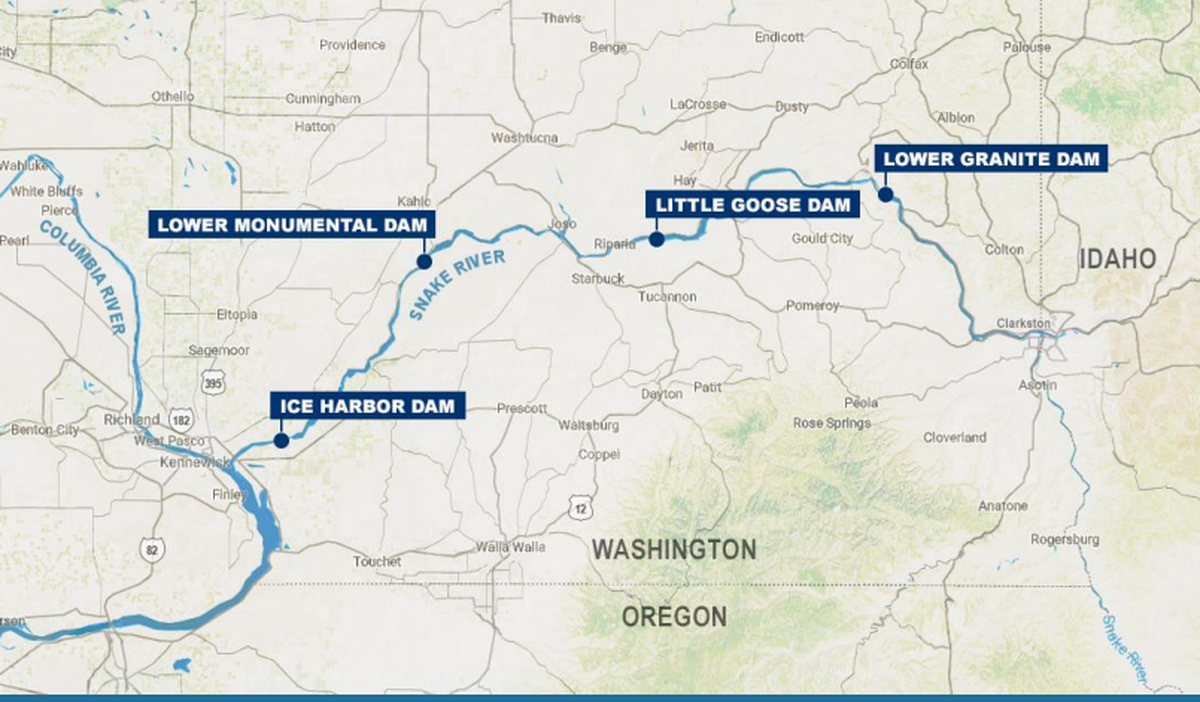
“A key part of this dialogue must involve listening to the scientists, engineers and fish biologists who make decisions based on science, not politics,” he said as he extended an invitation to tour Ice Harbor Dam near Pasco with him.
He’s proposing that she join him and the Pacific Northwest Waterways Association on an already planned tour of Ice Harbor Dam on March 18.
The association includes ports, businesses, public agencies and electric utilities, from the Northwest, including Oregon.
Science and dam breaching
“There are many assertions in your letter I disagree with,” Newhouse said.
Brown wrote that the science is clear that removing the earthen portions of the four dams “is the most certain and robust solution” to the recovery of endangered fish species.
She said no other action would improve overall survival two- to three-fold, addressing both salmon recovery and the dwindling numbers of Southern Resident orca that feed primarily on chinook salmon.
“This likely would provide a dramatic increase in salmon available for orca forage particularly during the late winter when vulnerable gestating orcas may be foraging off the mouth of the Columbia River,” she said.
But Newhouse questioned the basis for that conclusion, saying it is at odds with National Oceanic and Atmospheric Administration data. NOAA is the lead federal agency for recovery of chinook and southern resident killer whales.
A 2016 NOAA fact sheet said that recovery of orca will require progress on many fronts, including managing boat traffic near the killer whales and improving Puget Sound habitat.
“Since they feed on many different salmon stocks at different times, though, no one salmon recovery action on a single river, such as breaching dams on the Snake, would itself bring about the recovery of southern resident killer whales,” it said.
The relative size of the Snake River salmon stocks compared to others on the West Coast means that increases in their numbers, whether from breaching dams otherwise, would result in only a marginal change in the total salmon available, the fact sheet said.
It’s not clear if Brown will accept Newhouse’s invitation. She could not be reached Tuesday by the Tri-City Herald.
Ice Harbor’s fish friendly turbines
If Brown tours Ice Harbor Dam, she will see its first-of-a-kind hydroelectric turbine designed both to increase power efficiency and to improve the safety of fish, Newhouse said.
A recently completed study by the Army Corps of Engineers found a 98 percent survival rate of tagged juvenile chinook salmon passing through the new turbine unit, he said.
In addition, scientists at Pacific Northwest National Laboratory in Richland have used their robotic fish, equipped with sensors, to collect data that has been used to improve water flow conditions for fish through the turbines.
A second similar turbine is planned to be installed at Ice Harbor Dam by 2021 and a third by 2023.
Such efforts show that science can be used to find solutions to aid fish while strengthening the region’s power system, Newhouse said.
“It is important to point out that the clean energy supply the Pacific Northwest values and so greatly relies upon is at serious risk,” he said.
Removing the dams could lead to brownouts and blackouts and future reliance upon dirtier forms of energy, he said.
Brown said in her letter that she recognized that much must be done before the dams are torn down to help minimize potential harm, including to the power supply system.
This story was originally published February 25, 2020 at 12:32 PM.