
Snake dam issues got personal at Pasco rally. ‘All of us need to work harder to understand’
Katie Gordon Nelson’s family has been irrigating land near Pasco from the Ice Harbor pool of water for 42 years.
Columbia Basin agriculture is her life, she said at a Know the Dam Facts rally this week in Pasco.
Despite a snowstorm and college football championship, about 150 people joined the rally at the Pasco Red Lion.
Speakers emphasized the importance of the four lower Snake River hydrodams to the economy and way of life in Eastern Washington, from sustaining family farms like the Gordons’ to the reliable and low-cost electricity that helped develop the region.
Then nearly 200 people filled a conference room for a discussion of a draft report on the issues associated with either keeping or breaching the dams and the views of people statewide on the issue.
A range of speakers — with interests in river barging, farming, power production, salmon fishing and outdoor guiding, plus those working on projects to save salmon and the Puget Sound orca that depend on them — were invited to the discussion by the consultants preparing the report for the state governor’s office.
The tone of the sessions were markedly different.
Progress can only be made if people listen to opposing viewpoints and find ways to work together to protect other cultures, livelihoods and endangered species, panelists generally agreed at the state-supported workshop on the draft report.
Rally: Dams support economy
But at the rally, speakers shared specifics on what Eastern Washington will lose if advocates, mostly from outside the area, succeed in their push to tear down the dams.
The issue is helping endangered fish populations, but there remains disagreement about whether science shows removing the dams would make a significant impact on salmon recovery and is the best way to spend money available to help endangered species.
“These dams are critical to our environmental goals, our economy and our way of life,” said Jason Herbert, chairman of the Tri-Cities Legislative Council, which organized the rally. “It’s important for the people of the Tri-Cities to have a seat at the table and to have their voices heard.”
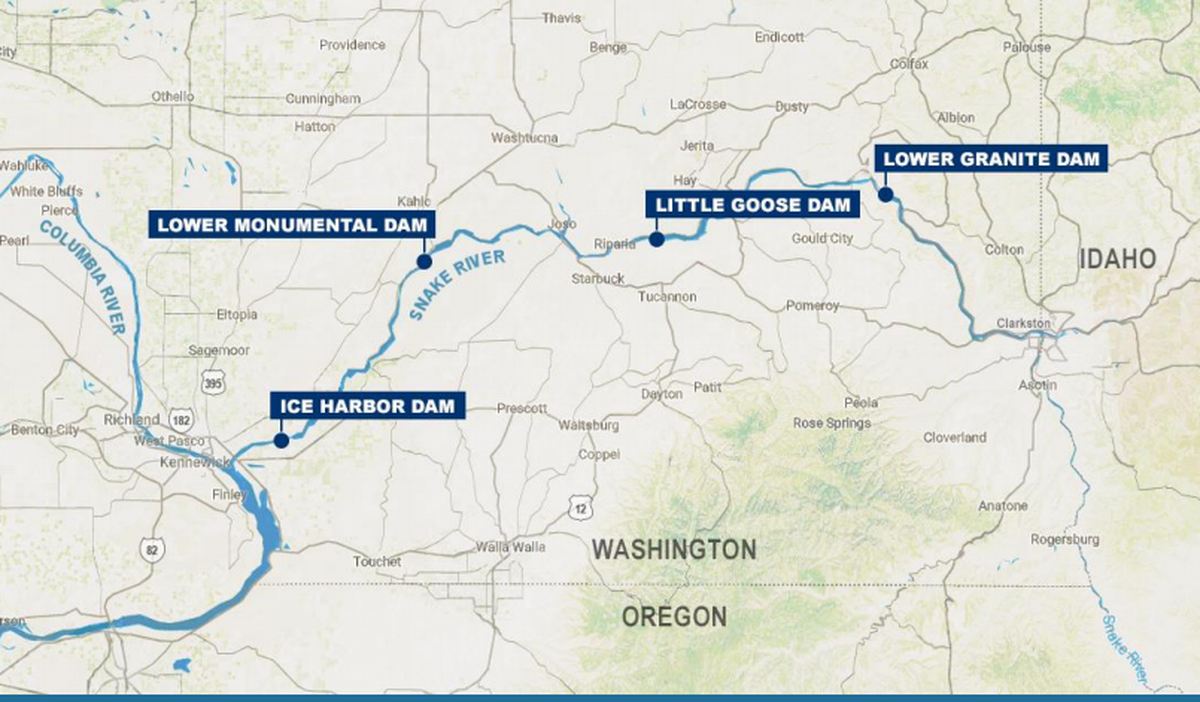
The dam systems allow barges to move 10 million tons of cargo on the Columbia and Snake river systems annually. Replacing that capacity with trains and trucks just for the Snake River would increase air pollution by more than 1.2 million tons a year, say supporters of the dams.
The Columbia and Snake river dams produce 60 percent of the Northwest’s electricity and 90 percent of its renewable energy, providing reliable, low-cost electricity.
Without Ice Harbor dam electrical production, the Tri-Cities would have brown-outs during the coldest days of the winter, said Randy Hayden, executive director of the Port of Pasco.
“If efforts are successful to work on taking out the Snake River dams, there are going to be efforts to take out Columbia River dams,” he said.
Family farm relies on Snake dam
Nelson, the general manger of Gordon Estate Winery in Pasco said that the agriculture and related operations of the Gordon family has grown since 1978 to support eight families year round and dozens other work seasonally in their cherry orchards and vineyards.
Without the Ice Harbor Dam her family would have no reliable water supply for their winery, their crops and their homes. Their water rights would be useless, and they would need to find other sources of income, she said.
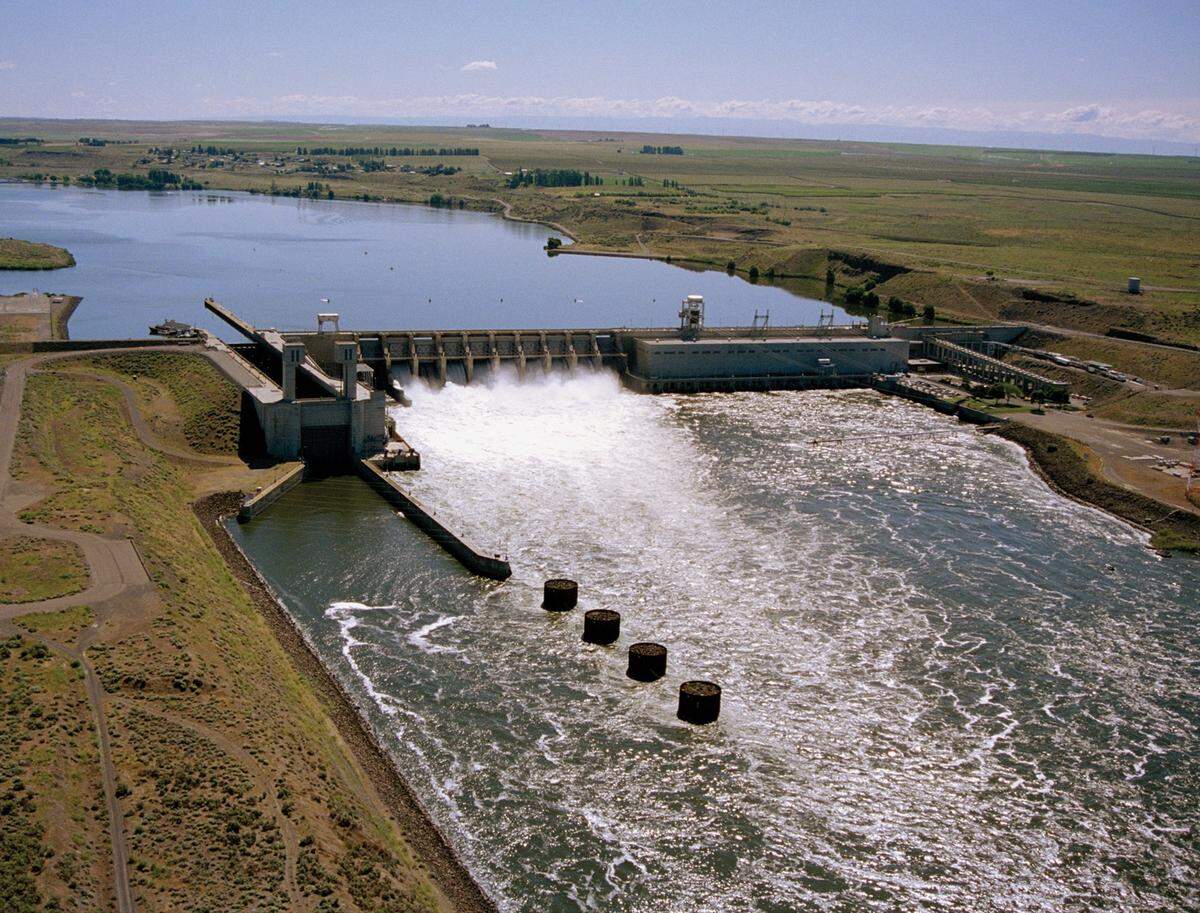
She’s often heard from dam breaching supporters that farmers would be made whole.
“What does that mean?” she said. “If your life’s work is taken from you, what does it take to make it whole?”
After 30 years of discussion it is clear that dam breaching isn’t the answer, she said.
Money would be better spent on projects like learning more about ocean conditions and causes of unfavorable conditions there for fish, she said.
“Destroying the Snake River dams would be a deadly distraction (from salmon), diverting time and money from the most effective salmon recovery efforts, and would do little to increase populations in the Snake and Columbia rivers,” according to the Washington Policy Center.
Too many dams for salmon?
But the panel discussion that followed the rally made clear that Eastern Washington residents are not the only people with passionate viewpoints about the dams.
“At some point when you build dams, you build too many for fish to get to where they need to go safely,” said Rob Masonis, the manager of Trout Unlimited’s Western U.S. conservation programs.
The Snake River was the most productive part of the Columbia River, particularly for spring and summer chinook and steelhead, producing about half of the fish of the Columbia River basin.
“My organization is on record saying that we think there is some compelling evidence that you are not going to recover wild chinook salmon and steelhead with the four lower Snake River dams in place,” he said.
But if there are other ways to get survival rates up, “we are all in,” he said.
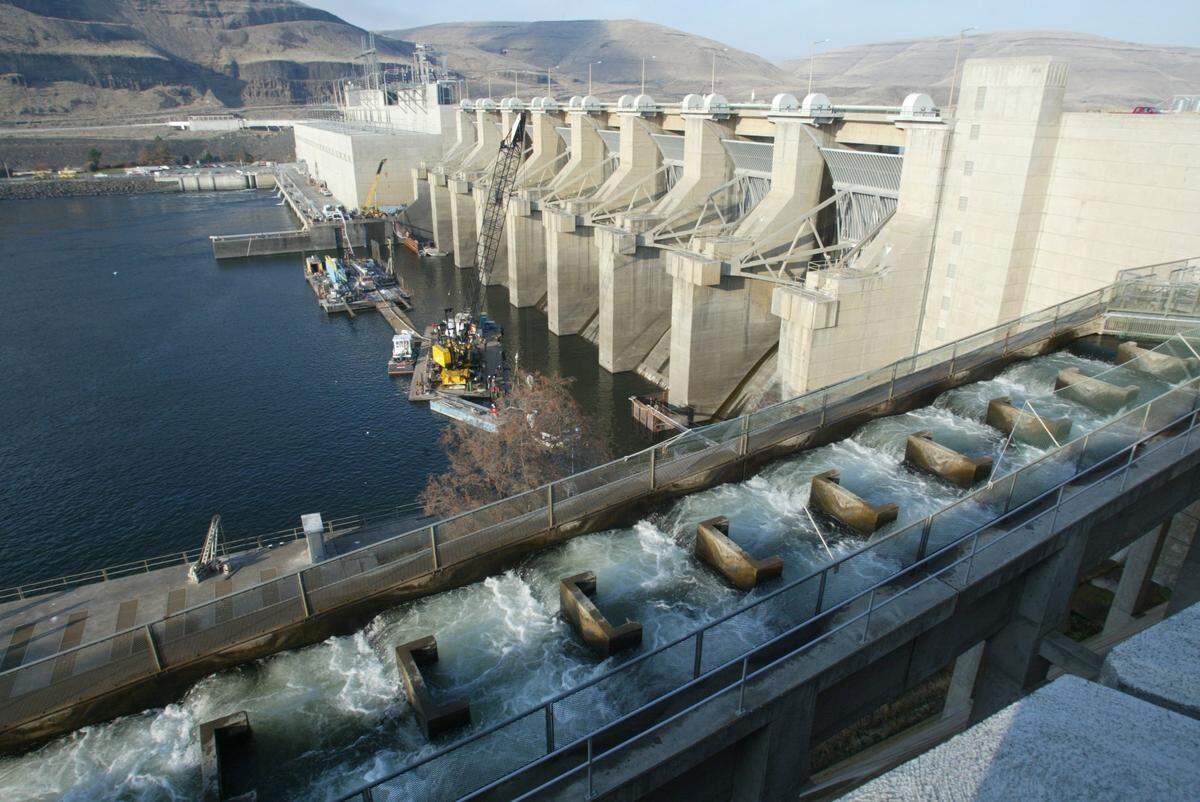
Supporters of the dams say those on the lower Snake have some of the most advanced and successful fish passage systems in the world, helping 97 percent of fish survive.
Deborah Giles, the science and research director for the Wild Orca, said the 73 remaining southern resident orcas off the Washington coast spend time in the spring at the mouth of the Columbia feeding on fish, primarily chinook.
Among the issues making finding enough food difficult for the killer whales is the loss of the massive salmon that formerly populated the Columbia River, she said.
An orca may need 300 to 350 pounds of fish a day to survive, which was not a problem when some Snake River salmon were larger than 100 pounds.
They spend half a year at best in the Puget Sound, or Salish Sea, she said. But now they are lucky in the Puget Sound to get 12.5 pound salmon and have to spend more time foraging for fish.
They have been spending less time in the Puget Sound and may be returning to the Columbia River area to seek fish, Giles said.
Snake River dams and jobs
Jobs were a continuing theme of the panel.
An Idaho river guide and a commercial salmon troller said their livelihoods were affected already by the lack of salmon. It has also meant a loss of related shipyard jobs in Jefferson County, said Joel Kawahara, a commercial salmon troller based in Quilcene, west of Seattle.
“Communities around the region have already suffered . . . and are looking for a way forward that is better that doesn’t hurt anyone else,” he said.
The dams are doing a good job of meeting three goals — a reliable power supply, irrigation for agriculture, and timely and reliable transportation for farmers, said Masonis.
But there is a fourth goal of healthy, harvestable Snake River salmon, and the question is how to retain the the success on the first three goals and also meet the fourth, he said.
“All of us need to work harder to understand the complexities and trade offs,” said Kieran Connolly, a vice president at Bonneville Power Administration.
The draft report was the result of a study paid for by the Washington state Legislature. At the request of Democrat Gov. Jay Inslee, it approved $750,000 for his office to have the study done by consultants.
Comment on the draft report
State officials say that up to $400,00 is expected to be spent on the study, with the remaining $350,000 kept in reserve in case additional work is needed after release of a federal environmental study.
The governor will use the final state report, expected in February, to inform the state’s comments on a federal environmental study of hydropower on the Columbia River system. The study was ordered by federal Judge Michael Simon who said not enough was being done to help endangered fish species.
Removing the four Snake River dams is one option being considered in the federal study, as required by Simon.
Written comments on the draft report being prepared for the state can be submitted until 5 p.m. Jan. 24.
Comments can be emailed to info@lsrdstakeholderprocess.org (with the lsrd short for lower Snake River dams) or mailed to LSRD Stakeholder Engagement Draft Report, c/o Tess Wendel, 1325 Fourth Ave., Suite 1600, Seattle, Wash. 98101.
A survey to gather public opinion also will remain open until 5 p.m. Jan. 24. The survey is at bit.ly/snakeriversurvey.
This story was originally published January 14, 2020 at 2:08 PM.