
Kennewick mayor recall effort tossed out of court. He still faces ethics complaint
The recall petition filed against Kennewick Mayor Don Britain was thrown out Wednesday.
Judge Bruce Spanner concluded that allegations of unethical or even criminal behavior by Britain did not happen when he was acting in an official capacity for the city.
A mayor cannot be recalled for actions when not representing the city, Spanner concluded at the hearing in Benton County Superior Court.
“I’m very pleased with the decision today,” Britain said after the hearing. “I don’t think the recall should have ever been done. I think it was filed for political reasons by a group that’s trying to disenfranchise Kennewick voters.”
Allegations in the recall petition were untrue, he said.
Kennewick resident Richard Bilskis filed the petition last month over Britain’s actions as a case manager for the Washington state Department of Social and Health Services.
Before Bilskis could start gathering signatures to put the recall measure on the ballot for Kennewick voters, the court needed to approve the charges alleged against Britain and the wording for the ballot.
However, the petition was dismissed before ballot language was considered.
The petition reflected the alleged actions that caused Britain to be fired from his job in October after a Washington State Patrol administrative investigation.
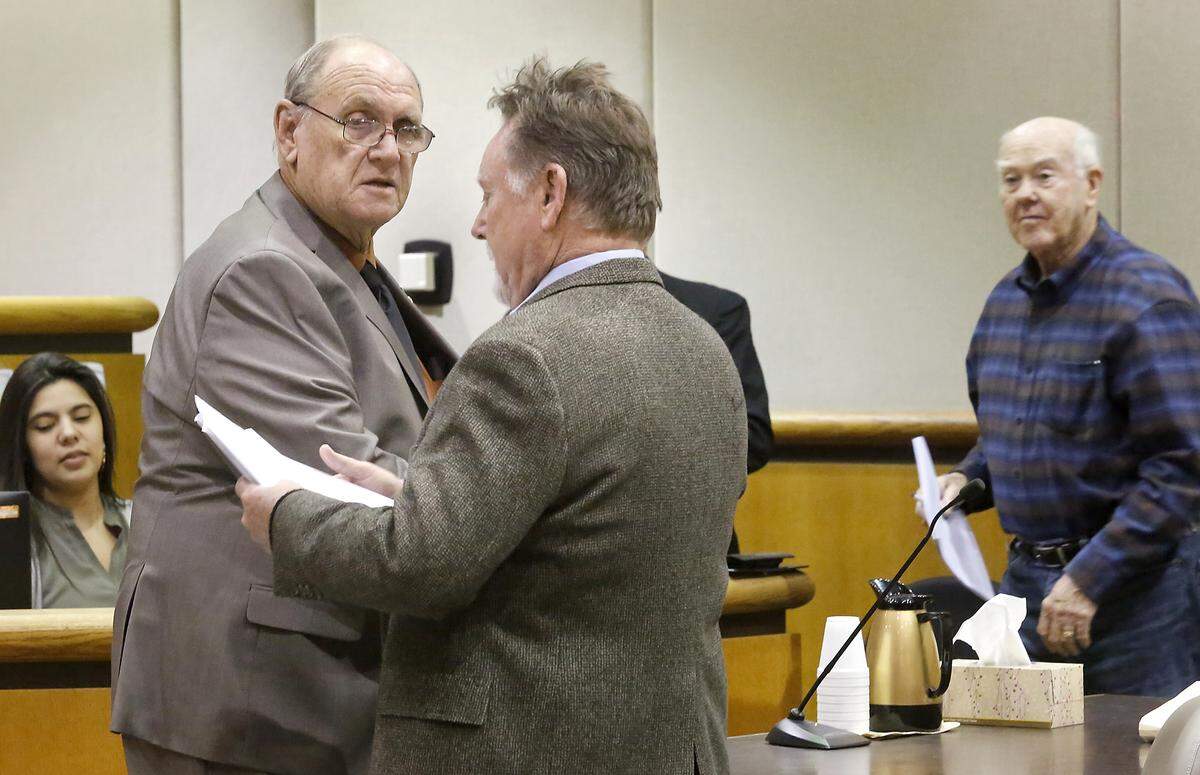
Britain, who was accused of an “inappropriate relationship” with a female client, has been fighting the termination with the backing of his union.
He said he did nothing wrong or illegal.
Legal fees for recall petition
Bilskis argued in court Wednesday that the judge should not dismiss the recall petition based on the Washington state Constitution.
It says that elected officers can be recalled for acts of malfeasance or misfeasance “while in office.”
“The words of the Constitution ‘while in office’ are much different than ‘while conducting the duties of office’,” Bilskis said.
Elected officials are held to a higher standard than the general public, he said.
“We expect them to follow the law, and spend the peoples’ hard-earned tax dollars in a prudent and legal manner at all times, not just when they are conducting the business of office,” he said.
However, the judge said that the courts have interpreted the state law on recalls, which implemented the language in the Constitution, to require that conduct alleged in recall petitions must have been part of official duties or be a violation of the oath of office.
“The allegations are legally and factually insufficient to support a recall petition,” Spanner said.
Britain’s attorney asked the judge to require Bilskis to pay Britain’s legal costs, saying the recall petition had been filed in “bad faith.”
That would require the case to remain open while the judge considered arguments.
But Britain told his attorneys he would prefer an immediate dismissal of the recall petition and was willing to drop the request for legal fees to get the case closed.
Bilskis told the judge he does not plan to appeal the recall ruling.
Ethics complaint filed
In the last recall petition filed with the city of Kennewick against former Mayor Steve Young, Young requested that city pay his legal fees. He died before a recall petition went forward.
The city this month paid Thompson $49,000, covering all legal representation in Young’s case.
Separately, Britain also faces an ethics complaint signed by three of the seven-member city council and filed the same week as the recall petition. The same week, four other council members re-elected him as mayor for 2020.
The city’s ethics officer has yet to decide whether the complaint has enough merit to go forward.
The recall petition goes beyond the findings of the WSP investigation, alleging that $2,500 in benefits for Britain’s client — including food for her children, gas money and a college training program — amounted to second-degree felony theft.
State patrol investigators did not find any criminal wrongdoing, and prosecutors have not charged him with a crime.
Britain said recall petition wrong
Britain signed a joint apartment lease with a client in 2019, and he, his client and her two children lived there.
He created support services vouchers for her Columbia Basin College welding program she enrolled in, which Bilskis said was $1,960 of the approximately $2,500 in benefits.
Britain says they were reviewed and approved by managers before being given to her.
The WSP report quoted people questioning some of the materials DSHS paid for a welding program.
Britain maintains that Bilskis came to conclusions not supported by facts.
The recall petition is filled with suppositions and “what ifs,” said Bob Thompson, Britain’s attorney for the recall attempt.
Britain said in documents filed in court that he did not commit any illegal acts or malfeasance or abuse his ethical obligations as a Kennewick council member.
He said his client told him she and her two children were at risk of being homeless at the start of 2019 and she might not be able to start the welding program.
Because of his divorce, Britain already was planning to move and said he leased a new apartment and rented a room to her. Her name was also on the lease at the recommendation of the apartment complex, he said.
“I received no personal gain or benefit from this situation,” he said in court documents.
“This relationship was not personal or romantic, and I believed it would only be temporary,” he said.
The WSP investigation also found that he used airline miles to buy his client a ticket to Hawaii at the same time he traveled to Hawaii, but denied that they vacationed together when they arrived there.
This story was originally published February 12, 2020 at 10:52 AM.