
Multiple ways of tracking COVID infections show virus on the rise in Tri-Cities
No recent deaths from COVID-19 were reported in the Tri-Cities area last week for only the second week in 10 months.
However, the prevalence of the coronavirus in the Tri-Cities area continues slowly increasing, according to data from the Benton Franklin Health District.
The death toll held steady at 684 people who have died of complications of COVID-19 in the last 27 months.
That includes 470 Benton county residents and 214 residents of Franklin County. Deaths are reported weekly.
Metrics — including confirmed new case rates, outbreaks, wastewater surveillance, hospital admissions and results of tests at community testing sites — all point to increasing infections.
Masks are not required but are encouraged by public health officials due to signs that the number of people infected is increasing. But fewer people are wearing them.
“Benton and Franklin communities show a high level of fatigue with everything related to COVID, with a common refrain heard being, ‘We’re done with COVID’,” according to the Unified Situation Report released at the end of May by the Tri-Cities-based health district and Benton and Franklin County Emergency Management.
“This has led to relaxed mitigation precautions in the community with regard to masking, social distancing and testing,” the report said.
COVID outbreaks
The latest report said there were three active outbreaks in Tri-Cities area businesses and three pending investigations. There also were three active outbreaks in schools.
Long-term care facilities, such as nursing homes, were struggling with outbreaks.
There were six active outbreaks with six more on a watch list, according to the report.
For residents of long-term care facilities for the elderly, getting booster shots appears to make the difference in preventing residents from becoming severely ill, said Heather Hill, infectious disease supervisor for the Benton Franklin Health District, speaking on the Kadlec on Call podcast last week.
Positive COVID tests
More people are showing up for COVID-19 tests at the drive-thru testing site at Columbia Basin College in Pasco and more are positive for the coronavirus, Hill said.
Currently about 24% of test results are positive there. At the Richland walk up testing site on George Washington Way, about 21% of test results are currently positive.
Two months ago the rate of positive tests was 5% at the Pasco testing site and 3% at the Richland testing site.
COVID new case rates
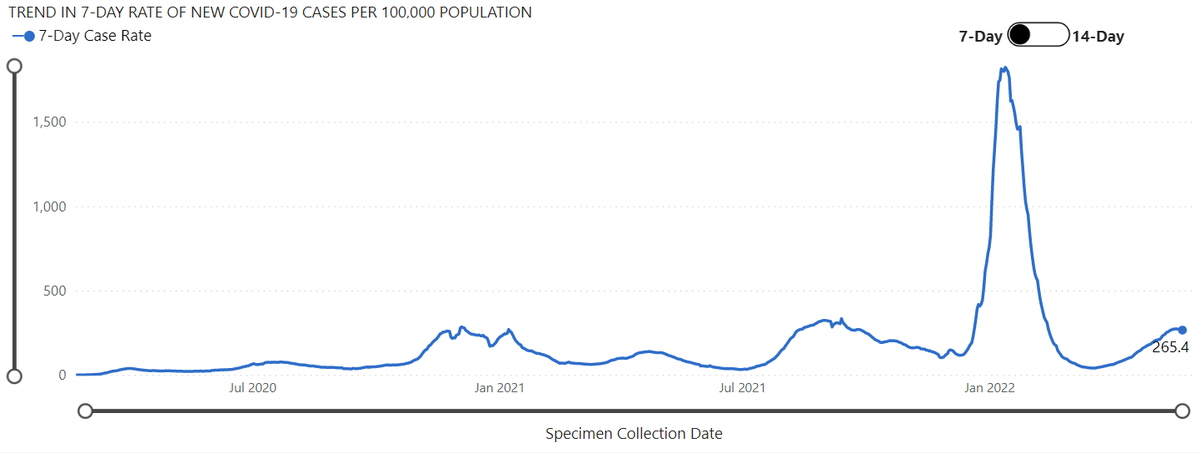
The new case rate for Benton and Franklin counties combined has increased from 81 new cases per 100,000 people in seven days as reported a week ago to 90 in the most current data. A month ago the new case rate was reported at 41.
The new case rate remains far below previous peaks of the pandemic.
However, the case rate is likely an under count since many people now use at-home testing kits with results not reported to the Benton Franklin Health District.
COVID hospitalizations
Hospital admissions of patients with COVID-19 in the Tri-Cities area are starting to rise some, the Unified Situation Report said.
According to the latest weekly data reported, 12 people were admitted to hospitals in Richland, Kennewick, Pasco and Prosser for treatment for COVID-19, up from nine people a week earlier.
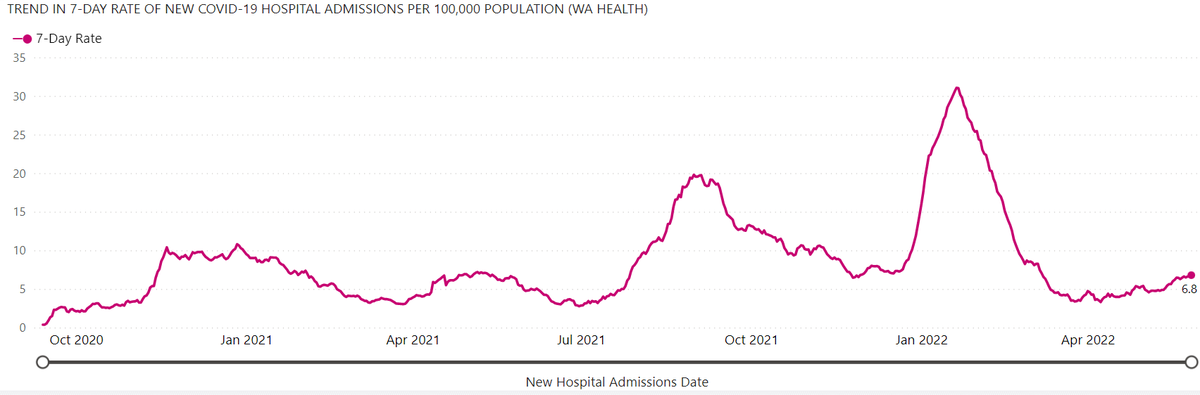
The number of hospital beds being used by patients with COVID-19 increased steadily from about 1% about two months ago to about 2% at the start of June, according to the report.
Hospitalizations across Washington also have continued their steady increase this spring.
Hospitals are again reporting significant numbers of staff out sick with COVID-19, the Tri-Cities area report said.
Wastewater testing
Checks for genetic material from the coronavirus in wastewater collected from treatment plants in Kennewick, Pasco, Richland and West Richland show an increase in COVID-19 over the past two months.
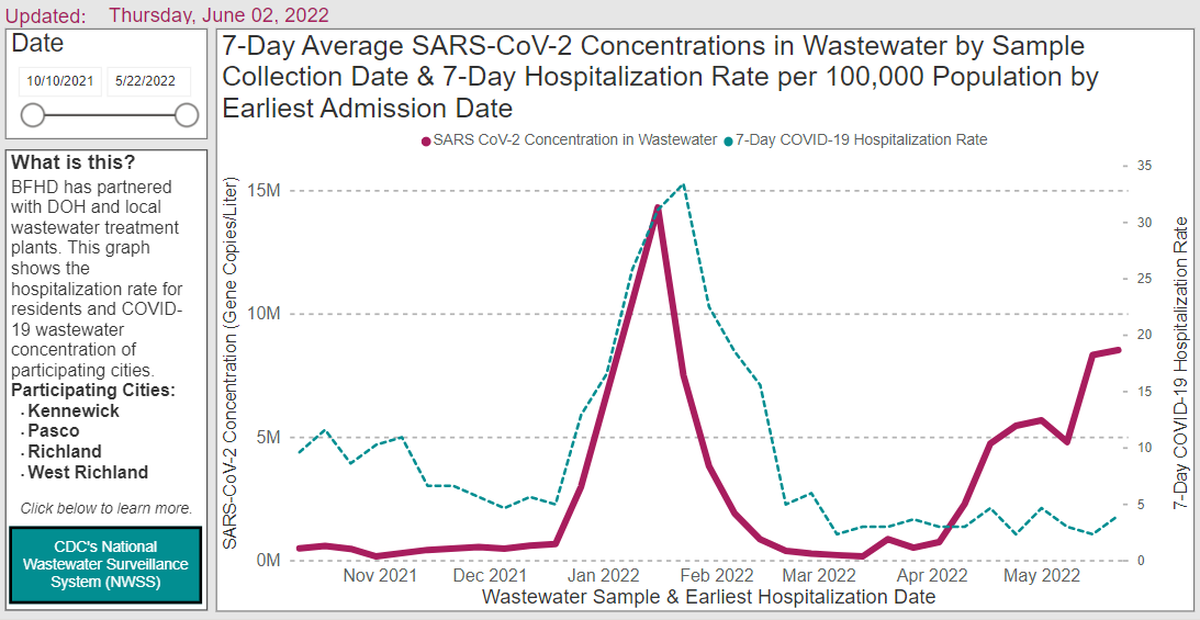
Concentrations reported Thursday have reached a level not seen in four months.
Wastewater checks are a new way to track COVID-19 in the community, and public health officials still are learning how to interpret data, but believe it is a useful tool in connection with data from other sources.
This story was originally published June 4, 2022 at 8:06 AM.